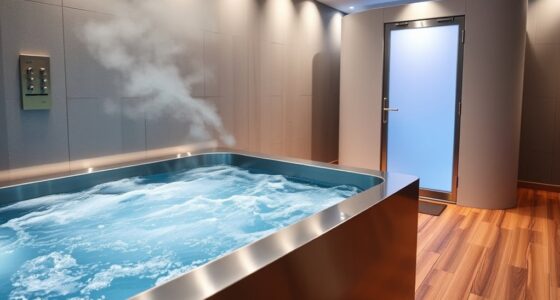
Cold plunge therapy boosts your recovery by reducing inflammation, easing muscle soreness, and flushing out waste products through blood vessel constriction and dilation. It also sharpens mental clarity by releasing alertness-boosting chemicals like norepinephrine and helps build resilience by controlling your response to discomfort. Regular exposure supports both physical and emotional well-being, making you more resilient to stress. Keep exploring to discover how to maximize these scientifically backed benefits in your routine.
Key Takeaways
- Scientific studies confirm cold plunge reduces inflammation, muscle soreness, and accelerates physical recovery post-exercise.
- Research indicates cold immersion increases norepinephrine, improving mood and enhancing alertness.
- Cold therapy promotes vasoconstriction and dilation, aiding in waste removal and tissue healing.
- Evidence suggests cold exposure enhances mental resilience, stress management, and mindfulness.
- Gradual acclimation to cold water safely boosts physical and mental benefits supported by scientific findings.
Cold plunge therapy has gained popularity for its ability to boost recovery, enhance mental clarity, and improve overall well-being. When you immerse yourself in cold water, you’re activating your body’s natural response to stress, which can lead to faster muscle recovery. The cold constricts blood vessels, reducing inflammation and swelling in muscles after intense activity. Once you exit the plunge, blood vessels dilate, helping flush out metabolic waste products and delivering fresh nutrients to damaged tissues. This cycle accelerates the healing process, so you often feel less soreness and stiffness sooner than with traditional recovery methods.
Beyond physical benefits, cold plunge therapy can also sharpen your mental clarity. When you step into cold water, your body releases a surge of adrenaline and norepinephrine, which heightens alertness and focus. The shock of the cold forces you to stay present, pulling your attention away from distractions and into the moment. Over time, regular exposure to cold water can improve your ability to manage stress and stay calm under pressure. You might notice that your mood lifts and your mental fog clears, enabling you to approach tasks with renewed energy and concentration.
Many practitioners find that cold plunge therapy encourages a state of mindfulness. The initial shock of the cold is intense, but as you get used to it, you learn to control your breathing and relax your mind. This mental practice can spill over into your daily life, making you more resilient and better equipped to handle stressors. Scientific studies support these claims, showing that cold exposure can increase the production of norepinephrine, which not only boosts alertness but also has mood-enhancing effects. For athletes and active individuals, this mental clarity translates into improved focus during training and competitions. Additionally, engaging in cold water immersion can promote safety awareness by helping you recognize your physical limits and respond appropriately to discomfort.
It’s important to note that the benefits are often dose-dependent; shorter dips, typically lasting two to five minutes, can provide significant benefits without overexposing yourself to the cold. As you become more accustomed to the sensation, you might extend your time gradually, always listening to your body’s signals. Incorporating cold plunge therapy into your routine can be a practical way to support muscle recovery while simultaneously sharpening your mental state. Whether you’re recovering from a workout or simply seeking mental refreshment, cold water immersion offers a straightforward, effective method to enhance your overall well-being through physical and mental rejuvenation.

BINYUAN XL Ice Bath Tub for Athletes With Cover 99 Gal Cold Plunge Tub for Recovery, Multiple Layered Portable Ice Bath Plunge Pool Suitable for Gardens, Gyms and Other Cold Water Therapy Training
STAY THE PEAK – Dive into the rejuvenating effects of our Ice Bath after strenuous workouts to alleviate…
As an affiliate, we earn on qualifying purchases.
As an affiliate, we earn on qualifying purchases.
Frequently Asked Questions
How Often Should I Do Cold Plunge Therapy for Optimal Benefits?
You should aim for cold plunge sessions 2 to 3 times a week to maximize benefits. Keep hydration strategies in mind by drinking plenty of water before and after each session to support recovery and skin health. Be mindful of your body’s response, and avoid overdoing it, as too frequent plunges can cause stress or skin irritation. Listen to your body and adjust frequency accordingly for ideal results.
Are There Any Risks Associated With Cold Plunge Therapy?
Yes, cold plunge therapy can carry risks like cold shock, which may cause hyperventilation or even fainting if you’re unprepared. It can also impact your immune response, especially if done excessively or at very low temperatures. To stay safe, start slowly, limit your sessions, and listen to your body. Consult a healthcare professional if you have underlying health conditions or concerns about how cold exposure might affect you.
Can Cold Plunge Therapy Improve Mental Health?
You might find that cold plunge therapy boosts your mental health benefits by reducing stress and elevating mood. Regular exposure can build emotional resilience, helping you better handle daily challenges. While some studies suggest these mental health benefits, individual responses vary. If you’re considering trying it, approach gradually and consult a healthcare professional, especially if you have underlying health conditions. Cold plunges could be a valuable tool for enhancing emotional well-being.
What Is the Ideal Temperature Range for Cold Plunges?
You should aim for a cold plunge temperature between 50°F to 59°F (10°C to 15°C). This range effectively promotes temperature regulation and stimulates recovery without risking hypothermia. Water conductivity affects heat transfer, so verify the water is properly cooled and maintained. Always listen to your body, start with higher temperatures, and gradually lower the temperature as you become more accustomed to cold plunges for safe, effective therapy.
How Long Should Each Cold Plunge Session Last?
You should aim for cold plunge sessions lasting about 3 to 5 minutes, based on duration guidelines. While it might seem uncomfortable at first, shorter sessions still offer benefits without risking hypothermia. Start with 2-minute dips and gradually increase as your body adapts. For ideal results, maintain consistent session frequency, typically 3 to 4 times a week, to build resilience and maximize recovery.

Immersion Water Heater with Controller, Portable Bucket & Bathtub Heater, 304 SS Immersion Heater for Bathtub, Auto Shut-Off, Anti-Dry Burn, 14AWG Cord, Water Heater for Inflatable Pool & Tub, 1800W
Ultimate Safety: Anti-Dry Burn & Auto Shut-off: Safety is paramount for any portable immersion water heater. Our device…
As an affiliate, we earn on qualifying purchases.
As an affiliate, we earn on qualifying purchases.
Conclusion
As the saying goes, “health is wealth,” and cold plunge therapy offers a promising way to boost your well-being. By reducing inflammation, improving circulation, and enhancing recovery, you can feel rejuvenated and energized. Just remember, Rome wasn’t built in a day—start slowly, listen to your body, and stay consistent. Incorporating cold plunges into your routine might just be the key to revealing a healthier, more resilient you.

BAOSHISHAN Cold Plunge Water Filter Kit for Ice Bath Tub & Chiller Systems
[COMPLETE ICE BATH FILTER KIT] – This all-in-one filtration system comes with everything you need—including a heavy-duty transparent…
As an affiliate, we earn on qualifying purchases.
As an affiliate, we earn on qualifying purchases.

Bubplay Ice Bath Cold Plunge Tub with Cover for Indoor Outdoor for Recovery, Cold Water Therapy, Athletes & Adults -105 Gallons, Black, XL
【XL Full-Body Cold Plunge for Most Adults】 Designed for an immersive ice bath / cold plunge experience with…
As an affiliate, we earn on qualifying purchases.
As an affiliate, we earn on qualifying purchases.