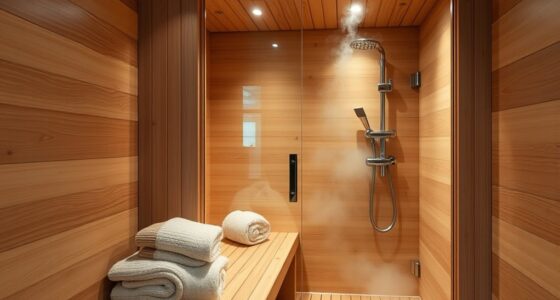
Building a sauna with recycled materials is a smart move for sustainability and efficiency. You can reuse insulation like mineral wool, denim, or cellulose to improve heat retention while reducing waste. Using reclaimed cedar or rot-resistant woods enhances durability and airflow. Incorporate recycled vents and ductwork made from rust-resistant materials to guarantee longevity. Proper insulation and ventilation design help keep the heat consistent and the air fresh, making your project eco-friendly—more tips on making your sauna sustainable continue below.
Play games included with Prime
Start a Prime free trial and play with Amazon Luna on your devices.
As an affiliate, we earn on qualifying purchases.
Key Takeaways
- Use recycled insulation materials like mineral wool, denim, or cellulose to enhance thermal efficiency and environmental sustainability.
- Incorporate reclaimed wood, such as cedar or rot-resistant panels, for durable, eco-friendly sauna interiors and exteriors.
- Install ventilation systems with recycled metal or PVC components to ensure airflow, safety, and longevity.
- Design accessible, removable panels and vents made from recycled materials for easy maintenance and inspection.
- Prioritize insulation and ventilation to improve heat retention, reduce energy use, and promote a healthier sauna environment.

Creating a sauna with recycled materials is an eco-friendly way to enjoy a relaxing retreat while reducing waste. When you start designing your sustainable sauna, one of the key considerations is how to effectively insulate the space. Insulation options are vital because they determine how well your sauna maintains heat, saving energy and enhancing comfort. You can repurpose old mineral wool, recycled denim, or cellulose insulation, which all provide excellent thermal resistance. These materials are not only environmentally friendly but also affordable and easy to install. Using reclaimed foam board or recycled wood fiber panels is another smart choice, especially if you want to maximize sustainability without sacrificing performance. Proper insulation ensures your sauna heats quickly and stays warm longer, reducing the need for continuous energy input.
Next, pay attention to the ventilation design. Good airflow is essential for safety and comfort, especially when using recycled materials that might have different moisture absorption properties. You want your sauna to have a well-planned ventilation system that promotes fresh air intake and exhaust. This can be achieved by installing a simple intake vent near the floor and an exhaust vent near the ceiling, which allows warm, moist air to escape efficiently. When choosing recycled materials for the vents or ductwork, look for durable, rust-resistant options like recycled metal or PVC. Proper ventilation also prevents mold and mildew buildup, which can be a concern in a sauna environment, especially when using reclaimed wood or other porous materials.
Incorporating recycled materials into your sauna’s insulation and ventilation not only benefits the environment but also enhances the longevity of your project. For example, using reclaimed cedar or other naturally rot-resistant woods can improve airflow and durability, making your sauna safer and more sustainable over time. Keep in mind that the design should facilitate easy maintenance, so consider removable panels or accessible vents made from recycled components. This way, you can regularly inspect and clean your sauna, ensuring it remains a healthy space for relaxation.
recycled insulation materials for sauna
As an affiliate, we earn on qualifying purchases.
As an affiliate, we earn on qualifying purchases.
Frequently Asked Questions
How Long Does a Recycled Material Sauna Typically Last?
A recycled material sauna typically lasts 10 to 20 years, depending on your maintenance and durability concerns. If you choose durable, weather-resistant recycled materials and perform regular upkeep, it can stay in great shape longer. However, neglecting maintenance or selecting less durable options may shorten its lifespan. To maximize longevity, focus on using high-quality recycled materials and stay consistent with cleaning and inspections.
Are Recycled Materials Safe for High-Temperature Environments?
Think of recycled materials as brave knights in a fiery arena; some are well-armored, others less so. Recycled woods and metals can be safe if they meet fire safety standards and have proven material durability. Always choose materials tested for high temperatures, and verify proper treatment to reduce risks. By doing so, you create a sturdy, safe sauna that withstands the heat and protects everyone inside.
What Are the Cost Differences Between Recycled and New Materials?
Recycled materials often cost less upfront than new ones, but their durability can vary, affecting long-term expenses. You might save money initially, but if recycled wood or siding wears out faster, you’ll need replacements sooner. However, recycled options can still offer great aesthetic appeal, giving your sauna a unique look. Balancing cost with material durability helps you choose the best recycled materials that fit your budget and design goals.
Can Recycled Materials Meet Local Building Codes?
Can recycled materials meet local building codes? Absolutely, if you prioritize construction safety and guarantee proper material certification. You should verify that recycled materials comply with your area’s standards, as codes often specify safety and durability requirements. By working with certified suppliers and consulting local authorities, you can confidently incorporate recycled materials into your sauna, creating a sustainable, code-compliant space that’s safe and eco-friendly.
How Do Recycled Materials Affect Sauna Insulation Efficiency?
Recycled materials can impact your sauna’s insulation efficiency by affecting thermal resistance and moisture control. If you choose materials with high thermal resistance, you’ll retain heat better, making your sauna more energy-efficient. However, some recycled materials may absorb moisture, reducing insulation effectiveness and risking mold growth. To optimize performance, select recycled options that are moisture-resistant and provide good thermal insulation, ensuring your sauna stays warm and safe.
As an affiliate, we earn on qualifying purchases.
Conclusion
Don’t let concerns about durability hold you back. Recycled materials can be just as sturdy and long-lasting as new ones if chosen carefully. By building your sauna with eco-friendly options, you’re not only creating a relaxing retreat but also helping the environment. Plus, you’ll enjoy the satisfaction of reducing waste and making a positive impact. So go ahead—embrace sustainable building, and create a beautiful, eco-conscious sauna that lasts for years to come.
rust-resistant recycled vent and ductwork
As an affiliate, we earn on qualifying purchases.
As an affiliate, we earn on qualifying purchases.
eco-friendly sauna ventilation system
As an affiliate, we earn on qualifying purchases.
As an affiliate, we earn on qualifying purchases.
Fall Picks
fall essentials
As an affiliate, we earn on qualifying purchases.