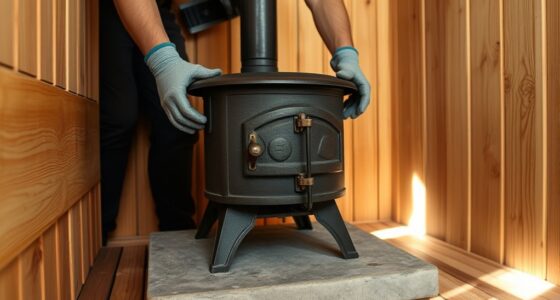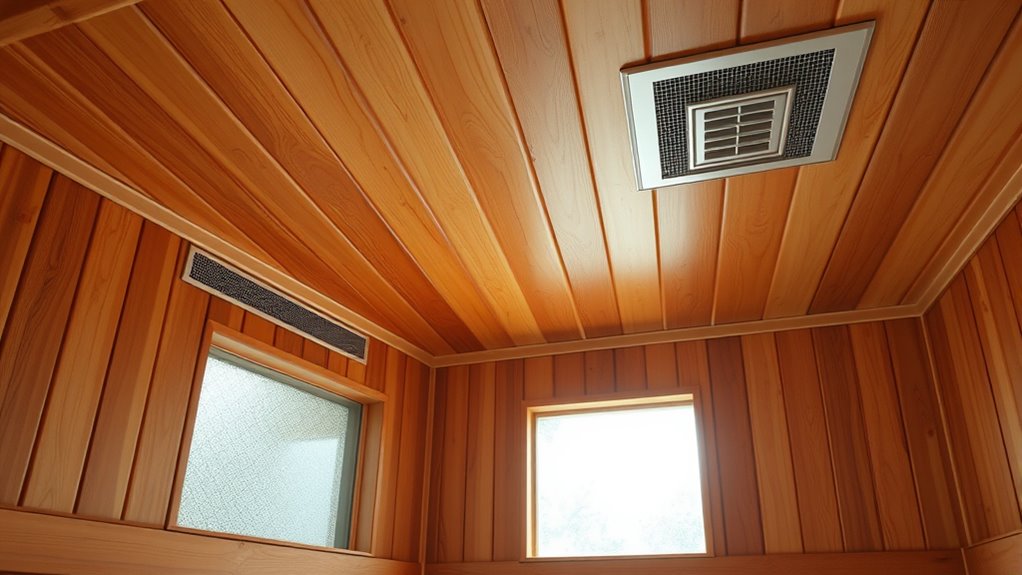

To integrate a ventilation system into your sauna, start by planning intake vents near the floor and exhaust vents near the ceiling to promote natural airflow. Use adjustable vents or exhaust fans to control air quality and moisture levels effectively. Proper placement and installation are key to preventing stale air and mold. Keep moisture management in mind to protect the wood and extend your sauna’s lifespan. Explore further for detailed tips on creating a healthy, comfortable space.

Get wellness gear delivered free with Prime
- Fast, free delivery on millions of items
- Prime Video, Amazon Music and more included
- Member-only deals all year
Key Takeaways
- Plan vent placement strategically with intake vents near the floor and exhaust vents near the ceiling to promote natural airflow.
- Incorporate adjustable vents and exhaust fans for customizable airflow control based on occupancy and heat levels.
- Ensure proper installation of ventilation components during construction to optimize air exchange and moisture removal.
- Consider including moisture management solutions like dehumidifiers or inline fans for humid climates or high usage.
- Design the ventilation system to maintain air quality, prevent mold, and preserve the sauna’s structural integrity over time.
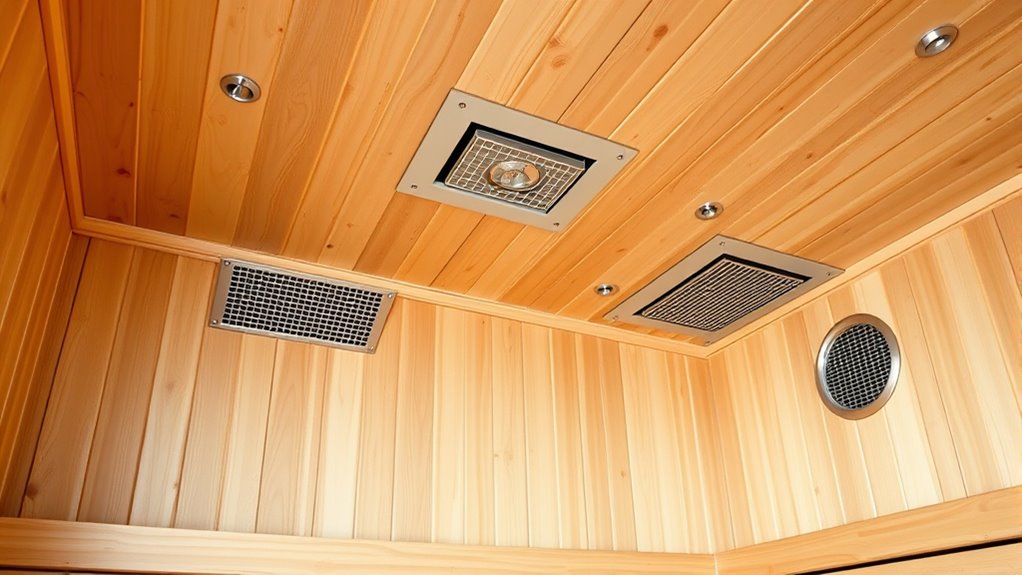
A well-designed ventilation system is vital for ensuring a safe and comfortable sauna experience. When you prioritize proper airflow, you’re actively managing air quality and moisture control, which are essential for both your health and the longevity of your sauna. Without effective ventilation, you risk breathing stale, humid air, which can lead to discomfort and potential health issues. Additionally, excess moisture can cause wood deterioration, mold growth, and unpleasant odors. That’s why integrating a ventilation system from the start is one of the smartest steps you can take during your sauna construction.
First, you need to understand that air quality directly impacts your overall experience. Fresh air circulation ensures that you’re constantly supplied with oxygen and that harmful indoor pollutants are expelled. When you incorporate adjustable vents or intake and exhaust fans, you give yourself control over airflow, allowing you to customize the environment depending on the number of users or the intensity of the heat. Proper ventilation prevents the buildup of carbon dioxide and other contaminants, keeping the air clean and breathable. It’s also important to think about the placement of these vents; typically, placing the intake vent near the floor and the exhaust vent near the ceiling promotes a natural flow that effectively exchanges stale air for fresh.
Proper ventilation ensures fresh air, controls humidity, and maintains a safe, comfortable sauna environment.
Moisture control is equally critical. High humidity levels can create a damp environment that’s perfect for mold and mildew to thrive, damaging the wood and reducing your sauna’s lifespan. To combat this, your ventilation system should be designed to remove excess moisture efficiently. Installing a vent or fan that can run continuously or be turned on during and after use helps to quickly dry out the interior. This reduces the risk of moisture-related problems and maintains a comfortable atmosphere. You might also consider using a dehumidifier in conjunction with your ventilation system if you live in a particularly humid climate. Proper moisture management not only protects your investment but also ensures that the sauna remains a healthy space for relaxation.
Incorporating a well-planned ventilation system doesn’t require complicated technology or excessive expense. Simple solutions like adjustable vents, exhaust fans, and strategic placement can make a significant difference. As you build or renovate your sauna, keep in mind that good airflow isn’t just about comfort — it’s about safety, durability, and creating an environment where you can truly unwind. By focusing on air quality and moisture control from the outset, you’re setting the stage for a sauna that performs well over time and offers a consistently enjoyable experience.
As an affiliate, we earn on qualifying purchases.
Frequently Asked Questions
How Do I Choose the Right Size Ventilation System for My Sauna?
To choose the right size ventilation system for your sauna, consider its size and ventilation capacity needs. You want enough airflow to regulate humidity and temperature without causing drafts. Measure your sauna’s volume and select a system that can exchange air efficiently, typically 0.5 to 1 air change per hour. Ensuring proper airflow regulation helps maintain comfort and safety, so don’t underestimate the importance of an appropriately sized ventilation system.
Can I Install a Ventilation System Myself or Should I Hire a Professional?
Like Da Vinci tackling the Mona Lisa, you could attempt installing a ventilation system yourself, but beware of DIY challenges. Proper ventilation safety is vital to avoid risks like poor air quality or fire hazards. Unless you have experience with electrical work and understanding of airflow dynamics, hiring a professional is wise. They guarantee the system is installed correctly, maintaining safety and efficiency, so your sauna remains a relaxing sanctuary.
What Maintenance Is Required for a Sauna Ventilation System?
You should regularly check and replace the ventilation filter to ensure clean airflow and prevent dust buildup. Keep the system’s airflow adjustment settings in mind, and clean or adjust them as needed to maintain ideal ventilation. Additionally, inspect the vents and ducts for blockages or debris, and clean them periodically to keep the system running efficiently. Proper maintenance helps extend your sauna’s lifespan and guarantees a comfortable, healthy environment.
How Does Ventilation Affect Sauna Energy Efficiency?
Imagine your sauna’s energy efficiency as a delicate dance—ventilation leads the rhythm. Proper airflow improves air quality and humidity control, reducing energy waste from overheating or excessive humidity. When you optimize ventilation, you guarantee consistent temperatures, lower energy bills, and a more comfortable experience. Good ventilation keeps your sauna efficient, inviting you to enjoy its benefits without the worry of wasted energy or poor air quality.
Are There Specific Ventilation Requirements for Outdoor Versus Indoor Saunas?
Yes, outdoor saunas often need more robust ventilation to handle airflow patterns and humidity control caused by external weather. Indoor saunas typically require less ventilation but still need proper airflow to prevent moisture buildup and maintain comfort. You should guarantee your ventilation system is designed to manage humidity effectively and promote proper airflow, regardless of location, to keep your sauna safe, comfortable, and energy-efficient.
As an affiliate, we earn on qualifying purchases.
Conclusion
By integrating a well-designed ventilation system into your sauna, you’ll create a sanctuary that’s not only warm and inviting but also as crucial as the heartbeat itself. Proper airflow prevents moisture buildup and keeps the air fresh, transforming your sauna into a health-boosting paradise. Don’t underestimate the power of good ventilation—you’re fundamentally giving your sauna a breath of life. With the right system, your sauna will become the most legendary relaxation spot you’ve ever experienced.
adjustable intake vents for sauna
As an affiliate, we earn on qualifying purchases.
As an affiliate, we earn on qualifying purchases.
sauna moisture control dehumidifier
As an affiliate, we earn on qualifying purchases.
As an affiliate, we earn on qualifying purchases.
Halloween Picks
halloween
As an affiliate, we earn on qualifying purchases.