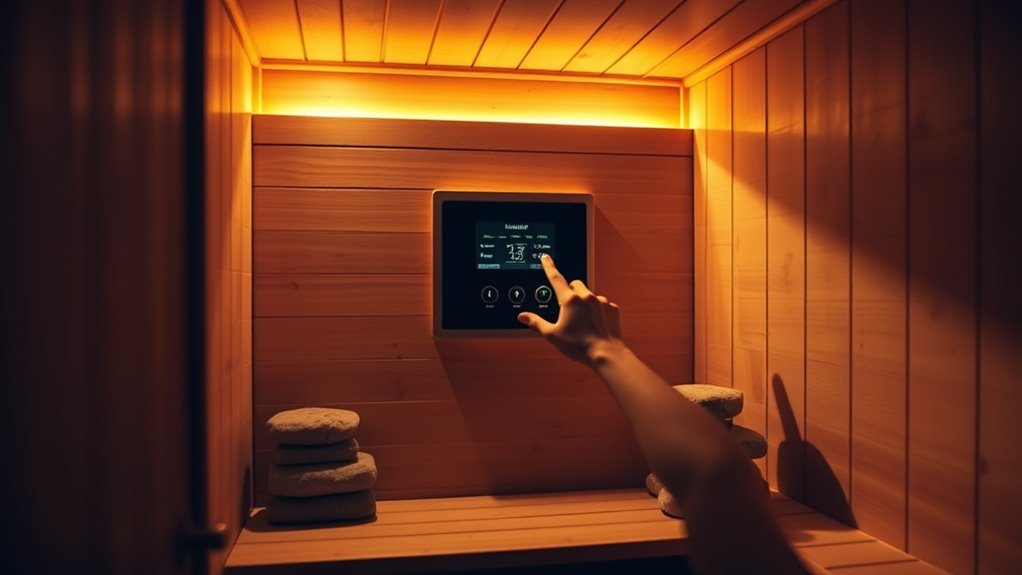
To save on electricity bills, choose energy-efficient sauna heaters like infrared models, which heat your body directly and use less power. Improve insulation and seal gaps around doors and vents to keep heat inside, reducing the heater’s workload. Regularly maintain your equipment by cleaning and inspecting heating elements to guarantee peak performance. Use timers or smart controls to avoid running the heater longer than needed. Keep these tips in mind to maximize savings and enjoy your sauna more efficiently.
Key Takeaways
- Choose infrared sauna heaters for targeted heating that consumes less energy than traditional models.
- Improve sauna insulation and seal gaps to reduce heat loss and decrease heater workload.
- Regularly maintain and clean heater components to ensure efficient operation and prevent energy waste.
- Use timers and smart controls to limit heater operation time, avoiding unnecessary energy consumption.
- Set the sauna to optimal temperatures (~150-170°F) to balance comfort with energy efficiency.
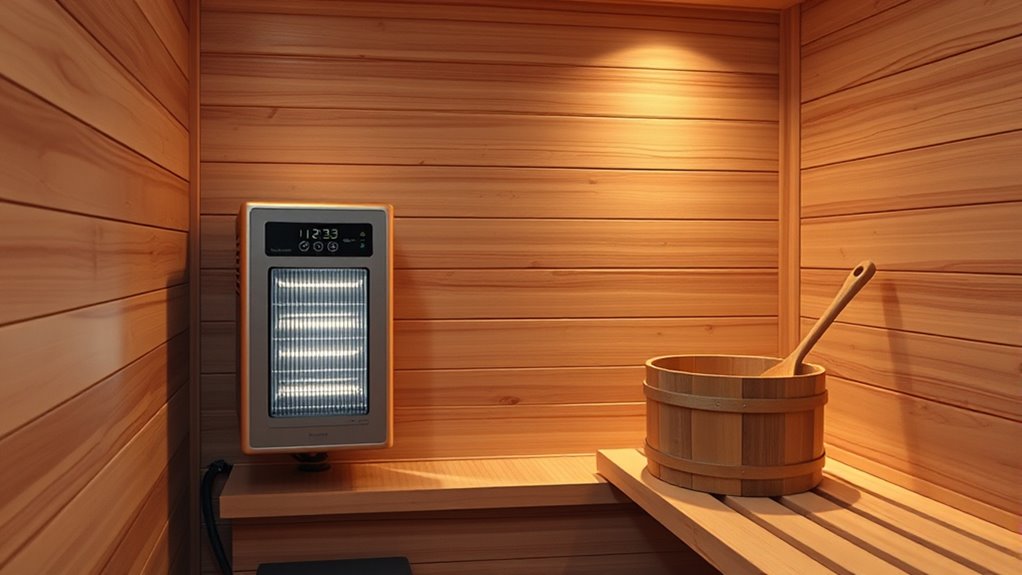
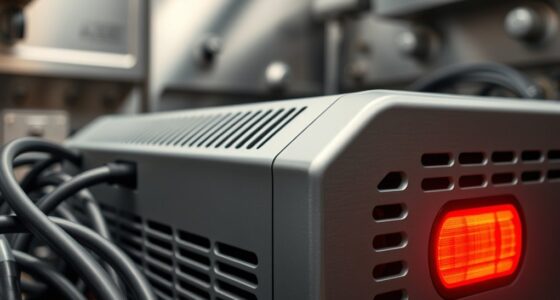
If you want to save energy and lower your heating costs, optimizing your sauna heater’s efficiency is vital. Choosing the right type of heater plays a key role in how much energy you consume. Infrared versus traditional sauna heaters each have their benefits and drawbacks, so understanding their differences can help you make a smarter choice. Infrared heaters warm your body directly through infrared rays, often heating up faster and operating at lower power levels. They tend to be more energy-efficient because they target your body and the immediate space, reducing wasted heat. Traditional heaters, on the other hand, warm the air in the entire sauna chamber, which can require more energy to maintain the desired temperature. They typically take longer to heat up but may provide a more classic sauna experience. Depending on your usage and preferences, opting for an infrared heater might save you more on electricity bills in the long run, especially if you prefer shorter, more frequent sessions. Additionally, understanding the importance of sauna insulation can significantly impact your energy savings by reducing heat loss.
No matter which type of heater you choose, proper heater maintenance is essential for maintaining peak efficiency. Regularly inspecting your sauna heater ensures it operates smoothly and prevents energy wastage. For infrared heaters, check the infrared panels for dust or dirt that can diminish heat output, and replace any damaged panels promptly. Traditional heaters require frequent cleaning of the heating elements and the sauna interior to prevent dust buildup that can insulate the heater and reduce efficiency. Always follow the manufacturer’s maintenance instructions to keep your heater running at its best. Additionally, ensure that the sauna’s insulation is intact and effective, as poor insulation leads to heat loss, forcing your heater to work harder and consume more energy. Sealing any gaps around doors, vents, and windows helps retain heat, making your heater’s job easier and more economical.
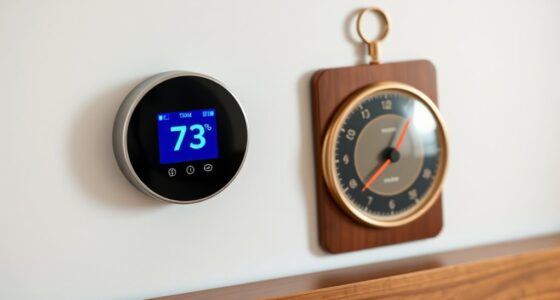
Furthermore, consider setting your sauna’s temperature wisely. Cranking it up to the maximum may feel more satisfying but will markedly increase energy consumption. Keeping the temperature at a comfortable level, around 150-170°F (65-75°C), balances comfort and efficiency. Use timers or smart controls if available, so your heater isn’t running longer than necessary. Proper heater maintenance combined with an informed choice between infrared and traditional models can lead to substantial savings on your electricity bills. Regularly cleaning and inspecting your heater, optimizing insulation, and managing operating times are simple yet effective steps toward making your sauna experience both enjoyable and energy-efficient.
Frequently Asked Questions
How Often Should I Schedule Maintenance for Optimal Efficiency?
You should schedule routine inspections and professional servicing for your sauna heater at least once a year. Regular maintenance helps identify potential issues early and keeps the heater running efficiently. If you use your sauna frequently or notice any performance problems, consider more frequent check-ups. Proper upkeep ensures maximum efficiency, saves energy, and prolongs the lifespan of your heater. Staying consistent with professional servicing is key to maintaining peak performance.
Are There Specific Sauna Heater Models More Energy-Efficient Than Others?
Think of some sauna heater brands as the shining stars guiding your energy savings journey. Many models boast energy-saving features like smart thermostats, insulation, and rapid heating. Brands like Harvia, Tylo, and SaunaCore often lead the pack with highly efficient designs. By choosing a heater with these features, you cut down on electricity use, making your sauna experience both enjoyable and eco-friendly.
Can Programmable Thermostats Significantly Reduce Energy Consumption?
Yes, programmable thermostats can considerably reduce your energy consumption by maintaining precise thermostat accuracy and optimizing heater operation. You’ll save money as they prevent unnecessary heating, especially when you set specific temperature schedules. Incorporate energy monitoring features to track usage and identify patterns, further enhancing efficiency. With a reliable programmable thermostat, you can enjoy a comfortable sauna experience while lowering your electricity bills efficiently.
What Are the Best Insulation Materials to Improve Heater Efficiency?
You should use insulation types like mineral wool, foam board, or fiberglass because they effectively trap heat and improve heater efficiency. Incorporate thermal barriers such as reflective foil or vapor barriers to prevent heat loss through walls and ceilings. These materials work together to keep the sauna warmer with less energy, ensuring your heater runs more efficiently. Proper insulation reduces energy consumption and keeps your sauna cozy for longer periods.
How Does Outdoor Temperature Influence Sauna Heater Energy Use?
Outdoor temperature effects your sauna heater’s energy use because colder ambient air makes it work harder to reach and maintain the desired temperature. When it’s chilly outside, your sauna heating efficiency drops, leading to increased electricity consumption. To minimize this, consider proper insulation and placing the sauna in a sheltered location. Staying mindful of outdoor temperature helps you manage energy use effectively and keeps your sauna experience enjoyable without extra costs.
Conclusion
By following these energy efficiency tips, you can turn your sauna into a warm haven that doesn’t drain your wallet. Imagine your savings blossoming like a radiant sunrise, brightening your days with every mindful choice. With a little effort, your sauna becomes not just a place of relaxation, but a symbol of smart living and caring for your environment. Embrace these strategies and let your energy savings shine as brightly as your well-deserved relaxation.