
When comparing sauna insulation options, mineral wool offers excellent fire resistance, durability, and cost-effectiveness, making it a safe choice for high temperatures. Foam insulations, especially closed-cell types, provide higher thermal resistance and moisture resistance, and are easier to install in irregular spaces. Your decision depends on balancing safety, heat retention, ease of installation, and budget. Continue exploring to discover how each material’s benefits align with your sauna’s needs.

Get wellness gear delivered free with Prime
- Fast, free delivery on millions of items
- Prime Video, Amazon Music and more included
- Member-only deals all year
Key Takeaways
- Mineral wool offers superior fire resistance and non-combustibility, enhancing sauna safety, while foam varies in fire safety ratings.
- Foam insulation generally provides higher moisture resistance and easier installation in irregular spaces compared to mineral wool.
- Mineral wool has a high R-value, effectively retaining heat, but some foam types can surpass it in thermal resistance.
- Mineral wool is typically more affordable, durable, and easier to handle, whereas foam may require specialized equipment for installation.
- Both materials improve sauna energy efficiency; the choice depends on needs for fire safety, moisture resistance, ease of installation, and budget.
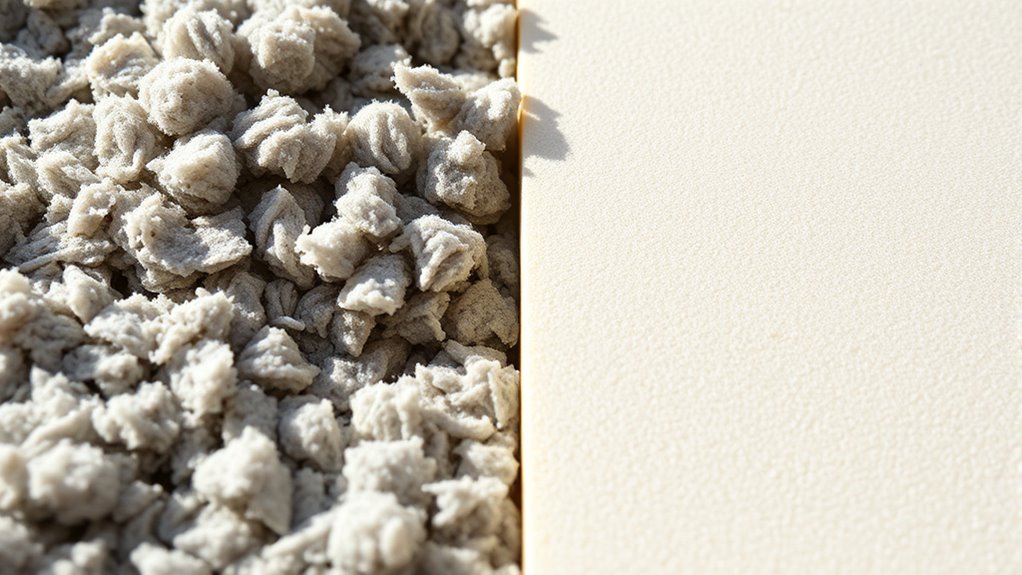
Choosing the right insulation materials for your sauna is essential to guarantee efficient heat retention and safety. When evaluating options, two popular choices stand out: mineral wool and foam insulation. Both provide distinct advantages and challenges, so understanding their properties helps you make an informed decision. One of the key factors to consider is thermal resistance, often measured as R-value. Higher thermal resistance means better heat retention, which is vital for a sauna’s performance. Mineral wool boasts a high R-value, making it excellent at trapping heat and maintaining consistent temperatures. Foam insulation, especially closed-cell varieties, also offers significant thermal resistance, sometimes surpassing mineral wool depending on the formulation. Ultimately, your choice depends on your specific needs for heat efficiency and safety.
Mineral wool and foam insulation offer excellent heat retention for saunas, with high R-values enhancing safety and efficiency.
Another important aspect is installation ease. You’ll want insulation that’s manageable to install without requiring complex tools or lengthy procedures. Mineral wool insulation comes in batts or rolls, which are relatively easy to cut and fit between studs or framing. Its fiber composition makes handling straightforward, although you should wear protective gear to avoid irritation from the fibers. On the other hand, foam insulation comes in liquid, spray, or rigid board forms. Spray foam expands to fill gaps and contours, which can simplify installation in irregular spaces, but it requires specialized equipment and a bit more skill. Rigid foam boards are simpler to handle and cut but may need precise fitting to prevent heat leaks.
Beyond installation ease and thermal resistance, safety considerations also matter. Mineral wool is non-combustible and highly resistant to fire, making it a safe choice for sauna environments where high temperatures are involved. Foam insulation varies; some types are fire-resistant, but others may emit toxic fumes when exposed to extreme heat or flames. Additionally, think about moisture resistance. Foam generally resists moisture better than mineral wool, which can absorb water if not properly protected—an important factor in sauna settings where humidity is high. Moreover, mineral wool’s fire-resistant properties make it especially suitable for high-temperature environments.
Durability is another factor to weigh. Mineral wool maintains its insulating properties over time without degrading, while certain foam types can degrade or shrink if exposed to prolonged heat or moisture. Cost is also a consideration; mineral wool tends to be more affordable and widely available, whereas foam insulation can be pricier but offers faster installation in certain cases.
In the end, choosing between mineral wool and foam insulation depends on balancing thermal resistance, installation ease, safety, moisture resistance, durability, and cost. By understanding these differences, you can select the insulation that best suits your sauna project, ensuring it’s safe, energy-efficient, and comfortable for years to come.
Frequently Asked Questions
How Do Insulation Materials Affect Sauna Energy Efficiency?
Insulation materials directly impact your sauna’s energy efficiency by enhancing thermal performance and moisture management. With better thermal performance, heat stays inside, reducing energy loss and lowering your bills. Effective moisture management prevents mold and damage, keeping your sauna safe and efficient. Materials like mineral wool excel at both, while foam insulations might offer better thermal performance but less moisture control. Choosing the right material helps you save energy and extend your sauna’s lifespan.
Are There Health Risks Associated With Mineral Wool or Foam?
Health concerns are associated with both mineral wool and foam, but you can stay safe by following proper safety precautions. Mineral wool may irritate your skin, eyes, and lungs if inhaled or touched, so wear protective gear during installation. Foam insulation can emit volatile organic compounds (VOCs), so guarantee good ventilation during and after installation. Always read safety instructions carefully to minimize health risks and protect your well-being in your sauna.
Which Insulation Material Offers Better Soundproofing?
You’ll find that mineral wool provides superior soundproofing effectiveness, making it the ultimate noise reduction hero in your sauna. Its dense fibers absorb sound waves better than foam, dramatically reducing noise transfer. With mineral wool, you get impressive noise reduction benefits, turning your sauna into a peaceful retreat free from outside disturbances. Foam, while decent, just can’t match the soundproofing prowess of mineral wool for a truly quiet and relaxing environment.
How Do Installation Costs Compare Between Mineral Wool and Foam?
You’ll find that installation costs for mineral wool are generally higher due to its installation complexity, as it requires careful fitting and protective gear. Foam is easier and faster to install, often lowering labor costs. Regarding durability, mineral wool tends to last longer without sagging or degrading, which can offset initial expenses. So, if you prioritize durability and can handle the installation, mineral wool might be worth the investment.
Can Insulation Materials Impact Sauna Maintenance Requirements?
Yes, insulation materials can impact your sauna’s maintenance. Moisture resistance is essential; foam often resists moisture better than mineral wool, reducing mold risk. Installation complexity also matters—foam is typically easier to install, minimizing errors that lead to future issues. When you choose insulation, you’re affecting not just initial setup but also ongoing maintenance, ensuring your sauna stays in top shape with less effort over time.
Conclusion
Ultimately, choosing between mineral wool and foam depends on your priorities. Mineral wool offers superior fire resistance and breathability, making it a safer, long-term option—especially if you value durability. Foam insulates more efficiently but may require extra fire safety measures. While foam might seem more convenient, considering mineral wool’s resilience guarantees your sauna remains safe and effective for years. Choose wisely, and you’ll enjoy a cozy, well-insulated retreat that stands the test of time.
Halloween Picks
halloween
As an affiliate, we earn on qualifying purchases.