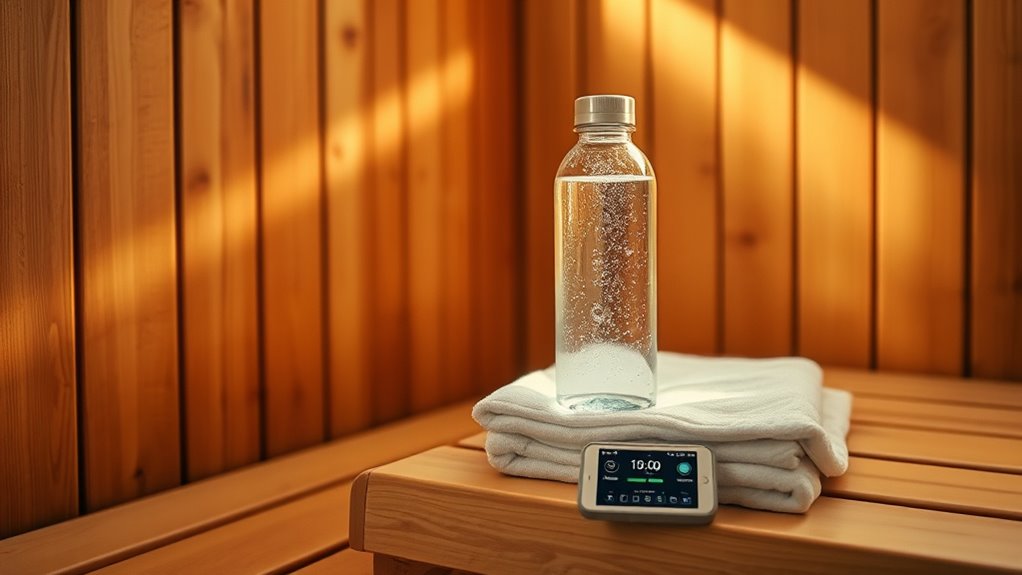

To avoid common hydration mistakes around sauna use, make sure you hydrate well before entering, rather than waiting until you’re thirsty. Don’t skip electrolytes, which are essential for recovery, and rehydrate promptly after sweating stops. Avoid alcohol and caffeine, as they dehydrate you, and adjust your fluid intake based on session length and heat. Watch for dehydration signs like dizziness, and continue to learn how to protect your health during every sauna experience.

Get wellness gear delivered free with Prime
- Fast, free delivery on millions of items
- Prime Video, Amazon Music and more included
- Member-only deals all year
Key Takeaways
- Hydrate adequately 30 minutes before sauna to prevent starting dehydrated and reduce discomfort.
- Rehydrate promptly within 5-10 minutes after sweating to restore electrolyte balance and support recovery.
- Avoid relying solely on thirst; drink small amounts regularly regardless of thirst signals.
- Incorporate electrolyte-rich drinks during and after sauna to prevent cramps and electrolyte imbalances.
- Adjust fluid intake based on session length, heat, and sweat loss, monitoring body signals for optimal hydration.
electrolyte drinks for hydration
As an affiliate, we earn on qualifying purchases.
As an affiliate, we earn on qualifying purchases.
Neglecting to Hydrate Adequately Before Entering the Sauna

Many people overlook the importance of hydrating properly before stepping into a sauna, but doing so can lead to dehydration and discomfort. Pre-session hydration is vital to ensure your body can handle the heat and manage sweat rate effectively. If you start your sauna session already dehydrated, you’ll lose fluids faster, which can cause dizziness, cramps, or overall fatigue. To prevent this, drink water or electrolyte-rich fluids 30 minutes before entering. Managing your sweat rate means not only staying hydrated but also avoiding overhydration, which can be just as harmful. Proper pre-session hydration helps your body regulate temperature better and supports recovery afterward. Remember, your goal is to arrive well-hydrated so your body can adapt and enjoy the benefits without unnecessary risks. Being aware of your hydration status can also help reduce the risk of dehydration symptoms.
As an affiliate, we earn on qualifying purchases.
Relying on Thirst as Your Only Indicator for Hydration
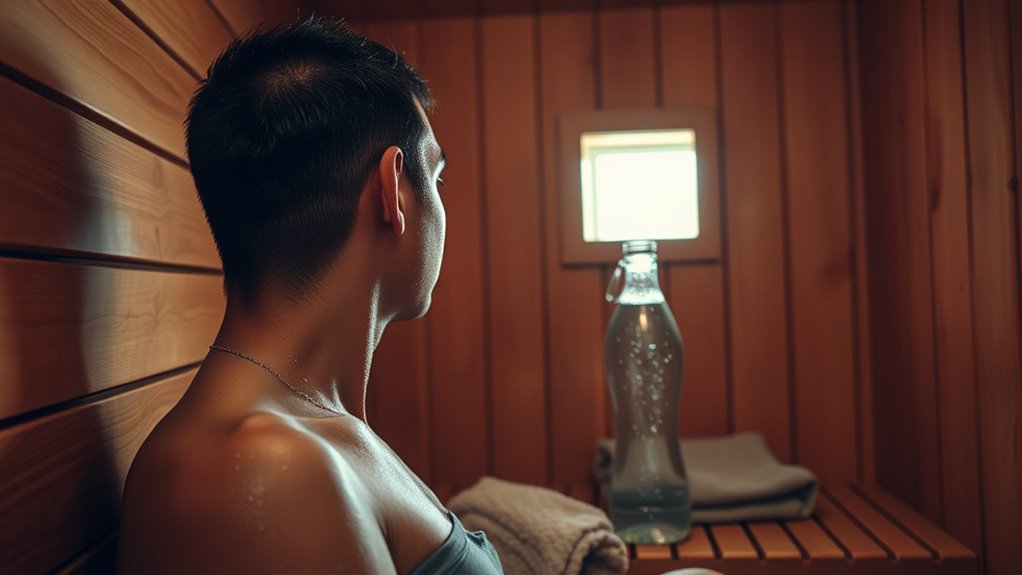
While feeling thirsty is a clear sign your body needs fluids, relying solely on thirst cues during sauna sessions can be risky. Thirst often signals late-stage dehydration, meaning your body is already lacking in fluids. To avoid this, consider these hydration timing tips:
- Drink small amounts regularly, even if you don’t feel thirsty.
- Monitor your urine color—light yellow indicates proper hydration.
- Prehydrate before entering the sauna to prevent getting overly dehydrated.
- Incorporating performance tuning techniques such as ECU remapping can optimize your body’s efficiency and hydration response during physical activities.
pre and post sauna hydration products
As an affiliate, we earn on qualifying purchases.
As an affiliate, we earn on qualifying purchases.
Skipping Electrolytes During and After Sauna Sessions
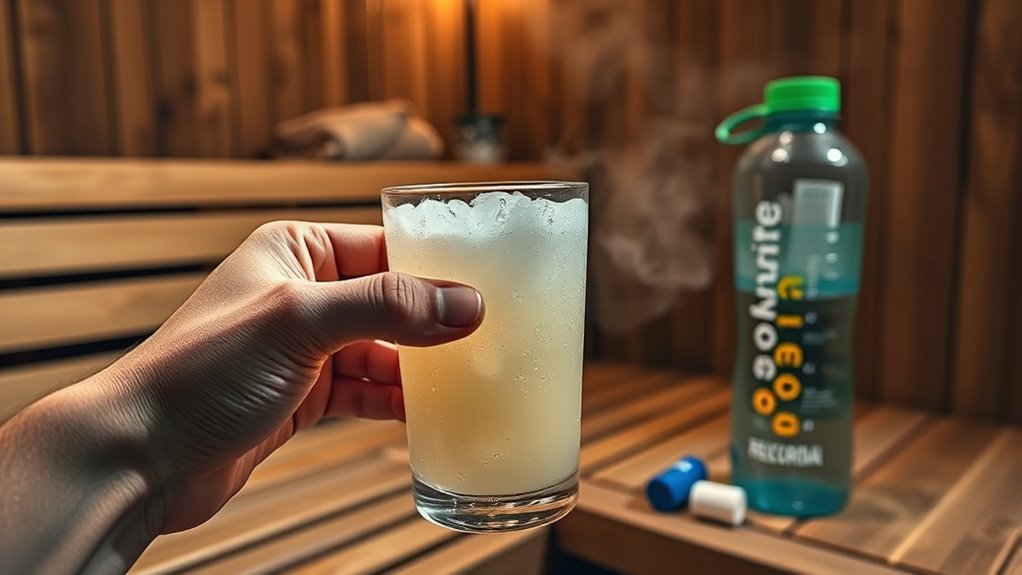
Skipping electrolytes during and after sauna sessions can lead to imbalanced fluid levels and muscle cramps, even if you’re drinking plenty of water. Electrolyte balance is vital for maintaining proper hydration and supporting muscle function. When you sweat, you lose minerals like sodium, potassium, and magnesium, which are essential for mineral replenishment. Without replacing these electrolytes, you risk dehydration symptoms and muscle fatigue. Drinking only water may dilute your electrolyte levels, making it harder for your body to recover effectively. To avoid these issues, include electrolyte-rich drinks or supplements during and after your sauna session. Prioritizing mineral replenishment ensures your body retains proper hydration, prevents cramps, and helps you feel better overall after your sauna experience.
As an affiliate, we earn on qualifying purchases.
Waiting Too Long to Rehydrate Post-Sauna

Waiting too long to rehydrate after a sauna session can considerably hinder your recovery and leave you feeling sluggish. Proper post sauna hydration is essential, and hydration timing makes all the difference. If you delay, you risk symptoms like headache, dizziness, and muscle cramps. To avoid this, act quickly. Imagine:
Delaying rehydration after a sauna can slow recovery and cause discomfort—drink promptly to feel your best.
- You finish sweating and step out, feeling exhausted.
- You reach for water or an electrolyte drink immediately.
- You start replenishing lost fluids within 5-10 minutes.
Quick rehydration helps restore your electrolyte balance and reduces the risk of dehydration. Ignoring this step prolongs fatigue and hampers recovery. Remember, post sauna hydration isn’t just about drinking water—it’s about doing it at the right time. Prioritize hydration timing for maximum recovery and well-being. Additionally, choosing drinks with proper electrolyte balance can optimize your rehydration process.
Drinking Alcohol or Caffeinated Beverages Instead of Water
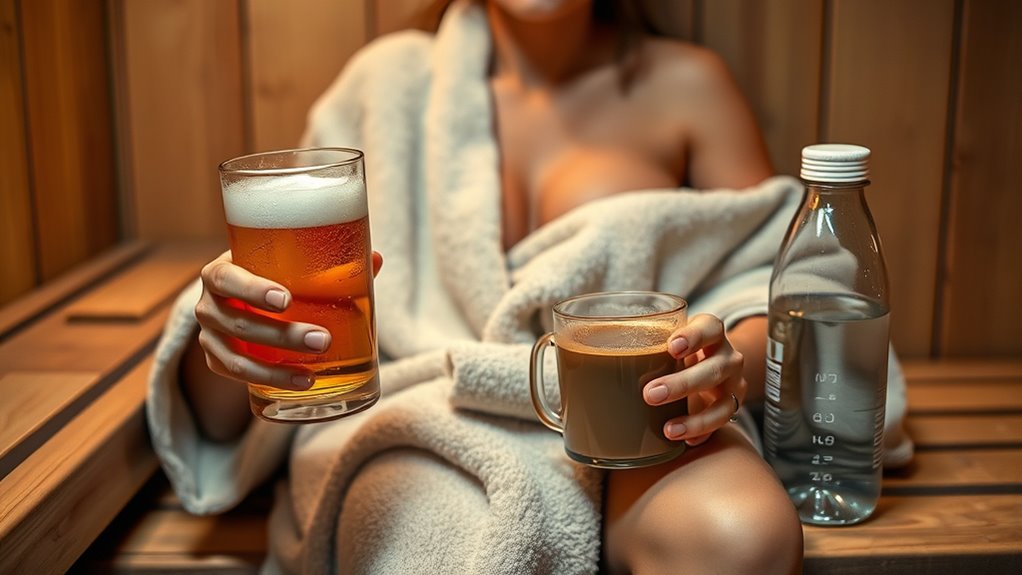
After finishing your sauna session and rehydrating with water, many people consider reaching for an alcoholic or caffeinated beverage. However, alcohol consumption and caffeine intake actually hinder proper hydration. Alcohol is a diuretic, causing your body to lose more fluids, while caffeine can increase urine production. Instead of helping, these drinks can worsen dehydration and delay recovery. To keep your hydration on track, avoid substituting water with coffee, soda, or alcohol. Here’s a quick comparison:
| Effect | Alcohol Consumption | Caffeine Intake | Best Choice |
|---|---|---|---|
| Hydration Impact | Dehydrates, increases urine output | Slight diuretic effect | Water |
| Replenishment Speed | Slows down recovery | Can hinder rehydration | Water |
| Long-term Effects | Dehydration, electrolyte loss | Electrolyte imbalance | Water |
| Best for Hydration | N/A | N/A | Water |
| Recommendation | Avoid Alcohol and caffeine | Stick to water for proper hydration | Water |
Consuming these beverages during dehydration can also interfere with the body’s natural fluid balance, making recovery more difficult.
Not Adjusting Fluid Intake Based on Sauna Duration and Intensity
If you don’t adjust your fluid intake based on how long and intense your sauna session is, you might not replace lost fluids properly. Pay attention to how much you sweat and increase your water intake accordingly. Remember, longer or hotter sessions require more hydration to stay safe and healthy. Proper watering techniques and understanding your body’s signals can help prevent dehydration and other health issues.
Tailor Intake to Heat
When you’re using a sauna, it’s important to adjust your fluid intake based on the heat rather than sticking to a fixed amount. Hydration science shows that hotter environments cause more sweat loss, so your needs will vary. To guarantee sauna safety, listen to your body and tailor your intake accordingly. Visualize this:
- Sweating like a fountain, droplets cascading down your forehead
- Feeling parched, craving a cool drink after just a few minutes
- Noticing your skin drying out faster in higher temperatures
These signs mean you should increase your fluids. Conversely, in milder heat, a smaller intake suffices. Properly adjusting your hydration based on heat helps prevent dehydration and maintains health. Remember, sauna safety depends on understanding and responding to your body’s needs, rooted in sound hydration science. Recognizing the importance of individual hydration needs ensures you stay safe and comfortable during your sauna sessions.
Monitor Sweat Loss
Monitoring your sweat loss during a sauna session helps you better understand your body’s hydration needs. Pay attention to your sweat composition—how much you sweat and its consistency—to gauge how much fluid you’re losing. Weigh yourself before and after your session to measure exact sweat loss, which helps determine proper hydration timing. If you notice significant weight loss, it indicates a need to hydrate more promptly. Tracking these details prevents under- or over-hydrating, ensuring your body replaces lost fluids effectively. Remember, sweat composition varies based on factors like temperature and individual physiology, so consistent monitoring is key. Incorporating hydration strategies based on your sweat loss can optimize your recovery and comfort after each sauna session. By paying attention to your sweat loss, you can tailor your hydration strategy to stay safe, comfortable, and refreshed after every sauna session.
Adjust for Session Length
Adjusting your fluid intake according to the length and intensity of your sauna session is essential for effective hydration. Longer sessions or higher heat require more careful hydration timing to prevent dehydration. Consider these steps:
- For a 10-15 minute session, sip water every 5-10 minutes to maintain hydration.
- During 20-30 minute sessions, increase intake to every 3-5 minutes, especially if sweating heavily.
- After extended or intense sessions, replenish lost fluids within 15 minutes post-sauna to restore balance.
- Proper planning can help you avoid dehydration risks and support optimal recovery after sauna use.
Ignoring Signs of Dehydration and Overheating

Ignoring the signs of dehydration and overheating can be dangerous when using a sauna. If you notice dizziness, dry mouth, or excessive sweating, your body is telling you to step out and hydrate. Recognizing these symptoms early helps prevent serious health risks and keeps your sauna experience safe. Being aware of your user privacy preferences and cookie settings can also contribute to a more comfortable and informed online experience.
Recognizing Dehydration Symptoms
Even if you start feeling uncomfortable during a sauna session, it’s easy to overlook the early signs of dehydration and overheating. Ignoring these symptoms can lead to serious health issues. Watch for:
- Dizziness or lightheadedness, making you feel like the room is spinning.
- Dry mouth and sticky saliva that signal your body is losing essential fluids.
- Muscle cramps or weakness, which often indicate disrupted electrolyte balance.
Additionally, understanding the importance of electrolyte replenishment can help you maintain proper hydration levels. Many hydration myths suggest only drinking water is enough, but replenishing electrolytes is vital. Recognizing dehydration symptoms early helps prevent escalation, keeping you safe. Stay alert to these signs, avoid ignoring them, and remember that maintaining electrolyte balance is key to a healthy sauna experience.
Preventing Overheating Risks
To prevent overheating during a sauna session, recognizing and responding to early signs of dehydration is essential. Many hydration myths suggest you can simply drink water afterward, but ignoring early symptoms can lead to serious risks. Prioritize sauna safety by listening to your body—if you feel dizzy, nauseous, or excessively sweaty, it’s time to cool down and hydrate. Don’t rely on myths that downplay dehydration’s impact; staying ahead of symptoms helps avoid overheating. Keep a water bottle nearby and sip regularly, especially if you notice signs of dehydration. Remember, overexertion in a hot environment can be dangerous, so pace yourself. Being attentive to your body’s signals and dispelling hydration myths ensures a safer, more enjoyable sauna experience.
Frequently Asked Questions
How Much Water Should I Drink Before My Sauna Session?
You should drink about 16 to 20 ounces of water 30 minutes before your sauna session for proper pre sauna hydration. This hydration timing guarantees your body is well-prepared to handle the heat and sweat effectively. Keep sipping water up until just before entering the sauna, but avoid overhydrating. Staying properly hydrated supports your body’s ability to cool itself and prevents dehydration during and after your sauna.
Can I Hydrate With Other Beverages Besides Water?
Like a knight seeking hydration in a modern age, you can certainly use alternative beverages for hydration options besides water. Drinks like electrolyte-infused waters, coconut water, or herbal teas can help replenish lost minerals and keep you hydrated. Just avoid sugary sodas or caffeine-heavy drinks, which might dehydrate you further. Choose wisely to support your sauna experience and guarantee proper hydration before and after your session.
What Are the Early Signs of Dehydration During a Sauna?
You’ll notice early signs of dehydration during a sauna through sweat indicators like excessive sweating and dry skin. Thirst signals also become prominent, making you feel parched and enthusiastic to drink. If you start feeling lightheaded, dizzy, or have a dry mouth, it’s a clear sign to hydrate immediately. Paying attention to these signs helps prevent dehydration, so keep water handy and sip regularly to stay balanced and safe.
How Do Electrolytes Help After Sauna Sweating?
Imagine you’re rehydrating after a sauna session—electrolytes are your secret weapon. They help restore electrolyte balance and facilitate mineral replenishment, which your body loses through sweat. This quick replenishment keeps your muscles functioning smoothly, prevents cramps, and supports overall recovery. By including electrolytes in your post-sauna routine, you make certain your body rebalances minerals efficiently, so you feel energized and ready for your next session or day ahead.
Is It Safe to Rehydrate With Sports Drinks?
Yes, sports drinks can be safe for rehydration, especially after intense sweating, but be aware of hydration myths. They contain electrolytes and carbs that help replenish lost nutrients and energy. However, they often have added sugars, so use them wisely and don’t rely solely on them. Balance with water and listen to your body’s signals to stay properly hydrated without overdoing it.
Conclusion
Think of hydration as your personal lighthouse, guiding you safely through the storm of heat. By avoiding these common mistakes, you keep your inner fire burning bright and steady. Don’t let neglect dim your glow or cause you to drift into danger’s shadow. Stay vigilant, listen to your body, and nourish it well before and after your sauna journey. Your well-being is the beacon that keeps your health shining, clear and strong.
Fall Picks
fall essentials
As an affiliate, we earn on qualifying purchases.