
To troubleshoot sauna safety effectively, keep the temperature between 150°F and 195°F and limit your sessions to 15-20 minutes. Watch for signs of overheating like dizziness or skin redness, and hydrate before, during, and after use. Regularly inspect your equipment for issues, fix any malfunctions promptly, and adjust settings for sensitive individuals. Staying vigilant and proactive guarantees safe enjoyment—keep exploring to learn how proper maintenance and precautions prevent risk.

Get wellness gear delivered free with Prime
- Fast, free delivery on millions of items
- Prime Video, Amazon Music and more included
- Member-only deals all year
Key Takeaways
- Regularly inspect sauna equipment for wiring, heating elements, and sensors to prevent malfunctions and ensure safety.
- Keep sauna temperature between 150°F and 195°F, and limit sessions to 15-20 minutes to avoid overheating.
- Monitor signs of overheating or dehydration, such as dizziness or skin redness, and cool down immediately if symptoms appear.
- Hydrate thoroughly before, during, and after sauna use, including electrolyte-rich drinks to maintain fluid balance.
- For vulnerable populations, consult healthcare professionals and supervise sessions closely to tailor safety measures.
Understanding Safe Sauna Temperatures and Duration
To enjoy the benefits of a sauna safely, you need to understand the ideal temperature range and how long you should stay inside. Maintaining proper sauna insulation guarantees consistent heat, so the environment stays within a safe range. Typically, temperatures should stay between 150°F and 195°F (65°C to 90°C). Staying too long or in excessively hot conditions increases health risks. Ventilation efficiency also plays a critical role, as good airflow helps regulate temperature and prevents overheating. Proper ventilation removes excess humidity and ensures fresh air, making the experience safer and more comfortable. Limit your sessions to 15-20 minutes, especially if you’re new or sensitive to heat. Being aware of health risks associated with sauna use can help you make informed decisions about your sessions. By controlling temperature, duration, and ensuring effective insulation and ventilation, you can enjoy your sauna safely.
Recognizing Signs of Overheating and Dehydration
Even when you’re mindful of sauna temperature and duration, it’s important to stay alert for signs your body is struggling to cope. Look out for signs of fatigue, such as feeling unusually weak or dizzy, which indicate overheating. Skin irritation, like redness or burning sensations, can also signal your body is under stress. If you notice these symptoms, it’s essential to step out and cool down immediately. Ignoring these signs can lead to dehydration and more serious health issues. Pay close attention to how your body responds during your sauna session. Recognizing these early warning signs helps prevent overheating and dehydration, ensuring you enjoy the sauna safely and effectively. Always listen to your body and don’t push through discomfort. Body signals play a crucial role in maintaining your safety during heat exposure.
Proper Hydration Before, During, and After Use
Staying properly hydrated is essential before, during, and after your sauna session to prevent dehydration and support your body’s cooling processes. Effective hydration strategies help maintain electrolyte balance, which is vital when sweating in hot environments. To optimize your hydration, consider these tips:
- Drink water in small, frequent sips throughout your session.
- Include electrolyte-rich drinks to replenish lost minerals.
- Hydrate well before entering the sauna to start with a good fluid base.
- Continue rehydrating afterward to restore electrolyte balance and prevent dehydration.
- Monitoring your hydration levels can help ensure you’re staying properly hydrated during your sauna experience.
Identifying and Handling Common Sauna Equipment Issues

Regularly inspecting your sauna equipment helps prevent malfunctions and guarantees safe, effective use. Focus on routine sauna maintenance by checking for loose wiring, damaged heating elements, or worn-out timers. If you notice uneven heating or strange noises, it’s time for equipment troubleshooting. Address issues promptly by consulting your sauna’s manual or contacting a professional if needed. Confirm the sensors and thermostats are functioning correctly, as faulty readings can cause unsafe temperature fluctuations. Keep vents clear and clean to avoid overheating. Regular inspections help catch problems early, saving you money and reducing safety risks. Being aware of equipment malfunctions and how to address them can significantly enhance safety. By staying vigilant and maintaining your sauna properly, you ensure it operates smoothly and safely every session. Proper sauna maintenance is key to preventing equipment issues before they escalate.
Precautions for Sensitive Populations and Medical Conditions
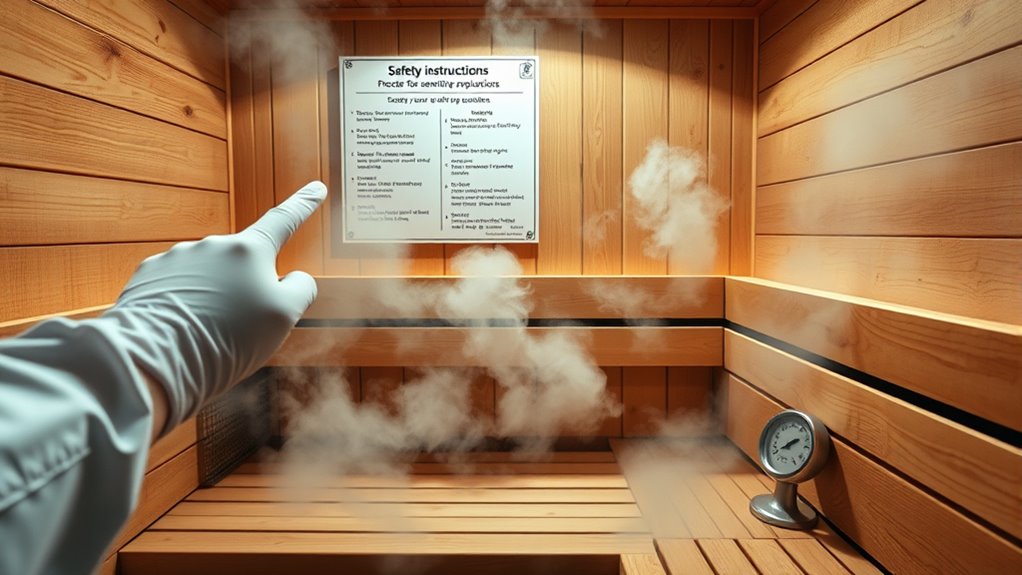
If you or someone in your group has a medical condition or is sensitive to heat, it’s crucial to monitor them closely during a sauna session. Always consult a healthcare professional before use to guarantee safety. Taking these precautions helps prevent health risks and ensures a safe experience for everyone. Additionally, being aware of indoor air quality can help identify potential environmental factors that may affect your comfort and health during sauna use.
Monitoring Vulnerable Individuals
Monitoring vulnerable individuals during sauna sessions is essential to guarantee their safety, especially those with sensitive health conditions or medical issues. You must pay close attention to those who require extra care, such as the elderly or individuals with disabilities. Confirm they are comfortable and able to communicate any distress promptly. Use these precautions:
- Maintain constant visual or auditory supervision
- Adjust sauna temperature and duration for elderly safety
- Ensure disability accessibility for easy entry and exit
- Watch for signs of overheating or fatigue
- Be aware of data privacy challenges that may affect how health information is managed and protected during monitoring.
Consulting Healthcare Professionals
Consulting healthcare professionals is a crucial step before allowing vulnerable individuals or those with medical conditions to use sauna therapy. Professional guidance ensures you understand potential risks and safety precautions tailored to specific health concerns. If you have cardiovascular issues, respiratory problems, or other chronic conditions, a healthcare provider can advise whether sauna use is appropriate. They can also recommend safe durations and temperatures, reducing the risk of adverse effects. Never skip this step, especially for those with sensitive populations or medical conditions, because sauna therapy might worsen certain health issues if misused. Additionally, understanding vetted sauna products and their safety features can further help in making informed choices. Consulting a healthcare professional helps you make informed decisions, ensuring safety and maximizing health benefits. Always prioritize professional guidance to troubleshoot safely and enjoy the benefits of sauna therapy responsibly.
Maintaining Hygiene and Preventing Infection
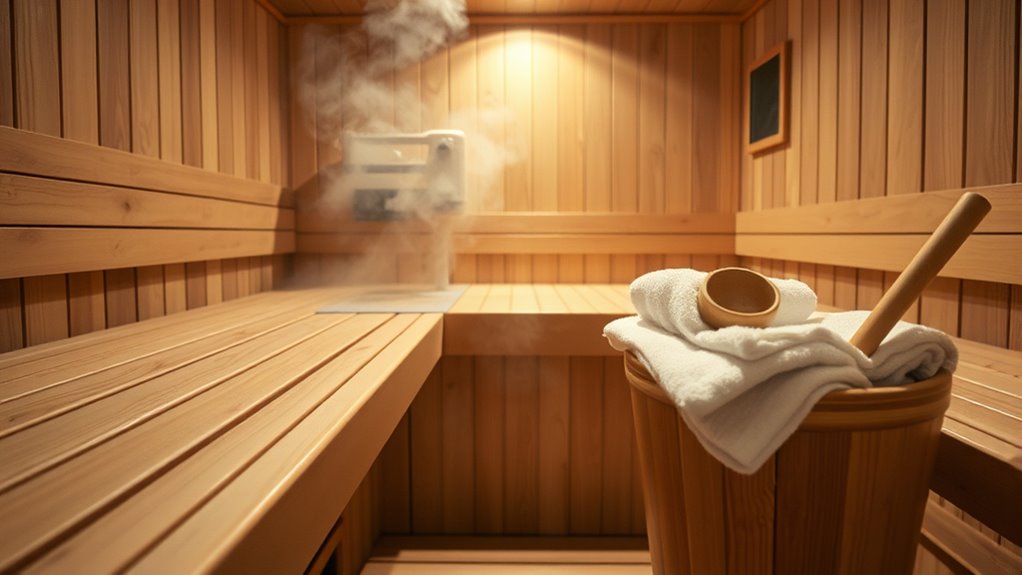
Maintaining hygiene and preventing infection are essential for a safe sauna experience. You should follow proper cleaning protocols to keep surfaces sanitary and minimize germs. Personal hygiene is equally important; shower before entering to remove sweat, oils, and dirt that can harbor bacteria. Always wipe down benches and controls after use to prevent cross-contamination. Use clean towels to sit on, and avoid sharing items like towels or water bottles. Regularly disinfect high-touch areas, such as door handles and switches. Keep your personal space tidy, and wash your hands frequently. By adhering to these practices, you’ll reduce the risk of infections and enjoy a healthier sauna session. Staying vigilant with hygiene ensures safety for everyone using the facility.
Frequently Asked Questions
How Often Should I Schedule Sauna Sessions for Optimal Health Benefits?
You should schedule sauna sessions about 3 to 4 times a week for ideal health benefits. Focus on frequency planning by spacing your sessions to avoid overdoing it, and keep session duration between 15 to 20 minutes to prevent dehydration or overheating. Listening to your body is key; if you feel comfortable, gradually increase frequency or duration, but always prioritize safety and hydration.
Are There Specific Sauna Safety Guidelines for Children and Pregnant Women?
Think of sauna safety guidelines as a delicate dance where every step matters. For children, prioritize child safety by limiting exposure and keeping sessions short, ensuring their young bodies don’t overheat. Pregnant women should follow pregnancy precautions, avoiding high temperatures and long stays to protect both mother and baby. Always consult a healthcare professional before using a sauna, and listen closely to your body’s signals to prevent harm.
What Are the Environmental Factors That Affect Sauna Safety and Equipment Longevity?
You should monitor environmental factors like humidity control and ventilation maintenance to guarantee sauna safety and prolong equipment life. Proper humidity levels prevent mold growth and discomfort, while good ventilation reduces excess heat and moisture buildup. Regularly check and maintain ventilation systems to keep air circulating effectively. By managing these factors, you create a safer, more comfortable sauna environment and help extend the lifespan of your sauna equipment.
How Can I Effectively Monitor My Health During and After Sauna Use?
Ever wonder how to stay safe during your sauna sessions? You should monitor your heart rate and hydration levels actively. Use a heart rate monitor to keep your pulse in a safe zone and track your hydration by drinking water before, during, and after. Are you paying attention to how your body responds? Staying mindful helps prevent overheating and dehydration, ensuring a safe, enjoyable experience every time.
What Emergency Procedures Should I Follow if Someone Experiences a Medical Crisis in the Sauna?
If someone experiences a medical crisis in the sauna, you should immediately call emergency response services. Stay calm and assess their condition, checking for responsiveness and breathing. If they’re unresponsive and not breathing, begin CPR if you’re trained. Keep the person cool and comfortable, and avoid moving them unless necessary. Stay with them until professional help arrives, providing reassurance and monitoring their condition throughout the emergency.
Conclusion
By balancing boundaries, braving basics, and boosting awareness, you guarantee sauna safety with confidence. Stay vigilant, hydrate diligently, and heed health hints to prevent problems before they pop up. Proper precautions and persistent practices protect your health and happiness, helping you harness the healing heat without harm. Remember, responsible routines and reliable remedies turn sauna sessions into safe, soothing, and satisfying escapes. Stay smart, stay safe, and savor your sauna experience every time.
Fall Picks
fall essentials
As an affiliate, we earn on qualifying purchases.