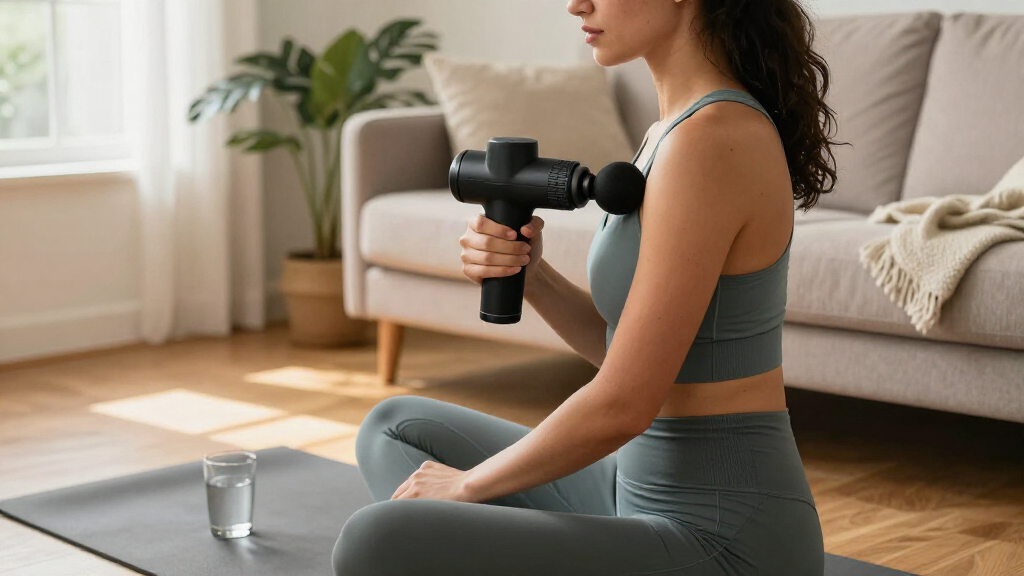

Choosing an at-home massage device is less about finding the single strongest machine and more about matching its action to the way you want to use it. Massage guns and shiatsu massagers are often compared because both promise muscle relief at home, but they work differently: a massage gun delivers rapid percussion at a spot you guide, while a shiatsu device kneads or rolls across a fixed area such as the back, neck, or feet.

Get wellness gear delivered free with Prime
- Fast, free delivery on millions of items
- Prime Video, Amazon Music and more included
- Member-only deals all year

TOLOCO Deep Tissue Massage Gun with 10 Massage Heads
- ✔ Type: Cordless percussion massage gun
- ✔ Stroke length: 12 mm
- ✔ Maximum speed: 3,200 rpm

REVO 4-in-1 Smart Cupping Massager
- ✔ Functions: Suction cupping, vibration massage, LED light, and adjustable heat
- ✔ Intensity levels: 12
- ✔ Power design: Flameless and cordless

JJV Lymphatic Drainage and Anti-Cellulite Massage Tool
- ✔ Massage features: Gentle warming and vibration
- ✔ Power: Cordless and rechargeable
- ✔ Design: Handheld with simple controls
That difference shapes the whole purchase. A massage gun is usually the more versatile choice for people who want to target calves, thighs, shoulders, or other specific muscles and are comfortable holding the device. A shiatsu massager can be easier for people who want to sit back and let a cushion, wrap, or foot unit work on its intended area. Pressure tolerance, body area, noise, setup, and how often you will use the device matter more than a long list of attachments or modes.
This comparison focuses on seven shared decisions: target coverage, control and convenience, pressure and comfort, portability, noise, versatility, and value. Neither device replaces medical care or hands-on treatment, and more force is not automatically better. Choose based on the routine you are likely to keep using.
At a Glance
| Criteria | Massage guns | Shiatsu massagers | Winner |
|---|---|---|---|
| Target coverage | Can target many muscle groups, but requires you to guide the head precisely. | Best suited to its built-in shape and area, such as a neck, back, or feet. | A |
| Control and convenience | Handheld operation; good control, but holding and reaching can be tiring. | Often hands-free once positioned; less effort during use, but less freedom to reposition. | B |
| Pressure and comfort | Percussive pressure is adjustable on many models; a concentrated sensation may feel intense. | Kneading or rolling can feel broader and more relaxing; pressure and fit vary. | Depends |
| Portability | Usually compact and portable, though weight, case size, and battery vary. | Varies widely: small neck wraps travel more easily than full cushions or foot units. | A |
| Noise | Motor noise and vibration are common; levels vary by model and setting. | Motor and kneading sounds vary; some units are quiet enough for relaxed use, others are not. | Depends |
| Versatility | Multiple heads and speeds can suit varied areas, with technique and reach limits. | Usually specialized for one area or posture, with fewer ways to treat other muscles. | A |
| Value | Often strong value if one device will be used on several muscle groups. | Good value when it fits a frequently used area; poor value if its shape does not suit you. | Depends |
TOLOCO Deep Tissue Massage Gun with 10 Massage Heads
When we want a focused percussion session at home, TOLOCO is the clearest fit in this group. Its 12 mm stroke and speeds up to 3,200 rpm give it a more direct, percussive feel than REVO’s suction-and-vibration approach or JJV’s gentler warming glide. Ten detachable heads let us change the contact point for different muscle areas, which makes this the most purpose-built option for directing massage rather than simply moving a device over the body.The LED touchscreen shows speed and remaining battery, useful when we want to adjust intensity without guessing how much charge is left. The cordless design also makes it easy to move between areas, and the stated battery life reaches up to six hours depending on speed. That qualification matters: higher settings can change how long a session is available, so the maximum figure is not a fixed runtime.Compared with REVO, TOLOCO offers a more familiar massage-gun format but fewer types of treatment: it does not combine percussion with heat or cupping. Compared with JJV, it gives us more attachment choices and speed information, but asks for more intentional placement and pressure. The supplied details do not explain the best way to use each head, and the USB charging plug is not included. This is our top pick for buyers who know they want percussion and value control over a gentler, hands-off-feeling glide.
Pros:
- 12 mm stroke and adjustable speed settings support targeted percussion.
- Ten detachable heads provide options for changing the contact point.
- LED touchscreen displays speed and battery information.
- Cordless design with stated battery life of up to six hours, depending on speed.
Cons:
- USB charging plug is not included.
- Battery life changes with the selected speed.
- Percussion requires deliberate positioning and may not suit people seeking a gentle glide.
Best for: People who want cordless, targeted percussion massage and expect to switch between muscle areas or attachment styles.
Not ideal for: Anyone who prefers gentle warming vibration, dislikes percussion, or wants a complete charging setup in the box.
Bottom line: We rank TOLOCO first for buyers who want adjustable, targeted percussion, provided they are comfortable supplying a charging plug and using a massage-gun style device.
“We rank TOLOCO first for buyers who want adjustable, targeted percussion, provided they are comfortable supplying a charging plug and using a massage-gun style device.”
REVO 4-in-1 Smart Cupping Massager
REVO stands apart because it changes the type of at-home massage we can choose within a single device. Its four functions—adjustable suction, vibration, LED light, and heat—can be used separately or together, so we can tailor a session more than with TOLOCO’s percussion-only design or JJV’s warming vibration. Twelve intensity levels add another layer of adjustment, which is useful if we want to start low and change the feel gradually.That flexibility also comes with a more specific technique. Cupping uses suction, so this is not simply a massage tool we can assume will feel like a gun or a smooth gliding massager. Buyers should consider whether they actually want that pulling sensation; the extra functions do not remove the fact that suction is central to the product’s identity. REVO is the most configurable pick here, but its breadth may matter less to someone who only wants straightforward muscle percussion.The cordless, portable design suits home use and makes placement less constrained by a cable. Two devices can be paired for dual placement, but that setup requires buying a second device. The available details do not provide dimensions or battery information, which makes it harder to judge storage and charging needs against TOLOCO’s specified runtime. We place REVO second: it offers the widest mix of functions, while TOLOCO is more clearly specified for targeted percussion and JJV is a simpler option for gentle glide.
Pros:
- Combines suction cupping, vibration, LED light, and adjustable heat.
- Functions can be used independently or together.
- Twelve intensity levels allow changes to the session’s feel.
- Cordless and portable, with the option to pair two devices for dual placement.
Cons:
- Dual placement requires a second device.
- No dimensions or battery details are provided.
- Suction cupping is a distinct massage style and may not match preferences for percussion or gentle glide.
Best for: Buyers interested in adjustable suction cupping who want heat and vibration available in the same cordless device.
Not ideal for: People who want conventional percussion, need published battery and dimension details before choosing, or expect dual placement from one unit.
Bottom line: REVO is our pick for buyers who want to explore adjustable cupping with several built-in functions and can accept missing battery details.
“REVO is our pick for buyers who want to explore adjustable cupping with several built-in functions and can accept missing battery details.”
JJV Lymphatic Drainage and Anti-Cellulite Massage Tool
JJV is the least forceful-sounding option in this lineup: it combines gentle warming with vibration in a handheld device intended to glide across several body areas. Its approach is closer to a simple body massage than TOLOCO’s targeted percussion or REVO’s suction cupping. For someone who wants a warming sensation and an easy-to-move tool, that distinction is the main reason to consider it.The tool is described for use on the waist, abdomen, arms, thighs, calves, and back, and it is designed to glide with compatible lotion or massage oil. That can help the device move smoothly across the body, but it adds a step and means we should factor the preferred product into our routine. Unlike TOLOCO, JJV does not list multiple heads or a stroke length; unlike REVO, it does not describe adjustable intensity levels or a range of separate functions. The supplied details therefore make it harder to judge how precisely we can tune the massage.JJV is cordless and rechargeable, so we can use it without staying near an outlet, though charging is part of ownership. The product’s “lymphatic drainage” and “anti-cellulite” naming should not be taken as evidence of health or body-shaping results; the described features support a warming vibration massage. We rank it third because it has the gentlest, simplest role but the least stated control information. It makes sense for a buyer who values glide and warmth more than strong percussion or multiple modes.
Pros:
- Combines gentle warming and vibration.
- Cordless, rechargeable handheld design.
- Described for use across the waist, abdomen, arms, thighs, calves, and back.
- Designed to glide with compatible body lotion or massage oil.
Cons:
- Requires recharging.
- Lotion or massage oil is suggested for improved glide.
- Available details do not specify intensity levels, battery life, or dimensions.
Best for: People looking for a cordless handheld body massager with gentle warmth and vibration, especially for use with lotion or massage oil.
Not ideal for: Buyers seeking deep percussion, suction cupping, clearly specified intensity controls, or a massage tool that does not call for a gliding product.
Bottom line: JJV suits buyers who want gentle warming vibration and a glide-on routine, but it offers less documented control than the other two picks.
“JJV suits buyers who want gentle warming vibration and a glide-on routine, but it offers less documented control than the other two picks.”
As an Amazon Associate we earn from qualifying purchases.
Key Differences
The central tradeoff is control versus ease. A massage gun lets you move from one muscle group to another and choose where the head lands. That is useful after exercise or when discomfort is localized, but it demands attention, reach, and a steady hand. A shiatsu unit is more passive: position it against the area it was designed for, settle into a seat or lie down, and let it run. This can make regular use easier, though the fixed shape may miss the spot you want.
Pressure feels different as well. Percussion is concentrated and can feel forceful even on lower settings, so careful placement and conservative use matter. Shiatsu devices apply a kneading or rolling sensation over a broader contact area; some add heat, but warmth is a comfort feature rather than proof of greater relief. The right sensation is personal, and pain or numbness is a reason to stop rather than turn up the intensity.
For overall flexibility, massage guns tend to have the advantage: one tool can reach several muscles, and attachments may change the contact surface. That flexibility has limited value if you will not use the device consistently or cannot comfortably reach the area. A shiatsu massager can be the better purchase when its specific format fits a daily routine, such as a foot unit by a chair or a back cushion used while seated. Paying more makes sense only for features you will use and a shape that fits your body.
Detailed Comparison
Target coverage (Massage guns wins — moderate)
Massage guns win by a moderate margin for coverage. You can guide one from calves and thighs to arms and shoulders, and attachments may adapt how the head contacts the muscle. That freedom depends on reach and technique; treating the middle of your back alone can be awkward. A shiatsu device is designed around a particular area or posture. A back cushion can cover a seated back, while a foot massager is purpose-built for feet, but neither automatically works well elsewhere. Choose A for moving between muscle groups; choose B when one area is the clear priority.
Control and convenience (Shiatsu massagers wins — moderate)
Shiatsu massagers have a moderate convenience advantage. Many can be positioned and used while seated or resting, leaving your hands free. The compromise is less precise control over where the mechanism works, and you may need to shift your posture to change coverage. A massage gun gives direct control over placement and movement, but you must keep holding it and guide it throughout the session. People with limited reach, hand comfort, or patience for active use may prefer B; people who want to steer each pass may prefer A.
Pressure and comfort (moderate difference)
This depends on what sensation you tolerate; neither is a universal comfort winner. Massage guns produce focused percussion that some users like for a specific muscle and others find too intense. A shiatsu mechanism generally feels more like kneading or rolling over a set contact area, though pressure depends on the model, body position, and fit. Extra power is not a reliable measure of usefulness. Check return terms and start gently, particularly if you are unsure how your body responds. Stop if you feel pain, tingling, or numbness.
Portability (Massage guns wins — minor)
Massage guns usually win by a minor to moderate margin. Many are designed as handheld devices and can move between rooms or travel, though some are heavy, bulky, or dependent on charging. Shiatsu products range from compact wraps to large cushions and foot machines that are more naturally kept in one place. Compare actual dimensions, weight, power source, and storage needs rather than assuming every gun is travel-ready or every shiatsu unit is bulky. For a device that stays by your chair, portability may not matter.
Noise (minor difference)
There is no dependable winner across product categories. Massage guns vibrate and produce motor noise, which may be noticeable in a quiet room or at higher settings. Shiatsu units also contain motors and moving parts; noise varies with the mechanism and how firmly the device is pressed against a surface. If noise could prevent you from using the device while watching television or relaxing, check model-specific demonstrations or reviews. A quieter model is a more practical choice than assuming one category is silent.
Versatility (Massage guns wins — moderate)
Massage guns win by a moderate margin. One handheld device can serve different muscle groups, and interchangeable heads or speed settings offer some adjustment. That does not make it ideal for every body area: awkward angles can limit what you can treat safely and comfortably. Shiatsu massagers tend to excel at the area their shape was built for, with less value beyond it. If your needs change across the body, A is more adaptable; if one repeatable routine is enough, B’s specialization may be a strength.
Value (moderate difference)
The better value depends on expected use, so this is a genuine tie. A massage gun can justify its cost when you will use it on several areas and appreciate guided control. Its attachments and settings do not add much value if the device stays in a drawer. A shiatsu massager can be worth paying more for when its fixed format makes a specific routine comfortable and easy to repeat. Before spending extra, check whether the added heat, modes, or accessories solve a real need. Buying a less expensive device that fits your routine beats paying for unused features.
Massage guns: Pros and Cons
Pros:
- Targets a wide range of muscle groups with one device.
- Allows precise movement and placement under the user’s control.
- Often compact enough to store or carry, depending on model.
- Attachments and speed settings can add useful flexibility.
Cons:
- Requires active holding and guidance throughout use.
- Can be difficult to reach some areas without help.
- Percussion may feel too intense for users who prefer broad, gentle pressure.
- Motor noise and vibration may be distracting.
Shiatsu massagers: Pros and Cons
Pros:
- Often provides a hands-free or low-effort session once positioned.
- Kneading or rolling can feel broad and relaxing.
- A specialized shape can suit a consistent routine for one area.
- Some models include heat as a comfort feature.
Cons:
- Coverage is limited by the device’s shape and intended area.
- Can be awkward to store or move, especially larger units.
- Less direct control over the exact point receiving pressure.
- Features and fit vary widely, so a poor match may go unused.
Who Should Choose What
Choose Massage guns if:
- You want one device for several muscle groups.
- You prefer to control exactly where and how the device moves.
- You want a relatively portable option and are comfortable holding it.
- Your use is tied to exercise or localized muscle tension, and percussion feels comfortable to you.
Choose Shiatsu massagers if:
- You want a more passive session while sitting or resting.
- You have one main target area, such as your feet, neck, or seated back.
- You prefer kneading or rolling over focused percussion.
- A shaped device would make it easier for you to maintain a regular routine.
Skip both if: Skip both if you need evaluation for persistent, severe, unexplained, or worsening pain, or if a clinician has advised against massage. These devices are comfort tools, not substitutes for diagnosis or treatment.
Value for Money
Paying more is worth it only when the upgrade improves fit, comfort, or routine. For a massage gun, that might mean a weight you can hold comfortably, a useful range of settings, or attachments that suit the muscles you actually target. A large accessory set is poor value if the extra heads will sit unused. For shiatsu, spend more only if the device fits the area and posture where you plan to use it; heat or extra modes are secondary to comfortable positioning.
As a broad value choice, a massage gun is more compelling for someone who wants a single tool across several muscle groups. A shiatsu massager is better value for someone who will use a specific format frequently, such as a foot unit after work. If neither routine sounds realistic, save the money. A device’s value comes from repeated comfortable use, not its maximum intensity or feature count.
Final Verdict
For most people seeking one adaptable at-home device, choose a massage gun if you can hold it comfortably and prefer to direct treatment across different muscle groups. Its range and control make it the stronger all-purpose pick, though it asks more of the user and its percussion is not for everyone.
Choose a shiatsu massager if you have one clear target area, prefer a hands-free routine, or find kneading more comfortable than percussion. The biggest deciding factor is whether you want to move the device yourself or settle into a device shaped for a particular area. Pay more only for a fit and features you expect to use. If your pain needs medical assessment, choose neither as a substitute for care.
Frequently Asked Questions
Is a massage gun better than a shiatsu massager?
A massage gun is generally better for flexible, user-directed work across multiple muscle groups. A shiatsu massager may be better for hands-free kneading of its intended area. The better choice depends on the sensation you prefer and the routine you will use.
Which is easier to use on your own?
A shiatsu device is often easier for a defined area because you can position it and relax. A massage gun is straightforward to guide over reachable muscles, but some areas are awkward to reach alone.
Is a massage gun worth paying more for?
It can be if you will use it across several muscle groups and the weight, controls, and attachments suit you. Extra power or a larger accessory set does not automatically make it a better buy.
Can either device treat an injury?
Neither should be treated as a way to diagnose or treat an injury. Stop if use causes pain, tingling, or numbness, and seek qualified medical advice for persistent, severe, or worsening symptoms.
Black Friday Picks

Garmin Forerunner 265 GPS Running Smartwatch, 46 mm, Black/Powder Gray
As an affiliate, we earn on qualifying purchases.