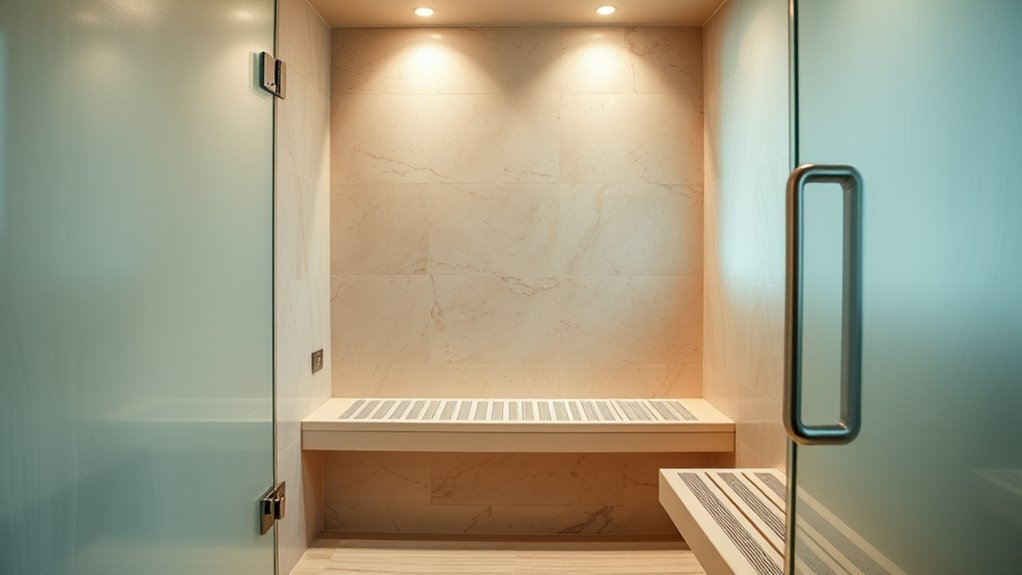

When planning a steam room as part of your sauna suite, focus on proper ventilation to control humidity and prevent damage. Install vents with intake near the entrance and exhaust near the ceiling for ideal airflow. Use waterproof membranes on walls, floors, and ceilings to stop water infiltration. Choose durable, water-resistant finishes and ensure all joints are sealed. Combining good waterproofing with effective ventilation creates a long-lasting, safe steam room—keep exploring for detailed setup tips.

Get wellness gear delivered free with Prime
- Fast, free delivery on millions of items
- Prime Video, Amazon Music and more included
- Member-only deals all year
Key Takeaways
- Ensure proper ventilation design with intake near the entrance and exhaust near the ceiling to manage humidity effectively.
- Apply high-quality waterproof membranes on all surfaces, including walls, ceilings, and floors, to prevent water infiltration.
- Properly slope floors and seal joints with waterproof sealants to facilitate drainage and prevent leaks.
- Select moisture-resistant finishes like tiles or waterproof panels for walls and floors for durability.
- Coordinate ventilation placement and waterproofing techniques to maintain dry conditions and prolong the steam room’s lifespan.
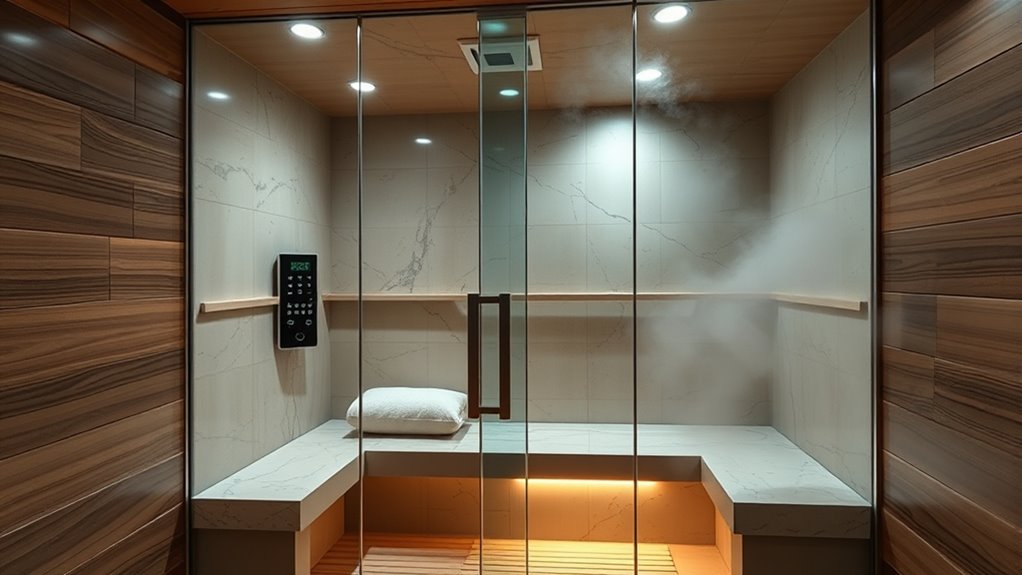
Creating a steam room requires careful planning to guarantee it functions safely and efficiently. One of the most critical aspects is the ventilation design, which ensures proper airflow and prevents excess humidity from damaging the space. When planning your steam room, you need to consider how to circulate fresh air while exhausting moist air effectively. A well-designed ventilation system minimizes the risk of mold, mildew, and structural deterioration caused by prolonged exposure to high humidity. Proper placement of vents and exhaust fans is essential; typically, an intake vent near the entrance and an exhaust vent near the ceiling help maintain ideal air exchange. This setup also helps regulate temperature and humidity levels, making your steam room more comfortable and safer to use. Additionally, understanding emotional support can be beneficial in managing the stress that sometimes accompanies home renovation projects.
Alongside ventilation, waterproofing techniques are indispensable for creating a durable, long-lasting steam room. Moisture is inevitable, so investing in quality waterproofing materials and methods is essential. You should start by applying a waterproof membrane to all surfaces that will be exposed to steam, including walls, ceilings, and floors. These membranes act as a barrier, preventing water infiltration that could lead to rotting, mold growth, or structural damage over time. In addition, sealing joints and corners with waterproof sealants ensures there are no weak spots where water might seep through. Choosing the right waterproofing products designed specifically for high-humidity environments guarantees your steam room remains dry and protected, even after years of use.
While planning, keep in mind that waterproofing isn’t just about applying membranes; it involves a thorough approach that includes proper slope construction for floors, ensuring water drains away efficiently, and selecting water-resistant finishes. For walls, tile or waterproof panels are popular choices because they’re easy to clean and resistant to moisture. Ventilation and waterproofing are interconnected; without adequate ventilation, moisture can accumulate and compromise waterproofing efforts, leading to costly repairs. Conversely, effective waterproofing enhances the performance of your ventilation system by preventing water damage and maintaining the integrity of the space.
As an affiliate, we earn on qualifying purchases.
Frequently Asked Questions
What Is the Ideal Size for a Home Steam Room?
You should aim for a steam room size of at least 4×4 feet, providing enough space for comfortable use. Make certain you include proper steam room ventilation to prevent excess humidity and guarantee air quality. Regular steam generator maintenance is essential to keep it running efficiently. Keep the room around 7-8 feet tall for ideal steam distribution and safety. This size balances comfort, safety, and functionality for your home steam experience.
How Much Does Installing a Steam Room Typically Cost?
Installing a steam room typically costs between $5,000 and $15,000, depending on size, materials, and features. Your cost estimation should include equipment, plumbing, and finishing touches. Proper budget planning helps you allocate funds for high-quality steam generators and waterproofing. Keep in mind, custom designs or premium materials can increase the price. You’ll want to balance your desired features with your budget to ensure a successful installation.
Can I Integrate a Steam Room With Existing Sauna Features?
Yes, you can integrate a steam room with your existing sauna features. Just ensure proper steam room ventilation to prevent moisture damage and maintain air quality. You’ll also need to think about steam generator maintenance, making sure it’s compatible with your current setup. Regular upkeep keeps everything running smoothly, preventing issues and extending your sauna’s lifespan. Proper integration enhances your relaxation space without compromising safety or efficiency.
What Are the Best Materials for Steam Room Walls?
You should choose steam-resistant tiles like glazed ceramic or porcelain for your steam room walls because they withstand moisture and mold. Additionally, opt for moisture-proof drywall, such as green board or cement board, to prevent water damage and ensure durability. These materials work together to create a safe, long-lasting environment that handles steam effectively, keeping your steam room beautiful and functional for years to come.
How Long Does It Take to Install a Steam Room?
Installing a steam room typically takes about one to two weeks, depending on your project’s complexity. During this time, you’ll set up proper steam room ventilation to make sure safety and comfort are maintained. You’ll also need to schedule regular steam generator maintenance to keep everything running smoothly. Rushing the process can cause issues, so plan for enough time to install the steam generator, waterproof walls, and make certain all systems are correctly tested before use.
bathroom ventilation exhaust fan
As an affiliate, we earn on qualifying purchases.
As an affiliate, we earn on qualifying purchases.
Conclusion
Think of your steam room as a sanctuary you’ve built with care—like planting a seed that blooms into relaxation. When you plan thoughtfully and install with precision, you create a space where stress melts away, much like steam rising gently in the air. Remember, a well-designed steam room isn’t just a luxury; it’s your personal retreat, transforming everyday stress into serenity. With patience and attention, you’ll enjoy the soothing warmth for years to come.
moisture-resistant wall panels for steam room
As an affiliate, we earn on qualifying purchases.
As an affiliate, we earn on qualifying purchases.
As an affiliate, we earn on qualifying purchases.
Cold & flu season Picks
humidifiers
As an affiliate, we earn on qualifying purchases.