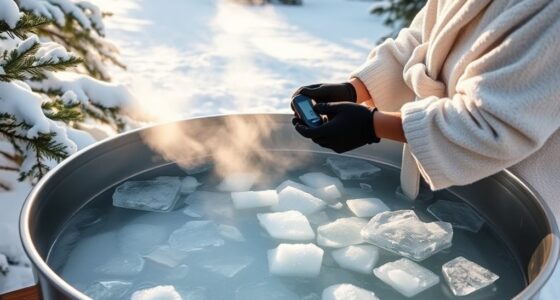

To maximize post-workout recovery with cold plunges, immerse in water between 50°F and 59°F for 1 to 2 minutes, starting at the higher end and gradually adjusting as your body adapts. Focus on controlled breathing, exit quickly, and dry off to stay warm. Avoid water that’s too cold or pushing beyond comfort to prevent risks. Keep safety in mind, and you’ll boost circulation, reduce soreness, and improve your recovery. Learn more about proper protocols for safe and effective cold plunges.

Get wellness gear delivered free with Prime
- Fast, free delivery on millions of items
- Prime Video, Amazon Music and more included
- Member-only deals all year
Key Takeaways
- Use water temperatures between 50°F to 59°F (10°C to 15°C), starting at the higher end for gradual adaptation.
- Begin with 1-2 minutes per session and increase duration gradually based on comfort.
- Plunge immediately after workout when muscles are warm, focusing on controlled breathing and quick exit.
- Avoid cold plunges if experiencing chest pain, dizziness, or nausea; exit immediately if adverse symptoms occur.
- Benefits include reduced soreness, improved circulation, mental clarity, and faster muscle recovery with regular practice.
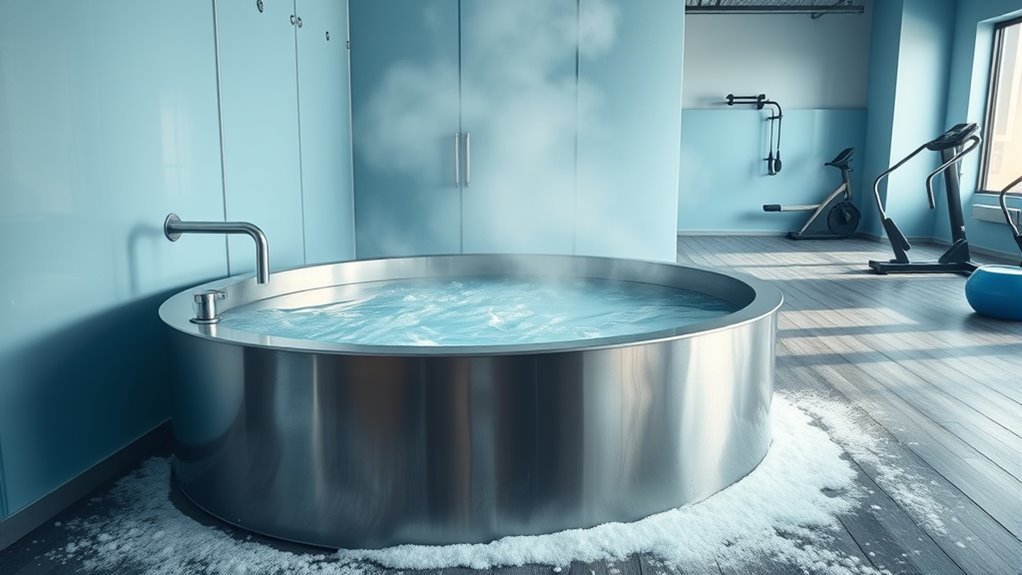
Have you ever wondered how to safely incorporate cold plunges into your routine? If you’re looking to enhance your post-workout recovery, understanding proper protocols is essential. Cold plunges can help reduce inflammation, accelerate muscle repair, and improve your overall recovery process. However, without the right approach, they can be uncomfortable or even risky. One of the key benefits of cold plunges is their ability to support temperature regulation. When you immerse yourself in cold water, your body works to maintain its core temperature, which can boost circulation and reduce swelling. This process helps you recover faster and feel less sore. Additionally, many people notice that regular cold plunges improve mental clarity, sharpening focus and reducing mental fatigue. This mental boost can make a significant difference in your daily performance and motivation.
Cold plunges enhance recovery by regulating temperature, boosting circulation, reducing soreness, and sharpening mental clarity.
To begin with, you need to guarantee the water temperature is appropriate. Typically, a safe cold plunge ranges between 50°F to 59°F (10°C to 15°C). Starting at the higher end of this spectrum allows your body to adapt gradually, especially if you’re new to cold exposure. Always check the water temperature before immersing yourself, and avoid plunging into ice-cold water immediately. This can cause shock and increase the risk of hyperventilation or other adverse reactions. Instead, aim to start with shorter durations, around one to two minutes, and gradually increase as your body becomes accustomed. Never push yourself to stay in longer than comfortable, especially if you begin to shiver uncontrollably or feel dizzy. Paying attention to body signals is crucial to ensure safety and effectiveness.
Timing your cold plunge is also critical. The best practice is to do it immediately after your workout, when your muscles are warm but not overheated. This helps to quickly close off blood vessels, reducing inflammation and promoting faster recovery. Once you’re in the water, focus on controlled breathing to calm your nervous system, which enhances the mental clarity benefits. Exiting the plunge, dry off quickly, and warm up gradually with light activity or warm clothing. This prevents sudden temperature shifts that could stress your body.
Listening to your body is paramount. If you experience chest pain, extreme dizziness, or nausea, get out immediately and consult a healthcare professional if symptoms persist. Remember, cold plunges are a powerful recovery tool, but safety always comes first. By following these protocols—paying attention to temperature regulation, duration, and timing—you’ll maximize their benefits. Over time, you’ll likely notice improvements not only in how your body recovers but also in your mental focus and resilience. Incorporating cold plunges carefully into your routine can be a game-changer for your post-workout recovery and overall well-being.
As an affiliate, we earn on qualifying purchases.
Frequently Asked Questions
How Long Should I Stay in the Cold Plunge?
You should aim to stay in the cold plunge for about 10 to 15 minutes, following the duration guidelines for safe and effective recovery. The ideal timing usually falls within the first 30 minutes after your workout, when your muscles are most receptive to cold therapy. Keep an eye on how your body feels, and don’t push beyond the recommended time to avoid hypothermia or discomfort.
What Is the Ideal Water Temperature for Recovery?
The perfect water temperature for recovery benefits typically falls between 50°F and 59°F (10°C to 15°C). Staying within this range helps reduce inflammation, soothe sore muscles, and speed up recovery. You should aim for a temperature that’s cold enough to provide these benefits but not so cold that it causes discomfort or risk. Adjust based on your comfort level, but don’t go above 60°F for ideal recovery results.
Can Cold Plunges Replace Traditional Recovery Methods?
Cold plunges can complement traditional recovery methods but shouldn’t replace them entirely. They boost your circulatory health and mental health by reducing inflammation and elevating mood. You benefit from quicker muscle recovery and mental clarity, but combining cold plunges with stretching, hydration, and rest yields the best results. Always listen to your body and consult a professional to personalize your recovery plan, ensuring safe and effective healing.
Are There Any Risks for Beginners Using Cold Plunges?
As a beginner, you should be cautious using cold plunges because of cold shock and hypothermia risks. Sudden immersion can cause rapid breathing, increasing the chance of hyperventilation or fainting. Prolonged exposure might lead to dangerous drops in body temperature. To stay safe, start with short durations, monitor your body’s response, and consult a healthcare professional if you have underlying health issues. Always prioritize safety over the benefits of cold plunging.
How Often Should I Incorporate Cold Plunges Into My Routine?
In the days of yore, you’d probably take a cold plunge after each workout, but now, you should plan your frequency carefully. For most, 2-3 times a week balances recovery timing and benefits without overdoing it. Pay attention to how your body responds; if you’re sore or fatigued, add more recovery days. Adjust your cold plunge routine based on progress and comfort, ensuring it complements rather than hinders your fitness journey.
As an affiliate, we earn on qualifying purchases.
Conclusion
Incorporating cold plunge protocols into your post-workout routine can boost recovery and reduce soreness. By chilling your body briefly, you activate your body’s natural healing processes. But are you truly maximizing your recovery potential if you skip this simple step? Embrace the cold, and see how it transforms your fitness journey. After all, sometimes the coldest solutions lead to the hottest results—are you ready to take the plunge?
As an affiliate, we earn on qualifying purchases.
cold plunge bath for muscle recovery
As an affiliate, we earn on qualifying purchases.
As an affiliate, we earn on qualifying purchases.
Cold & flu season Picks
humidifiers
As an affiliate, we earn on qualifying purchases.