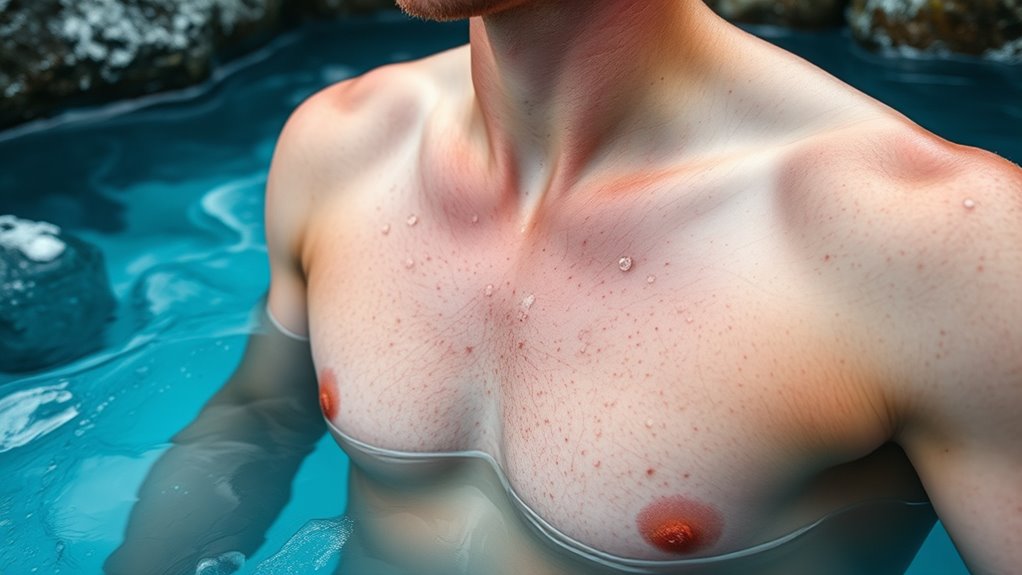
When you take a cold plunge, your blood vessels rapidly constrict to conserve heat, redirecting blood flow inward and protecting your essential organs. As you step out and warm up, your vessels dilate, boosting circulation and delivering oxygen and nutrients more efficiently. This cycle of vasoconstriction and vasodilation strengthens your blood vessel walls and improves overall circulation over time. Continuing will show you how these vascular responses can enhance your health and resilience.

Get wellness gear delivered free with Prime
- Fast, free delivery on millions of items
- Prime Video, Amazon Music and more included
- Member-only deals all year
Key Takeaways
- Cold immersion causes vasoconstriction, narrowing blood vessels to conserve core body heat.
- Exiting cold water triggers vasodilation, relaxing vessels and increasing blood flow.
- Repeated cold exposure trains vascular responses, improving circulation and endothelial function.
- Vasoconstriction reduces peripheral blood flow, while vasodilation enhances nutrient and oxygen delivery.
- These vascular adjustments support cardiovascular health and temperature regulation over time.

Taking a cold plunge can markedly boost your circulation by causing blood vessels to constrict and then dilate, which helps improve blood flow throughout your body. This process hinges on a fundamental vascular response called vasoconstriction, where blood vessels narrow in reaction to cold exposure. When you immerse yourself in cold water, your body rapidly detects the drop in temperature, prompting your blood vessels—especially those near your skin’s surface—to tighten. This constriction reduces blood flow to the outer layers, conserving core warmth and protecting essential organs. As a result, blood is redirected from the periphery to your core, maintaining internal temperature and ensuring critical organs receive adequate blood supply.
Cold water immersion causes blood vessel constriction to conserve core warmth and protect vital organs.
This initial vasoconstriction is a defensive mechanism that shields your body from hypothermia. However, it also sets the stage for a subsequent vascular response. Once you exit the cold water, your body works to restore normal temperature, triggering vasodilation—the relaxation and widening of blood vessels. This dilation allows blood to flow more freely, enhancing overall circulation. The increased blood flow helps deliver oxygen and nutrients more efficiently to tissues and removes metabolic waste products more effectively. Over time, repeated cold plunges train your vascular system to respond more dynamically, improving your overall circulation efficiency.
Understanding this vasoconstriction and vasodilation cycle is key to grasping how cold immersion benefits your vascular health. The constriction phase reduces blood flow temporarily, but the subsequent dilation phase increases blood flow beyond baseline levels. This boost in circulation can have several health benefits, including improved endothelial function, reduced inflammation, and strengthened blood vessel walls. When your blood vessels regularly undergo these oscillations, they become more resilient and adaptable, which can support better cardiovascular health over the long term.
You might notice that after a cold plunge, your skin feels numb or tight due to vasoconstriction, but shortly after exiting the water, you’ll experience a rush of warmth and increased blood flow. This rapid change stimulates your circulatory system, potentially reducing sluggishness and promoting better oxygen delivery. As you continue this practice, your body’s ability to regulate blood flow improves, making it more efficient at responding to various stressors or temperature changes.
As an affiliate, we earn on qualifying purchases.
Frequently Asked Questions
How Often Should I Do Cold Plunges for Optimal Vascular Benefits?
You should do cold plunges about 2 to 3 times a week to see ideal vascular benefits. Following the frequency guidelines helps prevent overexposure and promotes adaptation effects, where your body becomes more efficient at regulating blood flow and vascular responses. Consistency is key, so stick to this routine and listen to your body’s signals to avoid overstressing your circulatory system while maximizing benefits.
Are There Any Risks for People With Pre-Existing Cardiovascular Conditions?
If you have a pre-existing cardiovascular condition, cold plunges could pose risks like blood pressure fluctuations and arrhythmia risks. For example, someone with hypertension might experience sudden spikes in blood pressure, increasing strain on their heart. Always consult your doctor before starting cold plunges, especially if you have heart issues. Monitoring your response and avoiding extreme cold can help reduce potential dangers and protect your cardiovascular health.
Can Cold Plunges Improve Long-Term Blood Vessel Health?
Cold plunges can improve your long-term blood vessel health by enhancing vascular elasticity and boosting endothelial function. Regular exposure causes your blood vessels to adapt, becoming more flexible and responsive. This improved elasticity helps maintain healthy blood flow and reduces cardiovascular risk over time. However, if you have existing heart conditions, you should consult your doctor before incorporating cold plunges into your routine, as they can be intense.
What Are the Best Practices for Safely Exiting a Cold Plunge?
Think of exiting a cold plunge like a gentle wave retreating from the shore. To do it safely, focus on temperature regulation and avoid abrupt movements. Gradually lift yourself out, giving your body time to adjust. Dry off quickly and warm up with layered clothing or a warm towel. These steps help prevent dizziness or shock, ensuring a smooth shift from chilling depths to comfortable warmth.
How Does Cold Exposure Compare to Other Circulation-Enhancing Therapies?
Cold exposure triggers vasodilation mechanisms that boost circulation more rapidly than some other therapies. It also stimulates your immune response, helping your body fight off illnesses. Unlike passive treatments, cold plunges actively enhance blood flow and vascular health, making them effective for circulation. You might notice quicker recovery times and improved vascular function, especially when combined with proper safety practices. Cold exposure offers a dynamic, natural way to support your circulatory and immune systems.
As an affiliate, we earn on qualifying purchases.
Conclusion
So, stepping into that cold plunge is like awakening a dormant river inside you. It stirs your blood, ignites your circulation, and awakens hidden strength, much like a river carving new paths through solid rock. Embrace the chill as a symbol of renewal—each drop a reminder that even in coldest moments, energy flows beneath the surface. Keep plunging, and watch your inner currents grow stronger, transforming your health with every icy embrace.
As an affiliate, we earn on qualifying purchases.
As an affiliate, we earn on qualifying purchases.
Cold & flu season Picks
humidifiers
As an affiliate, we earn on qualifying purchases.