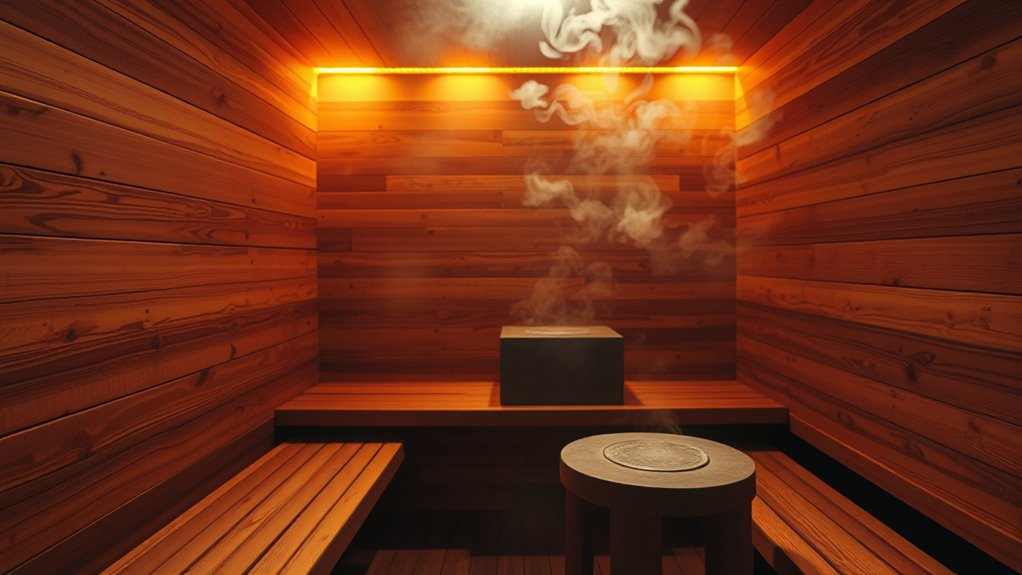

Saunas work by heating the air around you, either with dry heat or moisture, to raise your core body temperature and make you sweat. Dry saunas use high temperatures with low humidity, promoting muscle relaxation and detoxification. The heat can come from electric, wood-burning, or infrared heaters, each creating a different experience. If you’re curious about how heat and humidity interact to affect your body, you’ll discover more fascinating details as you explore further.
Key Takeaways
- Saunas generate heat using electric, wood-burning, or infrared heaters to create a warm environment.
- Dry heat saunas operate at high temperatures with minimal humidity, promoting sweating and detoxification.
- The low humidity makes breathing easier and enhances muscle relaxation.
- Heat penetrates deep into muscles, relieving tension and soreness.
- Different heater types influence the sauna’s atmosphere, temperature control, and overall experience.

Have you ever wondered how saunas produce such intense heat and relaxation? It’s a fascinating process rooted in the way heat is generated and how it interacts with your body. One key aspect is the benefits of dry heat, which many people find both soothing and invigorating. Dry heat in a sauna typically involves heating the air to high temperatures with minimal humidity, allowing your body to sweat and detoxify without feeling overwhelmed by moisture. This dry environment helps improve circulation, relax muscles, and promote a sense of well-being. The heat penetrates deep into your muscles, relieving tension and easing soreness, while the dry atmosphere makes it easier to breathe compared to humid environments. These benefits make dry heat saunas popular for stress relief and physical recovery.
Now, you might wonder how these intense temperatures are achieved. That’s where the types of sauna heaters come into play. There are mainly electric heaters, wood-burning stoves, and infrared panels, each creating the heat differently. Electric sauna heaters are the most common in modern homes. They heat up quickly and allow precise temperature control, making it easy to create a consistent dry heat environment. These heaters often have metal heating elements that warm up rocks, which then radiate heat throughout the sauna. Wood-burning stoves, on the other hand, give you a traditional experience. They generate heat by burning wood, which heats the stones placed on top. The warmth then radiates into the space, producing a natural, dry heat that many purists prefer. Infrared panels are a newer alternative. Instead of heating the air, they emit infrared radiation directly to your body, providing a different kind of heat experience, often at lower temperatures but still delivering the benefits of dry heat.
Each type of heater influences the sauna’s environment and your experience differently. Electric heaters are convenient and easy to operate, making them ideal for regular use. Wood-burning stoves create a more rustic, authentic feel and can generate higher heat levels, but require more maintenance and ventilation. Infrared panels offer a gentler heat that penetrates your skin directly, often allowing for shorter sessions. No matter which type you choose, they all work by converting energy into heat, raising the temperature within the sauna’s enclosure. This heat then interacts with your body, causing you to sweat and experience the relaxing, health-boosting effects characteristic of a good sauna session. Understanding these components helps you appreciate how your sauna works and how different options might suit your preferences for heat and comfort.
Frequently Asked Questions
Can Saunas Help With Detoxification?
Yes, saunas can help with detoxification by promoting sweat detoxification, which flushes out toxins through your skin. As you sit in the heat, you sweat more, aiding in skin cleansing and removing impurities. This process not only detoxifies your body but also leaves your skin feeling refreshed and revitalized. Regular sauna sessions can support your body’s natural detox pathways and improve overall skin health.
Are There Health Risks Associated With Sauna Use?
You should be aware of potential health risks when using saunas, especially if you have heart issues. For example, a person with hypertension might experience increased heart strain. To stay safe, prioritize hydration safety and consult your doctor if you have existing health concerns. While saunas can benefit heart health, overuse or dehydration can pose risks, so listen to your body and use them responsibly.
How Does Humidity Affect Sauna Comfort?
Humidity plays a key role in your sauna comfort by influencing thermal comfort and humidity regulation. Higher humidity levels can make the heat feel more intense, causing you to sweat more and potentially feeling more relaxed. Conversely, lower humidity allows heat to feel less oppressive, making it easier to breathe and stay comfortable. Adjusting humidity helps you find the perfect balance for an enjoyable, relaxing sauna experience tailored to your preferences.
What Are the Differences Between Dry and Wet Saunas?
Ever imagine stepping into a sauna that’s like a desert or a steam room? Dry saunas use materials like wood to maintain high temperatures with low humidity, offering a hot, comfortable experience. Wet saunas, or steam rooms, trap moisture, creating a humid environment. Your choice depends on how you prefer to control temperature and humidity, giving you options to relax and detox in either dry heat or steamy warmth.
How Long Should I Stay in a Sauna for Benefits?
You should aim for a sauna session lasting about 15 to 20 minutes for benefits, but listen to your body. To stay safe, follow hydration tips like drinking water before and after your session. Keep track of your session duration and avoid overdoing it, especially if you’re new. If you start feeling dizzy or uncomfortable, exit the sauna promptly. Proper hydration and moderation maximize your wellness gains safely.
Conclusion
Now that you understand how saunas work with heat and humidity, you can enjoy their benefits safely and effectively. Remember, “Prevention is better than cure,” so always listen to your body and stay hydrated. Whether you prefer dry or steam saunas, knowing the science behind them helps you make informed choices. So go ahead, relax, and reap the wellness rewards—you’ve got this!