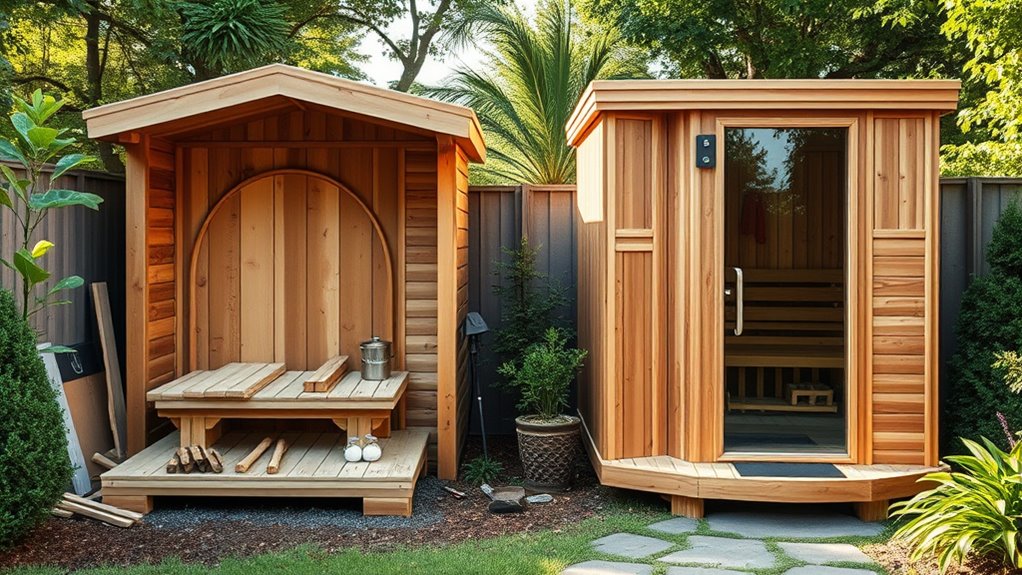

Choosing between DIY and prefab sauna kits depends on your preferences for customization, effort, and budget. DIY lets you personalize wood types and accessories but requires time, skills, and careful research to guarantee compatibility and safety. Prefab kits offer quicker installation, pre-selected compatible components, and less hassle, but may limit customization. If you’re unsure which option fits your needs and want to explore the detailed pros, cons, and costs, you’re in the right place to discover more.
Listen free for 30 days with Audible
Thousands of audiobooks and originals — cancel anytime.
As an affiliate, we earn on qualifying purchases.
Key Takeaways
- DIY saunas offer full customization and potentially lower costs but require time, skills, and careful component compatibility.
- Prefab sauna kits provide quick, straightforward installation with pre-selected, compatible accessories, reducing errors and setup time.
- DIY projects involve higher risk of mistakes in insulation, wiring, and safety standards, possibly increasing long-term costs.
- Prefab kits generally have higher upfront costs but save money through easier assembly and built-in quality controls.
- The choice depends on available time, technical ability, budget, and preference for personalization versus convenience.

Are you torn between building your own sauna or choosing a pre-made kit? Deciding between a DIY project and a prefabricated unit can be daunting, especially when considering the accessories selection and installation challenges involved. If you opt for a DIY approach, you’ll have more control over every detail, from choosing the type of wood to customizing the accessories like benches, heaters, and lighting. This flexibility allows you to tailor the sauna to your specific preferences, creating a truly personalized retreat. However, it also means you’ll need to carefully research and select compatible accessories to ensure everything fits and functions properly. A well-thought-out accessories selection is *vital* because incompatible components can lead to operational issues or safety hazards down the line.
When it comes to installation challenges, building your own sauna from scratch demands *considerable* effort and expertise. You’ll need to navigate the complexities of framing, insulation, vapor barriers, and electrical wiring. If you’re not experienced with construction or electrical work, this can become a frustrating and time-consuming process, potentially requiring multiple trips to the hardware store for parts or adjustments. *Furthermore*, ensuring proper ventilation and safety standards can be tricky without professional guidance, increasing the risk of mistakes that might compromise the sauna’s performance or safety. Understanding the importance of proper ventilation and safety standards is essential for a secure and efficient sauna.
On the flip side, prefabricated sauna kits are designed for easier installation, often coming with straightforward instructions and pre-cut materials that minimize the guesswork. These kits streamline the process, reducing installation challenges *considerably*. Most kits are engineered to fit together seamlessly, which means you spend less time troubleshooting or modifying pieces. The accessories in prefab kits are usually pre-selected or compatible with the unit, simplifying your decision-making and ensuring everything works harmoniously. This not only saves you time but also reduces the stress involved in customization and assembly.
Cost-wise, DIY saunas can be more affordable in the long run if you have the skills and time to handle the project. You save on labor and can choose cost-effective materials. However, unforeseen challenges or mistakes can add to expenses, especially if you need to hire professionals for tricky steps like electrical wiring or insulation. Prefab kits might have a higher upfront cost, but their ease of installation can save you money by avoiding costly errors and reducing labor hours. Plus, the pre-selected accessories ensure you won’t overspend on incompatible or unnecessary components.
Ultimately, your choice depends on your skills, budget, and how much time you’re willing to invest. If you enjoy DIY projects and want full control over every detail, building your own sauna might be rewarding. But if you prefer a quicker, more straightforward process with fewer installation challenges, a prefab sauna kit is likely the better option.
sauna kit with heater and benches
As an affiliate, we earn on qualifying purchases.
As an affiliate, we earn on qualifying purchases.
Frequently Asked Questions
How Long Does It Typically Take to Install a Prefab Sauna?
It typically takes about 4 to 8 hours to install a prefab sauna, depending on the model and your experience. The installation timeline is usually quicker than building from scratch, with most prefabs ready for use within a day. Construction duration can be shortened if you follow the manufacturer’s instructions closely and prepare the site beforehand. This efficient process makes prefab saunas a convenient choice for speedy relaxation setups.
What Maintenance Is Required for DIY Vs Prefab Sauna Kits?
You’ll need to regularly clean your DIY or prefab sauna to prevent mold and maintain hygiene. For DIY kits, cleaning requirements are straightforward but may demand more seasonal upkeep, like sealing wood or checking for mold. Prefab saunas often come with easier maintenance, as they’re pre-finished, but you should still inspect seals and ventilation seasonally. Proper upkeep guarantees your sauna stays in good condition and lasts longer.
Are There Any Zoning or Building Permits Needed?
Getting a sauna installed is like steering through a maze—building codes and permit processes can seem daunting. You’ll likely need zoning or building permits, especially for prefab kits, to ensure compliance with local regulations. Check with your city or county’s building department first, as they’ll guide you through the permit process. This step keeps your sauna legal and safe, preventing future headaches and ensuring your relaxing retreat is built on solid ground.
Can I Customize the Design of a Prefab Sauna?
Yes, you can customize the design of a prefab sauna, but your options might be limited compared to a DIY build. Many prefab kits offer a range of customization options, like choosing interior finishes, window placements, and door styles. However, design flexibility varies by manufacturer. Before customizing, check with the supplier to make sure your desired features are available and compatible with their standard prefab options.
What Safety Features Should I Consider in Both Options?
You should prioritize sauna fire safety by guaranteeing proper ventilation and using fire-resistant materials in both DIY and prefab options. Check for electrical safety features like grounded outlets, circuit breakers, and waterproof wiring to prevent shocks. Regularly inspect heating elements and wiring, and follow all safety guidelines. These measures help protect you from potential hazards and ensure your sauna remains a safe, relaxing space.
prefab sauna kit with installation instructions
As an affiliate, we earn on qualifying purchases.
As an affiliate, we earn on qualifying purchases.
Conclusion
Whether you choose a DIY or prefab sauna kit, you’re about to uncover a relaxation experience that could make even the busiest bee feel like royalty. DIY kits save you a fortune and give you a sense of accomplishment, while prefab options offer quick, professional results. Whichever path you take, your new sauna will transform your space into a personal sanctuary—probably the coolest upgrade you’ll ever make, and definitely the most rewarding. Get ready to sweat in style!
As an affiliate, we earn on qualifying purchases.
As an affiliate, we earn on qualifying purchases.
Fall Picks
fall essentials
As an affiliate, we earn on qualifying purchases.

![The GNU Emacs Architecture: Unlocking The Core [Pdf]](https://homesaunalab.com/wp-content/uploads/2026/07/the-gnu-emacs-architecture-unlocking-the-core-pdf-featured-560x300.jpg)