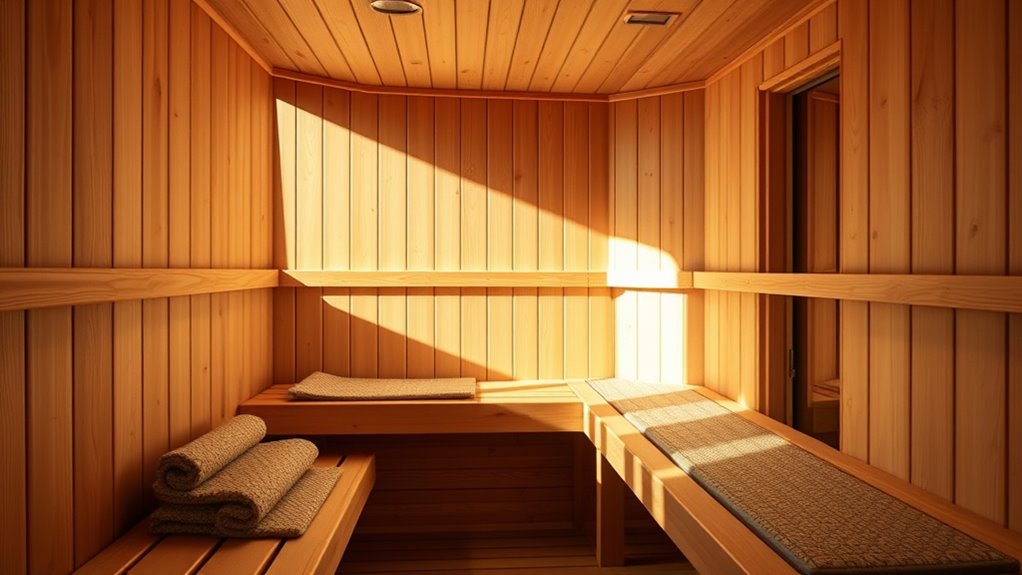

To create a peaceful sauna experience, focus on soundproofing key areas like walls, doors, and ceilings. Use insulation materials such as mineral wool or foam panels inside the walls to reduce sound escape, and seal gaps around doors with rubber or silicone seals for a tight barrier. Adding soundproof panels or blankets can also help if replacing doors isn’t an option. Keep listening to discover more ways to maximize privacy and tranquility in your sauna.

Get wellness gear delivered free with Prime
- Fast, free delivery on millions of items
- Prime Video, Amazon Music and more included
- Member-only deals all year
Key Takeaways
- Insulate walls, ceilings, and doors with dense materials like mineral wool or foam panels to reduce sound transmission.
- Seal gaps around doors and frames with high-quality rubber or silicone seals for a tight soundproof barrier.
- Add soundproof panels or blankets to doors and walls to absorb noise and prevent sound leaks.
- Ensure the sauna is airtight to enhance insulation and minimize external noise intrusion.
- Focus on creating a tranquil environment by combining soundproofing with calming interior elements for a peaceful experience.
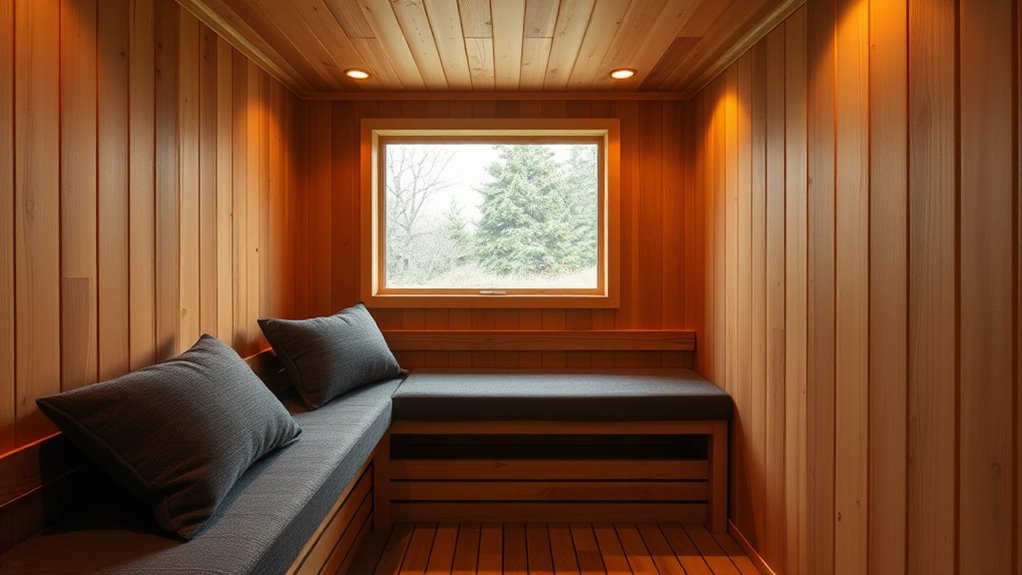
If you want to enjoy the relaxing benefits of your sauna without disturbing others nearby, soundproofing is essential. Saunas can get loud, especially when you’re enjoying a vigorous steam or a deep heat session. Without proper soundproofing, those noises might travel beyond your space, disturbing others in your home or neighborhood. To prevent this, start by focusing on the core areas that transmit sound—walls, doors, and ceilings. Using the right insulation materials inside your sauna walls can make a big difference. Materials like mineral wool or foam panels absorb sound waves effectively, reducing the amount of noise that escapes. These insulation materials are easy to install and provide a dense barrier that muffles sound, making your sauna’s interior quieter and more peaceful inside as well.
Another key element is sealing your door properly. Doors are often weak points in soundproofing because gaps around the frame allow noise to leak out. Installing high-quality door seals creates a tight barrier, preventing sound from escaping when you’re enjoying your sauna. Look for rubber or silicone seals designed specifically for soundproofing; they are flexible and fit snugly around the door edges. This not only reduces noise transmission but also helps maintain the sauna’s heat efficiency. When you combine good insulation materials with properly sealed doors, you create a much more effective soundproof environment.
Don’t forget that the door itself can also contribute to sound leakage if it’s hollow or lightweight. Consider adding a door blanket or a soundproof door panel if replacing the door isn’t an option. These additions can greatly dampen sound transmission and improve overall soundproofing. Additionally, sealing any gaps around the door frame, including the threshold, ensures there’s no escape route for sound. The more airtight your sauna is, the less noise will escape, letting you enjoy your sessions without worry. Improving soundproofing techniques can also enhance your sauna’s energy efficiency and overall comfort.
Incorporating soundproofing into your sauna isn’t just about listening without disturbing others—it also enhances your experience. A well-insulated, sealed sauna keeps the noise levels down inside, creating a calming atmosphere. You’ll find it easier to relax, meditate, or listen to music without external interruptions. Plus, the better your soundproofing, the less you’ll need to crank up the volume to enjoy your favorite playlist or audio guide. Overall, investing in quality insulation materials and sturdy door seals transforms your sauna into a peaceful retreat, where you can unwind fully without the worry of disturbing others.
Frequently Asked Questions
Can Soundproofing Affect Sauna Heat Efficiency?
Soundproofing can affect your sauna’s heat efficiency if it reduces heat retention or impedes heat flow. Using sound-absorbing materials might trap heat better, enhancing retention, but poorly installed insulation can create gaps that let heat escape. To maintain ideal heat, guarantee your soundproofing materials are specifically designed for high temperatures and airtight sealing, so your sauna stays warm while enjoying reduced noise.
What Materials Are Best for Soundproofing Sauna Doors?
You can effectively soundproof your sauna doors using materials like dense foam insulation and soundproof door seals. Sauna door insulation helps absorb sound, reducing noise transfer, while soundproof door seals create an airtight barrier that blocks sound leaks. These materials work together to keep your sauna peaceful. Make sure you choose high-quality, heat-resistant options to maintain sauna performance and comfort without sacrificing soundproofing efficiency.
How Long Does Sauna Soundproofing Installation Take?
The installation process for sauna soundproofing typically takes between a few hours to a full day, depending on the size of your sauna and the materials used. Timing considerations include preparing the space, applying soundproofing materials, and allowing any adhesives to set. You can expect a straightforward process if you follow proper steps, but complex setups might require extra time, so plan accordingly to guarantee a quiet, peaceful sauna experience.
Is Soundproofing Necessary in Small Saunas?
Imagine your tiny sauna turning into a gossip hotspot, with everyone hearing your steam and secrets. You probably don’t need soundproofing in small saunas, but adding acoustic panels and insulation barriers can keep noise contained, making your peaceful retreat even more private. If you’re after silence, a little soundproofing effort can make a big difference, ensuring your sauna stays your personal sanctuary—no unwanted eavesdroppers allowed.
Will Soundproofing Materials Emit Harmful Fumes?
Soundproofing materials can emit harmful fumes if they contain chemicals with high emissions, so you should always check for low or zero chemical emissions. To guarantee safety, follow proper safety precautions during installation, like well-ventilating the area and wearing protective gear. Using eco-friendly, non-toxic soundproofing options reduces the risk of chemical emissions, making your sauna safer and more enjoyable without compromising soundproofing effectiveness.
Conclusion
By soundproofing your sauna, you create a sanctuary so peaceful, it’s like stepping into a bubble of tranquility that blocks out the chaos of the outside world. With these simple steps, you’ll transform your sauna into a serene retreat where noise is nothing but a distant memory. Your peaceful haven will become the ultimate escape, more restful than even the quietest forest at dawn. Embrace these tips and enjoy the blissful silence—you deserve it!
Halloween Picks
halloween
As an affiliate, we earn on qualifying purchases.