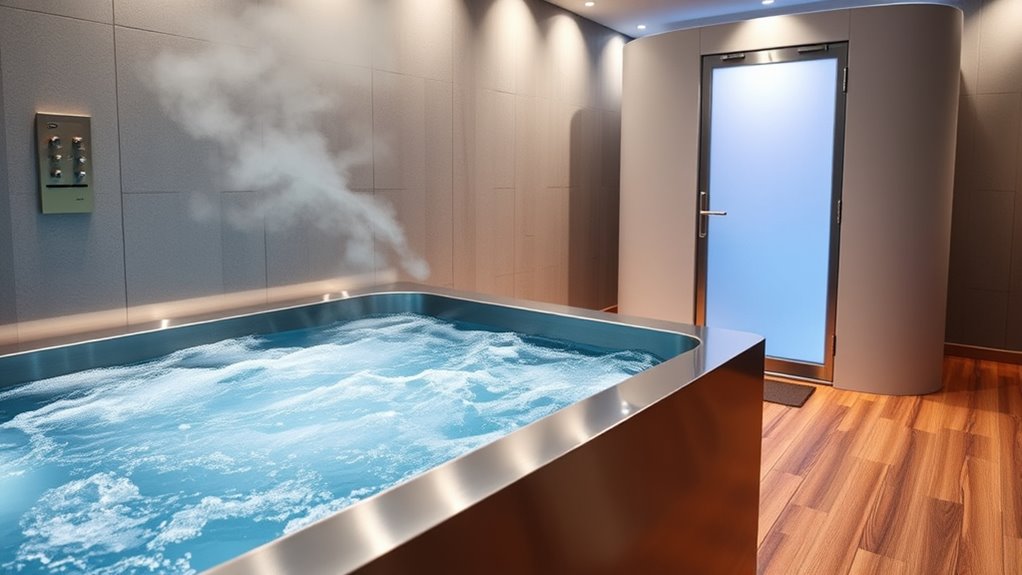

Cold plunges involve immersing in water at 50-59°F for longer periods, offering customizable sessions and a calming, meditative experience, while cryotherapy exposes you to -110°F to -140°F air for just a few minutes, delivering a quick, intense cold boost that can stimulate endorphins. Both methods reduce inflammation and promote healing, but they differ in duration, intensity, and mental effects. To discover which approach suits you best, stay tuned for a closer look at their differences.

Get wellness gear delivered free with Prime
- Fast, free delivery on millions of items
- Prime Video, Amazon Music and more included
- Member-only deals all year
Key Takeaways
- Cold plunges involve longer immersion in water at 50-59°F, while cryotherapy uses brief, intense exposure to -110°F to -140°F air.
- Cold water immersion offers adjustable duration and temperature control, whereas cryotherapy provides quick, standardized sessions.
- Both methods reduce inflammation and aid recovery; cold plunges promote circulation through gradual temperature changes, cryotherapy triggers systemic responses.
- Cold plunges can be meditative and calming, while cryotherapy often produces endorphin rushes and invigorating effects.
- Preference depends on individual needs: athletes may favor the control of cold plunges, while those seeking quick recovery might prefer cryotherapy.
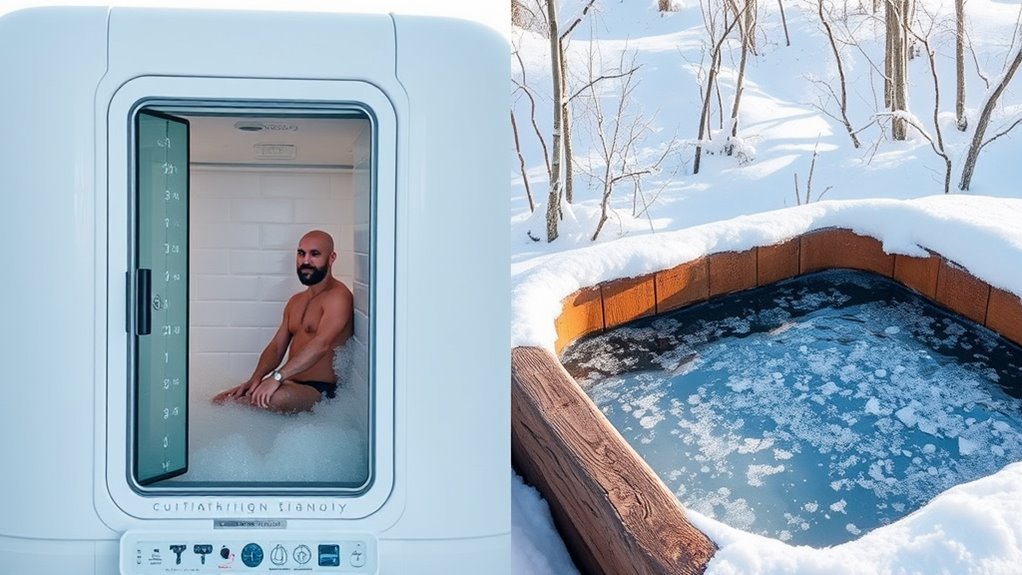
When it comes to recovery and wellness, both cold plunges and cryotherapy are popular methods that offer rapid cooling benefits, but they differ markedly in approach and effectiveness. If you’re exploring recovery techniques, understanding how each method impacts your body and mind can help you make an informed choice. Cold plunges involve immersing yourself in cold water, typically between 50-59°F (10-15°C), while cryotherapy exposes you to ultra-low temperatures, often between -110°F to -140°F (-80°C to -120°C), for a short duration. Both methods aim to reduce inflammation, accelerate healing, and improve overall recovery, but they do so through different mechanisms.
Cold plunges work by directly immersing your body in cold water, which causes blood vessels to constrict, reducing blood flow to inflamed areas. As you exit the water, the rush of warm blood back into your tissues promotes circulation and speeds up the removal of metabolic waste. This process can lead to decreased muscle soreness and faster recovery from intense workouts. Because cold water immersion is a more natural, familiar approach, it’s often preferred by athletes and those who enjoy traditional recovery techniques. It also allows for longer sessions, giving you control over the exposure time and level of cold.
Cryotherapy, on the other hand, uses controlled, extremely cold air in a chamber that surrounds your body, usually up to your neck or just your limbs. The rapid cooling is more intense but shorter in duration—typically 2 to 3 minutes. The theory is that the extreme cold triggers a systemic response, releasing endorphins, reducing inflammation, and promoting faster tissue repair. Many users report feeling invigorated after a session, with some claiming mental health benefits like reduced stress and improved mood. Cryotherapy’s ability to deliver a full-body experience in such a brief period makes it appealing if you’re looking for quick, comprehensive recovery.
From a mental health perspective, both methods can offer benefits. Cold plunges can provide a meditative, calming effect as you focus on steady breathing during immersion. They can also help reduce anxiety and improve sleep over time. Cryotherapy’s intense cold exposure may produce a rush of endorphins, leading to improved mood and decreased symptoms of depression or anxiety. Some individuals find that the invigorating nature of cryotherapy helps boost mental clarity and resilience.
Frequently Asked Questions
Which Method Offers Faster Recovery Times?
Cryotherapy generally offers faster recovery times because it quickly reduces inflammation and accelerates muscle repair. When you undergo cryotherapy, your body is exposed to extremely cold temperatures for a short period, which helps decrease inflammation more efficiently. Cold plunges also help with inflammation reduction and muscle repair, but they tend to take longer to produce noticeable effects. If speed is your priority, cryotherapy is typically the better choice.
Are There Any Long-Term Health Risks?
While both methods are generally safe with proper guidance, you should be aware of potential long-term safety concerns and health implications. Cold plunges might cause skin irritation or cardiovascular stress if not monitored, whereas cryotherapy could pose risks if extreme cold affects nerve or tissue health over time. Always consult health professionals to understand individual health implications and guarantee safe, effective use of either approach.
How Do Costs Compare Between Treatments?
In regard to cost comparison, cryotherapy tends to be more expensive per session, often ranging from $60 to $100, while cold plunges generally cost less, especially if you own one or access free public pools. An expense analysis shows cryotherapy’s higher upfront and session costs add up quickly, but cold plunges might require initial investment for equipment. Your choice depends on your budget and how often you plan to use these therapies.
Can These Methods Be Combined Effectively?
You can definitely combine cold plunge and cryotherapy to create a powerful duo for temperature regulation and mental health. Think of it as layering benefits; the cold plunge helps your body recover physically, while cryotherapy sharpens your mental clarity. Alternating between the two may boost circulation, reduce inflammation, and enhance mood. Just be mindful to listen to your body and consult professionals to optimize the synergy of these treatments.
Are There Specific Conditions Better Suited for One Approach?
You’ll find that cold plunge therapy suits those with muscle recovery needs due to its lower temperature effects, offering immediate relief. Cryotherapy, with its ultra-high temperatures, is often better for mental health benefits like mood enhancement and reducing stress. If you have cardiovascular issues or skin sensitivities, consult a healthcare professional first. Overall, understanding your specific condition helps you choose the approach that aligns best with your health goals.
Conclusion
Choosing between cold plunge and cryotherapy is like picking your adventure—both take you to icy heights, but each offers a unique thrill. I once heard of an athlete who switched from cold plunges to cryotherapy and found her recovery faster, like switching from a river’s chill to a mountain’s breeze. Whether you prefer the deep immersion or the swift freeze, know that both methods can refresh your body, turning icy challenges into opportunities for renewal.
Cold & flu season Picks
humidifiers
As an affiliate, we earn on qualifying purchases.