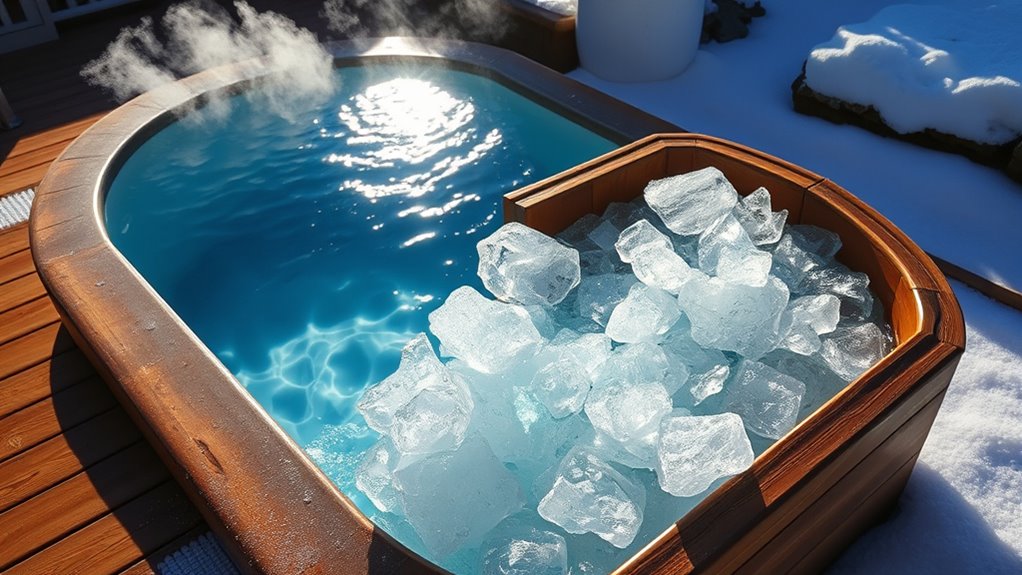

A cold plunge involves immersing yourself in water between 50-60°F for a few quick minutes, offering benefits like circulation and inflammation reduction. An ice bath uses colder water, around 32-50°F, often with added ice, and lasts up to 15 minutes for more intense muscle recovery. Since the temperatures and durations differ, knowing the right method depends on your goals and safety. Keep exploring to discover how these methods can best work for you.
Key Takeaways
- Cold plunge involves water temperatures of 50-60°F and shorter durations, primarily for quick recovery and wellness benefits.
- Ice baths use colder water, 32-50°F, often with ice added, and last longer for enhanced muscle recovery.
- Cold plunge is generally safer due to milder temperatures and brief exposure, while ice baths require careful safety precautions.
- Both methods reduce inflammation and muscle soreness, but ice baths provide more intense recovery effects.
- Duration and temperature are key differentiators, with cold plunge being brief and milder, and ice baths being colder and longer.

Cold plunges and ice baths have become popular wellness practices for those seeking muscle recovery, mental clarity, and overall health benefits. While these terms are often used interchangeably, understanding their differences can help you choose the right method for your needs. Both involve exposing your body to cold water, but they vary in temperature, duration, and setting, which impacts their recovery benefits and safety precautions.
A cold plunge typically refers to immersing yourself in a tub or natural body of water with temperatures ranging from 50 to 60°F (10 to 15°C). It’s usually a quick dip lasting just a few minutes. This method is favored for its ability to stimulate circulation, reduce inflammation, and promote recovery after intense workouts. Because the temperature isn’t as extreme, it’s generally safer for most people, but you still need to follow safety precautions. For example, you should avoid plunging if you have cardiovascular issues, as sudden cold exposure can cause a spike in blood pressure or heart rate. It’s essential to limit your time in the water and listen to your body—if you feel numbness, dizziness, or discomfort, exit immediately. Additionally, warming up gradually afterward helps prevent shock or hypothermia. Cold water immersion at moderate temperatures can also boost your immune system and improve mental well-being.
In contrast, ice baths involve immersing yourself in water cooled to 32 to 50°F (0 to 10°C), often with added ice. They are typically used by athletes to accelerate recovery after particularly strenuous activity. The colder temperature intensifies the recovery benefits, such as reducing muscle soreness, swelling, and inflammation more effectively than milder cold plunges. However, because ice baths are colder and often longer in duration—up to 10-15 minutes—they require extra safety precautions. It’s essential not to overstay, especially if you’re new to cold therapy, as prolonged exposure can lead to hypothermia or frostbite. Always have a warm cloth or blanket ready for warming up afterward, and make sure you’re supervised or have someone nearby the first few times you try an ice bath. People with circulatory or heart conditions should consult a healthcare provider before attempting either cold plunge or ice bath, as extreme cold can pose risks.
Frequently Asked Questions
Can Cold Plunges Improve Mental Health?
Cold plunges can improve your mental health by boosting mental clarity and emotional resilience. When you immerse yourself in cold water, your body releases endorphins, which help reduce stress and elevate mood. This practice also trains your mind to stay calm under pressure, strengthening emotional resilience. Over time, regular cold plunges can lead to better focus, reduced anxiety, and an overall sense of well-being, making it a valuable mental health tool.
What Are the Risks of Cold Water Therapy?
You should be aware that cold water therapy carries risks like hypothermia if water temperature drops too low or if you stay in beyond recommended duration guidelines. Always monitor your body’s response, avoid extreme temperatures, and limit your time in the water. Overdoing it can lead to cardiovascular stress or nerve damage, so listen to your body and consult a healthcare professional before starting cold water therapy.
How Long Should I Stay in a Cold Plunge?
The ideal plunge time varies, but generally, you should stay in a cold water plunge for 1 to 3 minutes. Keep an eye on your body’s response and avoid overextending your cold water duration, as prolonged exposure can increase risks. Start with shorter durations and gradually increase as you become more comfortable. Remember, listening to your body ensures a safe and effective cold water experience.
Is There a Difference in Recovery Speed?
Imagine a swift cold shock awakening your senses versus a deep, steady ice bath calming your body. A cold plunge often results in faster recovery due to rapid thermal regulation, helping reduce inflammation quickly. An ice bath, with its prolonged cold exposure, may take longer but offers sustained benefits. Your recovery speed depends on your body’s response, but cold plunges generally promote quicker relief through intense, focused cooling.
Can Cold Therapy Replace Traditional Recovery Methods?
Cold therapy can supplement traditional recovery methods, but it shouldn’t replace them entirely. Cold shock from cold plunges or ice baths helps with thermal regulation and reduces inflammation, aiding recovery. However, combining cold therapy with rest, stretching, and proper nutrition offers the best results. Listen to your body and consult professionals to develop a balanced recovery plan that leverages cold therapy effectively without risking overstress or injury.
Conclusion
Now that you know the difference between a cold plunge and an ice bath, you can choose the best option for your recovery needs. Both methods offer benefits like reduced muscle soreness and improved circulation. Did you know that athletes who incorporate cold therapy experience up to 20% faster recovery times? So, next time you consider cooling down, remember that understanding these methods helps you maximize your performance and recovery effectively.