TL;DR

Get wellness gear delivered free with Prime
- Fast, free delivery on millions of items
- Prime Video, Amazon Music and more included
- Member-only deals all year
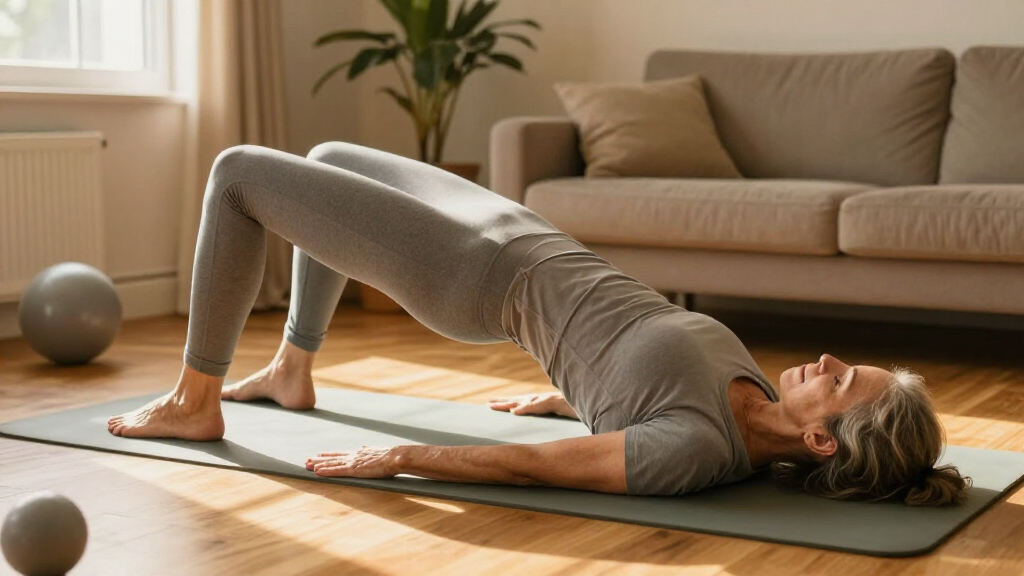
Fit&Well published five beginner-friendly Pilates exercises recommended by instructor Claire Seager for women in their 60s and 70s. The sequence combines strength, flexibility and movement, with modifications; the report does not provide clinical evidence that the exercises correct posture or suit every individual.
Fit&Well has published a five-exercise Pilates routine for women in their 60s and 70s, with moves selected by instructor Claire Seager to combine strength, flexibility and posture-focused movement. The list includes modifications for each exercise, though the report does not establish that the routine will correct posture or is appropriate for every person.
The suggested sequence consists of rocking cat and cow, reverse tabletop, knee circles, triceps push-ups and thread the needle. The report gives a target of 10 repetitions for most moves; knee circles are prescribed for 10 repetitions in each direction on each side, and thread the needle for 10 repetitions per side.
Seager, a Pilates teacher and founder of Pilatify, told Fit&Well that the exercises were chosen to offer what she called a “blend of strength, flexibility and posture correction.” She describes Pilates as a low-impact way to exercise and says it can help build strength and balance. These are the instructor’s explanations, not findings from a clinical study presented in the report.
Each move has a simpler option. Examples include doing cat and cow without rocking, performing reverse tabletop with bent knees, and keeping both knees on the floor for thread the needle. For knee circles, the report suggests lifting and lowering the bent knee if keeping the pelvis still is difficult. These alternatives make the routine more adaptable, but the article does not provide individualized assessment or advice about pain, injury or medical conditions.
A Scaled Routine for Older Adults
The exercise list offers readers a practical starting point for low-impact movement that does not require weights or equipment. Its modifications may help people adjust the movements to their current ability, while the mix of upper-body, hip and spinal movement gives the routine more variety than a single-muscle exercise plan.
That accessibility should not be confused with a guarantee of safety or results. Age alone does not determine whether a move is suitable, and a person’s balance, strength, mobility, pain and health history can affect what they can do comfortably. The report is a set of general exercise suggestions, not a personalized program or proof that Pilates can correct posture.
As an affiliate, we earn on qualifying purchases.
Seager’s Posture-Focused Approach
Fit&Well says it consulted Seager because her Pilatify program is designed with women over 50 in mind. In the report, she connects posture concerns with what she describes as the head-forward or stooped positions associated with modern life and age. She says Pilates aims to counter those positions by working and stretching the body.
The five moves follow that broad approach: cat and cow and thread the needle involve spinal movement, while reverse tabletop and triceps push-ups challenge strength. Knee circles add controlled movement around the hips. The source provides instructions and easier variations, but no study results, participant data or measured outcomes for this particular routine.
“Pilates brings the whole body into balance and once we’ve worked one set of muscles, we will stretch them.”
— Claire Seager, Pilates teacher and founder of Pilatify, in the Fit&Well report
As an affiliate, we earn on qualifying purchases.
Suitability and Results Vary
The source does not give a publication date, identify a clinical study supporting the routine, or report outcomes from people who performed it. It also does not explain how the exercises should be adapted for particular conditions, injuries, or differing levels of mobility and balance. The headline’s reference to posture correction reflects the routine’s stated aim, not a demonstrated result for every reader.
Readers who experience pain, have a health condition or are unsure about balance and floor-based movement may need individualized guidance before attempting the exercises. The report does not say how often to repeat the sequence, how to progress it, or whether a qualified instructor should supervise.
posture correction Pilates equipment
As an affiliate, we earn on qualifying purchases.
As an affiliate, we earn on qualifying purchases.
How Readers Can Use the Routine
The Fit&Well report presents the moves as beginner-friendly suggestions and supplies a modification for each one. Readers interested in trying them can follow the published instructions conservatively, using an easier variation where needed and stopping if a movement causes pain or feels unsafe. People with pre-existing conditions or concerns about mobility should seek guidance from a qualified health professional or Pilates instructor.
No follow-up study, additional guidance from Seager or further update is included in the source material. The next step for readers seeking evidence about outcomes would be to consult research or a professional who can assess their individual needs; the article itself does not establish a specific result.
low-impact Pilates workout DVD for women over 60
As an affiliate, we earn on qualifying purchases.
As an affiliate, we earn on qualifying purchases.
Key Questions
Which five Pilates moves does the report recommend?
Fit&Well lists rocking cat and cow, reverse tabletop, knee circles, triceps push-ups and thread the needle. Claire Seager selected the exercises for the routine.
Are the exercises intended for beginners?
The report describes the moves as beginner-friendly and includes an easier variation for each. That does not mean every move is suitable for every person; individual mobility, balance, pain and health history matter.
Does the routine prove Pilates corrects posture?
No. Seager says the exercises were selected with posture correction in mind, but the report does not present clinical evidence or measured results showing that the routine corrects posture.
What should someone do if an exercise feels difficult or painful?
The report suggests easier versions, such as doing cat and cow without rocking or keeping both knees down for thread the needle. Stop if a movement causes pain or feels unsafe, and seek professional guidance if you have a health condition or mobility concern.
Source: rss
Cold & flu season Picks
humidifiers
As an affiliate, we earn on qualifying purchases.