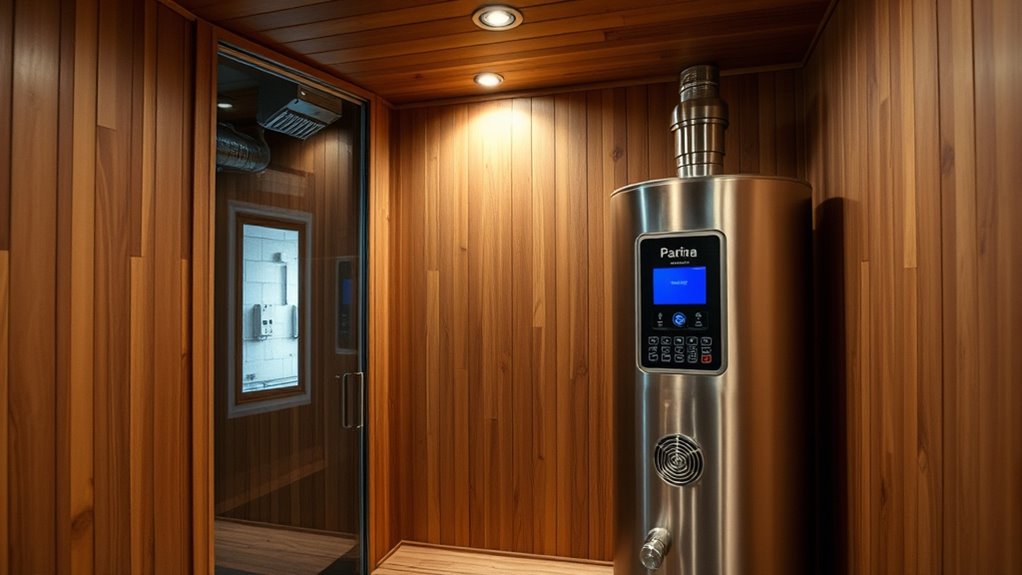

If you size a sauna incorrectly or choose a room that’s too large, you’ll face hidden costs like higher energy bills and frequent equipment repairs, since heaters work harder and insulation struggles to keep heat steady. Poorly matched equipment and inadequate insulation can cause uneven temperatures and faster wear on parts. To avoid these expenses, it’s vital to understand proper sizing and optimization techniques. Keep going to discover how to prevent these costly mistakes.
Key Takeaways
- Oversized sauna rooms increase energy bills due to higher heater workload and heat loss, raising operational costs.
- Incorrect heater sizing accelerates equipment wear, leading to costly repairs and replacements over time.
- Poor insulation amplifies heat loss, causing higher energy consumption and hidden expenses in maintaining temperature.
- Mismatched equipment and inadequate ventilation cause uneven heating, increasing maintenance and reducing efficiency.
- Proper sizing, insulation, and ventilation prevent hidden costs by optimizing energy use and extending equipment lifespan.
The Impact of Oversized Sauna Rooms on Energy Consumption
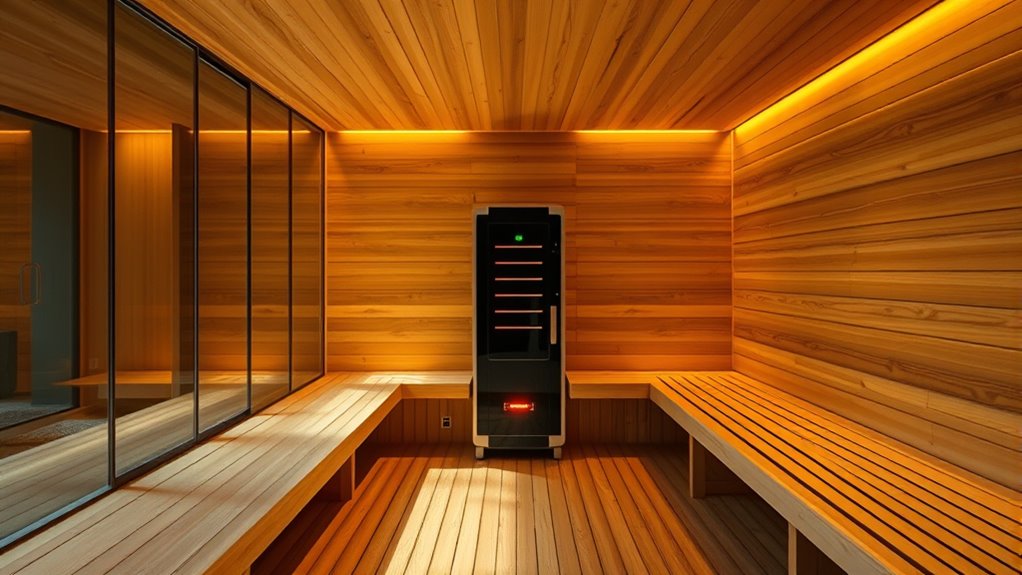
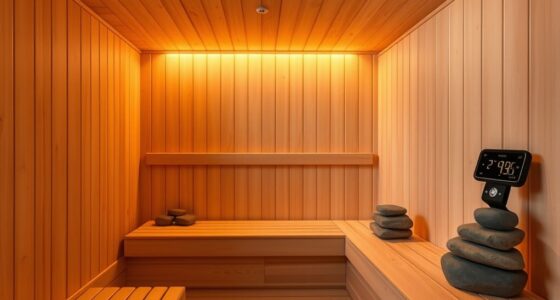
While larger sauna rooms might seem more luxurious, they often lead to higher energy consumption because the heater must work harder to maintain the desired temperature. Oversized spaces require increased insulation to prevent heat loss, which can drive up costs if not properly managed. Poor insulation means your heater runs longer, wasting energy. Additionally, ventilation needs become more complex; inadequate airflow can cause uneven heating and strain the system further. You might be tempted to think a bigger room is better, but without proper insulation and ventilation planning, you’ll spend more on energy bills. Ensuring your sauna is appropriately sized and optimized with proper insulation and ventilation reduces strain on your heater, saving you money and making your sauna more energy-efficient. Effective insulation is essential to minimize heat loss and improve overall energy efficiency.
Costly Upgrades Caused by Incorrect Heater Sizing
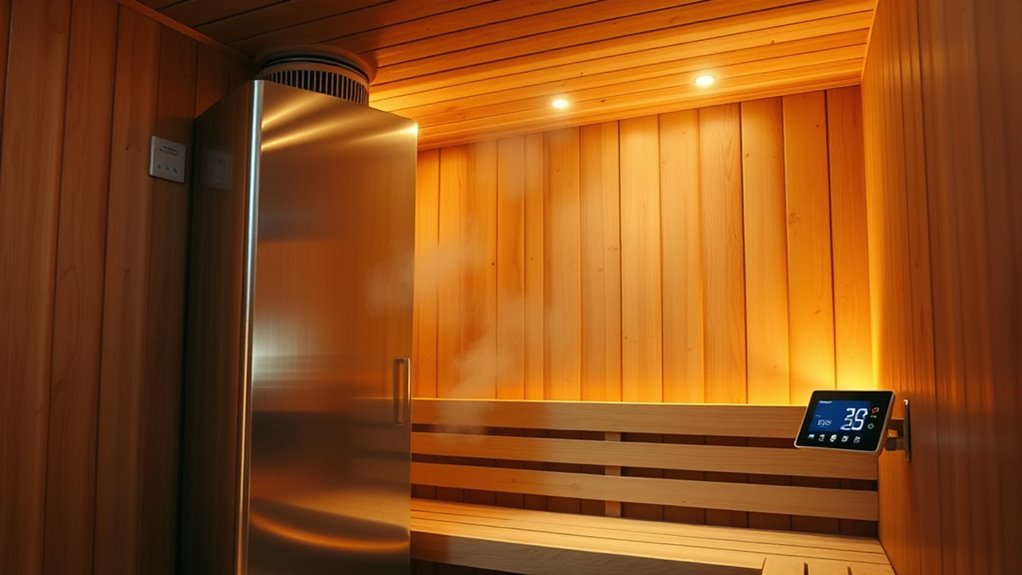
Incorrect heater sizing can lead to significant and costly upgrades down the line. When your heater isn’t properly calibrated for your sauna’s volume, it may struggle to reach or maintain the desired temperature, forcing you to replace or upgrade equipment prematurely. Poor insulation quality compounds this issue, as inadequate insulation causes heat loss, making your heater work harder and increasing wear. Over time, these factors can cause your heater to break down or become inefficient, prompting expensive repairs or full replacements. To avoid this, verify your heater is correctly sized for your sauna’s volume, and confirm that insulation quality is high. Proper calibration and insulation minimize strain on your heater, saving you money and preventing costly upgrades in the future. Additionally, understanding the AI security implications of automated control systems can help ensure your sauna’s heating setup remains safe and reliable.
Inefficiencies and Wear Due to Mismatched Equipment

Using equipment that doesn’t match your sauna’s size forces your heater to work harder than necessary, leading to increased energy use and faster wear. This mismatch can cause insulation issues, trapping heat unevenly and making the heater cycle more frequently. Poor insulation compels the heater to run longer to maintain the desired temperature, raising energy bills and accelerating component fatigue. Ventilation challenges also arise, as mismatched equipment can disrupt airflow, leading to hot spots or insufficient heat circulation. Over time, these inefficiencies strain the heater and other parts, increasing maintenance costs and reducing lifespan. Additionally, uneven heat distribution stresses the structure, potentially causing damage. To avoid these hidden costs, ensure your heater and sauna size are properly matched, and address insulation and ventilation to promote efficiency and durability. Proper projector technology can also improve the overall performance and longevity of your setup.
Hidden Expenses in Maintaining Optimal Temperature Levels
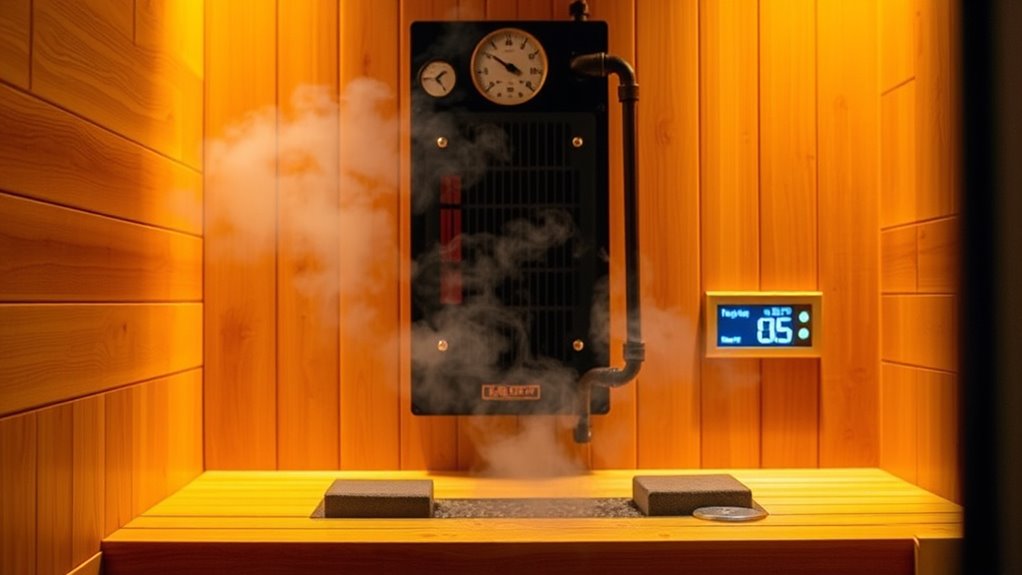
Maintaining a consistent ideal temperature in your sauna can lead to hidden expenses that often go unnoticed. You might underestimate ongoing energy costs, especially if your insulation techniques aren’t efficient. Poor insulation causes heat loss, forcing your heater to work harder and consume more power, increasing your overall cost estimation. Over time, these extra energy demands add up, making your sauna more expensive to operate than initially planned. To avoid this, invest in proper insulation materials and techniques that retain heat effectively. Regular maintenance of seals and insulation helps sustain perfect temperature levels without unnecessary energy expenditure. Additionally, understanding the honey bee species in your area can inform better maintenance practices by considering environmental factors affecting your sauna’s energy efficiency. Being aware of these hidden expenses allows you to better manage your sauna’s operational costs and ensures long-term efficiency.
Practical Strategies for Proper Sauna Room and Heater Sizing

Choosing the right sauna room size and heater capacity is essential to guarantee efficient heating and cost savings. To achieve this, focus on proper insulation techniques that minimize heat loss, ensuring your sauna stays warm with less energy. Additionally, implement effective ventilation solutions to maintain consistent airflow and temperature control, preventing overheating or cold spots. Measure your space accurately and select a heater that matches your room’s volume; oversized units waste energy, while undersized ones struggle to reach desired temperatures. Combining insulation techniques with proper ventilation solutions helps optimize heat retention and circulation. Regularly assess your sauna’s performance and adjust insulation or ventilation as needed. This approach ensures a comfortable experience without unnecessary energy consumption or costly upgrades down the line. Proper earplug usage can also protect your hearing during sauna sessions if music or sound systems are used nearby.
Frequently Asked Questions
How Does Improper Sauna Insulation Affect Overall Costs?
Improper sauna insulation can considerably increase your overall costs by reducing insulation durability and compromising thermal barriers. When insulation isn’t installed correctly, heat escapes easily, forcing your heater to work harder and consume more energy. This not only raises your utility bills but also shortens the lifespan of your heater and insulation materials. To avoid these costly issues, ensure proper installation with high-quality insulation that maintains thermal barriers effectively.
What Are the Long-Term Financial Impacts of Frequent Heater Replacements?
You might think frequent heater replacements save money, but they actually drain your wallet over time. Poor heater durability leads you to face ongoing replacement costs, which add up faster than you expect. Instead of investing in a high-quality heater upfront, you save yourself from the hassle and expense of constant repairs and replacements. Ultimately, ignoring durability can turn your sauna into a costly, never-ending project.
How Does Room Shape Influence Heating Efficiency and Costs?
Your sauna’s room shape greatly impacts heating efficiency and costs. A well-designed, compact shape like a square or rectangle allows heat to disperse evenly, reducing energy waste. Irregular or elongated shapes can create cold spots, forcing your heater to work harder and increasing costs. To maximize efficiency, choose a room shape that promotes even heat distribution, helping you save money and enjoy consistent warmth without overloading your heater.
Are There Safety Risks Associated With Oversized Sauna Rooms?
Sure, oversized sauna rooms are perfect for dramatic entrances—until safety hazards and structural integrity issues arise. You might think bigger is better, but it can lead to uneven heating, mold, or even structural strain. These risks compromise safety, making your sauna less relaxing and more dangerous. So, don’t let grandeur overshadow safety; guarantee your sauna’s size aligns with proper design to avoid costly hazards.
Can Advanced Technology Reduce Hidden Maintenance Expenses?
Yes, advanced technology can reduce hidden maintenance expenses by enhancing energy savings and efficiency. Technological innovations, like smart controls and automated diagnostics, help you monitor and optimize your sauna’s performance, preventing issues before they escalate. This not only lowers your maintenance costs but also extends the lifespan of your equipment. By investing in these advanced features, you guarantee smoother operation and long-term savings, making your sauna experience more cost-effective.
Conclusion
Think of your sauna like a delicate musical instrument—you need the right size and tuning to hit perfect notes. When you choose an oversized room or an ill-suited heater, it’s like trying to play a grand piano with a tuba; it just doesn’t work efficiently. By sizing your sauna correctly, you’ll avoid costly energy waste and premature equipment wear, ensuring your relaxing retreat hits all the right notes without hidden expenses lurking in the background.