When choosing a heater for your barrel sauna, consider how well your insulation retains heat to match the heater’s capacity and efficiency. Prioritize models with safety features like auto shut-off and child locks to ensure safe use. Opt for a heater that matches your sauna’s size and insulation level to avoid unnecessary energy costs. Focusing on these factors helps create a cozy, safe environment, and exploring more details can help you make the best choice for your sauna.
Key Takeaways
- Assess the insulation quality of your barrel sauna to determine the appropriate heater size and capacity.
- Choose a heater with safety features like auto shut-off, temperature controls, and child safety locks for secure operation.
- Match the heater’s heat output to your sauna’s insulation to ensure efficient heating and energy savings.
- Opt for models with easy-to-use controls and clear indicators for quick adjustments and monitoring.
- Consider environment safety and user needs, selecting heaters with protective guards and reliable safety mechanisms.
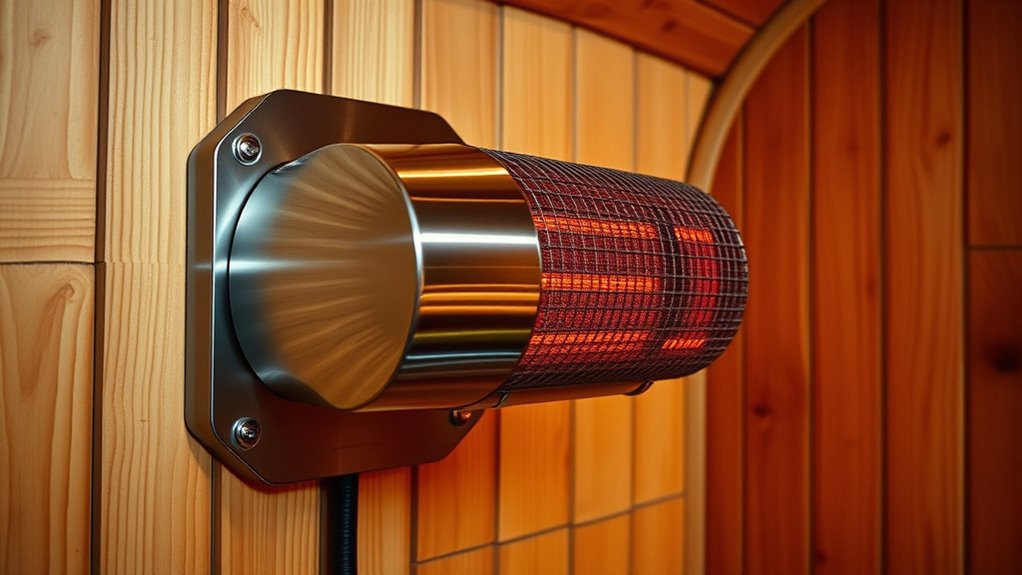
Choosing the right heater for your barrel sauna is vital to guarantee a safe, efficient, and enjoyable experience. When selecting a heater, one of the most important factors to think about is how well it integrates with your sauna’s insulation options. Proper insulation helps retain heat and maintain consistent temperatures, so your heater doesn’t have to work overtime. Look for a heater that can deliver the desired heat output without overtaxing your system. If your sauna is well-insulated, you might opt for a smaller, more energy-efficient heater, saving you money and reducing energy consumption. Conversely, inadequate insulation can mean you need a more powerful heater to compensate for heat loss, which could increase your operating costs. Ensuring your heater is compatible with your insulation choices can significantly enhance the overall efficiency of your sauna.
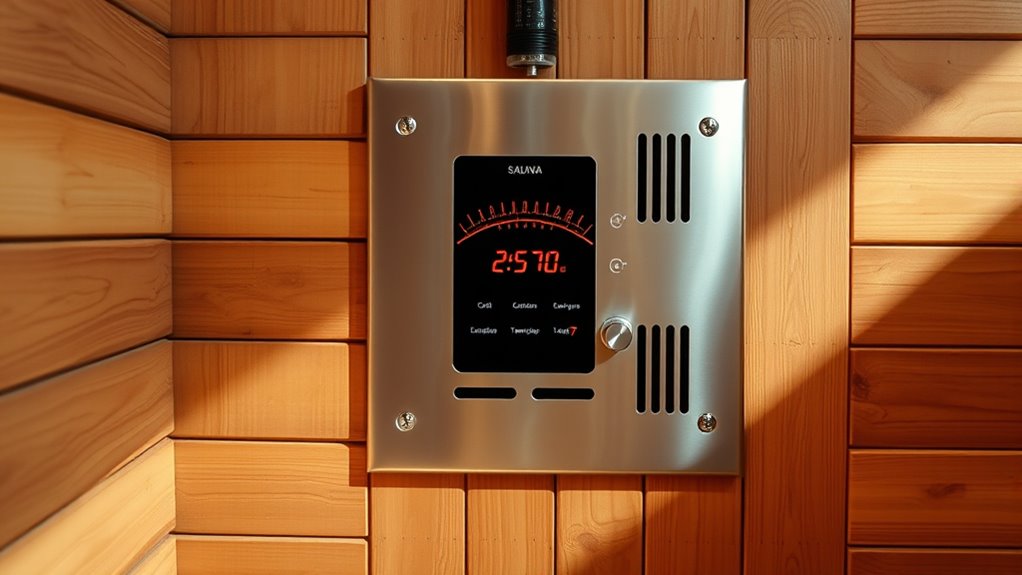
Safety features are equally vital when choosing a heater. Modern sauna heaters come with various safety mechanisms designed to prevent accidents and ensure user protection. For example, auto shut-off functions turn the heater off if it overheats or if there’s a malfunction, reducing fire risks. Temperature controls and limit switches help you set safe maximum temperatures, preventing overheating that could cause discomfort or harm. Additionally, consider heaters with cool-touch exterior surfaces or protective guards around heating elements. These features minimize the risk of burns if you accidentally come into contact with the heater. Some models also include safety alarms or indicators that alert you if the heater malfunctions or if the temperature exceeds safe levels.
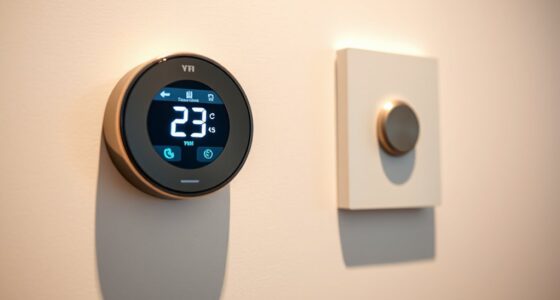
Another aspect to think about is how the heater’s safety features complement your sauna’s environment. For instance, if children or pets will be around, you’ll want a heater with child safety locks or barriers. Having clear, easy-to-read controls also helps you monitor and adjust settings swiftly, maintaining a safe environment. Remember, a heater with robust safety features not only protects you and your loved ones but also prolongs the lifespan of your sauna by preventing damage caused by overheating or electrical issues. When selecting your heater, consider those with comprehensive safety features to ensure peace of mind during your sauna sessions.
Ultimately, selecting a heater that aligns with your insulation options and offers comprehensive safety features ensures you enjoy your barrel sauna without worries. Combining appropriate insulation with a heater equipped with safety mechanisms means you can relax and reap the benefits of your sauna in a secure, efficient manner. Taking these considerations seriously helps create a cozy, safe retreat that you can enjoy for years to come.
Top picks for "choos heater barrel"
Open Amazon search results for this keyword.
As an affiliate, we earn on qualifying purchases.
Frequently Asked Questions
What Is the Ideal Wattage for a Barrel Sauna Heater?
For a barrel sauna, the ideal wattage for your heater depends on its size, but generally, you should aim for about 1.5 kW per 45 cubic feet of space. When selecting your heater size, consider the insulation and climate as well. Proper wattage guarantees even heating and comfortable sessions, so choose a wattage that matches your sauna’s volume to get the best experience and energy efficiency.
How Often Should I Maintain or Clean My Sauna Heater?
You should perform regular maintenance on your sauna heater to keep it functioning efficiently. Follow a maintenance schedule of cleaning your heater at least once every 3 to 6 months, depending on usage. During cleaning frequency, remove dust, debris, and any mineral buildup. Always unplug the heater before cleaning, and check for signs of wear or damage. Proper maintenance guarantees safety, longevity, and peak performance of your sauna heater.
Are There Specific Safety Features to Look for in a Heater?
Think of your sauna heater safety like a knight’s armor—robust and protective. Look for safety features like automatic shut-off, temperature controls, and thermal fuses to prevent overheating. These heater safety features ensure you enjoy your sauna without risking burns or fires. Prioritize models with clear safety certifications and user-friendly controls. With these features, you’re guarding your relaxation time with the same care as a knight guards their domain.
Can I Install a Heater Myself or Should I Hire a Professional?
You can attempt a DIY installation if you have the necessary skills and knowledge, but it’s often safer and more reliable to hire professional expertise. Installing a heater involves electrical work and safety precautions that require proper certification and experience. By choosing a professional, you confirm the job is done correctly, reducing risks and ensuring your sauna operates safely and efficiently. Always prioritize safety and follow local building codes.
What Are the Energy Consumption Differences Between Electric and Wood Heaters?
Electric heaters tend to be more energy-efficient, converting nearly all electricity into heat, which can lower your overall energy costs. Wood heaters, on the other hand, often have higher fuel costs and lower efficiency due to heat loss during combustion. If you’re aiming to minimize energy consumption and fuel expenses, an electric heater is generally a better choice. However, consider your access to wood and personal preferences when making your decision.
Conclusion
Choosing the right heater for your barrel sauna is essential for a cozy, enjoyable experience. Keep in mind the size, insulation, and your heating preferences to find the perfect fit. Remember, it’s better to be safe than sorry—investing in the right heater is like putting all your eggs in one basket. With careful consideration, you’ll create a warm haven that’s just right for relaxing and unwinding whenever you need it.