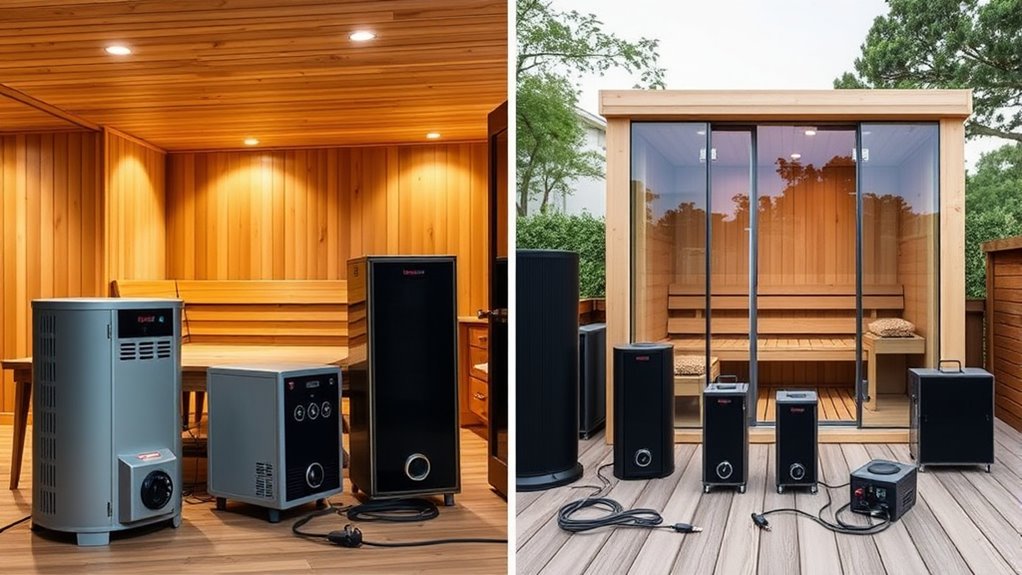

When sizing a heater for outdoor versus indoor saunas, consider insulation quality, ventilation needs, and environment. Indoor saunas typically require larger heaters because they tend to lose more heat without proper insulation, while outdoor saunas benefit from open air and better heat retention with smaller heaters. Proper ventilation is vital to prevent overheating or humidity issues. Continue exploring, and you’ll discover how to optimize heater size for your specific sauna setup.
Key Takeaways
- Consider sauna size and volume; larger spaces require bigger heaters for effective heating.
- Account for insulation quality; better insulation allows for smaller heaters, especially in outdoor setups.
- Evaluate ventilation needs; outdoor saunas typically have less restrictive ventilation, affecting heater size.
- For indoor saunas, design ventilation to prevent heat loss and humidity buildup, influencing heater capacity.
- Match heater size to environmental exposure; outdoor saunas need heaters that compensate for heat dissipation through external elements.
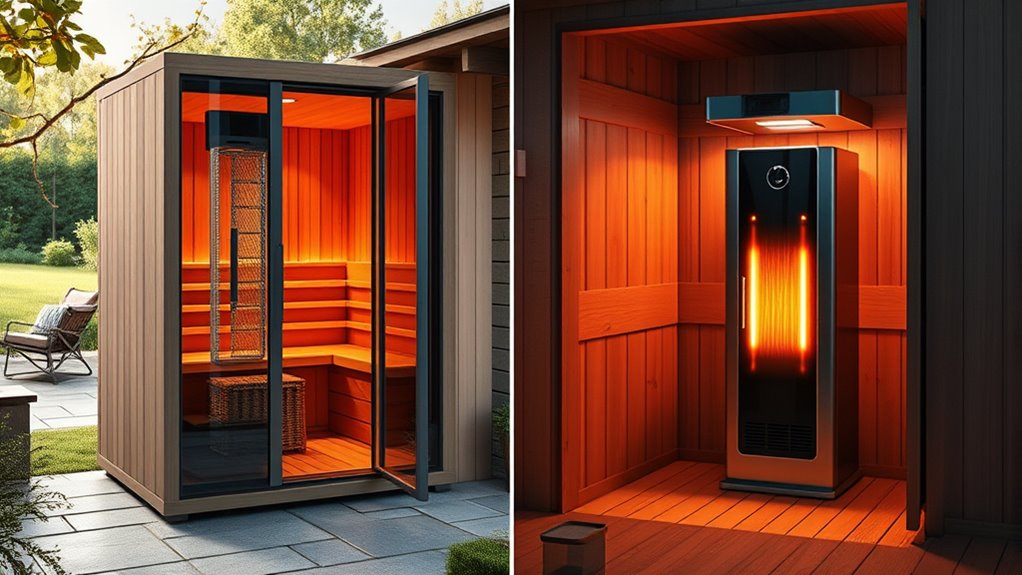
Choosing the right heater size is essential when designing a sauna, whether it’s outdoors or indoors. The heater must efficiently produce the desired temperature while maintaining safety and comfort. To do this effectively, you need to consider several factors, including ventilation requirements and material insulation, both of which influence how much heat your sauna needs to stay warm and comfortable.
Ventilation requirements play a critical role in heater sizing because they affect heat retention and air quality inside the sauna. Proper ventilation ensures fresh air circulation but can also lead to heat loss if not balanced properly. For outdoor saunas, ventilation is often less restrictive since the structure is exposed to open air, which helps dissipate excess heat and moisture. However, you still need to ensure adequate airflow to prevent stuffiness and to control humidity levels. Indoor saunas, on the other hand, typically require carefully planned ventilation systems to prevent overheating, reduce humidity buildup, and maintain air quality. These systems can influence the size of the heater, as poor ventilation might mean you need a slightly larger heater to compensate for heat loss or inadequate air circulation.
Material insulation is another key factor in selecting the right heater. The insulation quality of your sauna walls, ceiling, and floor directly impacts how well heat is retained. High-quality insulation keeps heat inside, meaning you might need a smaller heater to reach and maintain your desired temperature. Conversely, if your sauna’s insulation is poor, you’ll need a larger heater to compensate for heat escaping through less effective barriers. When considering insulation, lighter materials like wood or specialized insulating panels can help improve heat retention but may still require a larger heater if the insulation isn’t optimal. For outdoor saunas, insulation tends to be more straightforward because the structure is exposed to external elements, making proper insulation even more critical to prevent heat loss. Indoor saunas benefit from the building’s existing insulation, but you still need to verify that it’s sufficient to support your heater size. Additionally, the use of high high-performance projectors designed for variable lighting conditions can help optimize the sauna environment, especially if you plan to include multimedia features.
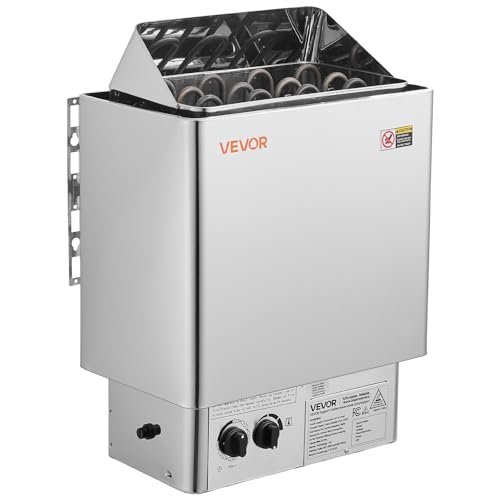
VEVOR Sauna Heater, 6KW 240V Electric Sauna Stove, Dry Steam Bath Saunas Stove with Pre-Drilled Bracket, Fit 176.5 to 317.8 CU.FT Saunas Rooms, Steam Bath Stoves for Home, Commercial, Leisure Venues
Rapid Heat: This sauna stove operates at 240V, 6kW, ideal for 176.5 to 317.8 cu.ft / 5 to…
As an affiliate, we earn on qualifying purchases.
As an affiliate, we earn on qualifying purchases.
Frequently Asked Questions
How Does Humidity Affect Heater Sizing?
Humidity impact plays a significant role in heater sizing because higher moisture levels require more heat to maintain the desired temperature. You need to account for moisture considerations, as increased humidity can make the sauna feel cooler and cause the heater to work harder. Properly sizing your heater ensures it can handle the moisture load, preventing overheating or insufficient heating, and keeps your sauna comfortable regardless of humidity fluctuations.
What Safety Features Are Essential for Outdoor Sauna Heaters?
You definitely don’t want your outdoor sauna turning into a fiery spectacle, so safety features are a must. Make sure your heater has a safety sensor that shuts it down if it overheats—because nobody needs a sauna meltdown. A reliable ventilation system is equally vital to prevent smoke buildup and guarantee fresh air flows. These features keep your sauna safe, functional, and more enjoyable than a backyard bonfire gone rogue.
Can I Use the Same Heater for Both Indoor and Outdoor Saunas?
You can’t use the same heater for both indoor and outdoor saunas because heater placement and temperature control needs differ. Outdoor heaters require weatherproofing and safety features suited for exposure, while indoor heaters focus on precise temperature control. Using the right heater guarantees safety, efficiency, and comfort. Always choose a heater designed for your specific environment, and consult a professional to match the size and features to your sauna’s requirements.
How Does Insulation Quality Influence Heater Requirements?
Insulation quality greatly impacts your heater requirements because good thermal insulation and heat retention keep your sauna warm efficiently. If your sauna has superior insulation, it needs less heating power to maintain the desired temperature. Conversely, poor insulation allows heat to escape, requiring a more powerful heater. By enhancing thermal insulation, you can reduce energy use and ensure consistent warmth, making your sauna more comfortable and cost-effective.
Are There Specific Heater Types Recommended for Outdoor Environments?
For outdoor saunas, you should choose heaters with high durability and environmental resistance, like stainless steel or specially coated models. These heaters withstand weather elements, such as rain and humidity, guaranteeing long-lasting performance. Look for units that are weatherproof and designed for outdoor use, so they can handle temperature fluctuations and moisture exposure without failing. This ensures your sauna remains safe, functional, and enjoyable regardless of outdoor conditions.

ZONEMEL Portable Dry Hot Air Heater, 1500W Electric Dry Heater for Portable Sauna
Pure Dry Heat Therapy: Equipped with an advanced 1500W electric dry heater (120V) that safely delivers powerful dry…
As an affiliate, we earn on qualifying purchases.
As an affiliate, we earn on qualifying purchases.
Conclusion
Now that you know how to size your sauna heater for both outdoor and indoor spaces, it’s almost like the universe aligned to give you the perfect setup. Whether you’re heating a cozy indoor retreat or an open-air escape, choosing the right size guarantees comfort and efficiency. With your new knowledge, you’ll find that the right heater isn’t just a coincidence—it’s a harmony of heat, space, and your well-being. Enjoy your perfect sauna experience, anytime you want.
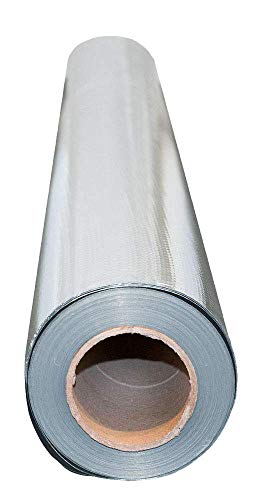
MWS 300 sqft Aluminum Foil Barrier Insulation Sauna Vapor Barrier Waterproof Strong
As an affiliate, we earn on qualifying purchases.
As an affiliate, we earn on qualifying purchases.

Fdit Sauna Air Vent Wooden Adjustable Sauna Room Equipment Ventilation Panel Blinds Grille Sauna Air Vent for Steam Room
The air gap is adjustable, can be used in a sauna or steam room to help ventilation.
As an affiliate, we earn on qualifying purchases.
As an affiliate, we earn on qualifying purchases.