Infrared panels heat objects and people directly, making them energy-efficient, quick to warm a space, and easy to install, often at lower costs. In contrast, traditional heaters warm the air, which can lead to heat loss and higher energy bills, especially in poorly insulated areas. Infrared panels also reduce environmental impact and offer flexible installation options. If you’d like to explore how these differences can benefit your space and budget, there’s more to uncover.
Open a free Amazon Business account
Business pricing, bulk buying and tax-exempt orders.
As an affiliate, we earn on qualifying purchases.
Key Takeaways
- Infrared panels heat objects directly, offering quick warmth with less energy waste compared to traditional air-heating systems.
- They are easy and inexpensive to install, often requiring minimal setup like wall mounting, unlike complex traditional heater installations.
- Infrared panels provide consistent comfort even at lower thermostat settings, while traditional heaters may struggle with uneven heat distribution.
- They are more energy-efficient and environmentally friendly, converting electricity into heat more effectively than traditional systems.
- Infrared panels are scalable and cost-effective for various spaces, whereas traditional heaters often involve higher upfront costs and infrastructure modifications.
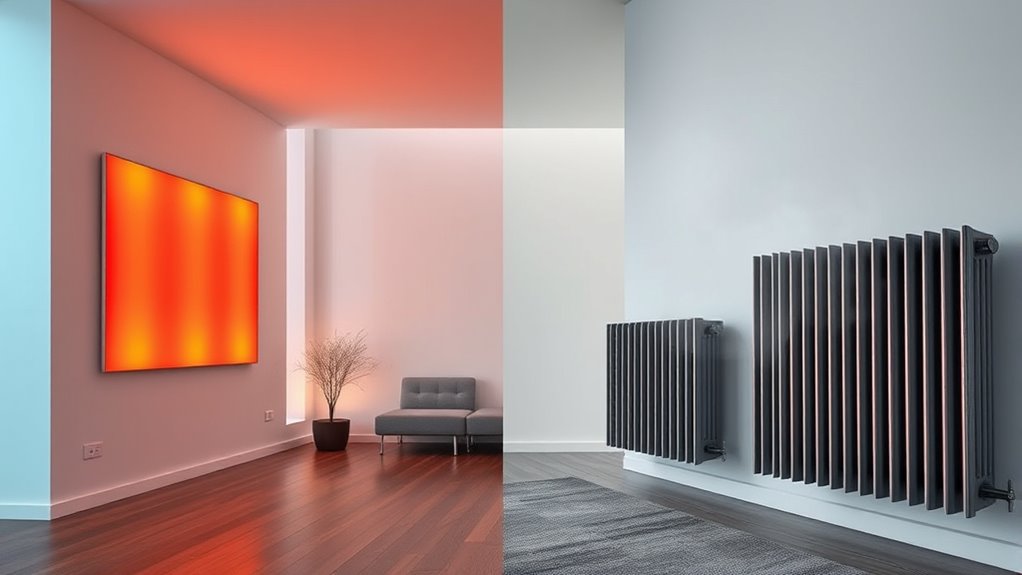
When choosing a heating solution for your home or office, understanding the differences between infrared panels and traditional heaters can make a significant impact on comfort and efficiency. One of the key factors to contemplate is energy efficiency. Infrared panels are generally more energy-efficient because they directly heat objects and people rather than the air. This means you can feel warm almost immediately, and your space stays comfortable even if the thermostat isn’t set excessively high. Traditional heaters, on the other hand, warm the air in the room, which often results in heat loss through drafts and poor insulation. As a result, they tend to consume more energy over time to maintain a steady temperature, especially in poorly insulated spaces. If you’re aiming to reduce your energy bills or minimize your carbon footprint, infrared panels might be the smarter choice. They convert electricity into heat more effectively, resulting in less wasted energy.
When it comes to installation costs, infrared panels usually have the advantage. They are compact, lightweight, and often require minimal setup, sometimes just a simple wall mount. They don’t need complex ductwork or extensive plumbing, which keeps installation straightforward and affordable. Depending on the size of your space, you might be able to install multiple panels yourself or with minimal professional help, further reducing costs. Traditional heaters, especially central systems like furnaces or radiators, can have higher installation costs. They often involve significant labor, ductwork, or piping, and may require modifications to your existing HVAC system. If you’re renovating or building anew, these costs can add up quickly, making traditional systems less appealing if budget constraints are a concern.
As an affiliate, we earn on qualifying purchases.
Frequently Asked Questions
How Does Installation Cost Compare Between Infrared Panels and Traditional Heaters?
You’ll find that the cost comparison for installation favors infrared panels, which usually cost less to install than traditional heaters. Infrared panels are simpler and quicker to set up because they often require fewer components and less complex wiring. Traditional heaters might need more extensive installation work, increasing your overall costs. So, if you want a more straightforward, budget-friendly installation, infrared panels are generally the better choice.
Which Heating Method Is More Energy-Efficient Long-Term?
They say “you get what you pay for,” and that rings true with energy-efficient heating. Infrared panels often provide better energy savings over time, reducing your utility bills and environmental impact. They heat objects directly, not the air, making them more efficient in the long run. Traditional heaters may be cheaper upfront, but infrared panels’ efficiency helps you save energy and money over years, making them a smarter choice.
Are Infrared Panels Safe for All Room Types and Users?
Infrared panels are generally safe for most room types and users, but safety concerns do exist, especially around children and pets. You should guarantee proper installation and avoid direct contact with the heating element. User accessibility is usually good, but consider room layout and any mobility issues. Always follow manufacturer guidelines to minimize risks and ensure safe, effective use across different environments.
How Do Maintenance Requirements Differ Between the Two Options?
Like a well-oiled machine, your infrared panels demand less maintenance, needing only occasional dusting and cleaning to keep them efficient. In contrast, traditional heaters often require more frequent maintenance, such as checking for mineral buildup or pilot light issues. Repair complexity is generally lower for infrared panels, which typically involve simpler components, whereas traditional heaters can have more parts prone to wear and require professional servicing more often.
Can Infrared Panels Effectively Heat Large or Open Spaces?
Infrared panels can effectively heat large or open spaces, but their performance depends on space coverage and heating uniformity. They work best in well-insulated areas where targeted heating is needed. For expansive or highly open spaces, you might need multiple panels to guarantee even warmth. While they provide quick, direct heat, they may not evenly warm the entire area, so consider your specific space and heating needs before choosing infrared panels.
electric wall mounted infrared heater
As an affiliate, we earn on qualifying purchases.
As an affiliate, we earn on qualifying purchases.
Conclusion
Choosing between infrared panels and traditional heaters depends on your needs. Infrared panels heat objects directly, providing efficient warmth, while traditional heaters warm the air, which can be less efficient. Did you know that infrared heating can save up to 60% on energy bills? So, consider your space and budget carefully. Infrared panels might be the modern, cost-effective solution you’re looking for, especially if you want quick, targeted warmth without high energy costs.
energy efficient infrared heating panels
As an affiliate, we earn on qualifying purchases.
As an affiliate, we earn on qualifying purchases.
As an affiliate, we earn on qualifying purchases.
Fall Picks
fall essentials
As an affiliate, we earn on qualifying purchases.