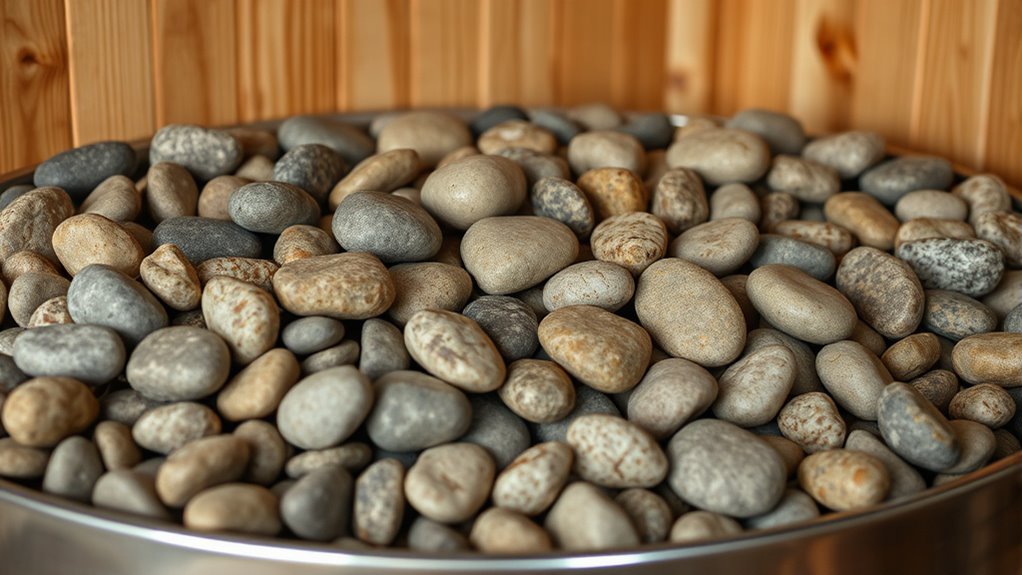

When choosing stones for your sauna heater, pick medium-sized, non-porous stones like peridotite or olivine that handle high temperatures well. Place larger stones at the bottom for stability, with smaller stones layered on top to promote airflow. Avoid overcrowding to prevent uneven heating or cracking. Regularly inspect and replace damaged stones for safety and efficiency. For more tips on optimizing your sauna setup, keep exploring how proper size, type, and placement make a difference.
Key Takeaways
- Select non-porous, durable stones like peridotite or olivine that withstand high temperatures and provide even heat distribution.
- Use medium-sized stones for balanced heat retention and airflow, avoiding overcrowding that restricts airflow and causes uneven heating.
- Place larger stones at the bottom as a stable base, with smaller stones layered on top to promote better airflow and heat transfer.
- Regularly inspect and replace cracked or worn stones to maintain safety, efficiency, and optimal heat retention.
- Ensure proper placement to allow free airflow, preventing hot spots, reducing stress on stones, and extending their lifespan.
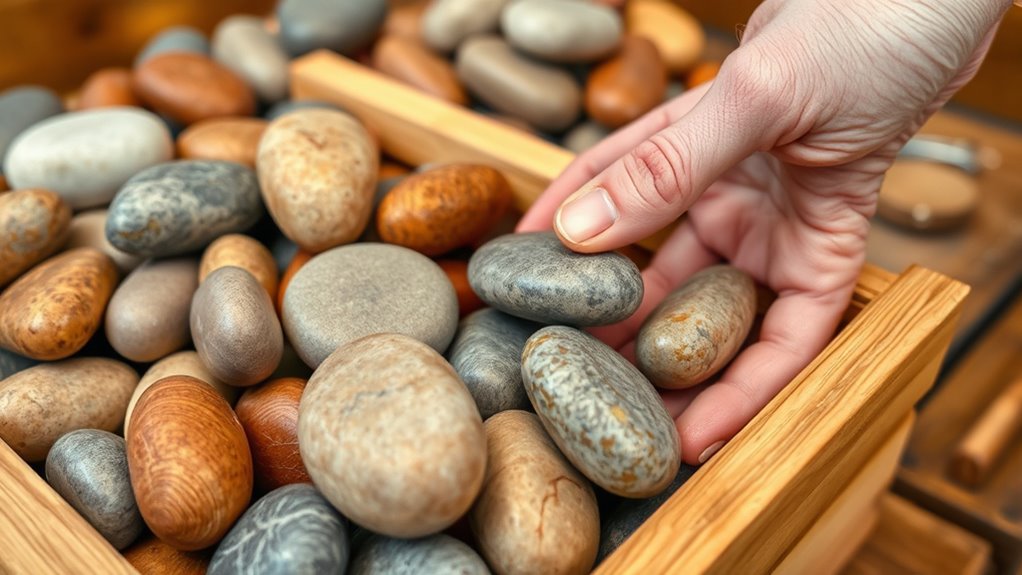
Selecting the right stones for your sauna heater is vital to guarantee efficient heat transfer, safety, and durability. When choosing sauna stones, you want to consider their ability to hold and distribute heat evenly without cracking or deteriorating over time. Proper sauna stone maintenance is key to making sure your stones stay effective and safe. Regularly inspect your stones for cracks, discoloration, or crumbling, and replace any that show signs of wear. Well-maintained stones improve heat retention strategies, helping your sauna operate efficiently and reducing energy consumption.
Choosing durable, heat-retentive sauna stones and maintaining them ensures safety and efficient heat distribution.
Size plays a significant role in selecting sauna stones. Larger stones tend to retain heat longer and provide a more consistent experience, but they can be harder to heat initially. Smaller stones heat up quickly but may not hold heat as effectively or as long. A good rule of thumb is to choose medium-sized stones that fit comfortably in your heater without overcrowding. Overloading the heater can restrict airflow, leading to uneven heating and increased stress on the stones. Proper placement is equally important; ensure stones are arranged loosely enough to allow for good airflow around them, which promotes even heating and prevents hot spots that could cause cracking.
The type of stone you select impacts both safety and performance. You want stones that are non-porous, durable, and resistant to high temperatures. Popular choices include peridotite, olivine, and certain types of granite. Avoid using stones that contain impurities or minerals like limestone or soapstone, which can crack or emit unpleasant odors when heated. When selecting stones, consider their heat retention capabilities—some materials naturally hold heat longer, reducing the need for frequent reheating and making your sauna more energy-efficient. Additionally, selecting stones with consistent density helps prevent cracking under thermal stress.
Placement within your sauna heater is vital. Arrange the stones in a way that allows air to circulate freely between them, which promotes even heat distribution. Typically, larger stones go at the bottom to serve as a stable base, while smaller stones can be layered on top. This setup also helps prevent stones from shifting or falling apart under thermal stress. Proper placement not only enhances heat transfer but also minimizes the risk of stones cracking or damaging your heater. Considering the size and shape of stones can further optimize airflow and heat retention within your heater.
Ultimately, choosing the right sauna stones involves balancing size, type, and placement while maintaining them properly. Keeping up with sauna stone maintenance ensures longevity and safety, and employing effective heat retention strategies will maximize the efficiency of your sauna experience. By paying attention to these details, you guarantee your sauna heats efficiently, stays safe, and provides a consistently enjoyable experience for years to come.
Top picks for "choos ston sauna"
Open Amazon search results for this keyword.
As an affiliate, we earn on qualifying purchases.
Frequently Asked Questions
How Often Should I Replace Sauna Stones?
You should replace your sauna stones every 1 to 3 years, depending on stone longevity and usage. Regularly inspect them for cracks, crumbling, or crumbling, which indicate it’s time for replacement. Proper maintenance and placement can extend their lifespan, but frequent heating and cooling cycles weaken stones over time. Replacing stones when needed ensures peak heater performance, safety, and consistent heat, so stay attentive to their condition and replace them as part of regular sauna upkeep.
Can I Use Decorative Stones in My Sauna Heater?
You shouldn’t use decorative stones in your sauna heater because they often lack the durability and heat resistance needed for safe operation. Sauna stone aesthetics are important, but safety comes first. Stick to traditional sauna stones or specific decorative options designed for high heat environments. Using unsuitable decorative stone options can cause cracks, emit harmful fumes, or break apart, risking injury or damage to your heater.
Are There Safety Concerns With Certain Stone Materials?
Yes, there are safety concerns with certain stone materials. You should prioritize stone safety by avoiding stones that might contain harmful minerals or toxins, as mineral toxicity can pose health risks when heated. Always choose sauna stones specifically designed for heating appliances, guaranteeing they’re free from dangerous elements. Using the right stones minimizes risks and ensures safe, effective sauna use, protecting you from potential health hazards.
How Do I Clean and Maintain Sauna Stones?
Cleaning sauna stones is essential; neglecting it can turn your serene oasis into a moldy nightmare! To maintain them, follow simple cleaning techniques like rinsing with water and removing debris regularly. Stick to a maintenance schedule—every few months—to prevent buildup and guarantee ideal heat distribution. Avoid harsh chemicals, and gently brush or replace stones when they crack or crumble. Proper care keeps your sauna safe, efficient, and inviting!
What Are Signs My Stones Need Replacing?
If you notice stone discoloration or cracking, it’s time to substitute your sauna stones. Discolored stones often indicate mineral buildup or damage, while cracks can cause stones to break apart, reducing efficiency and safety. Regularly inspect your stones, and if you see significant discoloration or cracks, replace them promptly to ensure your sauna operates safely and effectively. Staying attentive helps maintain your sauna’s longevity and performance.
Conclusion
By selecting the right stones in size, type, and placement, you’re crafting more than just a heater—you’re creating a sanctuary of warmth. Think of your stones as the silent orchestra, each playing its part to produce the perfect symphony of heat. When you choose wisely, your sauna becomes a haven where comfort and tradition intertwine, reminding you that in the end, it’s the smallest details that forge the greatest comfort.