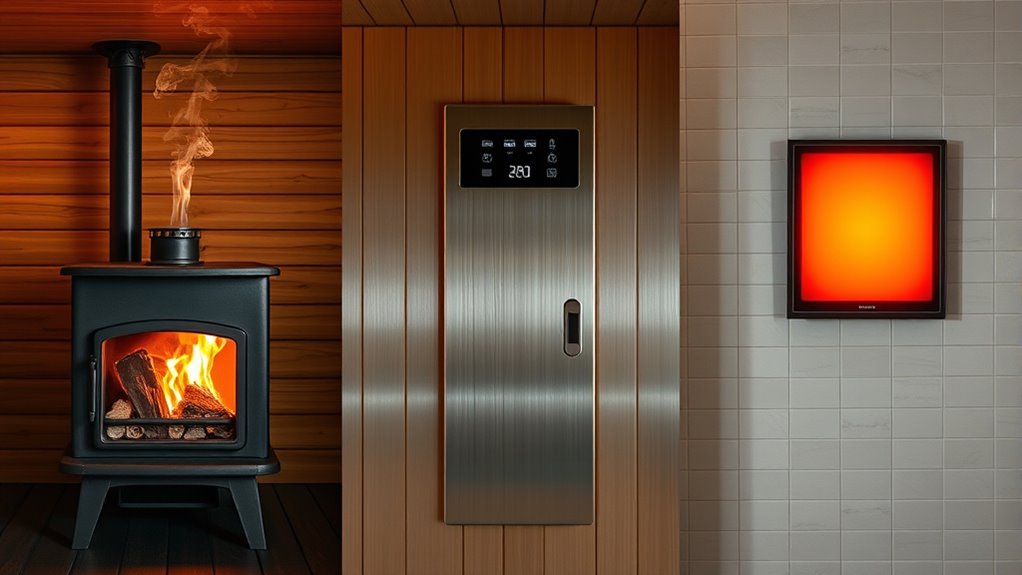

When choosing between wood-burning, electric, and infrared sauna heaters, consider their energy efficiency, installation costs, and ambiance. Wood heaters offer a traditional experience but need proper ventilation and can be costly to maintain. Electric and infrared heaters are more energy-efficient, easier to install, and require less upkeep, making them practical options. If you want to learn more about the pros and cons of each, keep exploring to find the best fit for your sauna needs.
Key Takeaways
- Wood-burning heaters provide a traditional sauna experience with natural heat but require chimney installation and ongoing fuel sourcing.
- Electric heaters are cost-effective, easy to install, and offer high energy efficiency with minimal maintenance.
- Infrared heaters heat the body directly, are highly energy-efficient, and suitable for small saunas but lack traditional ambiance.
- Installation costs are lower for electric and infrared heaters, while wood-burning models involve higher setup and ventilation expenses.
- Long-term operational costs favor electric and infrared options due to lower energy consumption and maintenance needs.

Choosing the right sauna heater can substantially enhance your sauna experience, but with so many options on the market, it can be hard to know where to start. One of the first considerations is energy efficiency, which directly impacts your ongoing costs and environmental footprint. Wood-burning heaters are often praised for their natural heat and traditional feel, but they tend to be less energy efficient compared to electric and infrared options. They require a steady supply of wood, which can be costly and time-consuming to source and store. Additionally, their installation costs can be higher because they need proper ventilation and a chimney, making setup more complex and potentially more expensive upfront. If you’re looking for a more energy-efficient solution, electric sauna heaters typically come out on top. They convert electricity directly into heat with minimal waste, meaning they use less energy to produce the same amount of warmth. Installation costs for electric heaters are generally lower too, as they don’t require venting or chimney installation. You can often plug them into standard electrical outlets, simplifying the setup process and reducing initial expenses. Infrared heaters, on the other hand, work differently by emitting infrared radiation that heats your body directly rather than warming the air around you. They are highly energy efficient because they use less power to produce effective heat, especially for smaller saunas. Infrared units are usually cheaper to install since they are designed to be wall-mounted or portable, eliminating the need for extensive electrical work or ventilation systems. However, it’s important to ponder that infrared heaters might not provide the same traditional sauna experience as wood-burning or electric heaters, especially if you prefer the ambiance or moisture levels associated with steam or traditional saunas. When comparing these options, think about your long-term costs, including energy consumption and maintenance, to make an informed decision. Wood-burning heaters, while nostalgic and potentially cheaper in fuel costs, might end up costing more in installation and upkeep. Electric heaters strike a good balance between ease of use, energy efficiency, and lower installation costs, making them popular for modern home saunas. Infrared heaters appeal to those seeking quick, efficient warmth with minimal setup costs and energy use. Additionally, considering sauna surface materials can influence heat retention and comfort during your sessions. Ultimately, your choice should align with your budget, desired sauna experience, and environmental considerations. By weighing energy efficiency and installation costs carefully, you’ll find the heater that best fits your needs, ensuring many relaxing and enjoyable sauna sessions ahead.

ALEKO Wood Burning Sauna Heater and Chimney Kit | Equivalent to 9-15 kW Electric Heater | Large Stone Capacity
[COZY, OFF-GRID EXPERIENCE]: Enjoy the cozy sounds of a fire crackling and bask in the flame’s warm, ambient…
As an affiliate, we earn on qualifying purchases.
As an affiliate, we earn on qualifying purchases.
Frequently Asked Questions
Which Sauna Heater Type Is Most Energy-Efficient?
You’ll find infrared sauna heaters are the most energy-efficient choice, offering better heating efficiency and energy savings compared to wood-burning and electric models. They heat up quickly and directly target your body, reducing heat loss and electricity use. Electric heaters come next, but they consume more energy. Wood-burning saunas, while traditional, aren’t as efficient because they rely on combustion and heat transfer, leading to higher energy costs.
How Does Heater Size Affect Sauna Performance?
Heater capacity directly impacts sauna performance and your comfort. If your heater is too small, it won’t reach the desired temperature, making your sauna less effective. Conversely, an oversized heater can cause uneven heating and waste energy. To optimize sauna comfort, choose a heater with the right capacity for your space, ensuring consistent warmth and efficient operation. Proper sizing creates a more enjoyable, relaxing sauna experience.
Are Infrared Heaters Safer Than Traditional Options?
Yes, infrared heaters are generally safer than traditional options because they offer improved sauna comfort with even, gentle heat. They pose fewer installation challenges since they’re easier to set up and don’t require venting or combustible fuels. Plus, infrared heaters don’t produce open flames or fumes, reducing risks. This makes them a safer choice for home saunas, especially if you’re concerned about safety and ease of installation.
Can Different Heater Types Be Combined?
You can definitely combine different heater types for your sauna, creating a customized experience. Interestingly, 65% of sauna owners prefer hybrid setups for maximum comfort. Mixing heaters allows for better heater customization and aesthetic integration, matching your style and needs. Just guarantee proper ventilation and safety measures. Combining wood-burning, electric, and infrared heaters can give you a versatile, personalized sauna experience that maximizes relaxation and efficiency.
What Maintenance Is Required for Each Heater Type?
You need to regularly clean your sauna heater to maintain its performance and extend its lifespan. For wood-burning heaters, remove ashes and creosote buildup, while electric heaters require dusting and checking for debris. Infrared heaters need minimal cleaning but should be wiped down occasionally. Proper maintenance guarantees each heater type lasts longer, reduces repair costs, and keeps your sauna running smoothly. Always follow manufacturer instructions for specific cleaning requirements.
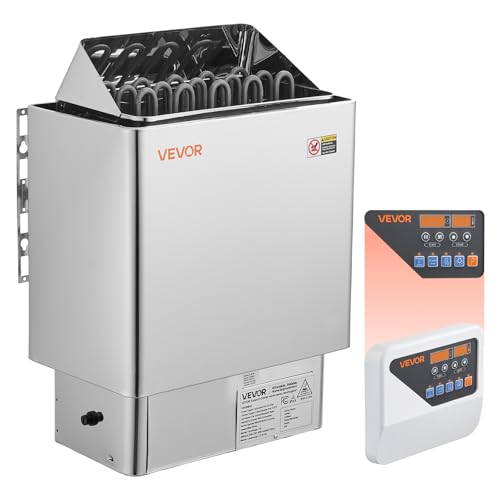
VEVOR Sauna Heater, 9KW 240V Electric Sauna Stove, Dry Steam Bath Saunas Stove with Pre-Drilled Bracket, Fit 317.8 to 459 CU.FT Saunas Rooms, Steam Bath Stoves for Home, Commercial, Leisure Venues
Rapid Heat: This sauna stove operates at 240V, 9kW, ideal for 317.8 to 459 cu.ft / 9 to…
As an affiliate, we earn on qualifying purchases.
As an affiliate, we earn on qualifying purchases.
Conclusion
Ultimately, choosing the right sauna heater is about finding the perfect balance for your personal retreat. Whether you prefer the cozy charm of wood-burning, the convenient glow of electric, or the gentle warmth of infrared, each option invites you into a relaxing sanctuary. Imagine a space where warmth wraps around you like a soft embrace, guiding you to unwind and refresh—your ideal sauna experience awaits, softly whispering comfort and tranquility in every heat.

iDOTODO 3Pcs Full Far Infrared Carbon Fiber Glass Red Light Heater Tube, Infrared Sauna Heater Tube Sauna Accessories, 110V Heater, Infrared Suana Heating Tube for Wooden Indoor/Outdoor Sauna (110V)
ATTENTION:Our products are not equipped with a plug and controller, you need to find your own electrician to…
As an affiliate, we earn on qualifying purchases.
As an affiliate, we earn on qualifying purchases.

HOW TO BUILD A SAUNA: Turn Your Backyard into a Personal Spa: The Ultimate DIY Sauna Guide for Health, Healing, and Heat Therapy
As an affiliate, we earn on qualifying purchases.
As an affiliate, we earn on qualifying purchases.