To design a multi-functional sauna space for yoga and relaxation, incorporate infrared heating for gentle, penetrating warmth that promotes comfort and efficiency. Use adjustable ventilation and moisture control to keep the environment dry and safe, while choosing non-slip, cozy flooring for movement. Create a calming atmosphere with soft lighting, natural elements, and relaxing decor. Balance open space with cozy areas to support both active and restful routines. If you explore further, you’ll discover tips to perfect this versatile wellness environment.
Key Takeaways
- Incorporate infrared heating to provide gentle warmth that enhances relaxation and supports deep breathing during yoga and meditation.
- Use moisture control systems like adjustable vents and dehumidifiers to maintain a comfortable, dry environment suitable for movement.
- Design flexible layouts with non-slip flooring, built-in seating, and adjustable lighting to accommodate various wellness activities seamlessly.
- Select moisture-resistant materials and calming lighting to create an inviting, hygienic space conducive to relaxation and mindfulness.
- Integrate natural elements and ambiance features such as plants, diffusers, and sound systems to enhance the calming atmosphere.

Creating a multi-functional sauna space allows you to enjoy a versatile wellness area tailored to your needs. When designing this space, consider integrating infrared heating, which offers a gentle, penetrating warmth that promotes relaxation and detoxification. Infrared heaters warm your body directly without excessively heating the surrounding air, making your sauna more energy-efficient and comfortable. This type of heating is especially beneficial if you plan to combine it with activities like yoga or meditation, as it creates a soothing environment that supports deep breathing and mental clarity.
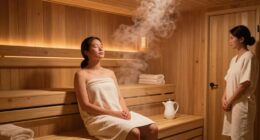
Integrate infrared heating for a relaxing, energy-efficient wellness space perfect for yoga and meditation.
To maximize comfort, moisture control becomes essential. Proper ventilation and humidity regulation help prevent the space from becoming too damp or stuffy, which can compromise comfort and safety. Incorporate features such as adjustable vents, dehumidifiers, or humidity sensors to maintain ideal moisture levels. Controlling moisture not only enhances your overall experience but also protects the longevity of your sauna’s materials, like wood and upholstery, which can deteriorate with excess humidity. A dry, well-ventilated space allows you to seamlessly shift between relaxing sessions and yoga routines without feeling overheated or sticky.
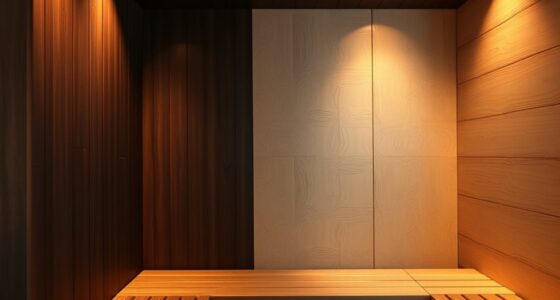
When planning your sauna, think about the layout and how to make it adaptable for both relaxation and movement. Consider installing a comfortable, non-slip flooring surface and adjustable lighting to set the right mood for meditation, stretching, or deep relaxation. Incorporate built-in benches or cushioned areas where you can sit or lie down comfortably during meditation or post-yoga rest. Keep the space open enough to allow free movement but also cozy enough to foster a sense of retreat. You might also add features like aromatic diffusers or sound systems to enhance relaxation during your yoga or meditation sessions.
Lighting plays a significant role in creating a calming atmosphere. Soft, warm lighting can help you unwind, while brighter, adjustable lights can energize your space when needed. Make sure to select materials and finishes that are resistant to moisture and easy to clean, ensuring your sauna remains a hygienic and inviting environment over time. If you want to incorporate natural elements, consider adding plants or natural wood accents, but make sure they’re suitable for high-moisture environments.
Top picks for "design multi functional"
Open Amazon search results for this keyword.
As an affiliate, we earn on qualifying purchases.
Frequently Asked Questions
What Are the Best Materials for Multi-Functional Sauna Walls?
You should choose wood paneling and moisture-resistant tiles for your sauna walls. Wood paneling creates a warm, natural feel and is ideal for a relaxing environment, but make sure it’s properly treated for humidity. Moisture-resistant tiles are perfect for areas exposed to water, preventing mold and damage. Combining these materials gives your sauna durability, aesthetic appeal, and versatility, making it suitable for both yoga and relaxation activities.
How Can I Ensure Proper Ventilation in a Combined Sauna and Yoga Space?
You need to prioritize airflow circulation and humidity control to keep your space comfortable and safe. Install adjustable vents or fans that promote fresh air movement without disrupting the peaceful atmosphere. Use a dehumidifier to prevent excessive moisture, which can cause mold or damage. Imagine the serene balance of air and humidity, where every breath feels pure and invigorating, making your sauna and yoga experience truly rejuvenating.
What Safety Features Are Essential for a Multi-Purpose Sauna Area?
You should install water-resistant fixtures to prevent damage from humidity and water splashes. Emergency preparedness is vital; ensure easy access to fire extinguishers, first aid kits, and clear evacuation routes. Incorporate non-slip flooring and proper ventilation to enhance safety. Regularly check electrical systems and keep emergency contact information visible. These features help create a safe, functional sauna space that minimizes risks and promotes quick response during emergencies.
How to Optimize Lighting for Both Relaxation and Yoga Practices?
Think of your sauna as a canvas where lighting ambiance paints serenity and focus. Use adjustable warm LED lights to create a calming glow for relaxation, and incorporate softer, diffused lighting for yoga. Choose soothing color schemes like earthy tones or gentle pastels to enhance tranquility. Dimmable fixtures allow you to seamlessly shift between energizing and calming atmospheres, ensuring your space supports both practices harmoniously.
What Are the Maintenance Tips for a Multi-Functional Sauna Environment?
You should set regular cleaning schedules to keep your sauna hygienic and inviting, wiping down benches and surfaces after each use. Additionally, maintain proper humidity control by using dehumidifiers or ventilation systems to prevent mold and mildew. Check filters regularly and verify the heating elements are functioning correctly. Proper maintenance not only prolongs your sauna’s lifespan but also ensures a safe, comfortable environment for yoga and relaxation.
Conclusion
By combining yoga and relaxation in your sauna space, you create a versatile sanctuary that boosts both mind and body. Did you know that incorporating just 20 minutes of sauna use three times a week can improve cardiovascular health? With thoughtful design, your multi-functional sauna becomes more than just a heat chamber — it’s a personalized wellness retreat. Embrace this space, and enjoy the benefits of relaxation and rejuvenation every day.