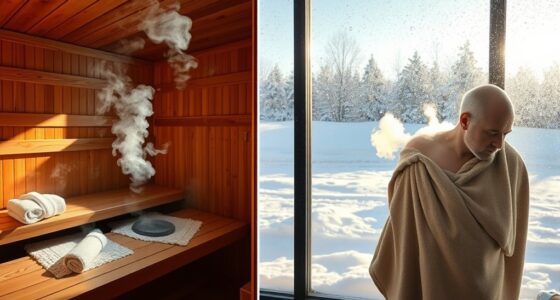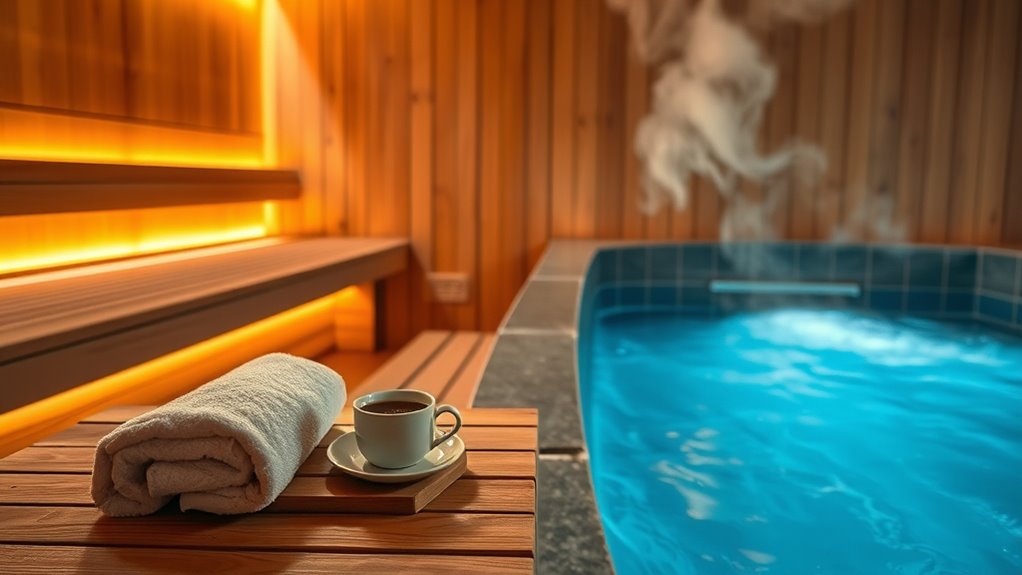

A multi-day recovery plan that combines sauna sessions, cold plunges, and sufficient rest can significantly boost your healing process. Alternate hot and cold therapies to enhance circulation, reduce inflammation, and speed up tissue repair. Prioritize quality sleep and passive recovery to maximize results. Fuel your body with nutritious foods to support healing, and maintain hydration. Keep consistency in your routine to build resilience. Stick with this approach to open deeper recovery insights as you continue forward.
Key Takeaways
- Integrate daily sauna sessions with cold plunges to stimulate circulation, reduce inflammation, and promote faster tissue repair.
- Combine consistent rest periods with nutritional strategies rich in antioxidants, healthy fats, and hydration for optimal recovery.
- Alternate hot and cold therapies to enhance circulatory benefits and decrease soreness over multiple days.
- Prioritize quality sleep and relaxation practices to support mental resilience and physical healing throughout the recovery process.
- Maintain routine adherence to foster a holistic cycle of healing, building resilience and accelerating multi-day recovery outcomes.

Have you ever wondered how to recover effectively from a setback or emergency? When you’re faced with physical or mental stress, a well-structured multi-day recovery plan can make all the difference. Combining practices like sauna sessions, cold plunges, and adequate rest helps reset your body and mind, but to truly optimize recovery, you need to incorporate proper nutritional support and build mental resilience. These elements work together to speed up healing, restore energy, and strengthen your capacity to bounce back stronger.
Starting with sauna sessions, they are excellent for promoting circulation and relaxing tense muscles. The heat stimulates blood flow, which helps deliver essential nutrients to damaged tissues and flush out toxins. This process supports your body’s natural healing mechanisms, making recovery more efficient. However, to maximize these benefits, pair sauna use with good nutritional support. Consuming foods rich in antioxidants, healthy fats, and proteins supplies your body with essential nutrients needed for tissue repair and immune function. Hydration is also fundamental—drink plenty of water before and after sauna sessions to replace lost fluids and maintain electrolyte balance. Over several days, this combination reduces inflammation and accelerates recovery, but it also requires mental resilience. Staying committed to the routine, especially when you’re tired or tempted to skip sessions, builds mental toughness that benefits your overall recovery process. Additionally, understanding the importance of a high contrast ratio in visualizing progress can motivate continued adherence to your routines.
Sauna sessions boost circulation and relaxation, especially when combined with antioxidant-rich foods and proper hydration for optimal recovery.
Cold plunges complement sauna therapy by constricting blood vessels and reducing inflammation. Alternating between hot and cold stimulates your circulatory system, helping to decrease swelling and soreness. This contrast therapy also has a profound impact on mental resilience. The initial shock of cold water can be uncomfortable, but regularly embracing it trains you to manage discomfort and stay calm under stress. To support this practice, focus on nutritional strategies that help your nervous system adapt, such as magnesium-rich foods or omega-3 fatty acids. These nutrients help stabilize mood and improve your body’s stress response, making it easier to handle the physical and mental challenges of recovery. Rest also plays a critical role. Sleep and passive recovery allow your body to repair tissues and recharge your mental energy. Prioritize quality sleep, and incorporate periods of conscious relaxation or meditation to foster mental resilience. When you’re well-rested, you’re better prepared to handle setbacks and maintain a positive outlook during recovery.
Over multiple days, this integrated approach creates a cycle of healing that nurtures both your body and mind. It’s about more than just physical recovery; it’s about cultivating the mental resilience needed to face future stresses. Consistency is key—adhering to a routine that combines sauna, cold plunge, proper nutrition, and rest helps you develop habits that reinforce resilience and expedite recovery. When you view recovery as a holistic process, you empower yourself to overcome setbacks with strength, clarity, and confidence.
Frequently Asked Questions
How Do I Individualize the Recovery Plan for Different Fitness Levels?
To individualize your recovery plan, start with a thorough fitness assessment to identify your strengths and weaknesses. Use personalization strategies, such as adjusting sauna and cold plunge durations based on your tolerance and recovery response. Pay attention to how your body reacts and modify rest periods accordingly. Regularly evaluate your progress and tweak your plan, ensuring it aligns with your fitness level and goals for ideal recovery and performance.
Are There Any Risks Associated With Multi-Day Sauna and Cold Plunge Routines?
Imagine your body as a delicate garden; overdoing sauna and cold plunge routines can invite weeds like overuse injuries and cardiovascular risks. Pushing too hard might strain your heart or cause muscle fatigue, turning your recovery into a stormy sea. Always listen to your body’s signals, limit sessions, and consult a professional to keep your wellness journey safe and thriving. Moderation keeps your garden lush and healthy.
Can I Combine These Recovery Methods With Other Therapies?
Yes, you can combine sauna, cold plunge, and rest with complementary therapies like massage or stretching. Just guarantee you integrate them thoughtfully into your lifestyle, avoiding overexertion. Mixing these recovery methods can enhance overall well-being, but listen to your body and adjust accordingly. Proper lifestyle integration helps maximize benefits while minimizing risks, so balance your routine and consult a healthcare professional if needed to tailor the combination safely.
How Do I Track Progress During Multi-Day Recovery Plans?
You can track your progress during multi-day recovery plans by monitoring key metrics like sleep quality, muscle soreness, and energy levels. Use a journal or apps to record daily progress indicators such as heart rate variability, mood, and recovery scores. Pay attention to how your body responds to each session, and adjust your plan accordingly. Consistent tracking helps you see improvements and identify areas needing more focus.
What Is the Ideal Duration for Each Sauna and Cold Plunge Session?
For ideal temperature regulation, aim for 15-20 minutes in the sauna and 3-5 minutes in the cold plunge. Keep hydration strategies in mind; drink water before, during, and after each session to support recovery. Listen to your body’s signals—if you feel dizzy or uncomfortable, ease up. This balance helps maximize benefits while safeguarding your well-being, creating a seamless flow between relaxation and refreshment.
Conclusion
By following these multi-day recovery plans, you’ll unleash the true power of your body’s resilience, feeling revitalized like a phoenix rising from the ashes. Combining sauna, cold plunge, and rest isn’t just a routine—it’s a game-changer that can transform your recovery journey into an unstoppable force. Stick with it, and you’ll see your strength and energy soar to heights you never thought possible, making recovery feel as effortless as breathing.