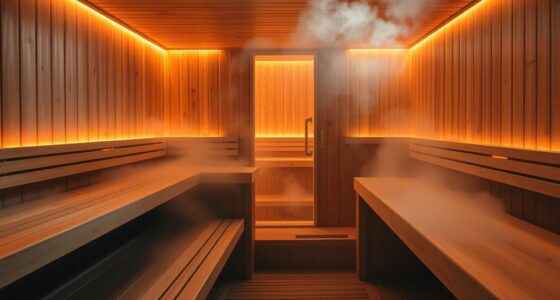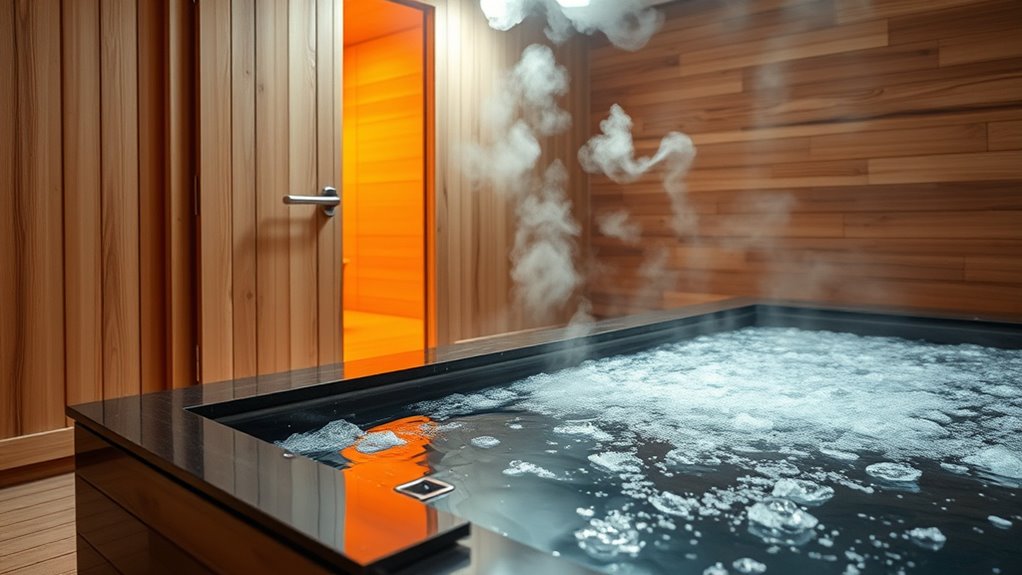

After a sauna session, it’s recommended that you rest for about one to five minutes before jumping into a cold plunge. This pause allows your body to recover, regulate your heart rate, and prepare safely for the temperature shift. During this time, focus on slow, deep breathing and hydration. Adjust your rest based on how you feel—longer if needed. Continuing further can help you optimize your shift between heat and cold safely and effectively.
Key Takeaways
- Rest periods typically range from 1 to 5 minutes to allow heart rate normalization.
- Adjust rest duration based on individual health, experience, and comfort levels.
- Use rest time for hydration, breathing exercises, and cooling down before the next cycle.
- Ensure sufficient rest to prevent overheating or chilling, especially during temperature transitions.
- Listen to your body signals; extend rest if feeling dizzy, unwell, or overly stressed.
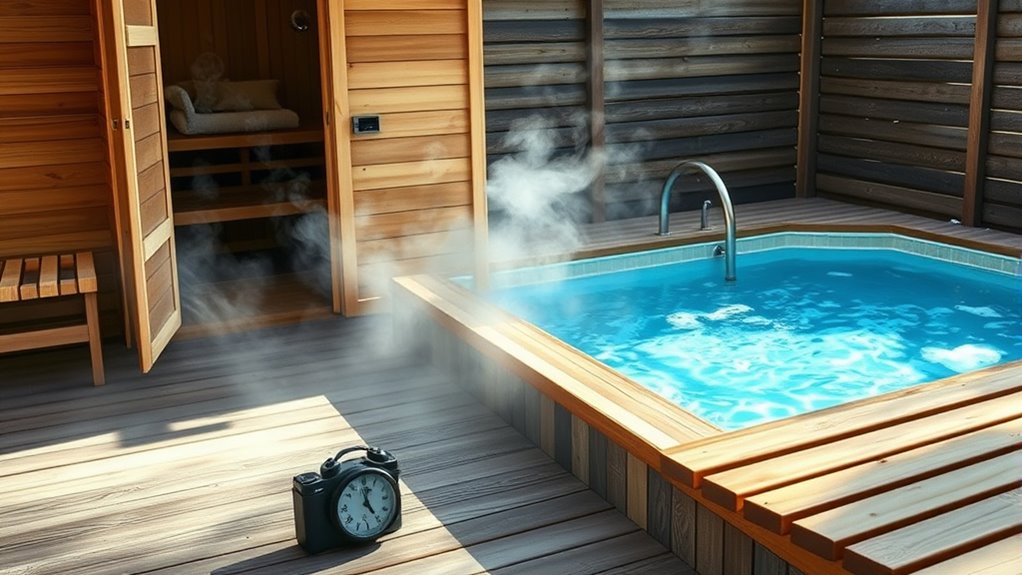
When alternating between sauna heat and cold plunge, taking proper rest periods is essential to maximize benefits and prevent overstressing your body. Rest allows your body to recover, stabilize, and prepare for the next cycle, whether it’s heating up in the sauna or cooling down in the plunge. During these breaks, focusing on hydration strategies is crucial. Sweating in the sauna causes fluid loss, so drinking water or electrolyte-rich beverages helps replenish what you’ve lost. Proper hydration supports your cardiovascular system and reduces the risk of dehydration or dizziness, keeping you safe throughout your session.
In addition to hydration, breathing techniques play a vital role during rest periods. Deep, controlled breathing helps regulate your heart rate, promotes relaxation, and ensures your body efficiently recovers from the intense temperature shifts. As you transition from heat to cold or vice versa, focus on slow, diaphragmatic breaths. Inhale deeply through your nose, allowing your abdomen to rise, then exhale slowly through your mouth. This method reduces stress on your cardiovascular system and enhances your overall comfort, making each cycle more effective.
The duration of rest periods can vary based on your experience, health, and the specific protocol you’re following. As a general rule, resting for about 1 to 5 minutes between cycles is advisable. This interval gives your heart rate a chance to return to a normal level, prevents overheating or chilling, and allows you to implement hydration strategies effectively. If you’re new to alternating sauna and cold plunges, start with shorter sessions and longer rest periods, gradually decreasing your rest time as your body adapts.
During these breaks, avoid rushing or overexerting yourself. Instead, sit comfortably in a shaded, cool environment, sip water steadily, and practice your breathing techniques. This approach not only enhances your recovery but also minimizes the risk of overstressing your system. Remember, listening to your body is key. If you feel dizzy, excessively tired, or unwell, extend your rest period or stop altogether. Over time, as you become more accustomed to the routine, you’ll learn to gauge your ideal rest durations, ensuring each cycle is both safe and beneficial. Incorporating yoga-inspired breathing techniques can further enhance your recovery and relaxation during these intervals.

BODYARMOR Flash I.V. Electrolyte Beverage, Strawberry Kiwi, Hydration Drink with Coconut Water For Rapid Rehydration, Post Workout Recovery, 20 Fl Oz (Pack of 12)
No artificial flavors, colors or sweeteners
As an affiliate, we earn on qualifying purchases.
As an affiliate, we earn on qualifying purchases.
Frequently Asked Questions
Can I Do Multiple Cycles Without Resting?
You shouldn’t do multiple cycles without resting because your recovery duration is essential for safety and effectiveness. Rest allows your body to stabilize temperature and recover. If you cycle too frequently without breaks, you risk dehydration, dizziness, or overheating. It’s best to wait at least 10-15 minutes between cycles, adjusting based on how you feel. Proper recovery duration helps you maximize benefits while minimizing health risks.
Does Age Affect the Rest Time Needed?
Ironically, age considerations do play a role in determining your rest duration. As you get older, your body needs more time to recover between sauna and cold plunge cycles. Don’t rush it—listen to your body’s signals. Younger folks might bounce back quickly, but if you’re older, extend your rest periods to prevent strain. Remember, patience and proper rest guarantee you enjoy the benefits safely.
Should Rest Times Vary for Beginners Versus Experienced Users?
Yes, your rest times should vary based on your experience level. Beginners need longer recovery strategies to allow their bodies to adapt thermally, preventing overstress. More experienced users might handle shorter rest periods because they’ve developed better thermal adaptation. Listen to your body, stay hydrated, and adjust rest times accordingly. This personalized approach guarantees safety and maximizes the benefits of your sauna and cold plunge cycles.
How Does Hydration Influence Rest Duration?
They say “you are what you eat,” but hydration’s just as essential. When your hydration levels are high, and electrolyte balance is maintained, you can safely extend your rest time between sauna and cold plunge. Adequate hydration prevents dizziness and dehydration, helping your body recover faster. If you’re dehydrated, cut your rest short. Drinking water and replenishing electrolytes ensures your body’s ready for the next cycle, making the process safer and more effective.
Are There Health Conditions That Require Longer Rests?
If you have heart health issues or skin sensitivity, you should take longer rests between sauna and cold plunge cycles. Your heart may need extra time to recover, and sensitive skin could react adversely to rapid temperature changes. Always listen to your body and consult a healthcare professional if you have concerns. Extending rest periods guarantees safety, helps prevent strain, and promotes better recovery.

Rivquvi Load Bearing Breathing Training Device, Abdominal Breathing Capacity,Breathing Resistance Training Dumbbells,Weighted Deep Breathing Trainer for Adults, Diaphragm Exercise Tool(Blue)
【Enhanced Breathing Technique】 Utilise this device to practise slow, deep breathing, improving oxygen flow and strengthening respiratory muscles….
As an affiliate, we earn on qualifying purchases.
As an affiliate, we earn on qualifying purchases.
Conclusion
Remember, patience is key when switching between sauna and cold plunge. Waiting about 1 to 3 minutes allows your body to adjust and maximizes benefits without overdoing it. Think of it like a dance—you need to switch steps smoothly to stay in rhythm. Listen to your body and don’t rush the process. As the saying goes, “Good things come to those who wait.” Taking your time ensures a safe, invigorating experience every time.

2 Pcs Cold Plunge Filter Scum Absorber, Ice Bath & Cold Plunge Accessories, Reusable Ice Bath Tub Filter Oil Scum Balls Floating to Keep Water Clear, Cold Plunge Water Filter, Ice Bath Water Cleaner
Remove Scum from Ice Bath tub: Reusable. The cold plunge tub eliminating scum balls will help keep your…
As an affiliate, we earn on qualifying purchases.
As an affiliate, we earn on qualifying purchases.

Sahara Sailor Water Bottle 32oz, Durable and Leakproof Water Bottles Motivational with Time Marker, Tritan, BPA Free, Wide Mouth with Easy Clean Brush for Gym, Travel, Home, School, Office (1 Bottle)
Stay Hydrated Throughout the Day: staying hydrated is often easier said than done. With the Sahara Sailor clear…
As an affiliate, we earn on qualifying purchases.
As an affiliate, we earn on qualifying purchases.