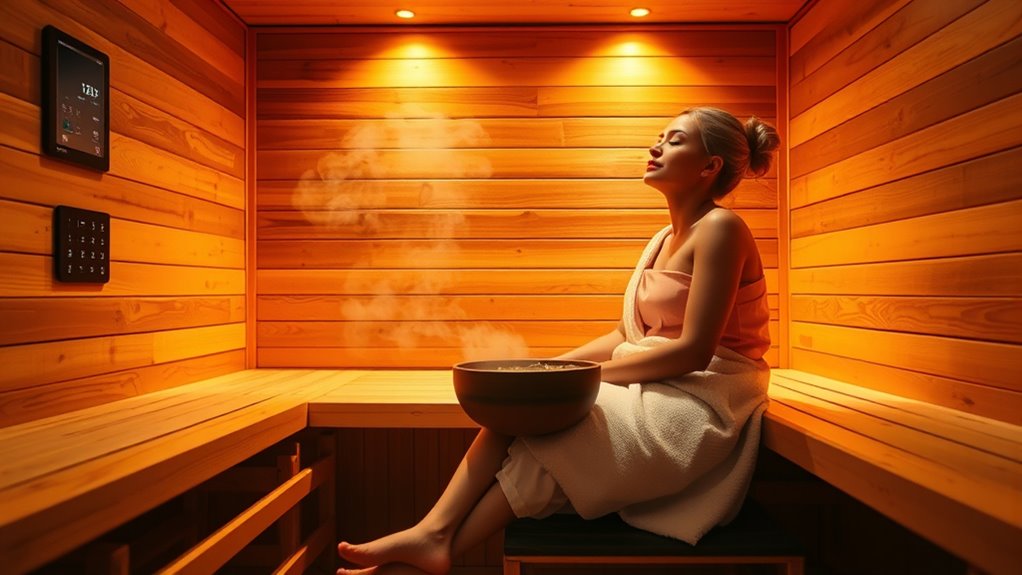

To effectively use a sauna for chronic pain relief, start with 15-20 minute sessions at temperatures between 110°F and 140°F, gradually increasing as your body adjusts. Stay well-hydrated before and after, and listen to your body to avoid discomfort. Regular sessions 2-3 times weekly can help improve circulation, relax muscles, and support healing. Keep safety in mind, and explore more tips to maximize your benefits and integrate saunas into your routine.

Get wellness gear delivered free with Prime
- Fast, free delivery on millions of items
- Prime Video, Amazon Music and more included
- Member-only deals all year
Key Takeaways
- Start with 15-20 minute sessions at 110°F-140°F, gradually increasing duration as tolerated.
- Stay well-hydrated before, during, and after sauna use to prevent dehydration.
- Listen to your body; exit immediately if you experience dizziness, lightheadedness, or discomfort.
- Use sauna 2-3 times weekly to promote circulation, muscle relaxation, and pain relief.
- Post-session, rest and hydrate to support recovery and maximize therapeutic benefits.
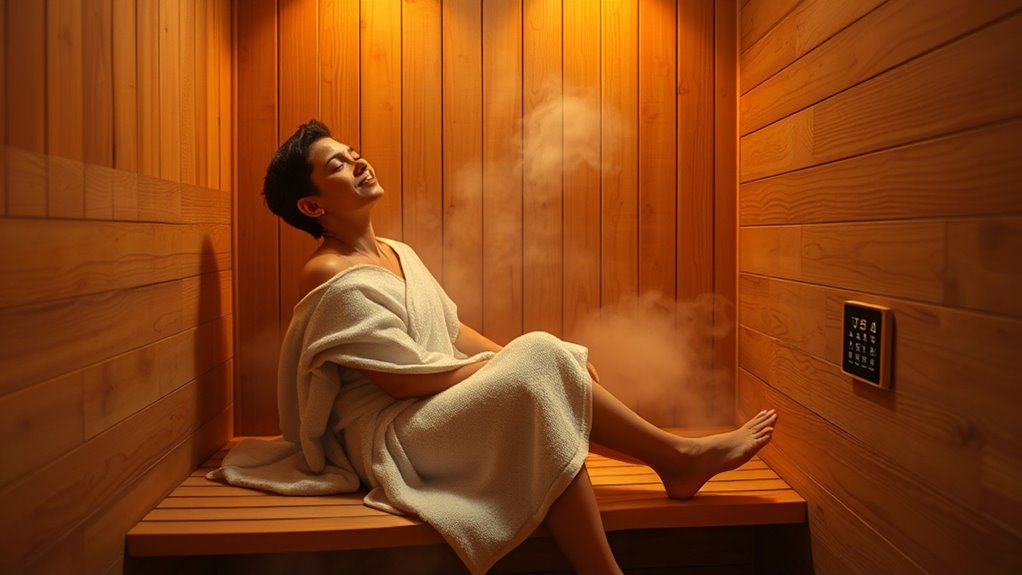
Have you ever considered how a simple sauna session might help manage chronic pain? Many people overlook this natural approach, yet it can offer significant relief through the infrared benefits and effective temperature regulation. Infrared saunas, in particular, penetrate your skin more deeply than traditional saunas, promoting circulation and easing muscle tension. This deep warmth can target areas where pain feels most intense, helping to reduce stiffness and improve mobility over time.
Infrared saunas deeply promote circulation, ease muscle tension, and target pain to improve mobility over time.
When you step into a sauna, your body begins to regulate its temperature, a process known as temperature regulation. This response is essential because it helps your body adapt to the heat, promoting sweating and detoxification. Sweating not only helps eliminate toxins but also enhances blood flow, which is critical for delivering oxygen and nutrients to damaged tissues. As your body adjusts to the heat, your muscles relax, which can alleviate pain and reduce inflammation.
Infrared benefits extend beyond just heating; they stimulate your body’s natural healing mechanisms. By penetrating deeper into tissues, infrared heat encourages increased blood circulation in areas affected by chronic pain. This improved circulation can accelerate tissue repair and decrease discomfort. Furthermore, infrared therapy often results in a more comfortable experience compared to traditional saunas because it heats your body directly rather than just the surrounding air, allowing you to stay in longer and enjoy sustained pain relief.
To maximize these benefits, it’s essential to follow a proper sauna protocol. Start with shorter sessions, around 15 to 20 minutes, especially if you’re new to sauna use. Gradually increase the duration as your body becomes accustomed to the heat. Remember to stay well-hydrated before and after each session, as sweating can lead to dehydration. During your session, focus on maintaining a comfortable temperature—most infrared saunas operate between 110°F to 140°F—so you can enjoy the warmth without feeling overwhelmed.
Listening to your body is key. If you start feeling dizzy, lightheaded, or uncomfortable, it’s best to exit the sauna and cool down. After each session, take a few moments to rest and hydrate. Incorporating regular sauna use, two to three times a week, can help your body adapt to the heat, providing ongoing relief from chronic pain. Over time, this routine can improve your overall quality of life by reducing stiffness, increasing flexibility, and promoting relaxation.
As an affiliate, we earn on qualifying purchases.
Frequently Asked Questions
Can Sauna Use Replace Medication for Chronic Pain?
Sauna use can’t replace medication entirely for chronic pain, but it can serve as a helpful alternative therapy. Regular sauna sessions may reduce your dependence on medications by easing muscle tension and promoting relaxation. However, you should consult your healthcare provider before making any changes, especially if you’re managing serious pain. Combining sauna therapy with other treatments might improve your overall pain management, but it shouldn’t be the sole approach.
How Long Should I Wait Between Sauna Sessions?
You should wait at least 24 hours between sauna sessions to allow your body to recover and stay well-hydrated. Incorporate hydration strategies like drinking water before and after each session, and avoid overdoing it with frequent sessions to prevent dehydration or fatigue. Listening to your body is key—if you feel tired or uncomfortable, extend the time between sessions. Adjust your session frequency based on how you respond.
Are There Specific Pain Conditions That Benefit Most?
Imagine stepping into a modern-day Thermae, as certain pain conditions respond well to sauna use. You’ll find muscle relaxation helps those with chronic muscle tension, while nerve pain sufferers often experience relief through improved circulation. Conditions like fibromyalgia, arthritis, and sciatic nerve pain tend to benefit most. Regular sauna sessions may ease discomfort and enhance your overall well-being, but always consult your healthcare provider before starting any new routine.
Is Sauna Use Safe for Pregnant Women With Chronic Pain?
Sauna use isn’t generally recommended during pregnancy, especially for pain management, as it can raise your body temperature and pose risks to your baby. Pregnancy safety should always come first, so consult your healthcare provider before considering sauna sessions. They can advise on safe pain relief options tailored to your needs, ensuring you manage your chronic pain without compromising your pregnancy health.
What Are Signs to Stop Sauna Therapy Immediately?
If you experience signs to stop sauna therapy immediately, pay attention to symptoms like dizziness, severe headache, chest pain, or difficulty breathing. Heat intolerance, feeling faint, or sweating excessively also signal you should leave the sauna. Cardiovascular symptoms such as rapid heartbeat or irregular heartbeat are serious warnings. Always listen to your body, and if these signs occur, exit the sauna promptly and seek medical attention if needed.
As an affiliate, we earn on qualifying purchases.
Conclusion
Embrace the sauna as your sanctuary, a warm haven where pain begins to fade like distant clouds at sunrise. Let each session symbolize a new dawn, a fresh start in your journey toward relief. Just as the steam gently lifts away tension, so too can your worries dissolve with patience and care. Remember, this ritual is a beacon guiding you through darkness, illuminating a path where comfort and hope quietly bloom like spring’s first flower.
sauna accessories for chronic pain
As an affiliate, we earn on qualifying purchases.
As an affiliate, we earn on qualifying purchases.
As an affiliate, we earn on qualifying purchases.
Cold & flu season Picks
humidifiers
As an affiliate, we earn on qualifying purchases.