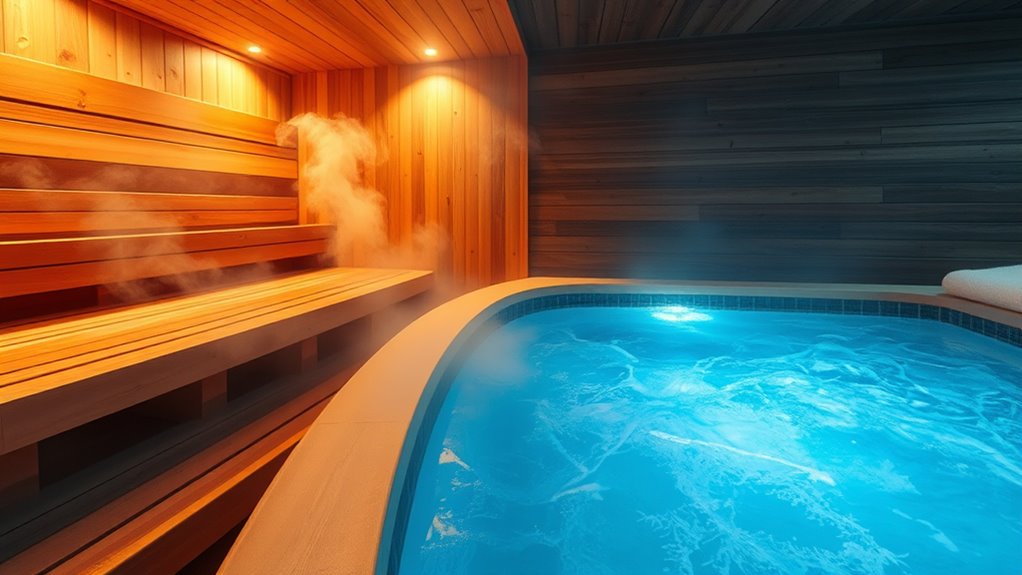

Alternating between sauna and cold plunge challenges your mind to adapt to extreme temperatures, building mental resilience. This routine improves focus, emotional stability, and stress management through increased discipline. Combining this with meditation during or afterward deepens mindfulness and calmness. Proper sleep hygiene further enhances recovery and mood. Over time, these practices create a cycle of mental toughness and resilience, helping you better face daily challenges. Keep exploring to learn how to maximize these powerful habits.
Key Takeaways
- Alternating sauna and cold plunge challenges physical limits, boosting mental focus and resilience through thermal stress adaptation.
- Integrating meditation during or after sessions enhances mindfulness and emotional regulation under stress.
- Regular thermal stress routines stimulate endorphin release and improve sleep quality, supporting mental recovery and stability.
- Combining focused breathing and body awareness in meditation reinforces calmness amidst temperature extremes.
- Consistent practice of thermal stress and meditation fosters mental toughness, resilience, and better stress management outside the routine.
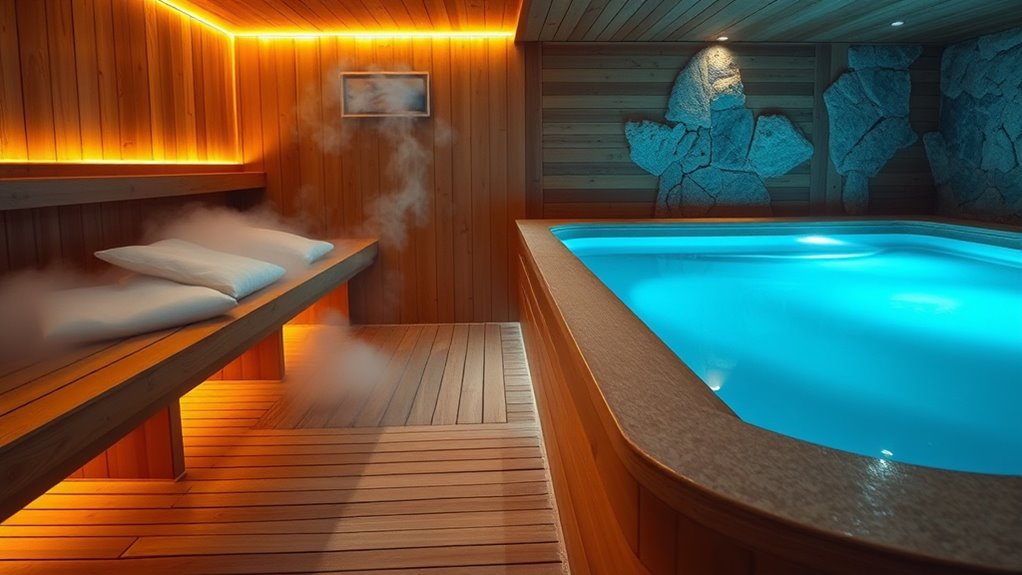
Using a sauna followed by a cold plunge can be a powerful way to boost your mental resilience. This practice not only challenges your physical limits but also sharpens your mental focus and emotional stability. One way to deepen this experience is by integrating meditation techniques into your routine. When you sit quietly in the sauna or linger after your plunge, focus on your breath, cultivating mindfulness and presence. These meditation techniques help you stay grounded amid the intense temperature shifts, training your mind to remain calm under stress. Over time, this mental discipline translates into better resilience outside the sauna, enabling you to handle daily pressures more effectively. Additionally, exploring different anecdotal evidence can provide further insights into the benefits of thermal stress practices.
Another critical aspect is sleep hygiene, which plays a essential role in mental resilience. The thermal stress from alternating between hot and cold stimulates your nervous system, releasing endorphins and promoting better sleep quality. When practiced regularly, this routine can improve your sleep hygiene by regulating your circadian rhythms, helping you fall asleep faster and enjoy deeper, more restorative sleep. Better sleep supports your mental health by reducing anxiety, improving mood, and enhancing cognitive function. As your sleep hygiene improves, you’ll find it easier to recover from mental fatigue and emotional setbacks, further strengthening your resilience.
Incorporating meditation techniques into your sauna and cold plunge routine also encourages relaxation and mental clarity. After exposure to extreme temperatures, take a few minutes to meditate, focusing on your breath or sensations in your body. This practice enhances your awareness and helps you process any residual stress, reinforcing a calm and centered mindset. When combined with good sleep hygiene, these habits create a feedback loop: improved sleep enhances your mental clarity, making it easier to engage in meditation, which in turn reduces stress and supports better sleep. This cycle ultimately builds a more resilient mind capable of withstanding life’s inevitable challenges.
Frequently Asked Questions
Can Sauna and Cold Plunge Therapy Improve Sleep Quality?
Yes, sauna and cold plunge therapy can improve your sleep quality. These relaxation techniques help reduce stress and promote relaxation, making it easier for you to fall asleep. The heat from the sauna relaxes your muscles and releases endorphins, while cold plunges can boost circulation and alertness. Incorporating these practices into your routine may enhance sleep improvement by calming your mind and body before bedtime.
Are There Any Age Restrictions for Cold Plunge Therapy?
Age restrictions for cold plunge therapy vary, but generally, it’s safe for adults of all ages with proper safety precautions. For example, a 65-year-old woman with no health issues might enjoy cold plunges, while a teenager with asthma should consult a doctor first. Always prioritize safety precautions, and if you’re older or have health concerns, seek medical advice to guarantee cold plunge therapy is suitable for you.
How Long Should Each Session Last for Optimal Benefits?
For ideal benefits, aim for a cold plunge session duration of 2 to 5 minutes. This timing allows your body to adapt without risking hypothermia. Start with shorter sessions if you’re new, and gradually increase as your tolerance improves. Pay attention to how your body responds and listen to your sensations. Consistent cold plunges within this suitable timing can boost resilience, improve circulation, and enhance mental clarity.
Are There Any Risks for People With Cardiovascular Issues?
Are you aware of the cardiovascular risks associated with extreme temperature therapies? If you have existing cardiovascular issues, you should be cautious because sauna and cold plunge can pose contraindications for therapy. These practices may elevate blood pressure or strain your heart, increasing risks. Always consult your healthcare provider before starting, especially if you have heart conditions, to guarantee safety and avoid potential complications.
Can These Practices Help Manage Anxiety or Depression?
Yes, sauna and cold plunge can help manage anxiety and depression by enhancing mindfulness techniques and emotional regulation. When you use these practices, you train your body and mind to stay present, reducing stress and improving mood. Regular exposure helps you build resilience, making it easier to cope with emotional challenges. Just remember to listen to your body and consult a healthcare professional if you have underlying health issues.
Conclusion
By embracing the bold balance of blazing saunas and chilling cold plunges, you build a bond of mental resilience. This dynamic duo deepens your discipline, boosts your bravery, and fortifies your focus. As you cycle through heat and cold, you cultivate courage, clarity, and calm. So, step into the sweat, plunge into the cold, and propel your psychological strength. Your journey to mental mastery begins with daring dedication and deliberate discomfort.