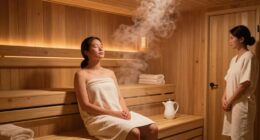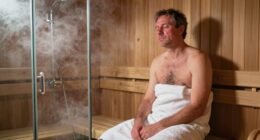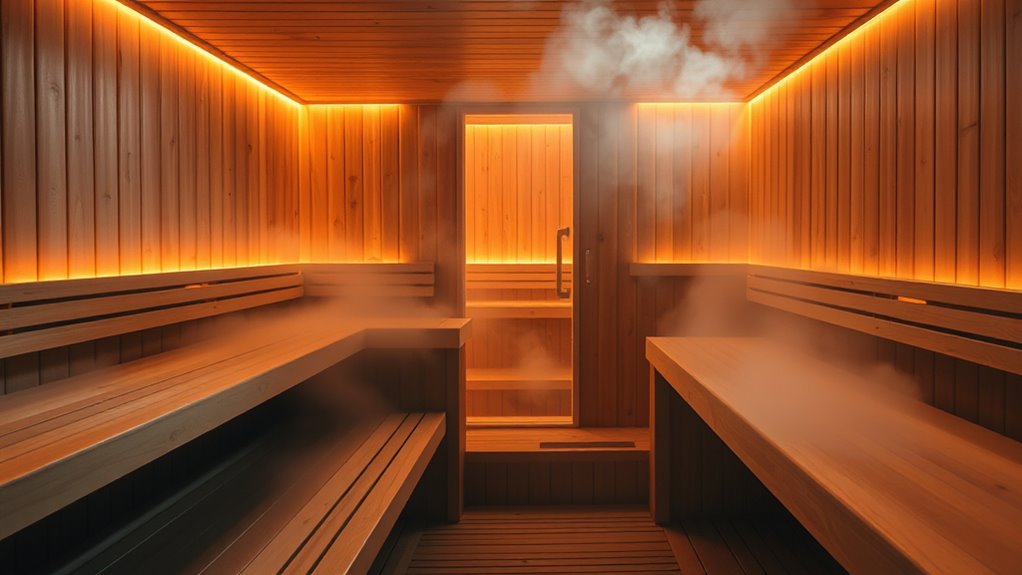

Using a sauna about 1 to 2 hours before bed can boost your sleep quality by helping you relax, ease muscle tension, and lower stress. Keep sessions around 15 to 20 minutes to prevent overheating, and stay well-hydrated. Timing your sauna routine to align with your circadian rhythm encourages faster sleep onset and deeper rest. For effective tips on maximizing benefits and safe usage, explore further details below.
Key Takeaways
- Use the sauna 1 to 2 hours before bedtime to maximize relaxation and sleep benefits.
- Limit sessions to 15-20 minutes to prevent dehydration and overheating.
- Avoid early or late sessions that may disrupt circadian rhythm or interfere with sleep onset.
- Monitor your body’s response and stop if you experience dizziness or discomfort.
- Consistent routine enhances sleep quality and supports the body’s natural sleep-wake cycle.
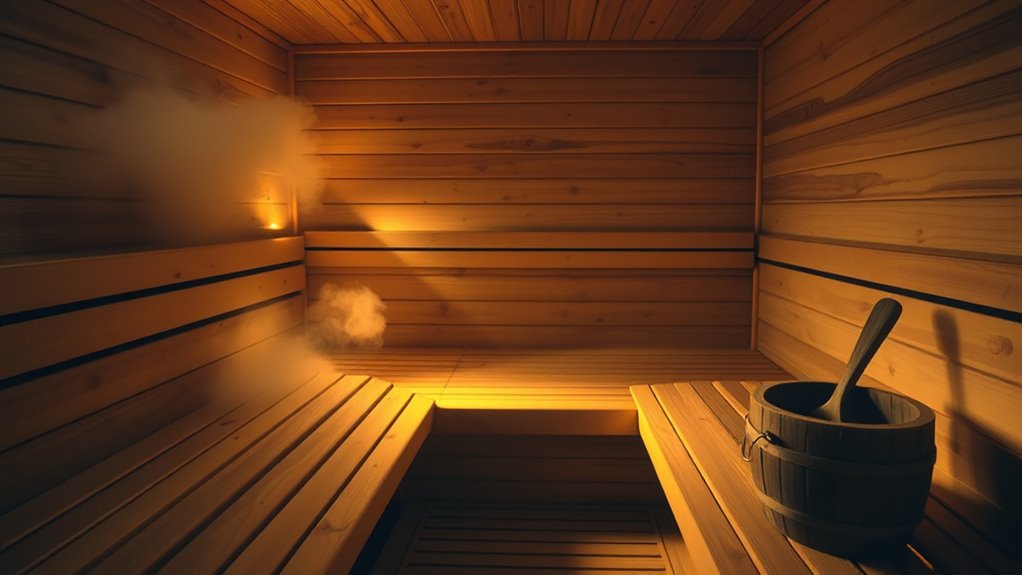
Using a sauna regularly can considerably improve your sleep quality by helping your body relax and unwind. The warmth from the sauna acts as a form of thermal therapy, which promotes blood flow, eases muscle tension, and calms your nervous system. When you sit in the heat, your body temperature rises, mimicking the natural buildup of warmth you experience before bedtime. As your body cools down afterward, it signals to your brain that it’s time to sleep, making it an effective way to align your sleep cycle with your circadian rhythm. This synchronization helps you fall asleep faster and enjoy deeper, more restorative sleep. Incorporating sauna sessions into your routine can also empower families to support their loved ones’ health and well-being more effectively.
Regular sauna use relaxes your body and aligns your sleep cycle for deeper, more restful nights.
Timing your sauna sessions is vital for maximizing their benefits on sleep. The best time to enjoy a sauna is about 1 to 2 hours before you plan to go to bed. During this window, the thermal therapy helps relax your muscles and reduce stress, setting a calm state of mind conducive to sleep. If you go in too early, you might miss the relaxation window, and if you go too late, the elevated body temperature could interfere with your ability to fall asleep promptly. Consistency is key; establishing a regular sauna routine in the evening helps reinforce your circadian rhythm, signaling to your body that it’s time to wind down and prepare for rest.
As for duration, most experts recommend staying in the sauna for about 15 to 20 minutes per session. Longer stays aren’t necessarily more beneficial and could lead to dehydration or overheating. Pay attention to how your body responds; if you start feeling dizzy, nauseous, or overly exhausted, it’s time to step out. You can gradually increase your comfort level over time, but keeping sessions within this range ensures you gain the relaxation benefits without adverse effects. Remember to hydrate well before and after your sauna session to support your body’s thermal regulation and prevent dehydration.
Incorporating sauna sessions into your evening routine can be a powerful tool to enhance your sleep quality. The thermal therapy works in harmony with your circadian rhythm, signaling your body that it’s time to relax and prepare for sleep. By paying attention to timing and duration, you can optimize the benefits and make your nights more restful. Making sauna a regular part of your evening routine helps you establish a natural, calming transition from wakefulness to sleep, ultimately leading to more restorative nights and better overall health.
Top picks for "sauna improv sleep"
Open Amazon search results for this keyword.
As an affiliate, we earn on qualifying purchases.
Frequently Asked Questions
Can Sauna Use Help With Chronic Insomnia?
Sauna use can help with chronic insomnia by promoting stress reduction and improving blood circulation, which may make it easier for you to fall asleep. The heat relaxes your muscles and calms your mind, easing tension built up during the day. Incorporate sauna sessions into your routine, ideally in the evening, to maximize these benefits. Just remember to stay hydrated and listen to your body’s signals.
Is Daily Sauna Use Safe for Everyone?
You might wonder if daily sauna use is safe for everyone, but generally, sauna safety is good for healthy individuals. Daily sauna benefits include relaxation, improved circulation, and better sleep. However, if you have heart issues, low blood pressure, or are pregnant, consult your doctor first. Listening to your body and staying hydrated guarantees you enjoy the benefits safely. For most, regular sauna sessions can be a safe, relaxing addition.
What Are the Best Sauna Temperatures for Sleep?
You should aim for sauna temperatures around 150-175°F (65-80°C) to promote ideal sleep. This range helps your body achieve effective temperature regulation and supports heat acclimation, which can improve sleep quality. Staying within this range ensures you benefit from the relaxing effects of the heat without overexerting yourself. Always listen to your body, and avoid excessively high temperatures that could cause discomfort or dehydration.
How Long After a Sauna Session Should I Sleep?
You should aim to sleep about 30 to 60 minutes after your sauna session. This gap allows your body to cool down, maximizing hydrotherapy benefits and enhancing relaxation. Avoid rushing into bed immediately, as it can interfere with sleep quality. Using sauna relaxation techniques during this interval helps your body shift seamlessly, promoting better sleep and deeper rest. Give yourself this time to fully enjoy the calming effects before bedtime.
Does Sauna Use Affect Sleep for People With Sleep Apnea?
Sauna use can positively influence your sleep environment, but if you have sleep apnea, it might affect your sleep differently. The heat from the sauna can promote relaxation, but timing your sauna session too close to bedtime could cause discomfort or dehydration, worsening sleep quality. It’s best to schedule your sauna sessions earlier in the day, allowing your body to cool down and create a comfortable sleep environment for restful sleep.
Conclusion
Incorporating sauna sessions into your routine can be a powerful tool for better sleep, as long as you pay attention to the timing and duration. Think of it as tuning a delicate instrument—you need the right balance to hit the perfect note. By finding your ideal window and session length, you’ll set the stage for restful nights, allowing your body to unwind like a river calming after a storm. Embrace this ritual, and watch your sleep blossom.