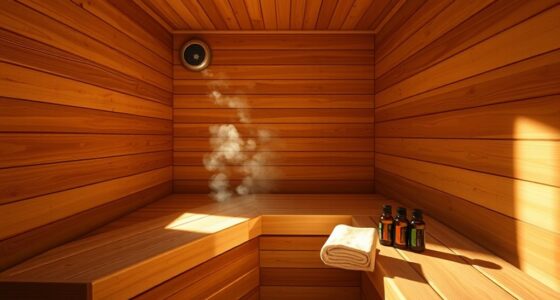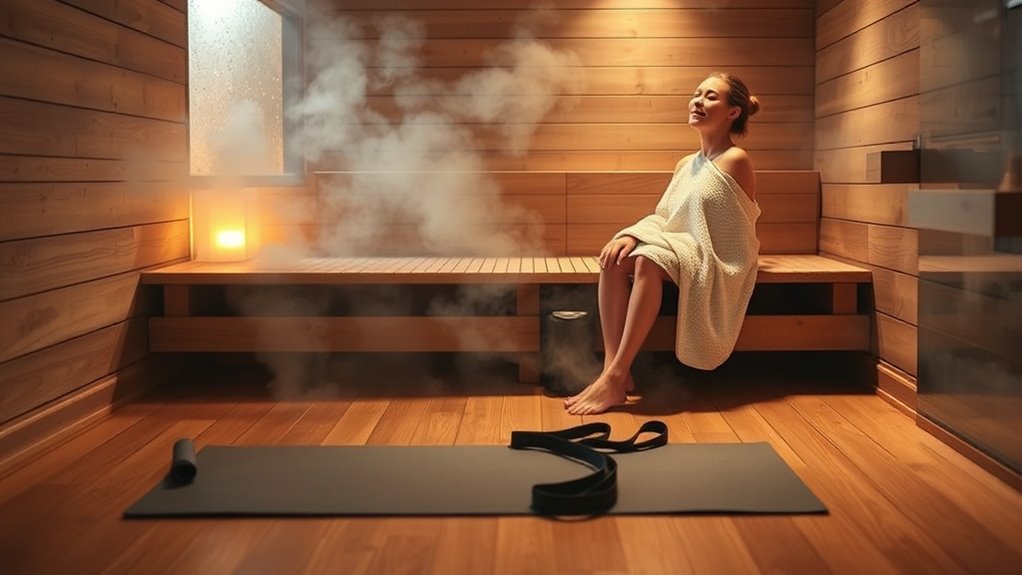

To create an effective recovery routine, start with a 10-15 minute sauna session to warm and loosen your muscles. Follow with gentle, focused stretching—holding each stretch for at least 20 seconds—and breathe deeply to enhance flexibility. Incorporate static stretches when muscles are relaxed and dynamic stretches when warmed. Combining heat and stretching accelerates recovery, reduces soreness, and improves flexibility. Keep practicing this routine regularly, and you’ll discover even more ways to optimize your recovery process.
Key Takeaways
- Schedule 10-15 minute sauna sessions to warm muscles before stretching.
- Follow sauna with gentle, deep-breathing stretches targeting sore areas for optimal flexibility.
- Hold stretches for at least 20 seconds, prioritizing dynamic stretches when muscles are warm.
- Incorporate stretching immediately after sauna to enhance muscle pliability and recovery.
- Maintain routine consistency, combining sauna, stretching, and hydrotherapy for best recovery results.

Creating an effective recovery routine is essential for maintaining your health and optimizing performance. When you combine sauna sessions with targeted stretching, you create a powerful strategy that accelerates your recovery process. Saunas promote relaxation and help your muscles loosen, which can reduce soreness and stiffness after intense workouts. But to truly maximize the benefits, you should incorporate stretching techniques into your routine. These techniques help improve flexibility, increase blood flow, and prevent injuries, making your recovery more extensive.
One of the key advantages of integrating sauna use with stretching is the synergy it creates. When you sit in a sauna, your body heats up, causing your muscles to relax and your circulation to improve. This pre-stretching phase allows your muscles to become more pliable, making stretching more effective and less prone to injury. After a sauna session, your muscles are already warm, which means stretching techniques will be more efficient at releasing tension and increasing flexibility. This combination helps you recover faster by reducing the buildup of lactic acid and flushing out metabolic waste products from your muscles.
Integrating sauna use with stretching enhances muscle pliability and accelerates recovery.
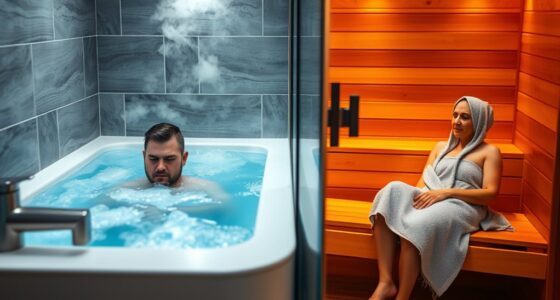
Incorporating hydrotherapy benefits into your recovery routine can also enhance your results. While hydrotherapy, such as contrast baths or cold plunges, isn’t the same as sauna use, it complements your stretching techniques by reducing inflammation and swelling. Alternating between hot and cold therapies can accelerate healing and soothe sore areas. When you add stretching into this mix, you improve your range of motion and decrease the risk of future tightness or injury. Stretching during or after hydrotherapy sessions can further enhance blood flow to your muscles, speeding up recovery and improving flexibility.
To make the most of your recovery routine, start with a sauna session of about 10 to 15 minutes to warm up your muscles. Follow this with gentle stretching techniques, focusing on areas that feel tight or sore. Hold each stretch for at least 20 seconds and breathe deeply to relax your muscles further. Make sure to include dynamic stretches if you’re still warm, and switch to static stretching once your muscles are fully relaxed. This approach allows your muscles to gradually cool down while maintaining flexibility gains. Consistency is key—integrate this routine after workouts or on rest days for sustained benefits.
Top picks for "combin sauna stretch"
Open Amazon search results for this keyword.
As an affiliate, we earn on qualifying purchases.
Frequently Asked Questions
How Long Should Each Sauna Session Last?
You should aim for sauna sessions lasting between 15 to 20 minutes, depending on your tolerance. Keep the sauna temperature around 150-175°F for safety and comfort. Remember, hydration is vital—you lose fluids through sweating, so drink plenty of water before and after your session. Listening to your body helps prevent overheating, and if you feel dizzy or uncomfortable, it’s best to exit early.
Can Stretching Be Done Immediately After Sauna?
Yes, you can stretch immediately after a sauna, but make certain you’re well-hydrated and use mental relaxation techniques to prevent strain. Hydration strategies are essential, as sauna sessions cause fluid loss, so drink water beforehand and afterward. Gentle stretching helps improve flexibility and relaxes muscles, but avoid overstretching. Incorporate deep breathing or mindfulness techniques during stretching to enhance mental relaxation and maximize recovery benefits.
What Are the Best Stretches Post-Sauna?
Oh, absolutely, the best stretches post-sauna are those that make you feel like a rubber band—gentle, slow, and aimed at boosting muscle flexibility. Focus on hamstrings, calves, and shoulders, holding each stretch to enhance circulation. Why rush when you can enjoy the delightful sensation of blood flowing freely and muscles loosening up? Embrace the opportunity to turn your sauna session into a full-body limbering extravaganza!
How Often Should I Combine Sauna and Stretching?
You should combine sauna and stretching 2-3 times a week to optimize recovery. Make sure to stay hydrated with proper hydration strategies before and after each session, as sweating can dehydrate you. Use this routine to promote mental relaxation and muscle flexibility. Always listen to your body; if you feel dizzy or uncomfortable, take a break and hydrate. Consistency helps enhance overall recovery and well-being.
Are There Any Risks of Overdoing This Routine?
Yes, overdoing this routine can lead to overuse injuries and dehydration risks. Pushing yourself too hard or frequent sessions might strain muscles and joints, increasing injury chances. Additionally, extended sauna use can cause excessive fluid loss, leading to dehydration. To stay safe, listen to your body, limit session durations, and stay well-hydrated. Moderate frequency and proper recovery are key to avoiding these risks.
Conclusion
Incorporating sauna sessions and stretching into your recovery routine can truly enhance your progress. Remember, consistency is key—think of it like tuning a vintage guitar; with patience and care, it’ll sing beautifully. Don’t neglect this duo, even when life gets busy. By making these practices a regular part of your routine, you’ll feel stronger and more energized, ready to face any challenge. So, embrace these modern methods and give your body the royal treatment it deserves.