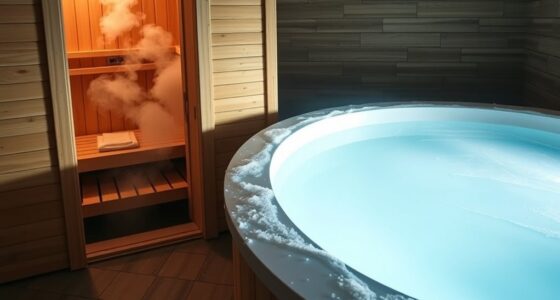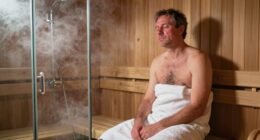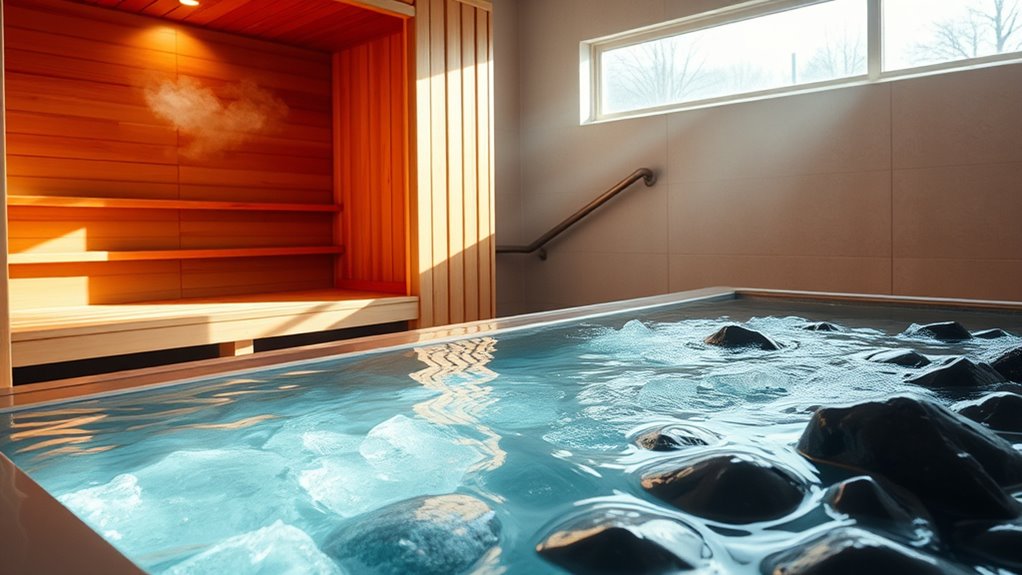
For post-workout recovery, start with a sauna to warm muscles, increase blood flow, and promote relaxation, which helps prepare your body for healing. Following with a cold plunge reduces inflammation, constricts blood vessels, and refreshes your senses. Alternating between the two maximizes circulation, speeds up waste removal, and aids muscle recovery. To learn how to combine these methods effectively for ideal results, continue exploring useful tips and strategies.
Key Takeaways
- Starting with the sauna promotes muscle relaxation and increased blood flow, preparing the body for recovery.
- Cold plunge first reduces inflammation and swelling by constricting blood vessels immediately after exercise.
- Alternating hot and cold therapies maximizes circulation, promoting faster removal of waste and nutrient delivery.
- The optimal sequence depends on recovery goals: sauna first for relaxation, cold first for inflammation control.
- Proper timing and controlled exposure are essential to avoid shock and maximize recovery benefits.
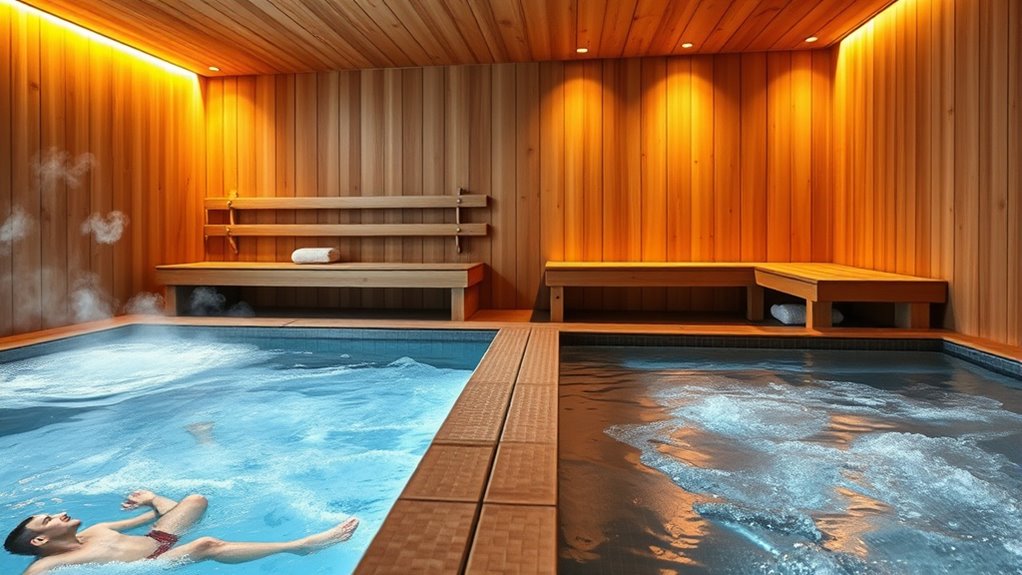
After a tough workout, deciding whether to hit the sauna or the cold plunge first can impact your recovery. Both options offer unique benefits, but choosing the right sequence can maximize muscle relaxation and blood circulation, helping you recover faster and more effectively. If your goal is to relax your muscles and promote better blood flow, understanding how each method works is essential.
Starting with the sauna can be advantageous if you want to relax your muscles and increase blood circulation. The heat from the sauna causes your blood vessels to dilate, which improves blood flow throughout your body. This enhanced circulation helps deliver oxygen and nutrients to your tired muscles, accelerating the removal of metabolic waste products like lactic acid. As your muscles relax in the warm environment, you may notice a decrease in soreness and stiffness, making it easier to stretch and cool down afterward. The heat also promotes sweating, which can help flush out toxins and hydrate your skin, further supporting recovery. By opening up your blood vessels first, you set the stage for more efficient recovery when you move to the cold plunge. Incorporating proper water temperature and duration can optimize these benefits and prevent overstressing your body.
Starting with the sauna relaxes muscles and boosts blood flow for faster recovery.
Switching to a cold plunge after the sauna can then provide a powerful contrast that boosts recovery. The cold water causes your blood vessels to constrict, which can help reduce inflammation and swelling in your muscles. This vasoconstriction temporarily limits blood flow, but once you exit the cold, your blood vessels rapidly dilate again—a process known as vasodilation. This rapid change enhances blood circulation even further, flushing out metabolic waste and bringing fresh nutrients to your muscles. The cold plunge also helps numb nerve endings, reducing pain and soreness, and can invigorate your senses, leaving you feeling refreshed. Alternating between heat and cold stimulates your circulatory system, encouraging a more dynamic flow of blood and lymphatic fluids, which accelerates overall recovery. Proper timing and controlled exposure are important to avoid shock or discomfort.
However, if your primary concern is immediate muscle relaxation and reducing soreness, starting with the sauna might be the better choice. It prepares your muscles by relaxing tension and increasing circulation. Conversely, if inflammation and swelling are your main issues, beginning with the cold plunge can help reduce those symptoms right away. Ultimately, the sequence depends on your recovery goals, but many athletes find that alternating between the two offers the most all-encompassing benefits. Whichever approach you choose, listen to your body and avoid overdoing it—balance is key to efficient recovery. Properly timing and combining these recovery methods can make a significant difference in how quickly your body heals and how prepared you are for your next workout.
Top picks for "post workout recovery"
Open Amazon search results for this keyword.
As an affiliate, we earn on qualifying purchases.
Frequently Asked Questions
Can Alternating Between Sauna and Cold Plunge Optimize Recovery?
Alternating between a sauna and cold plunge can optimize recovery by promoting muscle relaxation and mental clarity. The heat from the sauna helps soothe sore muscles and improves circulation, while the cold plunge reduces inflammation and speeds up recovery. Switching between these temperatures stimulates blood flow, clears toxins, and sharpens your focus. This contrast therapy enhances overall recovery, leaving you refreshed, relaxed, and mentally clear after your workout.
How Do Individual Health Conditions Affect Recovery Choices?
You should prioritize personalized protocols because your health conditions matter. If you have medical contraindications, such as heart issues or hypertension, certain recovery methods could be risky. Ignoring these factors might worsen your condition or delay recovery. Always consult a healthcare professional to tailor your recovery routine. Your safety is vital, so understanding how individual health influences recovery choices can make all the difference in your healing process.
Is There a Preferred Sequence for Specific Workout Types?
You should start with a cold plunge after high-intensity workouts to reduce inflammation and speed recovery, then use the sauna to relax your muscles. For endurance sessions, alternate between hot and cold to optimize hydration strategies and improve sleep quality. Always listen to your body, and if you notice signs of overexertion, adjust the sequence. Proper sequencing helps enhance recovery, boosts performance, and supports overall well-being.
What Are the Long-Term Effects of Frequent Sauna or Cold Plunge Use?
Frequent sauna or cold plunge use can boost your overall health, but it also impacts your long-term well-being. You might notice improved hydration strategies, which help prevent dehydration, and enhanced mental health, reducing stress over time. Regular exposure can increase resilience and boost mood. However, overdoing it could lead to dehydration or cardiovascular strain, so balance your routines and stay attentive to how your body responds.
How Does Timing Post-Exercise Influence Recovery Benefits?
Timing your post-exercise recovery is key to maximizing benefits. You should hydrate well and consider nutrient timing to replenish lost fluids and nutrients. Using a sauna first can help relax muscles and improve circulation, while cold plunges reduce inflammation. Alternating or choosing based on your goals can boost recovery. Prioritize hydration strategies and nutrient timing immediately after exercise to support ideal recovery and reduce soreness.
Conclusion
Ultimately, whether you choose the warmth of a sauna or the chill of a cold plunge first, listen to your body’s subtle whispers. Each path offers its own gentle lesson, guiding you toward balance and harmony in your recovery journey. Trust your instincts to lead you where renewal feels most natural, allowing you to embrace the quiet wisdom within. In these small acts, you nurture not just your body, but your spirit’s quiet resilience.