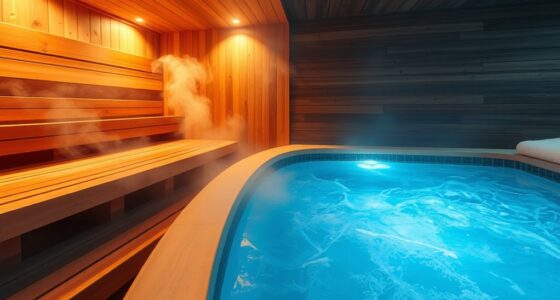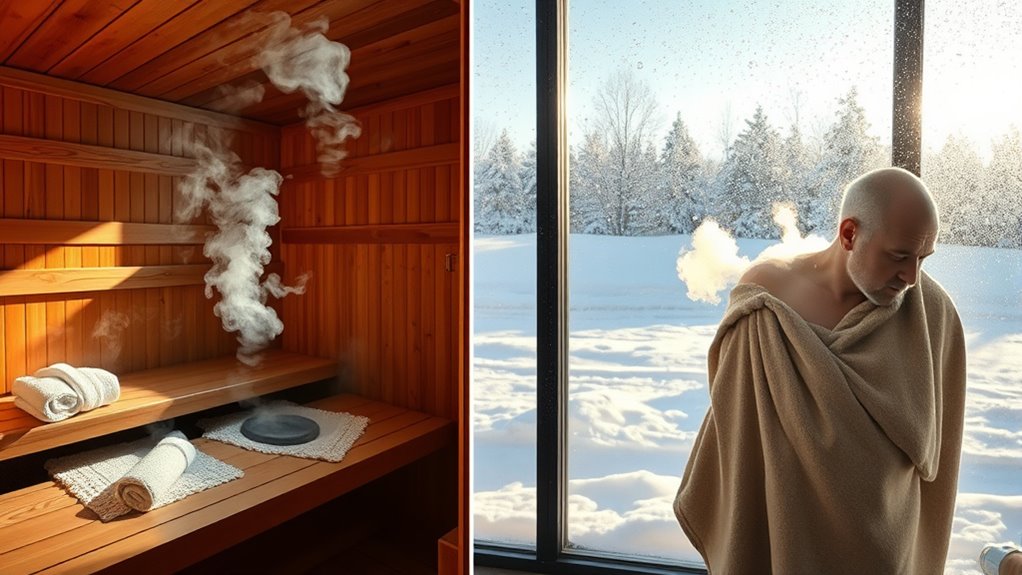
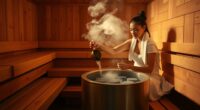
In summer, focus on hydration, wearing light clothing, and limiting heat exposure to prevent overheating, while in winter, add insulation and protective layers to stay warm and safe. Adjust your sauna sessions and cold plunges based on the season: shorter and cooler in summer, longer and more insulated in winter. Proper clothing, hydration, and gradual routines guarantee safety and comfort year-round—keep exploring for detailed seasonal protocols.
Key Takeaways
- Adjust hydration strategies: drink more water and electrolytes in summer; maintain hydration in winter despite lower thirst.
- Wear lightweight, breathable clothing in summer; use insulated, layered attire during winter cold exposure.
- Shorten sauna sessions in winter initially; extend gradually, while in summer focus on heat management and cooling down.
- Incorporate cold plunges or showers after sauna, ensuring proper clothing and skin protection suited to seasonal temperatures.
- Monitor body responses closely; prioritize safety by avoiding overheating in summer and frostbite or hypothermia risks in winter.
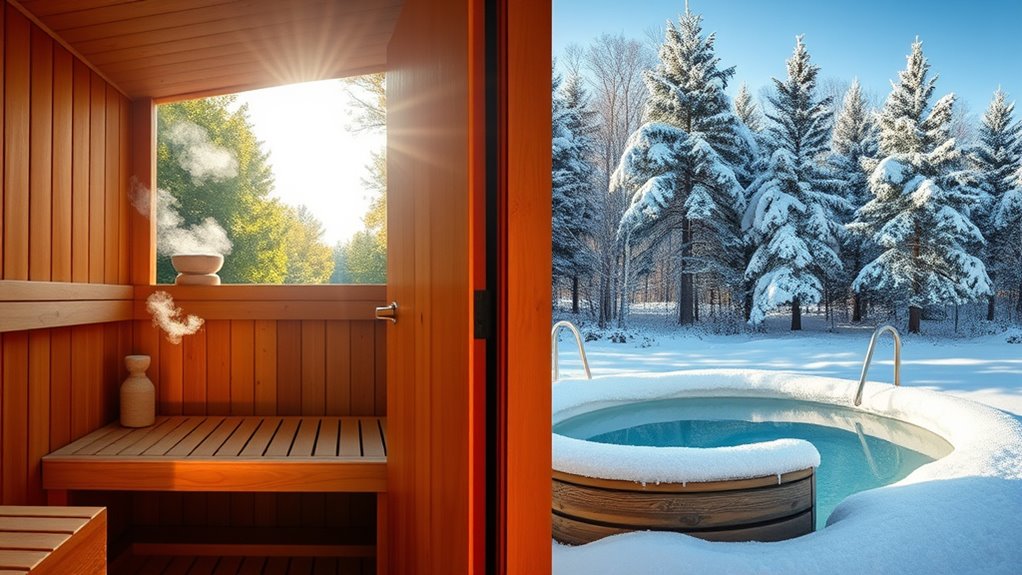
As the seasons change, adapting your sauna and cold exposure routines can enhance your health and well-being. When summer arrives, the focus shifts from warming up to managing heat exposure, so your hydration strategies become essential. During hot months, you’ll sweat more, losing vital fluids and electrolytes. To stay balanced, drink plenty of water before, during, and after your sauna sessions. Incorporate electrolyte-rich drinks if you’re sweating heavily, and avoid alcohol or caffeine, which can dehydrate you further. Proper hydration helps prevent dizziness and fatigue, especially when combined with sauna use or cold plunges.
Stay hydrated and replenish electrolytes during hot months to safely enjoy sauna and cold exposure routines.
Clothing considerations also play a key role in summer routines. Light, breathable fabrics are best when you’re exposed to heat, whether in the sauna or during outdoor activities. If you’re using a sauna, keep your clothing minimal—many prefer to go in a towel or swimsuit to allow heat to penetrate the skin efficiently. When stepping out into colder environments or cold plunges, layer appropriately. Lightweight, moisture-wicking clothing helps you transition smoothly from hot to cold, reducing shock and discomfort. Always listen to your body—if you start feeling dizzy or overheated, it’s time to cool down and hydrate.
In winter, your focus shifts toward protecting yourself against the cold while optimizing your cold exposure routines. Hydration remains essential, but you’ll also want to pay attention to clothing considerations to prevent frostbite and hypothermia. Dress in insulated layers, including thermal underwear, hats, gloves, and waterproof outerwear, especially if you’re outdoors. When using a sauna in winter, it’s best to start with shorter sessions and gradually increase duration as your body adapts. After sauna use, cold exposure like plunges or showers helps invigorate your system, but always ensure your clothing is adequate to prevent excessive heat loss.
Your hydration strategies should continue to emphasize water intake, but in colder months, you might not feel as thirsty. Don’t rely solely on thirst to gauge hydration—make it a habit to drink regularly, especially if you’re engaging in physical activity or cold exposure. Wearing proper clothing during cold exposure enhances safety and comfort, allowing you to enjoy the benefits without risking frostbite or hypothermia. For instance, covering extremities and exposed skin during winter cold plunges helps maintain your core temperature. Additionally, understanding the contrast ratio of your cooling and heating routines can help optimize your experience, ensuring that the transitions are safe and effective. Overall, adapting your routines with these considerations in mind ensures you stay safe, comfortable, and reap the maximum benefits throughout the seasons.
Top picks for "seasonal adjustment summer"
Open Amazon search results for this keyword.
As an affiliate, we earn on qualifying purchases.
Frequently Asked Questions
How Do Sauna and Cold Therapy Benefits Differ Across Various Age Groups?
You’ll find that age-specific responses influence how different age groups benefit from sauna and cold therapy. Younger individuals may experience faster recovery and improved circulation, while older adults should consider developmental considerations like cardiovascular health and skin sensitivity. Adjust protocols accordingly, as children and seniors respond differently. Always consult a healthcare professional to tailor these therapies safely, ensuring each age group gains maximum benefits without risking adverse effects.
Are There Specific Health Conditions That Contraindicate Seasonal Sauna or Cold Exposure?
You should avoid sauna and cold exposure if you have autoimmune concerns or cardiovascular risks. These conditions can worsen symptoms or trigger adverse reactions. Always consult your healthcare provider before starting seasonal sauna or cold protocols, especially if you have heart disease, hypertension, or autoimmune disorders. Your provider can help determine if these therapies are safe for you and suggest modifications to minimize risks during different seasons.
How Does Climate Influence the Effectiveness of Sauna and Cold Protocols?
Climate impacts your sauna and cold protocols by affecting humidity levels and daylight duration. In humid summer months, sauna sessions might feel more intense, while shorter winter days can influence your motivation and circadian rhythm. You’ll find that adjusting exposure based on these factors helps optimize benefits, ensuring you stay comfortable and effective year-round. Pay attention to humidity and daylight to tailor your protocols for better health and relaxation.
Can Seasonal Changes Impact the Safety of Cold Immersion Practices?
You could be risking your life if you ignore seasonal temperature variations during cold immersion. Cold practices in winter are much more intense and can lead to hypothermia if safety precautions aren’t followed. In summer, the risk of shock decreases, but you still need to be cautious. Always adapt your protocols to seasonal changes, stay aware of your body’s signals, and prioritize safety to avoid dangerous health consequences.
What Are the Long-Term Health Effects of Year-Round Sauna and Cold Exposure?
You may experience longevity benefits and metabolic improvements from year-round sauna and cold exposure, but it is crucial to listen to your body and avoid overdoing it. Consistent use can boost cardiovascular health, improve immune function, and enhance stress resilience. However, long-term effects depend on proper protocols and individual health. Always consult a healthcare professional to tailor your routine, ensuring safety while maximizing these potential health gains.
Conclusion
Think of your body like a thermostat—adjusting to summer’s heat and winter’s chill keeps it balanced. I once tried a winter cold plunge after a hot summer sauna, and the rush felt like flipping a switch—your body adapts quickly, just like a home’s heating system. Embrace seasonal protocols to optimize your health year-round. Remember, just as seasons change, so should your approach to sauna and cold therapy, keeping you resilient through every climate.