
To optimize your sleep and recovery, time your sauna sessions 1-2 hours before bedtime to boost melatonin and relax your muscles, helping you fall asleep faster. Incorporate calming routines like meditation and light management to support your circadian rhythm, especially if you work irregular hours. Keep your routines consistent and monitor your body’s responses for better results. If you want to master these strategies, stay tuned for more insights to refine your schedule.
Key Takeaways
- Schedule sauna sessions 1-2 hours before bedtime to boost melatonin and improve sleep quality.
- Maintain consistent routines, including sauna timing and sleep schedules, to reinforce circadian rhythms.
- Use relaxation techniques like meditation and dim lighting post-sauna to facilitate better sleep onset.
- Track sleep patterns and dream analysis to personalize sauna and sleep routines for optimal recovery.
- Adjust sauna timing for shift workers to enhance relaxation and compensate for irregular sleep schedules.
Understanding the Science Behind Sleep Cycles and Body Temperature
Understanding how your sleep cycles work and how body temperature fluctuates throughout the night can help you optimize your sleep quality. Your body follows a natural rhythm, cycling through REM and non-REM stages, which influences your dreams and overall rest. During REM sleep, your body temperature drops slightly, making it easier to relax and drift into deeper sleep. Recognizing these patterns can also aid in identifying sleep disorders and understanding dream analysis, revealing underlying issues affecting rest. When your body temperature doesn’t follow its usual pattern, it may signal disruptions in sleep cycles, contributing to poor sleep quality. Additionally, body temperature regulation plays a crucial role in maintaining healthy sleep patterns and overall well-being. By understanding these biological processes, you can better tailor your routines, including sauna use, to align with your body’s natural rhythms, promoting healthier, more restorative sleep.
The Benefits of Sauna Use on Sleep Quality and Recovery
Using a sauna regularly can substantially enhance your sleep quality and boost recovery by promoting relaxation and reducing stress. The heat increases body temperature, leading to a natural drop afterward, which signals your body it’s time to sleep. Incorporating meditation techniques before or after sauna sessions can deepen relaxation, easing your mind into restful sleep. Herbal supplements like valerian or magnesium may further support this process. To maximize benefits, try pairing sauna use with calming practices. Here’s a quick guide:
| Practice | Benefits |
|---|---|
| Meditation Techniques | Reduce stress, improve mental clarity |
| Herbal Supplements | Enhance relaxation and sleep quality |
| Consistent Timing | Establish a sleep-friendly routine |
This combo helps you recover faster and sleep more soundly. Being aware of your privacy policies ensures a transparent understanding of data handling while enjoying your wellness routines.
Optimal Timing for Sauna Sessions Based on Your Sleep Schedule
To maximize the sleep-enhancing benefits of your sauna sessions, timing is key. When you schedule your sauna, consider how it influences melatonin production and your circadian rhythm. Ideally, you should aim for sessions 1-2 hours before your bedtime to help signal your body it’s time to wind down. This timing boosts melatonin levels naturally, promoting better sleep quality. Incorporating sleep hygiene practices around your sauna sessions can further enhance your rest. Here are some tips:
Scheduling your sauna 1-2 hours before bed naturally boosts melatonin and improves sleep quality.
- Schedule sauna sessions early evening, about 1-2 hours before bed.
- Avoid late-night sessions that might disrupt your circadian rhythm.
- Keep your sleep schedule consistent, even around sauna days.
- Use sauna as a cue for relaxation, helping your body prepare for restorative sleep.
How to Incorporate Sauna Rituals Into Your Evening Routine

To make the most of your evening sauna, focus on timing it right to promote relaxation and better sleep. After your session, create a wind-down routine that helps your body shift smoothly into rest. By aligning sauna use with your sleep schedule, you can maximize its calming benefits and improve your overall nightly rest. Incorporating self watering plant pots into your environment can also enhance your relaxation by maintaining a lush, calming space.
Optimal Sauna Timing
Incorporating sauna sessions into your evening routine can enhance relaxation and improve sleep quality, but timing is key. To maximize benefits, consider these tips:
- Finish at least 1-2 hours before bed to allow your body to cool down and settle into a calm sleep environment.
- Use meditation techniques post-sauna to deepen relaxation and ease your mind.
- Create a consistent schedule to help your body anticipate sauna times and promote better sleep patterns.
- Avoid heavy meals or caffeine close to your sauna session to prevent disrupting your sleep cycle.
- Managing your body temperature effectively supports your overall sleep quality and recovery.
Post-Sauna Wind-Down
After your sauna session, establishing a calming wind-down routine helps shift your body and mind into a restful state. Begin by practicing meditative breathing to slow your heart rate and relax your muscles. Focus on deep, even breaths, allowing your mind to let go of the day’s stresses. Next, dim the ambient lighting to create a soothing environment that signals your body it’s time to wind down. Incorporating mindful practices into your routine can further enhance relaxation and prepare you for restful sleep. This combination of mindful breathing and soft lighting helps deepen your relaxation, easing the transition to sleep. Avoid rushing through this routine; instead, embrace these calming rituals to enhance your overall sleep quality. Making this wind-down a consistent part of your evening maximizes the benefits of your sauna ritual and supports a restful night.
Morning Sauna Sessions: Pros, Cons, and Best Practices
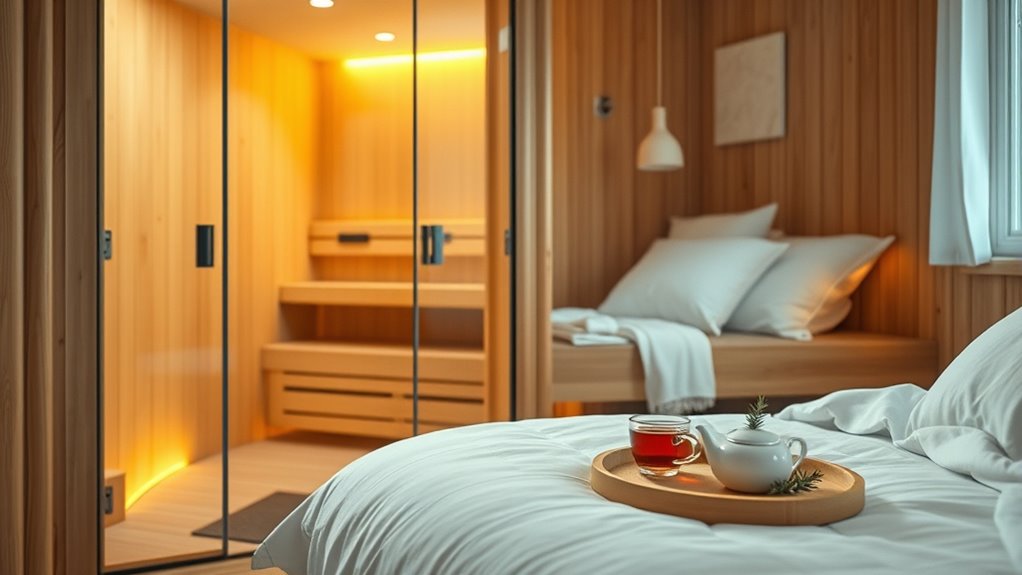
Starting your day with a sauna session can boost circulation, improve mood, and help you wake up more naturally. It sets a positive tone, increases morning alertness, and prepares you for the day ahead. However, there are some considerations to keep in mind.
Here are four best practices:
- Keep sessions brief—about 10-15 minutes—to avoid dehydration.
- Hydrate well before and after to support your body’s response.
- Use the sauna early enough so it doesn’t interfere with your sleep or cause fatigue.
- Incorporate relaxation techniques afterward to seamlessly transition into your day.
Additionally, choosing a portable vehicle like a Ford Transit can make it easier to set up your own sauna space on the go. Morning sauna sessions are great for energizing you and enhancing alertness, but they may impact afternoon relaxation if overdone. Balance is key to reaping benefits without feeling drained.
Adjusting Your Routine for Shift Workers and Irregular Schedules
If you work irregular hours, syncing your sleep cycles can be a challenge, but it’s essential for feeling rested. Timing your sauna sessions around your shifts helps maximize relaxation and recovery. By adjusting your routine thoughtfully, you can maintain better sleep and wellness despite a variable schedule. Incorporating proper disposal practices into your routine can also prevent issues that might disrupt your sleep environment.
Syncing Sleep Cycles
When you work irregular hours or shifts, your body’s natural sleep rhythm can become disrupted, making it challenging to get restorative rest. To better sync your sleep cycles, try these strategies:
- Keep a consistent sleep environment—dark, cool, and quiet—to signal your body it’s time to rest.
- Use dream journaling to track sleep patterns and identify disruptions.
- Shift your sleep schedule gradually, adjusting by 15-30 minutes each day to prevent sudden changes.
- Prioritize naps after night shifts to help recover and reset your internal clock.
- Incorporate light management techniques, such as using blackout curtains or light therapy, to reinforce your circadian cues and improve sleep quality.
Timing Sauna Sessions
Adjusting your sauna routine to fit irregular work schedules can boost relaxation and support better sleep. When you have unpredictable hours, timing your sauna sessions strategically helps create a consistent sleep environment, even on variable days. For shift workers, sauna sessions before bedtime can promote muscle relaxation and mental calmness, essential for restful sleep. Incorporate dream analysis by noting how your sauna timing affects your sleep quality and dreams, which can reveal insights into your sleep environment’s effectiveness. If your schedule shifts frequently, experiment with different times to discover what best prepares your body for sleep. Staying consistent, even with irregular hours, helps reinforce your sleep routine and enhances overall restfulness, making your sauna sessions a powerful tool regardless of your schedule. Additionally, understanding the importance of timing sauna sessions can help you optimize their benefits for your unique sleep patterns.
Practical Tips for Personalizing Your Sleep and Sauna Timing

Personalizing your sleep and sauna schedule begins with understanding your body’s unique rhythms and responses. If you experience sleep deprivation or notice unusual dream patterns, it’s a sign to adjust your timing. Here are some practical tips:
- Track your sleep and dreams to identify patterns that help you feel more rested. Dream analysis can reveal your sleep quality and stress levels.
- Experiment with different sauna times to see when you feel most relaxed and energized afterward.
- Adjust your bedtime based on your natural alertness peaks, not just external schedules.
- Listen to your body’s signals—if you feel groggy or restless, tweak your routine until you find what works best for your sleep and stress management.
Monitoring and Fine-Tuning Your Routine for Maximum Benefits

To truly optimize your sleep and sauna routines, consistent monitoring is key. Pay attention to signs of sleep deprivation, which can impair recovery and overall well-being. Keep a sleep journal to track your bedtime, wake time, and how rested you feel. Incorporate dream analysis—notice patterns or recurring themes that reveal your sleep quality or emotional needs. Adjust your schedule based on these insights, perhaps shifting sauna sessions to earlier or later times for better relaxation. Use wearable devices or apps to gather data on sleep cycles and heart rate. Fine-tuning your routine with this information helps you identify what works best, ensuring maximum benefits. Regularly evaluating your progress keeps your sleep and sauna practices effective and tailored to your body’s changing needs.
Frequently Asked Questions
How Does Caffeine Intake Affect Sleep and Sauna Timing?
Caffeine intake can considerably impact your sleep and sauna timing by affecting caffeine metabolism, which varies from person to person. Consuming caffeine too late can lead to sleep disruption, making it harder to fall asleep or stay asleep, especially if you’re sensitive to its effects. To optimize your sleep and sauna benefits, avoid caffeine at least 4-6 hours before bedtime, allowing your body enough time to metabolize it and prevent sleep disturbances.
Can Sauna Use Help With Insomnia or Sleep Disorders?
Sure, because sweating out your sleep problems in a sauna is the ultimate sleep hygiene hack, right? While saunas can promote relaxation and help reduce stress, they aren’t magic cures for insomnia or sleep disorders. Use relaxation techniques alongside sauna sessions to improve your sleep quality. Remember, a consistent bedtime routine and good sleep habits matter more than steam. So, embrace the sweat, but don’t neglect proven sleep strategies.
What Are the Risks of Overusing Saunas Before Sleep?
Overusing saunas before sleep can increase your risk of heat exhaustion and heart risks. Extended or intense sessions make your body work harder to cool down, raising your heart rate and stressing your cardiovascular system. This can lead to dehydration and dizziness, disrupting your sleep. To stay safe, limit sauna time, stay hydrated, and listen to your body’s signals for fatigue or overheating.
How Does Age Influence Optimal Sauna and Sleep Timing?
Age dramatically shifts your ideal sauna and sleep timing. As you age, hormonal changes mess with your sleep patterns, making it harder to fall asleep after sauna sessions. Younger folks might benefit from evening sauna boosts, but older adults need to be cautious, as developmental sleep patterns evolve and can be disrupted easily. Adjust your routines accordingly to match your age, ensuring restful nights and safe sauna use.
Are There Specific Sauna Types Better Suited for Sleep Enhancement?
You should choose a sauna with materials like cedar or eucalyptus, which promote relaxation. Low to moderate humidity levels, around 20-30%, are best for sleep enhancement since high humidity can cause discomfort and alertness. Infrared saunas are also beneficial because they heat your body gently and deeply, helping you unwind faster. Avoid overly humid or intense traditional saunas if your goal is to improve sleep quality.
Conclusion
By syncing your sauna sessions with your sleep rhythms, you create a soothing rhythm that calms your body and mind. Picture warm steam gently wrapping around you as your body cools down, signaling bedtime’s approach. When you tune your routine just right, you’ll drift into restful sleep like a peaceful lake at dusk. Keep experimenting, listen to your body, and let this harmonious dance of heat and rest transform your nights into rejuvenating retreats.