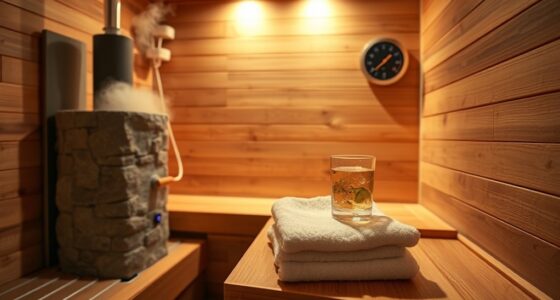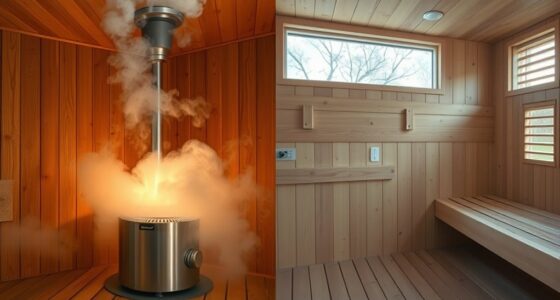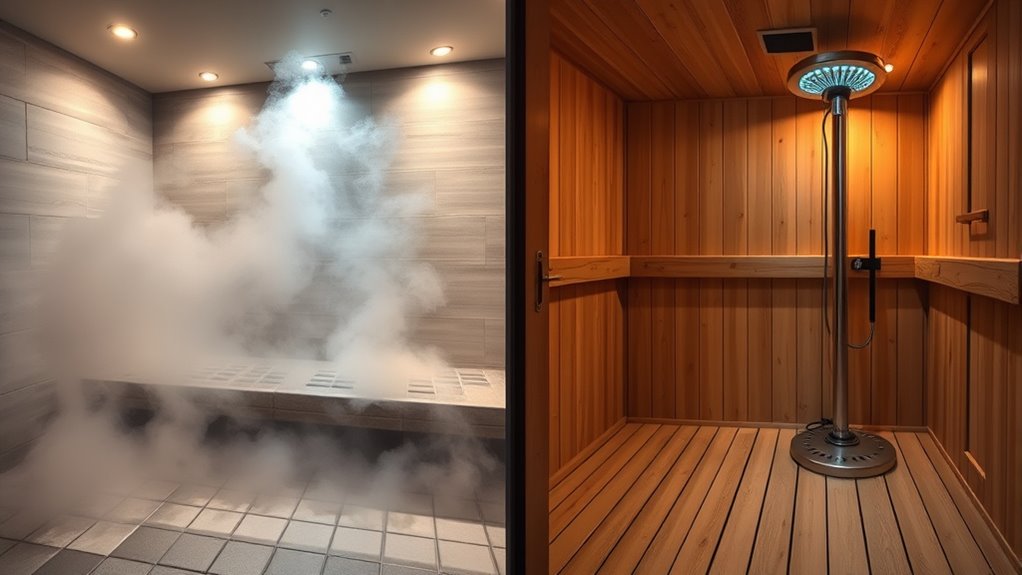

To distinguish between steam and dry saunas, understand that steam saunas operate at lower temperatures with high humidity, promoting skin hydration and pore opening, while dry saunas use higher heat with low moisture, boosting circulation and muscle recovery. In steam saunas, keep moisture levels balanced and sessions limited, whereas in dry saunas, guarantee proper ventilation and avoid overheating. If you want to get the most out of each type, explore the key features and best practices explained next.
Key Takeaways
- Do choose a steam sauna for skin hydration, pore cleansing, and sinus relief; avoid excessive moisture that can promote mold.
- Do opt for a dry sauna to enhance circulation and muscle recovery at higher temperatures; avoid prolonged sessions to prevent dehydration.
- Do maintain proper ventilation in dry saunas to prevent overheating; avoid neglecting humidity control in steam saunas.
- Do limit sauna sessions to 15-20 minutes for safety; avoid staying too long, which can lead to dehydration and discomfort.
- Do hydrate before and after use to stay safe; avoid ignoring body signals like dizziness or discomfort during sauna sessions.
steam sauna with adjustable humidity
As an affiliate, we earn on qualifying purchases.
As an affiliate, we earn on qualifying purchases.
Key Features and Benefits of Steam and Dry Saunas
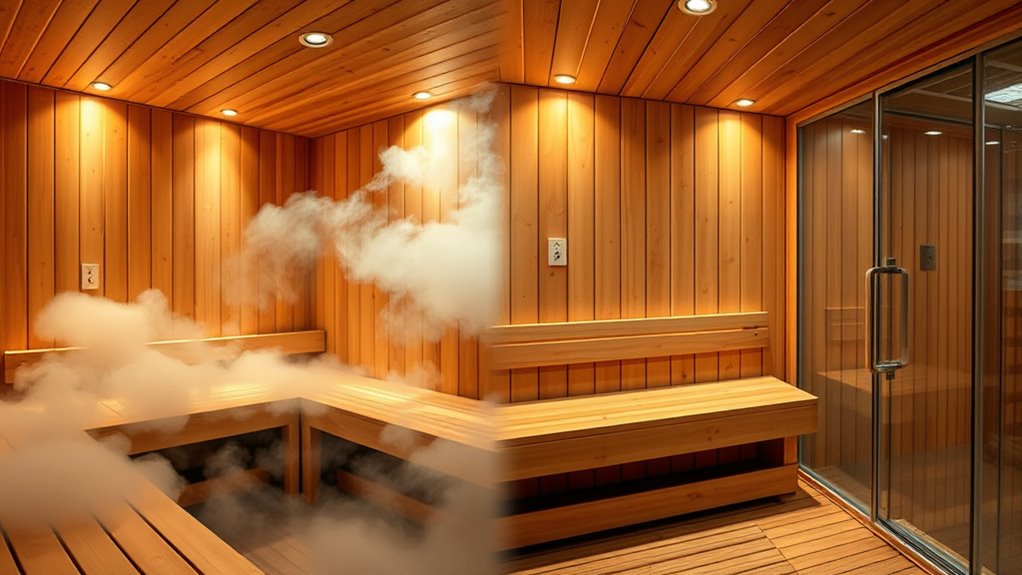
Steam and dry saunas each offer distinct features and benefits that can enhance your wellness routine. Steam saunas operate at high humidity levels, often reaching 100%, which helps hydrate your skin and open up your pores. They typically maintain lower temperatures, around 110-120°F, making them more comfortable for extended sessions. In contrast, dry saunas use low humidity but higher temperatures, usually between 150-190°F, creating a more intense heat experience. Both types allow temperature control, enabling you to adjust settings to suit your comfort. The moisture-rich environment of steam saunas promotes relaxation and sinus relief, while the dry heat can improve circulation and muscle recovery. Understanding these key features helps you choose the sauna that best fits your wellness goals.
As an affiliate, we earn on qualifying purchases.
Best Practices and Common Mistakes When Using Each Sauna Type

To maximize the benefits and guarantee safety, it’s essential to follow best practices when using both steam and dry saunas. Keep humidity levels in mind—steam saunas require high humidity, so make sure the environment stays moist without overdoing it. For dry saunas, maintain proper ventilation to prevent excessive dryness and overheating. Regularly follow maintenance routines, like cleaning surfaces and checking controls, to avoid mold and guarantee optimal operation. Avoid staying in too long; limit sessions to 15-20 minutes to prevent dehydration. Don’t forget to hydrate before and after use. Be mindful of your body’s signals, and exit immediately if you feel lightheaded or uncomfortable. Proper use and upkeep will enhance your experience and keep you safe. Additionally, understanding the contrast ratio of your sauna environment can help optimize the ambiance and comfort during your session.

Sauna Sauce Cooling Body Lotion, Peppermint Eucalyptus Sauna Accessory for Dry Steam and Infrared Saunas, Muscle Recovery, Vegan Paraben Free, Made in USA, 6 Fl Oz
- Cooling Sauna Enhancement: Invigorating peppermint and eucalyptus tingle
- Detox & Muscle Recovery: Soothes sore muscles and aids detox
- Premium Natural Ingredients: Organic coconut oil, white tea, chamomile, Vitamin E
As an affiliate, we earn on qualifying purchases.
As an affiliate, we earn on qualifying purchases.
Frequently Asked Questions
Are Steam and Dry Saunas Suitable for All Skin Types?
Steam and dry saunas can be suitable for many skin types, but if you have skin sensitivity or concerns about pore health, proceed with caution. Steam saunas offer moist heat that may soothe sensitive skin, while dry saunas provide intense heat that can sometimes aggravate it. Always listen to your skin’s response, stay hydrated, and consult a dermatologist if you’re unsure about how sauna exposure might affect your skin health.
How Do Sauna Types Affect Respiratory Health?
You might find that steam saunas, with their humid environment, offer more respiratory benefits by loosening mucus and easing breathing, especially if you have respiratory issues. Dry saunas, being less humid, may still help improve circulation and relaxation but might not provide the same level of respiratory relief. Choose based on your respiratory health needs, as the humid environment in steam saunas can be particularly beneficial for clearing your airways.
Can Sauna Temperature Settings Be Personalized?
Yes, sauna temperature settings can be personalized with various personalization options. You can adjust the temperature control to suit your comfort level, whether you prefer a milder heat or a more intense experience. Many modern saunas offer customizable controls, allowing you to set specific temperatures for your sessions. This flexibility helps optimize your relaxation and health benefits, making your sauna experience tailored precisely to your preferences.
Do Sauna Types Impact Detoxification Differently?
Surprisingly, sauna types do impact detoxification differently. In a humid environment, steam saunas promote better skin hydration and help loosen toxins through sweating. Dry saunas, on the other hand, induce intense heat without humidity, encouraging deeper sweating but less skin moisture. So, if you’re aiming for skin hydration and effective detox, a steam sauna’s your best bet. It’s ironic how moisture can be your detox secret weapon.
Are There Age Restrictions for Using Each Sauna Type?
Yes, there are age restrictions for using each sauna type, mainly due to safety considerations. Children and seniors should consult a healthcare professional before use, as their tolerance to heat varies. For safety, avoid prolonged sessions and monitor how you feel. Always follow facility guidelines, and if you or your loved ones have health issues, it’s best to seek medical advice beforehand to prevent any risks.

Northwood Sauna – Sauna Accessories Kit – Handmade from Canadian Red Cedar Wood – Core Set (Bucket & Ladle, Thermometer & Hygrometer, Sand Timer, Aromatherapy Cup)
- Material: Handmade Canadian Red Cedar Wood
- Core Set Includes: Bucket, Ladle, Thermometer, Hygrometer, Timer, Aromatherapy Cup
- Suitable for: North American Saunas
As an affiliate, we earn on qualifying purchases.
As an affiliate, we earn on qualifying purchases.
Conclusion
Choosing between a steam and dry sauna depends on your preferences and health goals. Remember, over 70% of regular sauna users report improved mood and relaxation. Whether you prefer the humidity of a steam sauna or the dry heat of a traditional one, understanding their differences helps you maximize benefits. So, try both and see which suits you best—your wellness routine will thank you! Enjoy your sauna sessions and reap the calming, health-boosting rewards.