
To safely use aromatherapy in saunas, always dilute essential oils with a carrier oil before adding them to your diffuser or steaming area. Never pour pure oils directly onto sauna surfaces or water, and avoid overloading blends to prevent overwhelming scents. Choose high-quality, pure oils, and start with small amounts to test tolerance. Confirm good ventilation and monitor for reactions like dizziness or nausea. Continue exploring ways to enhance your sauna experience safely and enjoy the benefits.
Key Takeaways
- Always dilute essential oils with carrier oils before adding to sauna diffusers or water.
- Use high-quality, pure essential oils and avoid synthetic or adulterated products.
- Start with small amounts and monitor for any adverse reactions or sensitivities.
- Ensure proper ventilation in the sauna to prevent vapor buildup and maintain safety.
- Follow manufacturer instructions for diffuser use and avoid applying undiluted oils directly to skin.
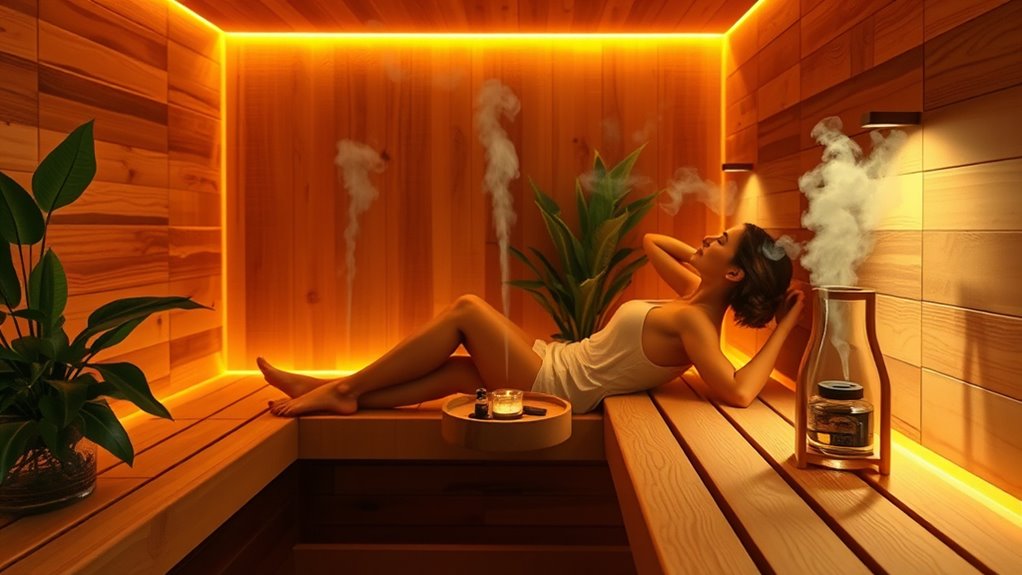
Many sauna enthusiasts turn to aromatherapy and essential oils to enhance their experience, as these natural scents can create a calming and invigorating atmosphere. If you’re interested in incorporating essential oils into your sauna routine, you might consider making your own DIY blends. Creating your own blends allows you to customize scents to match your mood or preferences, whether you prefer soothing lavender, invigorating eucalyptus, or revitalizing citrus. However, while experimenting with DIY blends can be fun and rewarding, you must also pay close attention to safety precautions. Essential oils are potent, and improper use can lead to skin irritation, respiratory issues, or other health concerns.
Enhance your sauna with DIY essential oil blends, but always prioritize safety and proper dilution.
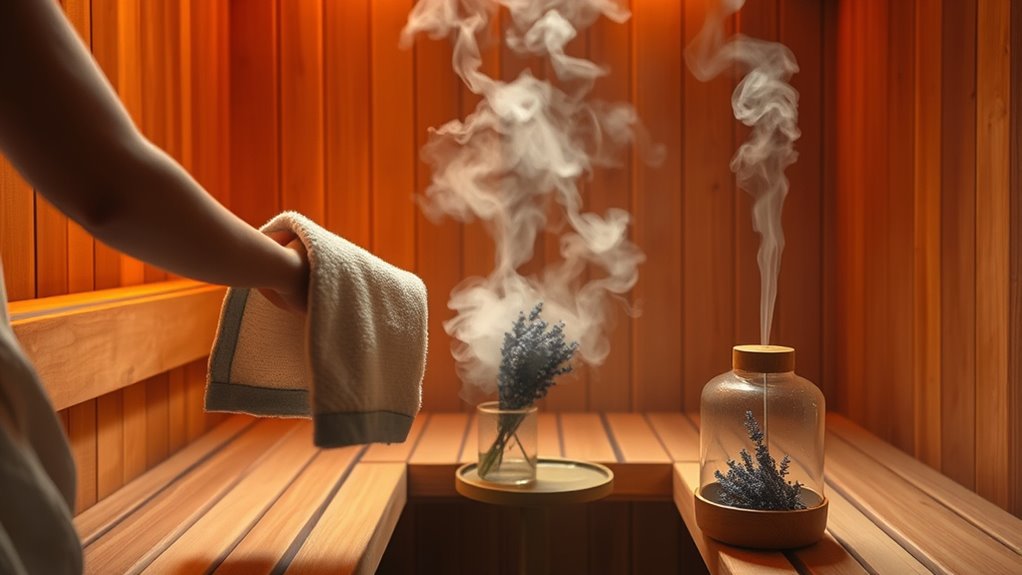
When preparing your blends, always remember to dilute essential oils properly. Never add pure oils directly to the sauna heat or water container. Instead, mix a few drops of your chosen essential oils into a carrier oil, such as jojoba or almond oil, before diffusing or adding them to your sauna. This dilution reduces the risk of skin irritation and guarantees a safer experience. If you’re using a diffuser designed for essential oils, check the manufacturer’s instructions to confirm compatibility and proper usage guidelines. Avoid overloading your blend with too many drops, as strong scents can become overwhelming or cause headaches.
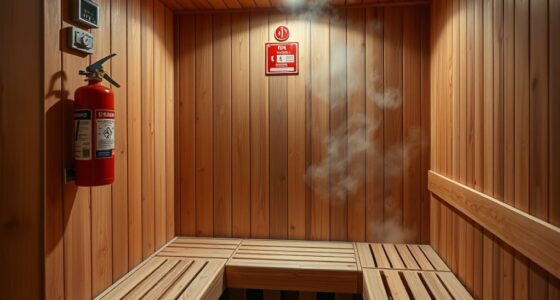
Safety precautions are vital when using essential oils in a sauna environment. Always start with small quantities to gauge how your body reacts, especially if you’re new to aromatherapy. If you notice any dizziness, nausea, or respiratory discomfort, discontinue use immediately. Keep the sauna well-ventilated to prevent the buildup of concentrated vapors, and never apply essential oils directly to your skin without proper dilution. Remember that some oils, like peppermint or eucalyptus, are particularly potent and may cause adverse reactions in sensitive individuals or those with respiratory issues. Incorporating proper diffuser technology can also help regulate scent dispersal and ensure safer usage.
Additionally, be mindful of the quality and source of your essential oils. Opt for high-quality, pure oils from reputable suppliers, as adulterated or synthetic products can pose health risks. Keep essential oils out of reach of children and pets, and avoid using them if you’re pregnant or have underlying health conditions unless you’ve consulted a healthcare professional. By taking these safety precautions and crafting your own blends thoughtfully, you can safely enjoy the benefits of aromatherapy in your sauna. This mindful approach guarantees that your sessions remain both enjoyable and safe, allowing you to relax and rejuvenate fully.
Top picks for "safely aromatherapy essential"
Open Amazon search results for this keyword.
As an affiliate, we earn on qualifying purchases.
Frequently Asked Questions
Can Essential Oils Cause Allergic Reactions in Saunas?
Yes, essential oils can cause allergic reactions if you have sensitivities. You might experience symptoms like sneezing, skin irritation, or breathing issues during sauna sessions. To reduce risks, test a small amount of oil beforehand, use high-quality oils, and avoid applying them directly to the skin. If you notice any allergic reactions, stop use immediately and consult a healthcare professional. Always prioritize your safety when using essential oils in saunas.
Is It Safe to Use Essential Oils With Children in Saunas?
Imagine a warm sauna, but with children nearby, you need to prioritize their safety. It’s generally not safe to use essential oils with children in saunas because their sensitive skin and developing lungs make them more vulnerable to aromatic concerns and potential allergic reactions. Always consult a pediatrician first, and avoid strong or concentrated oils, ensuring you keep their safety at the forefront while enjoying a calming environment.
How Long Should I Wait Before Entering After Adding Oils?
You should wait at least 10-15 minutes after adding oils to allow proper oil dispersal and sauna ventilation. This guarantees the essential oils evenly circulate without overwhelming your senses or causing irritation. Opening the ventilation helps disperse any concentrated fumes, making the environment safe and comfortable. Always monitor the aroma’s intensity and your comfort level before entering, and adjust the timing based on your sauna’s size and ventilation efficiency.
Are There Specific Oils to Avoid in Saunas?
Think of your sauna as a delicate dance floor—some oils can trip you up. You should avoid contraindicated oils like eucalyptus or peppermint, which can cause respiratory irritation or skin reactions in high heat. Essential oil hazards become real when used improperly, so steer clear of these potent oils. Always research and consult before using any oil, ensuring your aromatherapy experience stays safe, soothing, and enjoyable.
Can Essential Oils Damage Sauna Equipment or Interiors?
Essential oils can damage sauna equipment or interiors if you’re not careful. They may leave oil residue that’s hard to clean and could cause stains or slippery surfaces, affecting equipment safety. To prevent this, dilute oils properly and avoid direct contact with heater elements or wood surfaces. Regular cleaning after use helps maintain the sauna’s condition, ensuring you enjoy aromatherapy safely without risking damage or safety hazards.
Conclusion
By following these simple tips, you can transform your sauna experience into a blissful escape without risking your health. Always use high-quality essential oils, dilute them properly, and listen to your body’s signals. Think of your sauna as a sanctuary—protected and pure—where aromatherapy elevates your relaxation to legendary levels. With careful attention, you’ll turn every session into a rejuvenating adventure, proving that safety and serenity can indeed go hand in hand, creating a truly heavenly retreat.