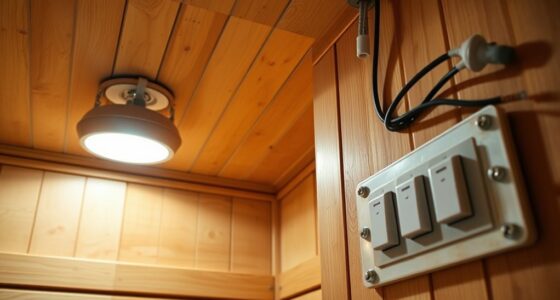
To guarantee fire safety in your sauna, always install and maintain properly grounded electrical wiring, avoiding overloading circuits and using extension cords. Keep fire extinguishers nearby, labeled for electrical fires, and check them regularly. Install smoke detectors and keep combustible materials away from heat sources. Educate users on emergency procedures and conduct regular safety checks. Following these protocols can help prevent fires; continue to explore more safety measures to keep everyone safe.
Key Takeaways
- Install and regularly inspect electrical wiring, heaters, and control panels by qualified electricians to prevent fire hazards.
- Position a Class C fire extinguisher outside the sauna and ensure users know how to operate it properly.
- Keep combustible materials away from heat sources and ensure proper ventilation to reduce fire risks.
- Install smoke detectors nearby, test them regularly, and maintain them to ensure early fire detection.
- Implement AI-driven safety monitoring systems for real-time fault detection and enhanced fire prevention protocols.
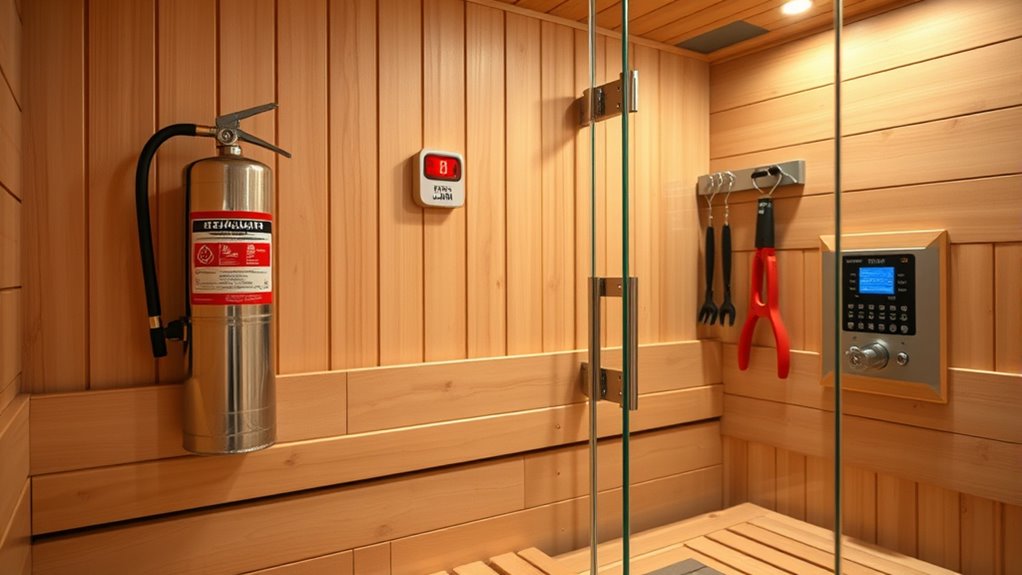
Saunas can provide a relaxing escape, but they also pose fire risks if proper safety measures aren’t followed. One of the most critical aspects of sauna safety is making certain that the electrical wiring is correctly installed and maintained. Faulty or outdated wiring can lead to short circuits, sparks, or electrical fires. It’s essential to have a qualified electrician inspect the wiring before you start using the sauna and periodically afterward. Make sure wiring is properly insulated, grounded, and complies with local electrical codes. Avoid overloading circuits or using extension cords, which can increase the risk of overheating and fire. Additionally, all electrical components, including heaters and control panels, should be installed with safety in mind and checked regularly for signs of wear or damage. Incorporating AI-driven safety monitoring systems can further enhance the detection of potential electrical faults before they cause a fire.
Another crucial safety tip is the strategic placement of fire extinguishers. You should position a fire extinguisher within easy reach outside the sauna, ideally near the door, so you can access it quickly in case of an emergency. It’s equally important to verify that the extinguisher is suitable for electrical fires—usually a Class C extinguisher—since electrical malfunctions are a common cause of sauna fires. Regularly check the extinguisher’s pressure gauge and replace or recharge it as needed. Educate everyone using the sauna on how to operate the extinguisher properly, so you’re prepared to respond swiftly if a fire occurs.
Beyond electrical wiring and extinguisher placement, keep the sauna’s environment safe by avoiding clutter around electrical components and ensuring proper ventilation. Keep combustible materials, such as towels or wood, away from heat sources. Installing smoke detectors in the vicinity adds an extra layer of safety, alerting you early if smoke or fire develops. Make sure to test these detectors regularly and replace batteries as needed.

Kidde, FA110G, Multi Purpose Fire Extinguisher for Home, Office, Dorm, Residential, 1A10BC
Reliable Fire Protection: Stop basic home fires involving trash, wood, paper, liquids, gases, and electrical equipment
As an affiliate, we earn on qualifying purchases.
As an affiliate, we earn on qualifying purchases.
Frequently Asked Questions
How Often Should Sauna Equipment Be Inspected for Fire Risks?
You should inspect sauna equipment for fire risks at least once a month. Regular checks ensure fire alarm systems are functional and that electrical wiring and heating elements are in good condition. It’s also essential to have fire safety training so you know how to respond if a fire occurs. Frequent inspections help prevent hazards, and proper training keeps you prepared to act swiftly, maintaining a safe environment for everyone.
Are There Specific Materials That Reduce Fire Hazards in Saunas?
You’re on the right track—using fire-resistant materials can be a game-changer in reducing hazards. Opt for safe construction by selecting fire-resistant materials like treated wood, non-combustible insulation, and fire-retardant coatings. These materials slow down or prevent ignition, giving you peace of mind. Remember, a stitch in time saves nine, so prioritize fire-safe materials in your sauna design to keep everyone safe and secure.
What Are the Emergency Procedures if a Fire Starts in a Sauna?
If a fire starts in your sauna, immediately activate the fire alarm system to alert others. Follow your evacuation planning by calmly guiding everyone to the nearest exit, avoiding elevator use. Call emergency services once you’re at a safe distance. Make certain all exit routes are clear and avoid re-entering until authorities confirm it’s safe. Regular drills help everyone respond quickly and effectively during such emergencies.
Can Electrical Sauna Heaters Be Safely Installed Outdoors?
Did you know that outdoor installation of electrical sauna heaters can be safe if you follow proper guidelines? You can install these heaters outdoors, but guarantee you prioritize electrical safety by using weatherproof wiring, proper grounding, and certified equipment. Always consult local codes and a qualified electrician to verify the setup. This way, you enjoy a safe sauna experience without risking electrical hazards or fire.
How Does Sauna Ventilation Impact Fire Safety Protocols?
Sauna ventilation critically impacts fire safety protocols by influencing ventilation design and fire risk mitigation. When ventilation is properly planned, it prevents overheating and reduces the buildup of combustible fumes, lowering fire hazards. You should ensure your sauna has adequate airflow to maintain safe temperatures and prevent moisture buildup, which can cause electrical issues. Good ventilation design is essential for minimizing fire risks and ensuring a safe sauna experience for everyone.

First Alert Smoke Alarm, Battery-Operated Detector with Test & Silence Button, SMI100, 1-Pack
First Alert's Precision Detection advanced sensing technology complies with new industry standards to reduce cooking nuisance alarms and…
As an affiliate, we earn on qualifying purchases.
As an affiliate, we earn on qualifying purchases.
Conclusion
Remember, your sauna should be a sanctuary, not a fire hazard. By following proper equipment protocols and staying vigilant, you hold the power to prevent a disaster that could turn your relaxing retreat into a blazing nightmare. Don’t underestimate the importance of fire safety—your safety and peace of mind depend on it. Stay cautious, stay prepared, and keep your sauna a safe haven where relaxation reigns supreme, not flames.

Harvia KIP Sauna Heater, Wall Mounted Electric Sauna Stove, Stainless Steel 220v Heater with Sauna Stones Included, Large Stone Cavity for Maximum Heat Release (8kW – Digital Controls)
Traditional KIP Harvia 220v Sauna Heater: A classic, reliable model within Harvia's heater variety, the KIP is user-friendly…
As an affiliate, we earn on qualifying purchases.
As an affiliate, we earn on qualifying purchases.

Sauna High Limit Control Switch FH71 ZSK-764 | Auto Shut-Off Safety & Heat Protection | for Finlandia Harvia Heaters – EGO 55.13529.100
BUILT-IN OVERHEAT PROTECTION — Automatically shuts off the sauna heater if it exceeds safe operating temperatures to help…
As an affiliate, we earn on qualifying purchases.
As an affiliate, we earn on qualifying purchases.