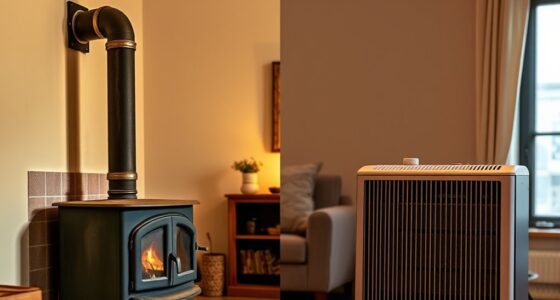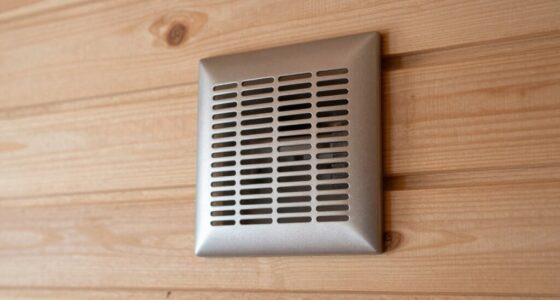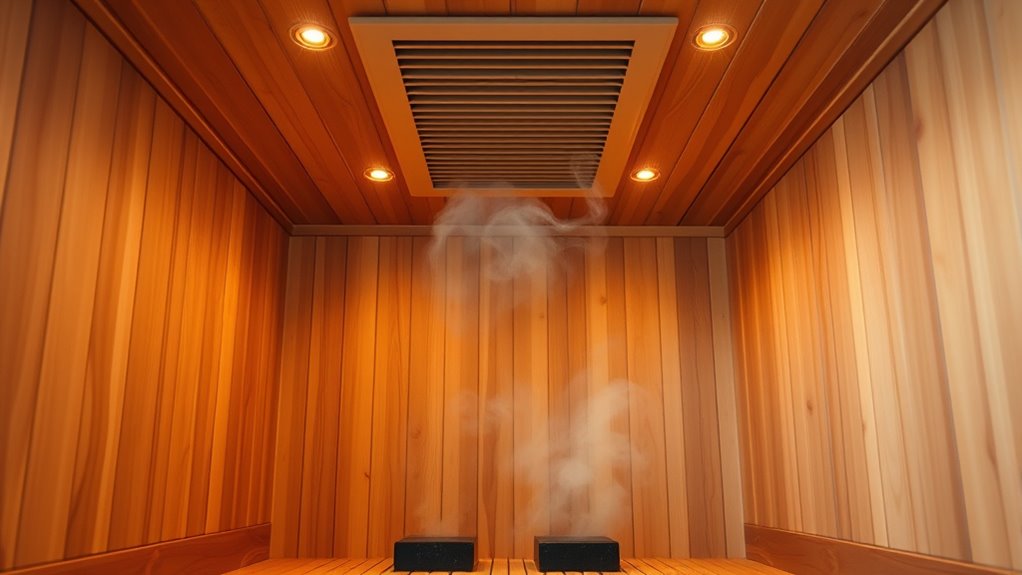

To guarantee adequate fresh air in your small sauna, position intake vents near the bottom to bring in cooler air and place exhaust vents higher to remove warm, humid air. Regularly monitor air quality with sensors to detect humidity, odors, and CO₂ levels, and consider adding mechanical ventilation like exhaust fans for better airflow. Maintaining and adjusting your ventilation system helps keep your sauna healthy and inviting—continue exploring to discover more expert tips.
Key Takeaways
- Install intake vents near the floor for cool, fresh air entry and exhaust vents higher up to remove warm, humid air.
- Use mechanical ventilation like exhaust fans to supplement natural airflow, especially in sealed saunas.
- Position vents thoughtfully to promote continuous airflow across all areas, including seating zones.
- Monitor air quality with sensors to detect humidity, odors, and CO₂ levels, enabling timely ventilation adjustments.
- Regularly inspect and maintain ventilation components to prevent blockages and optimize fresh air exchange.
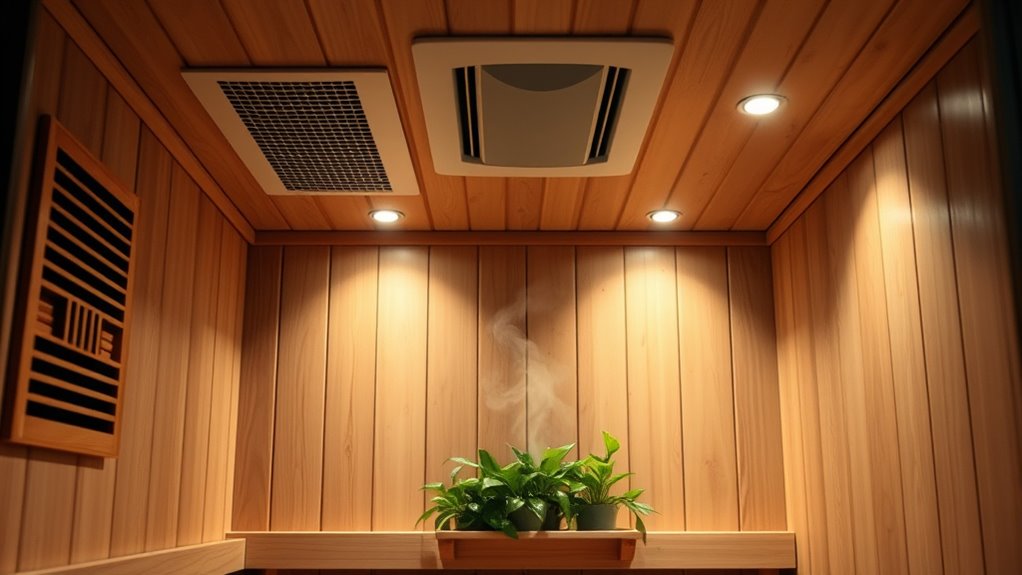
Have you ever wondered how to keep the air in your small sauna fresh and healthy? Proper ventilation design plays a vital role in guaranteeing that the air circulates effectively, preventing stuffiness and the buildup of moisture or odors. When you plan your sauna’s ventilation, consider both intake and exhaust vents carefully. An ideal design allows fresh air to enter from outside, replacing stale air and maintaining a comfortable environment. You might position the intake vent near the bottom to bring in cooler air, while placing the exhaust vent higher up helps expel warm, humid air naturally. This airflow pattern encourages continuous circulation, which is essential in small spaces where air can quickly become stagnant.
Air quality monitoring is another key aspect to maintaining a healthy sauna environment. By installing simple sensors or monitors, you can keep track of humidity levels, particulate matter, and even carbon dioxide concentrations. These devices help you identify when the air becomes too humid or contaminated with odors, prompting timely adjustments. For example, if the air quality monitoring indicates excessive moisture, you can increase ventilation or adjust the ventilation design to improve airflow. Regularly checking these readings ensures your sauna remains a safe, invigorating space rather than a breeding ground for mold or unpleasant smells.
When designing your ventilation system, think about the placement of vents relative to heat sources and seating areas. Proper placement maximizes airflow efficiency and ensures that fresh air reaches all parts of your sauna. Don’t forget that natural ventilation can be complemented with mechanical systems, such as exhaust fans or ventilators, especially if your sauna is tightly sealed. These systems can be controlled automatically based on air quality data, providing a seamless way to maintain ideal conditions without constant manual intervention.
Keep in mind that ventilation isn’t a one-time setup; it’s an ongoing process. Regularly inspecting and maintaining your ventilation components helps prevent blockages and ensures consistent airflow. If you notice lingering odors or excessive humidity despite your ventilation efforts, you may need to revisit your ventilation design or upgrade your monitoring tools. The goal is to create a balance where fresh air enters smoothly, stale air exits efficiently, and the overall air quality remains high. Additionally, understanding the contrast ratio of your ventilation system can help you evaluate how effectively it manages temperature and humidity levels, ensuring a comfortable environment for every sauna session. By combining thoughtful ventilation design with diligent air quality monitoring, you keep your small sauna a healthy, inviting space for every session.
As an affiliate, we earn on qualifying purchases.
Frequently Asked Questions
How Often Should I Check Sauna Air Quality?
You should check your sauna’s air quality daily, especially if you use it often. Use air quality sensors to monitor humidity, CO2, and odors, ensuring a healthy environment. Also, set ventilation timers to automate fresh air exchange, preventing stuffiness and buildup of harmful gases. Regular checks help you maintain peak air quality, making your sauna experience safer and more enjoyable. Adjust your ventilation system as needed based on sensor readings.
Can Plants Improve Sauna Air Circulation?
Plants can improve sauna air circulation through plant purification and natural ventilation. By adding select indoor plants, you introduce natural air filtration, reducing humidity and removing impurities. These plants, like ferns and snake plants, help enhance airflow and oxygen levels, creating a healthier environment. Incorporate them near vents or windows to boost natural ventilation, ensuring better air quality during your sauna sessions.
What Are Signs of Poor Ventilation in a Sauna?
If you’re wondering whether your sauna’s ventilation indicators are flashing red, chances are, airflow issues are at play. Signs of poor ventilation include a stuffy, stagnant atmosphere, excessive heat, lingering odors, or difficulty breathing comfortably. You might notice the air feels thick, with no fresh breeze in sight. These clues tell you it’s time to open a vent or improve your ventilation setup before you turn into a sweaty, overheated cave.
Is It Safe to Open Windows During Sauna Use?
Yes, it’s safe to open windows during sauna use if you prioritize window safety and make certain they are securely open to prevent accidents. Opening windows is an effective ventilation method that improves airflow and reduces the buildup of heat and humidity. Just make sure to open them gradually, monitor the temperature, and avoid sudden drafts that could cause discomfort or safety issues, creating a more comfortable sauna experience.
How Does Humidity Affect Fresh Air Exchange?
Humidity levels directly impact air circulation in your sauna. High humidity can make the air feel heavy, reducing the effectiveness of fresh air exchange because moist air doesn’t circulate as freely. When humidity is low, air moves more easily, improving ventilation and bringing in fresh air. To optimize air circulation, maintain balanced humidity levels, which guarantees the exchange of stale air with fresh air, keeping your sauna safe and comfortable.
As an affiliate, we earn on qualifying purchases.
Conclusion
By prioritizing proper ventilation, you guarantee your small sauna remains a healthy, enjoyable space. It might seem like a minor detail, but neglecting fresh air can lead to discomfort and poor air quality. Don’t dismiss the importance of ventilation; instead, invest a little effort into effective airflow. With proper design, you’ll enjoy relaxing sessions without worry, knowing every breath you take is fresh and safe—making your sauna experience truly restorative.
As an affiliate, we earn on qualifying purchases.
automatic sauna ventilation system
As an affiliate, we earn on qualifying purchases.
As an affiliate, we earn on qualifying purchases.