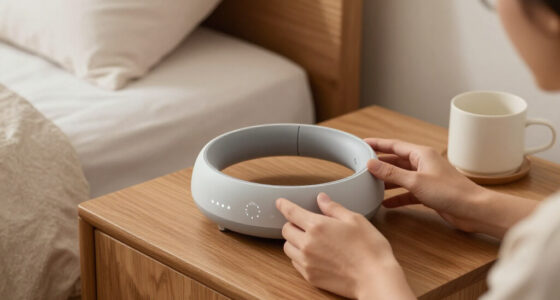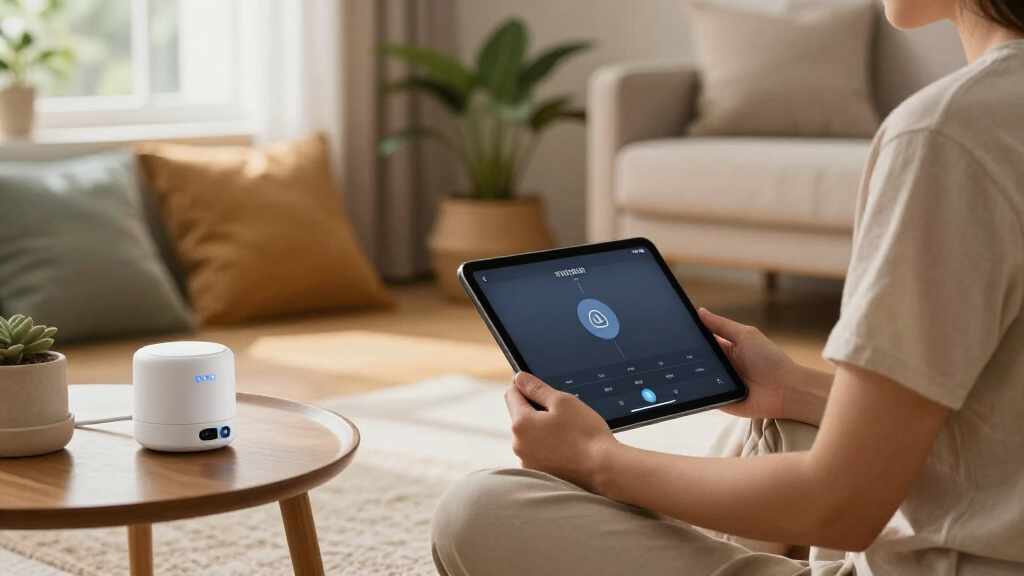

At-home wellness tech has quietly split into two camps: passive relaxation devices that promise to calm your nervous system in minutes, and data-driven trackers that measure what your body is actually doing so you can improve it. Deciding which camp you belong to is the single biggest factor in choosing well here, and it is why my top picks sit on opposite ends of that spectrum. For most people who want a low-effort daily relaxation ritual, the Pulsetto FIT (V2) stands out as the best overall blend of convenience, app-guided sessions, and portability. If you would rather see hard biometric proof of your progress, the Flowtime Biosensing Meditation Headband is the clear pick — it is the only device in this lineup that measures brainwaves and heart rate variability directly. And for buyers on a tighter budget who still want the wearable relaxation experience, the Pulsetto Lite (V1) covers the fundamentals at a lower price.

Get wellness gear delivered free — and shop member deals
- Fast, free delivery on millions of items
- Access to Prime Big Deal Days deals on October 6–7
- Prime Video, Amazon Music and more included
The tradeoffs worth knowing up front: the wearables are easy but rely on subscription upsells and have mixed long-term evidence, the biosensing headband is rich in data but demands an active meditation practice to be useful, and the two physical-therapy-style devices — the Adjustable Pelvic Floor Exerciser and the NeuroMD NMES Wireless Muscle Stimulator — serve specific rehabilitation goals rather than general wellness. None of these five devices does everything, and part of my job in this guide is making clear where each one stops being the right answer.
Key Takeaways
- The Pulsetto FIT (V2) wins as best overall because it balances guided relaxation, app customization, and portability better than any other device in this lineup.
- The Flowtime headband is the only pick that measures brainwaves, heart rate, and HRV, making it the strongest choice for meditators who want measurable proof of progress.
- The Pulsetto Lite (V1) delivers most of the same wearable relaxation experience as the FIT at a lower price, but with fewer features and the same paywalled premium content.
- The NeuroMD NMES stimulator and the pelvic floor exerciser are goal-specific rehabilitation tools — neither substitutes for a general wellness device.
- Both Pulsetto models hide their best content behind in-app purchases, so the sticker price understates the real cost of ownership.
| Pulsetto FIT (V2) Wellness Wearable |  | Best Overall | Package Dimensions: 6.46 x 6.02 x 2.76 inches | Item Weight: 15.1 ounces | Battery: 1 Lithium Ion battery (included) | VIEW LATEST PRICE | See Our Full Breakdown |
| Flowtime Biosensing Meditation Headband |  | Best for Data-Driven Meditation | Compatibility: iOS 14+ and Android 6.0+ | Metrics Measured: Brainwaves, heart rate, HRV, stress levels | Battery Life: Up to 8 hours use, 50 days standby | VIEW LATEST PRICE | See Our Full Breakdown |
| NeuroMD NMES Wireless Muscle Stimulator |  | Best for Muscle Recovery and Pain Relief | Model: SM9113 | Technology: Wireless NMES (neuromuscular electrical stimulation) | Modes: 2 adjustable modes | VIEW LATEST PRICE | See Our Full Breakdown |
| Adjustable Pelvic Floor Exerciser for Men & Women |  | Best for Pelvic Floor Training | Controls: Touch screen | Operation Mode: Manual | Power Source: Corded electric | VIEW LATEST PRICE | See Our Full Breakdown |
| Pulsetto Lite (V1) Wellness Wearable |  | Best Budget Wellness Wearable | Session Length: 4 to 10 minutes | App: Pulsetto App (free core programs) | Portability: Wearable, home and travel use | VIEW LATEST PRICE | See Our Full Breakdown |
More Details on Our Top Picks
Pulsetto FIT (V2) Wellness Wearable
The Pulsetto FIT (V2) earns the top spot because it solves the hardest problem in at-home wellness: consistency. Its short, guided pulse sessions mean the barrier to a daily habit is minutes, not an hour, and the lightweight 15.1-ounce design is comfortable enough to keep on during a session without thinking about it. Compared with the Flowtime headband, which requires you to actually meditate to get value, the FIT is a more passive, lower-commitment entry point into nervous-system relaxation — and that suits far more people.
The companion app is where this model separates itself from its cheaper sibling, the Pulsetto Lite (V1). The FIT supports deeper customization, session tracking, and integrated soothing audio, which makes it feel like a complete system rather than a standalone gadget. Broad compatibility — iOS 12.0+ and Android 6.0+ — keeps it accessible even for people holding onto older phones.
The tradeoffs are real, though. The customer rating sits at a moderate 3.6/5 stars, which suggests experiences vary from person to person, and long-term effectiveness data is limited. The premium features sit behind an in-app purchase, so the device’s real capability is only unlocked after paying beyond the sticker price. This pick makes the most sense for someone who wants a low-effort daily relaxation ritual and accepts that results may take experimentation to feel.
Pros:- Short, easy sessions that fit easily into a daily routine
- Intuitive app with customizable programs and soothing audio
- Lightweight, ergonomic design comfortable for regular use
- Works at home or on the go with broad phone compatibility
Cons:- Moderate 3.6/5 customer rating suggests inconsistent results
- Premium features locked behind in-app purchases
- Limited independent data on long-term effectiveness
Best for: Anyone who wants a low-effort, app-guided daily relaxation habit without committing to formal meditation practice
Not ideal for: Skeptics who want clinical-grade evidence of effectiveness, or buyers unwilling to pay subscription costs for full functionality
- Package Dimensions:6.46 x 6.02 x 2.76 inches
- Item Weight:15.1 ounces
- Battery:1 Lithium Ion battery (included)
- Compatibility:iOS 12.0+ and Android 6.0+
- App Required:Yes, for customization and tracking
- Session Length:Short guided sessions (minutes per day)
Our verdict“The FIT (V2) is the most complete package in this lineup for everyday relaxation, provided you accept the subscription cost and variable results.”
Flowtime Biosensing Meditation Headband
The Flowtime headband plays a completely different game than the Pulsetto wearables, and that difference is exactly why it holds the second spot. Instead of delivering relaxation, it measures your relaxation — tracking brainwaves, heart rate, HRV, and stress levels in real time while you meditate. For anyone who already meditates and wants to know whether their practice is actually deepening, this is the only device in this roundup that answers the question with data instead of vibes.
Its detailed biodata reports reward consistency over weeks, showing trends that a simple session timer never could. The bundled scientifically validated meditation lessons also make it more of a training system than a gadget, closer to having a coach than a tracker. Compared with the Pulsetto FIT, which is fire-and-forget, Flowtime demands active participation — you get out of it roughly what you put in.
Practically, the 8-hour battery life and 50-day standby are generous, and the headband is light enough to forget you’re wearing it. But there are genuine limitations: it has no water resistance at all, no built-in display, and it is effectively useless without the smartphone app. This model is better suited to committed meditators than casual browsers; if you are not going to sit down and practice regularly, the data it collects has nowhere to go.
Pros:- Real-time brainwave, heart rate, and HRV feedback during sessions
- Detailed biodata reports that reveal long-term progress trends
- Includes scientifically validated meditation lessons
- 8-hour battery life with 50-day standby for reliable regular use
Cons:- No water resistance limits where and how it can be used
- Fully dependent on the companion smartphone app
- No built-in display means all feedback goes through your phone
Best for: Regular meditators who want objective, measurable feedback on their practice and brainwave-level progress tracking
Not ideal for: Casual users or beginners who won’t meditate consistently, or anyone wanting a screen-free standalone device
- Compatibility:iOS 14+ and Android 6.0+
- Metrics Measured:Brainwaves, heart rate, HRV, stress levels
- Battery Life:Up to 8 hours use, 50 days standby
- Connectivity:Bluetooth
- Display:None — phone app required
- Water Resistance:Not water resistant
- Color:Silver with black band
Our verdict“The most measurable wellness device in this guide — ideal for serious meditators, overkill for everyone else.”
NeuroMD NMES Wireless Muscle Stimulator
The NeuroMD NMES is the pick that reframes what “wellness tech” can mean. Using neuromuscular electrical stimulation, it triggers muscle contractions that support activation, strength, and toning while offering temporary pain relief — a genuinely different job than anything the Pulsetto or Flowtime devices attempt. For people dealing with sore muscles, post-workout fatigue, or nagging discomfort, this is the most directly therapeutic option here.
Its cordless, pocketable design is the key advantage over the pelvic floor exerciser later in this list. You can wear it while cooking, working, or walking, and there’s no outlet tethering you to one spot in the house. The two adjustable modes and variable intensity levels let you dial sessions from gentle recovery to more demanding activation work.
Where it falls short is scope and onboarding. This is not a comprehensive therapy device — it stimulates muscles but does not diagnose, stretch, or replace physical therapy — and there is a real learning curve to pad placement and mode selection before sessions feel productive. Compared with the plug-in pelvic trainer, it trades raw power and a touchscreen interface for freedom of movement. That trade favors most buyers, but not the ones who want a set-it-on-the-counter, no-learning-curve device.
Pros:- Fully wireless and portable for use anywhere, anytime
- Two adjustable modes with customizable intensity levels
- Rechargeable battery eliminates ongoing pad-cord hassles
- Supports both muscle activation and temporary pain relief
Cons:- Setup and pad placement involve a genuine learning curve
- Limited to muscle stimulation rather than full-body therapy
- Only two modes may feel restrictive over time
Best for: Active adults and desk workers seeking portable muscle activation, toning, and temporary pain relief at home
Not ideal for: Anyone needing clinical-grade therapy, or users who want a zero-setup, plug-in-and-press-start experience
- Model:SM9113
- Technology:Wireless NMES (neuromuscular electrical stimulation)
- Modes:2 adjustable modes
- Power:Rechargeable battery, cordless
- Included:Control unit, electrode pads, instructions
- Use Case:Muscle activation, toning, temporary pain relief
Our verdict“The most practical choice in this lineup for targeted muscle work and pain relief, as long as you’re willing to learn to use it properly.”
Adjustable Pelvic Floor Exerciser for Men & Women
This pelvic floor trainer addresses a wellness category most devices ignore entirely. Pelvic muscle strength affects posture, core stability, and quality of life for both men and women, and doing those exercises correctly on your own is notoriously difficult. The ergonomic cushion and touchscreen control panel here solve that by guiding intensity and tracking progress — a level of structure that no app-only program can match.
Its unisex design widens its usefulness considerably, and the touchscreen makes adjustments immediate rather than buried in menus. Compared with the NeuroMD stimulator, this device is the more focused and arguably the more effective tool for its specific muscle group — the seated, guided format enforces proper form in a way loose electrode pads cannot. But it is also the least flexible product in this roundup: the corded power requirement anchors it to a wall outlet, and its size makes it awkward to store or travel with.
Compared with the wearables, the contrast is even starker. The Pulsetto and Flowtime devices live on your body and disappear into a drawer; this is a dedicated piece of equipment that occupies real space and demands a seated, scheduled session. That is not a flaw — it is simply a different kind of commitment, and buyers should go in knowing the device owns a corner of the room.
Pros:- Guided workouts that enforce proper pelvic floor technique
- Suitable for both men and women
- Smart touchscreen for easy intensity adjustment and progress tracking
- No complex setup or app dependency required
Cons:- Corded power source prevents portable use
- Bulky footprint makes storage and travel impractical
- Single-purpose device with no broader wellness functions
Best for: Men and women who want structured, guided pelvic floor strengthening at home and have the space for a dedicated device
Not ideal for: Travelers, apartment dwellers with minimal storage, or anyone seeking a portable multi-purpose wellness gadget
- Controls:Touch screen
- Operation Mode:Manual
- Power Source:Corded electric
- Color:Grey and White
- Material:Plastic, Rubber
- Design:Ergonomic cushion with adjustable intensity
Our verdict“A focused, well-executed pelvic trainer that earns its floor space — just make sure you have the floor space first.”
Pulsetto Lite (V1) Wellness Wearable
The Pulsetto Lite is the entry ticket to the same wearable relaxation system as the FIT (V2), at a lower price. Sessions run just 4 to 10 minutes, the core programs are free, and the device pairs with the same Pulsetto App for customization, usage tracking, and calming audio. For a first dip into wellness wearables without a big financial commitment, it does the fundamentals honestly.
Placed against the FIT, the Lite reveals the classic budget-device tradeoff: fewer advanced features and thinner documentation. Published specifications are sparse, the feature set is more basic, and the overall experience feels less refined — but the core relaxation function is recognizably the same. Compared with the Flowtime headband, the Lite asks far less of you (no meditation practice required) while offering none of the biometric insight.
The shared weakness with its pricier sibling is the paywall: premium content requires an in-app purchase, and full customization demands smartphone pairing. If you buy this expecting everything on the box, you will be disappointed; if you buy it as an affordable trial run to see whether pulse-based relaxation works for you before upgrading to the FIT, the Lite does exactly that job.
Pros:- Very low effort — sessions last just 4 to 10 minutes
- Core programs included free with the app
- Portable enough for home use or travel
- Customizable sessions through the Pulsetto App
Cons:- Premium features require additional in-app purchases
- Sparse published specs make pre-purchase research difficult
- Requires smartphone pairing for full functionality
Best for: Budget-conscious buyers testing whether wearable relaxation tech fits their routine before paying for a premium model
Not ideal for: Anyone who wants full feature access out of the box or detailed product specifications before purchasing
- Session Length:4 to 10 minutes
- App:Pulsetto App (free core programs)
- Portability:Wearable, home and travel use
- Connectivity:Smartphone pairing required
- Premium Content:Available via in-app purchase
- Use Case:Daily relaxation and wellness support
Our verdict“A sensible, low-risk way to sample wearable relaxation tech — with the understanding that the full experience costs extra.”

How We Picked
Because “wellness tech” covers everything from meditation headbands to muscle stimulators, my first filter was intent fit: every device here had to serve a coherent at-home wellness goal — relaxation, sleep support, mindfulness training, or physical conditioning — rather than general fitness tracking. From there, I judged each product on ease of daily use, because wellness devices live or die on whether people actually use them past week two. A device that requires a lengthy setup, a dedicated outlet, or constant phone pairing loses points against one you can pick up and run in five minutes.
I also weighed data and feedback quality heavily. Devices that show you measurable progress — like the Flowtime’s brainwave reporting — earned more credibility than devices making vaguer claims. Where independent evidence on long-term effectiveness is thin, which is true for both Pulsetto models, I factored in customer ratings and transparency about what the product does and does not promise. Finally, I considered total cost of ownership, including in-app subscriptions and required accessories, plus physical practicalities like portability, battery life, and storage footprint. The ranking reflects how well each device serves its intended buyer, not raw feature counts.
Factors to Consider When Choosing At-home Wellness Tech Devices
Choosing between these five devices comes down to three questions: what wellness outcome you actually want, how much effort you are willing to invest, and what your space and budget allow. Here is how I would work through the decision.Match the Device to Your Goal
Wellness tech fails most often when people buy a device for the wrong job. If your goal is stress relief and relaxation, the Pulsetto FIT or Lite is the right category — short sessions, minimal effort, app guidance. If your goal is improving a meditation practice, only the Flowtime headband gives you measurable feedback. If your goal is physical — muscle recovery or pelvic strength, the NeuroMD or the pelvic floor exerciser are the honest answers, and no relaxation wearable will substitute for them. Buying across categories rarely works; pick the problem you most want solved in the next three months.
Passive Versus Active Devices
The Pulsetto models are largely passive: you start a session and the device does the work. The Flowtime headband and the pelvic trainer are active: their value depends on your participation and consistency. Passive devices suit people with limited time or low motivation; active devices deliver better results for people who will genuinely show up. Be honest about which person you are — an unused $300 headband is worse value than a $100 wearable you touch daily.
Hidden Costs and Subscriptions
Both Pulsetto models gate premium features behind in-app purchases, so the advertised price is only the entry fee. Before buying any app-connected wellness device, check what the included content covers, what the subscription costs, and whether the device is usable without paying again. Devices like the NeuroMD and the pelvic trainer, by contrast, are one-time purchases with no recurring fees — a meaningful difference over a year of ownership.
Portability and Space Requirements
The two wearables and the NeuroMD stimulator are genuinely portable — they fit in a bag and work anywhere. The Flowtime headband is portable too, though it is not water resistant, and it depends entirely on your phone. The pelvic floor exerciser is the outlier: corded, bulky, and stationary. If you live in a small apartment or travel frequently, that constraint alone may rule it out regardless of how well it performs.
Evaluating Evidence and Ratings
Wellness tech is full of promising-sounding claims with thin long-term evidence. The Pulsetto FIT’s 3.6/5 rating reflects that reality — some users report real benefits, others none. Where measurable feedback exists, as with the Flowtime’s brainwave data, you at least get objective information about what the device detects. For stimulation devices, look for clear descriptions of what they do (muscle activation, temporary pain relief) and treat anything implying medical treatment with caution.
Frequently Asked Questions
Are wearable relaxation devices like the Pulsetto actually effective?
What is the difference between the Pulsetto FIT (V2) and the Pulsetto Lite (V1)?
Can the NeuroMD NMES replace physical therapy?
Who should consider a pelvic floor exerciser?
Do I need a smartphone to use these wellness devices?
Conclusion
After comparing all five devices, my recommendations break down cleanly by buyer type. If you want a general daily relaxation habit with the least friction, buy the Pulsetto FIT (V2) — it is the most complete wearable experience here, provided you budget for the in-app premium content. If you are budget-cautious or new to wellness tech, start with the Pulsetto Lite (V1) and upgrade only if the short daily sessions become a habit you value.
If you are a committed meditator who wants proof of progress, the Flowtime Biosensing Headband is in a class of its own — no other device in this guide measures brainwaves and HRV. For athletes and anyone with sore, overworked muscles, the NeuroMD NMES delivers portable stimulation and temporary pain relief, with the caveat that it takes some learning and is not a therapy substitute. Finally, if your priority is pelvic floor strength, the Adjustable Pelvic Floor Exerciser is the focused, guided tool for that job — as long as you have the outlet and floor space it demands.
My overall advice: pick the single problem you most want solved in the next three months, buy for that, and resist the urge to chase devices outside your actual goal. The best at-home wellness device is always the one you will still be using in week twelve.
Fall Picks
fall essentials
As an affiliate, we earn on qualifying purchases.