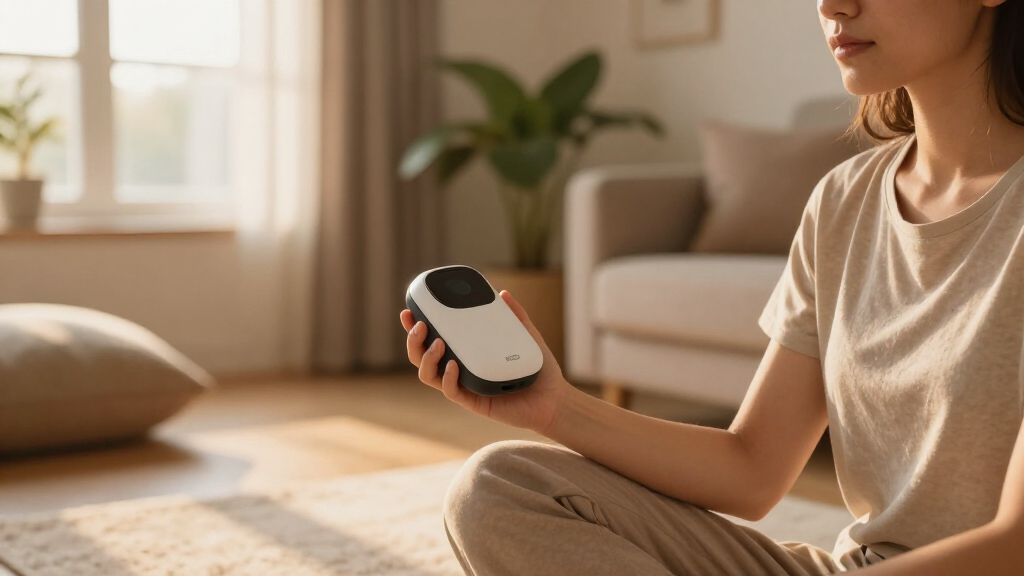

Portable meditation devices fall into two camps: guided sound devices that do the thinking for you, and electronic singing bowls that recreate traditional sound therapy in a travel-friendly form. After comparing eight options, the Morphée Zen stands out as my best overall pick thanks to its screen-free guided sessions and genuinely portable design, while the Mindsight Breathing Buddha wins for beginners who respond better to visual pacing than audio cues. The main tradeoff in this category is between session depth and simplicity — the bowls offer ambient sound therapy but little guidance, while the Morphée and Buddha provide structured practice but less of a “sound bath” experience. Budget also splits the field sharply, with electronic bowls clustering under $40 and the Morphée sitting at several times that price. Keep reading for the full breakdown, including which of the five nearly identical singing bowl models is actually worth buying.

Get wellness gear delivered free with Prime
- Fast, free delivery on millions of items
- Prime Video, Amazon Music and more included
- Member-only deals all year
Key Takeaways
- The singing bowl category is dominated by near-identical NDLT-style devices — the differentiators came down to mode count (8 vs 9), charging port (USB-C vs proprietary), and button layout, not sound quality.
- The Morphée Zen earned best overall because it is the only device in the lineup that delivers structured, session-based meditation rather than looping ambient tones.
- The Mindsight Breathing Buddha is the only visual-based option here, making it the strongest pick for open-plan offices and shared spaces where audio would be intrusive.
- Two of the eight products (the duplicate NDLT 8-frequency listings) are functionally the same device sold under slightly different names — buyers should compare price and seller before ordering.
- Battery life and charging standards varied more than expected in this category; USB-C models like the eSynic bowl offer a real long-term ownership advantage over micro-USB or coin-cell alternatives.
| Morphée Zen Guided Meditation Sound Device for Relaxation |  | Best Overall | Sessions: 72 guided sessions | Themes: Deep Relaxation, Immersive Journey, Dynamic Relaxation, Nature Sounds, Relaxing Music, White Noise | Languages: 4 | VIEW LATEST PRICE | See Our Full Breakdown |
| NDLT Portable Electronic Tibetan Singing Bowl with 8 Healing Frequencies |  | Best Value Sound Therapy Pick | Frequencies: 8 tones, 369Hz–963Hz | Modes: Auto and Manual | Battery Life: 8 hours | VIEW LATEST PRICE | See Our Full Breakdown |
| NDLT Portable Electronic Tibetan Singing Bowl with 8 Chakra Modes |  | Best for Chakra-Focused Practice | Frequencies: 369Hz–963Hz | Chakra Modes: 8 | Battery Life: 8 hours | VIEW LATEST PRICE | See Our Full Breakdown |
| eSynic Electronic Tibetan Singing Bowl for Meditation – USB-C Rechargeable |  | Most Authentic Bowl Sound | Tones: 9 real recorded Tibetan bowl sounds | Frequency Range: 510Hz / 433Hz / 256Hz / 288Hz | Battery: 2000mAh rechargeable | VIEW LATEST PRICE | See Our Full Breakdown |
| Electronic Tibetan Singing Bowl Meditation Sound Bowl Sound Bath Instrument |  | Best for Group Sound Baths | Frequencies: 8 (396Hz, 417Hz, 432Hz, 528Hz, 639Hz, 741Hz, 852Hz, 963Hz) | Timer Options: 15, 30, 45, 60, 105, 120 minutes | Battery Life: Up to 8 hours | VIEW LATEST PRICE | See Our Full Breakdown |
| Electronic Tibetan Singing Bowl Portable Meditation Sound Machine with 9 Healing Modes |  | Best Sound Variety | Sound Modes: 9 tracks including pure tones and nature sounds | Frequency Range: 256Hz, 288Hz, 433Hz, 510Hz | Auto-Shutoff Timers: 30 mins, 1H, 2H, 4H | VIEW LATEST PRICE | See Our Full Breakdown |
| NDLT Portable Electronic Tibetan Singing Bowl with 8 Healing Frequencies |  | Best for Travel | Frequencies: 369Hz-963Hz | Modes: Auto & Manual | Battery Life: 8 hours | VIEW LATEST PRICE | See Our Full Breakdown |
| Mindsight Original Breathing Buddha Guided Visual Meditation |  | Best for Beginners | Dimensions: 3.5 x 4 x 6 inches | Battery Life: 2 months @ 10 min/day | Brightness Levels: 2 | VIEW LATEST PRICE | See Our Full Breakdown |
| portable meditation device | Battery Life | Timer Options | Frequencies | Charging |
|---|---|---|---|---|
| Morphée Zen Guided Meditation | — | — | — | — |
| NDLT Portable Electronic Tibet | 8 hours | 15/30/45/60 minutes | 8 tones, 369Hz–963Hz | USB-C fast charging |
| NDLT Portable Electronic Tibet | 8 hours | 15/30/45/60 minutes | 369Hz–963Hz | USB-C fast charging |
| eSynic Electronic Tibetan Sing | — | 30 min / 1h / 2h / 4h | — | USB-C |
| Electronic Tibetan Singing Bow | Up to 8 hours | 15, 30, 45, 60, 105, 120 minutes | 8 (396Hz, 417Hz, 432Hz, 528Hz, 639Hz, 741Hz, 852Hz, 963Hz) | — |
| Electronic Tibetan Singing Bow | — | — | — | — |
| NDLT Portable Electronic Tibet | 8 hours | 15/30/45/60 minutes | 369Hz-963Hz | USB-C fast charging |
| Mindsight Original Breathing B | 2 months @ 10 min/day | — | — | — |
More Details on Our Top Picks
Morphée Zen Guided Meditation Sound Device for Relaxation
Morphée Zen stands out as the most complete meditation experience in this lineup because it does something none of the singing bowl devices attempt: it actually guides you. With 72 sessions across themes like Deep Relaxation, Nature Sounds, and White Noise, plus support for four languages, it replaces both a meditation app and a sound machine in one screen-free package. Compared with the NDLT bowls, which assume you already know how to structure a session, Morphée walks you through the process, making it far friendlier for anyone building a habit. The tradeoff is session length — at just 2 or 5 minutes per session, serious meditators who want longer sittings will find it limiting, and there is little room for customization.
Pros:- 72 guided sessions across six distinct themes
- Fully screen-free design removes digital distraction
- Lightweight and genuinely travel-ready
- Four language options for wider accessibility
Cons:- Sessions cap at 5 minutes, too short for deep practice
- No adjustable or customizable session settings
- Assumes some familiarity with meditation basics
Best for: Beginners and travelers who want guided structure without a phone screen
Not ideal for: Experienced meditators wanting long, unguided or customizable sessions
- Sessions:72 guided sessions
- Themes:Deep Relaxation, Immersive Journey, Dynamic Relaxation, Nature Sounds, Relaxing Music, White Noise
- Languages:4
- Screen:None — fully screen-free
- Portability:Portable, travel-friendly design
Our verdict“The most well-rounded pick for anyone who wants structure and guidance on the go, provided short sessions fit your routine.”
NDLT Portable Electronic Tibetan Singing Bowl with 8 Healing Frequencies
This NDLT bowl earns its spot as the value pick by packing eight tuned frequencies (369Hz–963Hz), dual auto/manual modes, and an 8-hour battery into a package that undercuts more elaborate alternatives. Where the Morphée Zen guides you verbally, this device takes the opposite approach: it hands you pure sound and lets you build your own practice around it. Timer options from 15 to 60 minutes give more flexibility than Morphée’s 2–5 minute sessions, which matters for longer sittings. The honest drawback is that without guided content, it assumes you already know how to meditate with sound — and purists will notice the absence of a physical bowl’s tactile resonance. Compared to the chakra-focused NDLT variant, this one frames its frequencies around general healing rather than energy centers, which may suit secular users better.
Pros:- Eight tuned frequencies spanning 369Hz–963Hz
- Auto and manual modes suit both passive and active sessions
- 8-hour battery with USB-C fast charging
- Storage bag included for travel
Cons:- No guided content — assumes prior meditation experience
- Electronic tones lack the tactile feel of a traditional bowl
- Fixed frequency set limits deeper sound-therapy customization
Best for: Budget-conscious buyers who already meditate and want affordable, flexible sound therapy
Not ideal for: Complete beginners who need guided instruction or anyone wanting a physical bowl to strike
- Frequencies:8 tones, 369Hz–963Hz
- Modes:Auto and Manual
- Battery Life:8 hours
- Charging:USB-C fast charging
- Timer Options:15/30/45/60 minutes
- Includes:Storage bag
Our verdict“A sensible budget entry into sound therapy for self-directed meditators who don’t need hand-holding.”
NDLT Portable Electronic Tibetan Singing Bowl with 8 Chakra Modes
Sibling to the NDLT healing-frequencies model, this version distinguishes itself by organizing its eight frequencies around chakra alignment, which changes who it’s for rather than what it does. If your practice involves working through specific energy centers, this framing makes session selection far more intentional than the generic healing approach of its counterpart. It shares the same strengths — 8-hour battery, USB-C fast charging, 15–60 minute timers, and a bundled storage bag — but adds a one-year warranty the other NDLT unit doesn’t advertise. Compared with the Morphée Zen, it offers much longer session flexibility but zero guidance, so it rewards practitioners who arrive with a plan. The main tradeoff beyond the lack of guided content is that buyers indifferent to chakra systems gain nothing over the cheaper sibling.
Pros:- Eight frequencies mapped to individual chakras for targeted sessions
- Auto and manual dual modes
- 8-hour battery life with fast USB-C charging
- One-year warranty included
Cons:- Requires chakra knowledge to use meaningfully
- No physical bowl resonance for traditional sound therapy
- Overlaps heavily with the cheaper NDLT unit if chakras don’t matter to you
Best for: Yoga practitioners and energy-work enthusiasts who meditate around specific chakras
Not ideal for: Secular or skeptical users — the chakra framing adds nothing over the cheaper NDLT model
- Frequencies:369Hz–963Hz
- Chakra Modes:8
- Battery Life:8 hours
- Charging:USB-C fast charging
- Timer Options:15/30/45/60 minutes
- Warranty:1 year
- Included:Storage bag
Our verdict“Choose this over the standard NDLT bowl only if chakra-targeted sessions are central to your practice.”
eSynic Electronic Tibetan Singing Bowl for Meditation – USB-C Rechargeable
The eSynic takes a different route from every other bowl here: instead of synthesizing frequencies, it plays nine real recordings of actual Tibetan bowls, complete with genuine overtones. That choice matters — where the NDLT models output clean electronic tones, eSynic captures the layered, resonant complexity that makes traditional bowls feel immersive, and its zinc alloy body even transmits physical vibration you can feel in your hands. Timer options stretching to four hours blow away every competitor’s ceiling, making it the best pick for overnight sleep support or extended sessions. The costs are real, though: it’s limited to pre-recorded tones rather than specific healing frequencies, and the 2000mAh battery means travel users should pack the cable.
Pros:- Nine authentic recorded Tibetan bowl tones with true overtones
- Physical vibrations you can actually feel
- Timers up to 4 hours, ideal for sleep
- Memory function remembers your last settings
Cons:- Locked to pre-recorded tones, no frequency selection
- May need frequent recharging on longer trips
- Won’t fully replace a traditional struck bowl for purists
Best for: Buyers who want the closest thing to a real singing bowl’s sound and feel, plus long overnight sessions
Not ideal for: Frequency-specific sound therapists who need exact Hz tuning like the NDLT bowls offer
- Tones:9 real recorded Tibetan bowl sounds
- Frequency Range:510Hz / 433Hz / 256Hz / 288Hz
- Battery:2000mAh rechargeable
- Charging:USB-C
- Timer Options:30 min / 1h / 2h / 4h
- Material:Zinc alloy
- Includes:Singing bowl, USB-C cable, user manual
Our verdict“The best choice when authenticity of tone and long sessions matter more than precise frequency control.”
Electronic Tibetan Singing Bowl Meditation Sound Bowl Sound Bath Instrument
This model earns the sound bath designation through one standout feature: binaural stereo sound from a precision metal acoustic chamber. Where the eSynic delivers authentic single-bowl tones, this device projects a wider, room-filling stereo field that works better when more than one person is meditating — think yoga studios, therapy offices, or group sessions at home. Its timer range is the most flexible in the batch at 15 to 120 minutes, and its eight tuned frequencies (396Hz–963Hz) match what the NDLT bowls offer. The metal honeycomb sound cover adds genuine acoustic depth for the price. On the downside, it charges over a dated dual-head USB cable rather than USB-C like its competitors, and the 120-minute charge time tests patience before a group session.
Pros:- Binaural stereo output fills a room, not just headphones
- Widest timer range in the lineup: 15–120 minutes
- Eight tuned frequencies with adjustable volume
- Metal acoustic chamber and honeycomb cover add tonal richness
Cons:- Dual-head USB cable instead of modern USB-C
- Two-hour charging time before use
- Electronic tones won’t satisfy traditional bowl purists
Best for: Yoga teachers, therapists, and anyone running group sessions who needs room-filling sound
Not ideal for: Solo travelers wanting quick top-ups — the old dual-head USB cable and slow charging are frustrating on the road
- Frequencies:8 (396Hz, 417Hz, 432Hz, 528Hz, 639Hz, 741Hz, 852Hz, 963Hz)
- Timer Options:15, 30, 45, 60, 105, 120 minutes
- Battery Life:Up to 8 hours
- Charging Time:120 minutes
- Connectivity:Dual-head USB cable
- Materials:Precision metal acoustic chamber, honeycomb metal sound cover
Our verdict“The strongest option for shared or studio meditation spaces where stereo reach and session flexibility beat portability concerns.”
Electronic Tibetan Singing Bowl Portable Meditation Sound Machine with 9 Healing Modes
Among the electronic bowl devices in this roundup, this model stands out for having the widest selection of tracks — nine built-in options blending pure bowl tones with nature sounds. Compared with the NDLT Portable Electronic Tibetan Singing Bowl, which is limited to eight fixed frequencies, this one gives listeners more sonic variety without needing to understand what each frequency supposedly does. The smart memory function means it picks up your last session automatically, a small convenience that frequent users will appreciate.
The tradeoff is power: unlike the rechargeable NDLT, this unit needs a constant power source, which limits true portability despite its mini desktop footprint. There’s also no way to feed in your own audio, so the nine tracks are the whole library. This pick makes the most sense for someone meditating in one dedicated spot rather than traveling.
Pros:- Nine built-in tracks mix pure bowl tones and nature sounds for varied sessions
- Smart memory resumes your last settings automatically
- Four auto-shutoff timers up to 4 hours suit long meditation sessions
- Simple touch panel works for users of any tech level
Cons:- No rechargeable battery — requires a wall power source, limiting portability
- No external audio input, so you’re locked into the built-in track list
Best for: Home meditators and yoga practitioners who want varied ambient soundscapes in a fixed practice space
Not ideal for: Travelers or outdoor meditators — with no rechargeable battery, it’s tethered to an outlet wherever you go
- Sound Modes:9 tracks including pure tones and nature sounds
- Frequency Range:256Hz, 288Hz, 433Hz, 510Hz
- Auto-Shutoff Timers:30 mins, 1H, 2H, 4H
- Memory Function:Yes
- Control Type:Touch panel
- Material:Gold matte shell
- Size:Mini desktop
- Speaker:Built-in
Our verdict“Choose this if you meditate in one place and value track variety over untethered portability.”
NDLT Portable Electronic Tibetan Singing Bowl with 8 Healing Frequencies
This is the pick for meditators whose practice leaves the house. With an 8-hour rechargeable battery, USB-C fast charging, and an included storage bag, it handles airports, retreats, and park sessions that the Electronic Tibetan Singing Bowl Sound Machine — which must stay plugged in — simply can’t. Its frequency range also climbs higher, spanning 369Hz to 963Hz, versus the sound machine’s ceiling of 510Hz.
The catch is the learning curve. Frequencies are labeled by number, so getting value from the device means researching which tone suits which intention — something a beginner may find tedious. It also skips vibration in name only; if you want the felt resonance of a traditional bowl, no electronic substitute here delivers that. Compared with the Mindsight Breathing Buddha, it’s far more capable sonically but demands more from the user to unlock it.
Pros:- 8-hour battery life with USB-C fast charging for genuine on-the-go use
- Auto and Manual dual modes allow customized sessions
- Wide frequency range from 369Hz to 963Hz for targeted practice
- Storage bag and 1-year warranty add travel-readiness and peace of mind
Cons:- Getting the most from it requires understanding what each frequency is for
- Lacks the tactile, physical resonance of a traditional singing bowl
Best for: Experienced meditators and sound-therapy enthusiasts who want a rechargeable device for travel, yoga studios, or therapy sessions
Not ideal for: Complete beginners who just want calming sound without studying frequency meanings
- Frequencies:369Hz-963Hz
- Modes:Auto & Manual
- Battery Life:8 hours
- Charging:USB-C fast charging
- Timer Options:15/30/45/60 minutes
- Includes:Storage bag
- Warranty:1 year
Our verdict“The most travel-ready option in this lineup, provided you’re willing to learn its frequency system.”
Mindsight Original Breathing Buddha Guided Visual Meditation
This option takes a completely different approach from every bowl-style device here: instead of sound, the Breathing Buddha guides meditation through expanding light that visually paces your breath. That makes it the most accessible pick in the roundup — there’s nothing to learn about frequencies, unlike the NDLT Electronic Singing Bowl, and no setup beyond turning it on. The soft silicone body and app-free design also make it safe and simple enough for kids and classrooms.
The tradeoffs are real, though. With no audio at all, anyone who finds sound essential to settling the mind — the reason most people buy an electronic bowl — will find it incomplete. There’s no manual timer and no app to customize sessions, so you work within the built-in modes. Battery life is the standout: roughly two months on a charge at ten minutes a day, far outpacing the NDLT’s 8 hours.
Pros:- Guided light-based breathing requires no prior meditation knowledge
- Exceptional battery life — up to 2 months at 10 minutes daily
- Squishy silicone build is kid-safe and travel-friendly
- Silent operation suits shared offices and classrooms
Cons:- No sound or audio guidance at all, limiting it to visual/tactile cueing
- No app, no manual timer — customization is minimal
Best for: Beginners, children, and workplace or classroom users who want a silent, zero-learning-curve breathing aid
Not ideal for: Sound-focused meditators — it produces no audio and can’t replace a singing bowl or sound machine
- Dimensions:3.5 x 4 x 6 inches
- Battery Life:2 months @ 10 min/day
- Brightness Levels:2
- Material:Premium soft & squishy silicone
- Auto Shut Off:After 3 hours
- Features:No sound, no moving parts, app-free, manual timer not included
Our verdict“If your goal is calm breathing rather than sound therapy, this is the easiest entry point in the roundup.”
How We Picked
My ranking logic starts with a simple question: does this device actually help someone meditate away from home? That meant weighing portability (size, weight, battery life, charging standard), practice support (guided sessions vs ambient tones vs visual cues), and ease of use — a meditation device that requires a manual defeats its own purpose. Build quality and volume range also mattered, since several of these are designed for travel where flimsy construction or tinny speakers become obvious fast.
Because five of the eight products are variations of the same electronic singing bowl concept, I ranked them against each other on mode count, charging port, and controls rather than treating them as independent devices. The Morphée Zen and Breathing Buddha were then judged on a different axis: depth and structure of the meditation experience itself. Value was the final filter — a cheap bowl with nine modes can outperform a pricier one with eight, but only if the modes are distinct and usable, so I discounted listings that padded feature counts without adding function.
| portable meditation device | Charging |
|---|---|
| Morphée Zen Guided Meditation | — |
| NDLT Portable Electronic Tibet | USB-C fast charging |
| NDLT Portable Electronic Tibet | USB-C fast charging |
| eSynic Electronic Tibetan Sing | USB-C |
| Electronic Tibetan Singing Bow | — |
| Electronic Tibetan Singing Bow | — |
| NDLT Portable Electronic Tibet | USB-C fast charging |
| Mindsight Original Breathing B | — |
Factors to Consider When Choosing Portable Meditation Devices
Before settling on a specific device, it helps to understand what actually separates a useful portable meditation tool from a gadget that ends up in a drawer. These are the factors that shaped my rankings — and the mistakes I see buyers make most often in this category.Guided Sessions vs. Ambient Sound
The single biggest decision is whether you want structure or atmosphere. Guided devices like the Morphée Zen walk you through timed sessions with narration and progression, which matters if you’re still building a habit or struggle with unstructured silence. Electronic singing bowls, by contrast, produce sustained tones that support your own practice — closer to background therapy than instruction. Neither approach is objectively better, but buying the wrong one is the most common regret in this category. If you’ve never maintained a meditation streak longer than a week, guidance usually wins. If you already have a technique and just want an acoustic anchor, a bowl is the better fit and costs far less.
The Duplicate Listing Problem
This roundup contains five electronic singing bowls that are visually and functionally near-identical, sold under overlapping brand names and near-identical titles. That’s not unique to these products — it’s a pattern across the whole category, where a handful of factories produce the same hardware for multiple sellers. The practical takeaway: compare the actual specs, not the listing photos. Check the charging port, the number of genuinely distinct modes, and the return policy, because quality control varies between sellers even when the product photos don’t. Paying a few dollars more for a seller with a responsive return process is often worth it here.
Mode Counts Are Often Inflated
An electronic bowl advertising nine healing modes sounds more capable than one with eight frequencies — until you realize several modes may differ only by a few hertz or duplicate each other entirely. Listing inflation is rampant in this category, so treat mode count as a rough signal, not a feature. What matters more is whether the tones are distinct enough that you’d notice a difference blindfolded, and whether you can actually navigate between them without a manual. Fewer, well-spaced modes with simple controls usually beat a crowded feature list. In my rankings, the nine-mode bowl placed higher partly because its extra modes were usable, not just countable.
Battery, Charging, and Travel Reality
A meditation device that dies mid-session or needs a proprietary cable is a poor travel companion. USB-C charging is the current standard and means one cable covers your phone and your device; micro-USB or barrel-plug models are a quiet ongoing annoyance. Battery life claims of 8–12 hours are common but often assume low volume — realistic use at travel volume tends to run 60–70% of the advertised figure. If you meditate daily, factor in charging cadence: a device used twice a day needs charging every few days regardless of capacity. Also check whether the speaker is loud enough for a hotel room, not just a quiet bedroom.
Where You’ll Actually Use It
Context should drive the choice more than most buyers allow. In an open office or shared bedroom, audio devices are compromised — a visual breathing trainer like the Breathing Buddha works silently alongside others without headphones. For flights and commutes, small size and wired-headphone compatibility beat speaker quality. At home, speaker volume and tonal richness become the priority. The mistake I see most often is buying for an idealized meditation retreat scenario rather than the messy reality of where practice actually happens. Be honest about your environment and the right device type usually becomes obvious.
When Paying More Is Worth It
The price gap in this category is dramatic: electronic bowls cluster between roughly $25 and $45, while guided devices like the Morphée Zen cost three to four times that. The premium is justified only if you’ll use the structured content — session libraries, progressive programs, and a design intended for daily bedside use. If you already meditate confidently, an expensive guided device mostly duplicates what your phone can do for free. But if screen dependence is the problem you’re solving, a phone-free guided device is one of the few things in this price range that actually addresses it. Pay for the mechanism, not the brand.
Frequently Asked Questions
Are electronic singing bowls a real substitute for traditional Tibetan singing bowls?
They recreate the tones but not the physical experience. A traditional bowl involves the tactile ritual of the mallet, sustained vibration you can feel, and subtle variation with every stroke — an electronic version replaces all of that with a consistent digital tone. That consistency is actually a plus for beginners and travel, since there’s no technique to learn and no risk of an unpleasant scraping sound. If your practice centers on sound bath therapy or you value the physical ritual, an electronic bowl will feel like a downgrade. For ambient meditation anchoring away from home, most people find the electronic versions entirely serviceable.
Why does this roundup include the same NDLT bowl multiple times?
Because that’s genuinely what the market looks like — the same hardware appears under multiple listings with slightly different names and descriptions, and buyers routinely order two thinking they’re different products. Rather than hide the duplication, I treated them as one family and ranked the variants against each other. The differences that do exist come down to mode configuration (healing frequencies vs chakra modes) and seller packaging, not internal hardware. If you see two listings with near-identical photos and specs, compare price, return policy, and shipping speed — that’s where the real difference lies. This transparency is also why the bowls occupy the middle and lower ranks rather than filling the top spots.
Is a visual breathing trainer better than an audio meditation device?
It depends on your attention style and environment. Visual pacing works remarkably well for people whose minds wander during audio guidance — the expanding and contracting light gives the eyes and brain a single, wordless anchor. It’s also the only option here that works completely silently, which matters in offices, on public transport, or beside a sleeping partner. Audio devices, on the other hand, offer richer content, better guidance for complete beginners, and work with eyes closed, which many meditators prefer. If anxiety and racing thoughts are your main challenge, breathing-paced visuals have strong appeal; if you want to learn techniques and build a varied practice, audio wins.
Can I just use a free meditation app instead of buying a device?
For most guided content, yes — apps offer vastly more variety at lower cost, and I’d never argue a device replaces a good app library. The case for devices rests on two things apps can’t do: removing the screen and working reliably without a phone. The Morphée Zen exists almost entirely for people whose phone is the source of their restlessness, and the Breathing Buddha serves those who don’t want to pull out a phone at an office desk. If you can open a meditation app without drifting into notifications, save your money. If the phone itself is the obstacle, a dedicated device solves a problem no app can.
What should I check before buying a cheap electronic singing bowl?
Three things, in order: the charging port, the return policy, and whether the advertised modes are distinct. USB-C charging means long-term convenience; micro-USB or proprietary cables become a liability the moment you lose them. Because quality control varies between sellers of identical-looking hardware, a generous return window is your real protection against a unit with a buzzy speaker or dead buttons. And read reviews specifically for complaints about modes sounding the same — that’s the most common letdown in this price bracket. A $30 bowl from a seller with easy returns beats a $25 one with none.
Conclusion
For most buyers, the Morphée Zen is the best overall choice — it’s the only device here that delivers complete, structured meditation sessions without a screen, and it justifies its premium price for anyone building a daily practice. On value, the eSynic USB-C rechargeable bowl is hard to beat: sensible charging, solid tones, and a price that leaves room for experimentation. Beginners who feel intimidated by meditation entirely should start with the Mindsight Breathing Buddha, whose visual pacing removes the learning curve and works anywhere without sound. If you want the most capable bowl in the lineup, the nine-mode bowl takes the premium spot in that subcategory thanks to genuinely distinct tones and better controls. And for chakra-focused practice specifically, the NDLT chakra-mode bowl maps its tones to that framework directly. Skip the duplicate 8-frequency listings unless one is priced clearly below its twin — the lineup’s quiet lesson is that in this category, knowing which products are the same matters as much as knowing which is best.
Halloween Picks
halloween
As an affiliate, we earn on qualifying purchases.