TL;DR

Get wellness gear delivered free with Prime
- Fast, free delivery on millions of items
- Prime Video, Amazon Music and more included
- Member-only deals all year
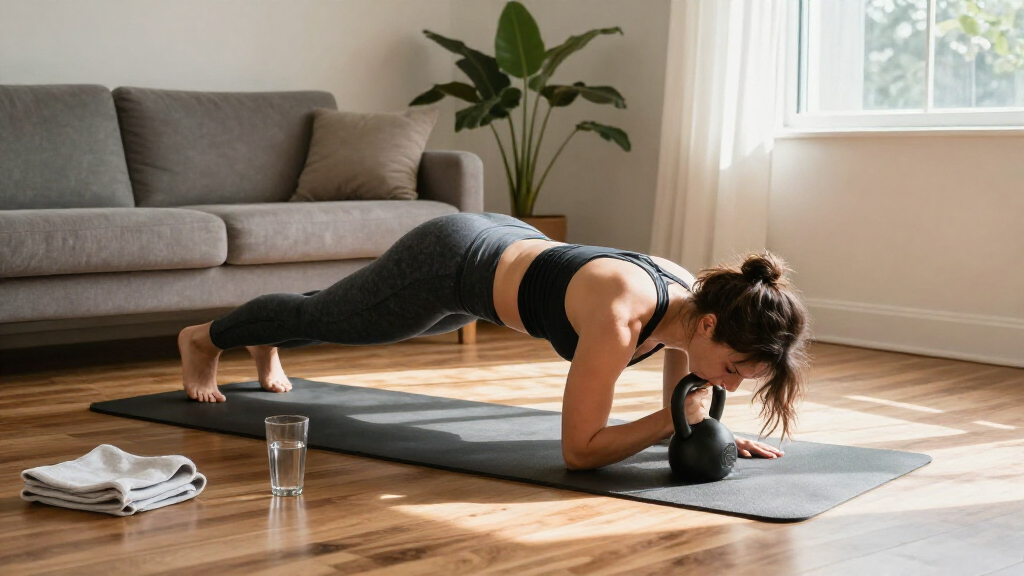
Fit&Well has published a home kettlebell routine built around three exercises: a half-kneeling halo, a single-arm suitcase carry and a dead bug with a pullover. The report presents the workout as a way to train core stability and advises beginners to start light, prioritize form and increase difficulty gradually.
Fit&Well has published a three-move kettlebell workout that can be done at home in about 10 minutes, featuring a half-kneeling halo, a single-arm suitcase carry and a kettlebell dead bug. Certified kettlebell specialist Faith Ellis recommends the exercises for challenging the core’s role in stabilizing the body, while advising new exercisers to begin with manageable weights and focus on technique.
The routine sets out three rounds of each movement. For the half-kneeling halo, Fit&Well recommends four circles in each direction per side, starting with a 10-18lb (4-8kg) kettlebell. The exerciser kneels with one foot planted, holds the kettlebell by its horns at chest height and circles it around the head while keeping the hips square, then changes sides.
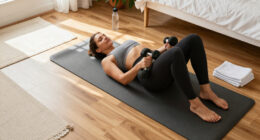
The second exercise is a single-arm suitcase carry: walk at a controlled pace for 30 seconds while holding a kettlebell at one side, then switch hands. The report suggests starting around 18-26lb (8-12kg). For the dead bug variation, lie on the back with a light kettlebell held above the chest, knees bent at 90 degrees, and alternate lowering one leg while moving the kettlebell behind the head. Fit&Well prescribes six to eight repetitions per side and suggests a starting weight of 10-18lb (4-8kg).
Ellis advises maintaining a neutral spine and controlled breathing before adding load. The report says that when a set feels easy and can be completed with good form, exercisers can add repetitions, slow the movement or increase the kettlebell by 4-8lb (2-4kg). These are recommendations in the source, not a guarantee of a particular strength result.
Why the Routine Trains Stability
The exercises offer a short home option that uses one piece of equipment and combines movement, balance and resistance. Their common focus is not simply bending the trunk: Ellis says kettlebell movements can ask the core to stabilize the body and transfer force, including when the weight is held off-center.
That makes the routine relevant to readers seeking an efficient session without gym equipment beyond a kettlebell. However, the source describes the workout’s intended focus; it does not provide trial data showing that this specific sequence produces a measured improvement in core strength or that 10 minutes is sufficient for every person’s fitness goals.
Products Worth Considering

Bowflex SelectTech 840 Adjustable Kettlebell

BowFlex Results Series SelectTech Adjustable Dumbbells (Pair)

Oura Ring 5 Smart Ring, Silver, Size 7
As an affiliate, we earn on qualifying purchases.
Ellis’s Advice for Beginners
Fit&Well frames the workout for people exercising at home, including beginners. Ellis, identified by the publication as a certified kettlebell specialist and founder of The KettleBelle, explains that single-arm and offset exercises place demands on the trunk that differ from movements focused mainly on spinal flexion.
The suggested weights are starting points in the report, not requirements. Individual ability and kettlebell availability vary, and the article’s progression guidance puts consistent form before heavier loading. The supplied source does not describe a warm-up, rest intervals or how long the full sequence takes for different users; the 10-minute framing should be read as the workout’s stated duration, rather than a timed result verified for all participants.
“Kettlebell exercises require the core to stabilize and transmit force rather than just flex the spine.”
— Faith Ellis, certified kettlebell specialist and founder of The KettleBelle, as quoted by Fit&Well
What the Workout Report Does Not Establish
The supplied Fit&Well report does not include a study or measured results showing how much core strength participants may gain, nor does it establish that the workout is suitable for everyone. It also does not give a detailed modification plan for people who find kneeling, overhead movement or floor exercises uncomfortable.
The report’s estimated duration may depend on transitions, rest and individual pace. Readers should choose a weight they can control and stop if they feel pain or cannot maintain the stated positions. People with an injury, a health condition or uncertainty about exercise suitability may want guidance from a qualified health or fitness professional before starting.
How to Progress the Three Moves
Fit&Well’s guidance is to repeat the routine at a manageable level and raise the challenge only when repetitions remain controlled. Progress can mean adding reps, slowing the pace or increasing weight by 4-8lb (2-4kg); the report does not set a schedule for when to do so or prescribe how many days a week to train.
For a first session, readers can use the lighter end of the listed ranges, pay attention to breathing and posture, and keep the kettlebell path controlled. The next step is guided by whether each movement can be completed with the intended form, rather than by a fixed deadline.
Key Questions
What exercises are in the 10-minute kettlebell routine?
Fit&Well lists a half-kneeling halo, a single-arm suitcase carry and a kettlebell dead bug with a pullover, with three sets of each movement.
What kettlebell weight should a beginner use?
The report suggests 10-18lb (4-8kg) for the halo and dead bug, and around 18-26lb (8-12kg) for the carry. These are starting suggestions; choose a weight that allows controlled movement and good form.
How does the workout target the core?
Ellis says kettlebell exercises can require the core to stabilize the trunk and resist rotation or side bending, particularly during single-arm and offset movements. The report does not provide measured results for this routine.
How should someone make the workout harder?
According to Ellis, progress after a set feels easy and remains well-controlled. Options include adding repetitions, slowing the reps or increasing the weight by 4-8lb (2-4kg).
Source: fitandwell.com