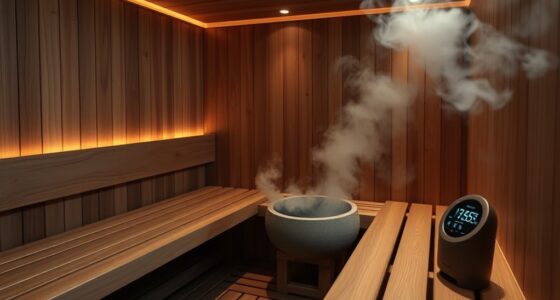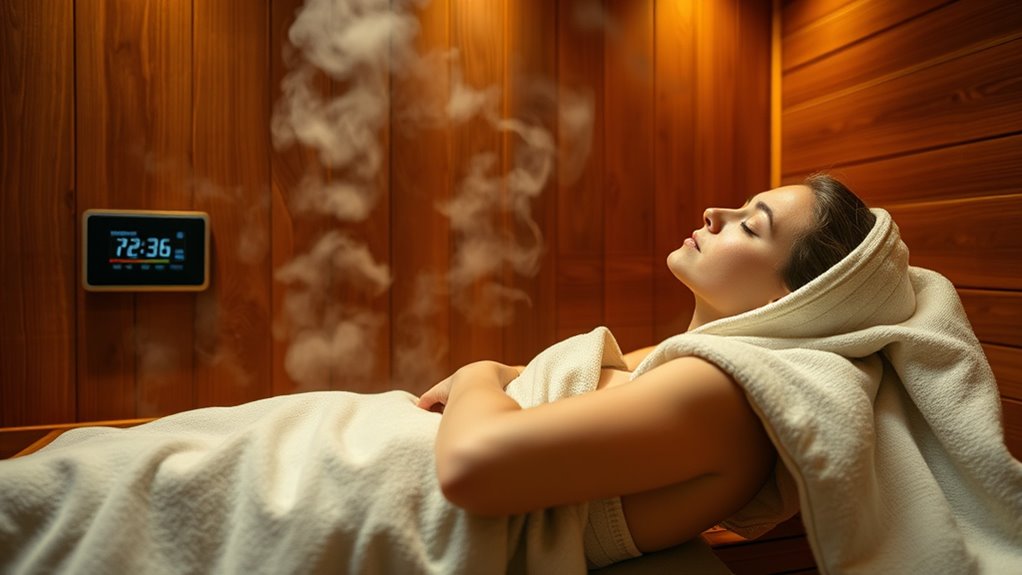
To understand heat tolerance and acclimation in saunas, you need to recognize how your body adapts to heat over time. Repeated exposure increases your ability to handle higher temperatures comfortably, improves your sweating response, and enhances circulation. By gradually adjusting your sauna sessions, you build resilience and enjoy longer, safer experiences. Keep exploring because understanding these processes more deeply can help you optimize your sauna practice and stay safe while benefiting from heat therapy.

Get wellness gear delivered free with Prime
- Fast, free delivery on millions of items
- Prime Video, Amazon Music and more included
- Member-only deals all year
Key Takeaways
- Thermal adaptation improves the body’s ability to handle heat stress from sauna sessions over time.
- Regular, gradual sauna exposure enhances sweat response and blood circulation efficiency.
- Building heat tolerance reduces discomfort and risks during sauna use.
- Safe acclimation involves starting with short, moderate-temperature sessions and increasing gradually.
- Factors like age, hydration, and health influence individual heat tolerance and adaptation speed.
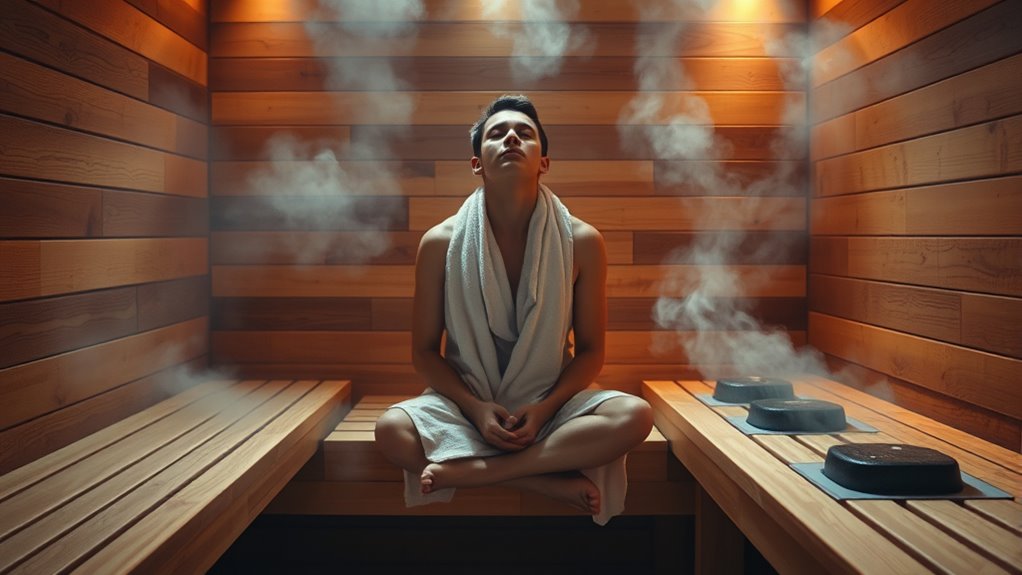
Many people enjoy saunas for relaxation and health benefits, but understanding how your body tolerates and adapts to heat is essential for a safe experience. When you step into a sauna, your body encounters heat stress, which triggers a series of physiological responses aimed at maintaining internal stability. These responses include increased blood flow to the skin, sweating, and changes in heart rate. The key to a safe and effective sauna session lies in your ability to manage this heat stress without overwhelming your body’s capacity to adapt.
Thermal adaptation is your body’s way of adjusting to repeated or prolonged exposure to heat. Over time, your body becomes more efficient at handling high temperatures, which reduces discomfort and minimizes potential risks. When you regularly expose yourself to sauna heat, your sweat response becomes more rapid and effective, helping to cool your body more efficiently. Additionally, your blood vessels become more responsive, promoting better circulation and heat dissipation. This process is gradual; if you jump into a hot sauna without prior exposure, you’re more likely to experience symptoms of heat stress, such as dizziness or nausea.
Building thermal adaptation takes time and consistency. Starting with shorter sessions at moderate temperatures allows your body to gradually get used to the heat. As you become more accustomed, you can extend your sauna time or increase the temperature slightly, but always listen to your body’s signals. If you feel lightheaded, excessively sweaty, or uncomfortable, it’s crucial to cool down and hydrate. Overexposure to heat without proper adaptation can lead to heat exhaustion or more serious heat-related illnesses.
Understanding your personal limits is vital. Factors such as age, fitness level, hydration status, and medical conditions influence how well you tolerate heat stress. For some, heat may induce a quick fatigue response, while others may build a robust thermal adaptation over time. It’s a process that requires patience and mindfulness. Remember, your body’s thermoregulatory system is remarkably adaptable, but it needs time and proper conditions to do so safely. Developing heat tolerance through gradual exposure can enhance your overall sauna experience and safety.
sauna heat tolerance training kit
As an affiliate, we earn on qualifying purchases.
As an affiliate, we earn on qualifying purchases.
Frequently Asked Questions
How Long Does It Take to Fully Acclimate to Sauna Heat?
You can typically expect to fully acclimate to sauna heat within 1 to 2 weeks, depending on your adaptation timeline and consistency. During the acclimation process, your body gradually adjusts to the high temperatures, improving your tolerance and comfort. To speed up the process, start with shorter sessions and increase exposure gradually. Listen to your body and stay hydrated to guarantee a safe and effective acclimation process.
Can Heat Tolerance Vary Between Individuals With Similar Health Profiles?
Your heat tolerance can definitely vary, even among individuals with similar health profiles—it’s like comparing stars in the sky. This individual variability stems from genetic factors that influence how your body responds to heat. Some people naturally handle higher temperatures better, while others need more time to adapt. Recognizing these differences helps you listen to your body, ensuring safe and enjoyable sauna sessions tailored just for you.
What Are the Signs of Overexposure to Sauna Heat?
You might notice signs of overexposure to sauna heat like dehydration symptoms—dry mouth, dizziness, or headache. Your heart rate could increase markedly, and you may feel weak or nauseous. If you experience excessive sweating, confusion, or faintness, it’s a clear sign to cool down and hydrate. Always listen to your body; stopping the session early helps prevent heat-related illnesses and ensures a safe sauna experience.
Does Age Affect Heat Tolerance Development in Saunas?
Just like a fine wine matures, your heat tolerance evolves with age. Age-related physiological changes can slow your developmental heat response, making it trickier to adapt to sauna heat. Younger individuals often develop heat tolerance more quickly due to more efficient thermoregulation. As you age, you might notice it taking longer to acclimate, so listen to your body and gradually increase sauna sessions to build your resilience safely.
How Quickly Can Heat Tolerance Decline After Regular Sauna Use?
Heat tolerance can decline within just a few weeks after stopping regular sauna use. Your body gradually loses the acclimation achieved through heat exposure, making heat loss feel more challenging and tolerance variability increase. To maintain your heat resilience, try to keep consistent sauna sessions, even if they’re less frequent. If you pause for too long, expect your body to revert to baseline, reducing your ability to handle high temperatures comfortably.
As an affiliate, we earn on qualifying purchases.
Conclusion
As you explore saunas, you’ll notice how your body surprisingly adapts over time, often faster than you expect. That initial discomfort can turn into comfort, making each session more enjoyable. It’s almost like your body and the heat find a rhythm together—whenever you think you’re reaching your limit, your tolerance seems to shift unexpectedly. Embrace this coincidence; it’s a sign your body is responding, helping you liberate the full benefits of your sauna experience.
As an affiliate, we earn on qualifying purchases.
As an affiliate, we earn on qualifying purchases.
Cold & flu season Picks
humidifiers
As an affiliate, we earn on qualifying purchases.