
To master humidity control in saunas, start by understanding the difference between dry and wet environments, and how humidity impacts comfort and relaxation. Use tools like hygrometers, humidifiers, or steam generators—adjust water pouring on hot stones gradually to manage moisture levels. Keep an eye on signs of over- or under-humidifying, and regularly calibrate your devices for consistency. With these basics, you’ll build confidence in creating the ideal sauna atmosphere—continue exploring to become even more skilled.

Get wellness gear delivered free with Prime
- Fast, free delivery on millions of items
- Prime Video, Amazon Music and more included
- Member-only deals all year
Key Takeaways
- Understand the differences between dry (<20%) and wet (near 100%) sauna humidity levels for proper environment control.
- Use hygrometers and sensors to monitor humidity, ensuring accurate adjustments and avoiding over- or under-humidification.
- Employ appropriate humidification tools like steam generators or ultrasonic diffusers based on sauna type and size.
- Adjust humidity gradually by controlling water pouring on hot stones or using automated systems for consistency.
- Recognize signs of imbalance, such as condensation or dry skin, and maintain regular equipment checks for optimal comfort.
Understanding Sauna Humidity Levels

Understanding sauna humidity levels is essential for creating a comfortable and effective experience. Proper sauna insulation helps maintain consistent humidity, preventing drafts and heat loss that can make the environment uncomfortable. When humidity is well-controlled, you can enjoy the aromatherapy benefits more fully, as essential oils released in a humid setting disperse evenly, enhancing relaxation. Too much humidity can make the air feel heavy and oppressive, while too little can dry out your skin and reduce aromatherapy effectiveness. Finding the right balance involves understanding how humidity impacts thermal comfort and scent diffusion. Awareness of potential contaminants in the environment can also influence your overall sauna experience. By paying attention to insulation and humidity levels, you ensure a soothing, personalized sauna experience that maximizes relaxation and therapeutic benefits.
The Difference Between Dry and Wet Saunas

Dry and wet saunas differ primarily in their humidity levels, which profoundly impact your comfort and health benefits. In dry saunas, humidity is low, often below 20%, allowing high temperatures with minimal moisture. Wet saunas, or steam rooms, have humidity levels approaching 100%, creating a moist environment. This difference affects sauna insulation, as wet saunas require better insulation to handle high moisture levels without damage. Heater placement also varies: dry saunas often have heaters designed for even heat distribution, while wet saunas may incorporate steam generators, requiring careful placement to avoid water damage. Understanding these distinctions helps you choose the right sauna type for your preferences and ensures proper construction and maintenance for ideal performance. Proper humidity control is essential for maintaining comfort and preventing issues like mold or material deterioration.
How Humidity Affects Your Sauna Experience
Humidity levels markedly influence how you feel and respond during your sauna session. Proper atmospheric conditioning can boost relaxation or energize you, depending on humidity psychology. High humidity makes the air feel denser, impacting your breathing and sweating. Low humidity, on the other hand, allows quicker evaporation and cooling. To optimize your experience, consider:
Humidity greatly affects your comfort and response during a sauna session, influencing breathing, sweating, and relaxation levels.
- Maintaining moderate humidity for comfort and relaxation.
- Adjusting humidity based on personal response—more for relaxation, less for invigoration.
- Recognizing that humidity affects perceived temperature, influencing your comfort level.
- Using humidity control to enhance mental clarity and physical well-being.
- Incorporating AI-driven insights to personalize humidity settings and optimize your sauna experience.
Understanding how humidity influences your senses and body helps you create a personalized sauna atmosphere, making your sessions more effective and enjoyable.
Basic Tools for Humidity Control

To regulate humidity effectively, you need the right tools. Choosing the right humidification devices and monitoring methods guarantees your sauna remains comfortable. Let’s explore the options to keep your sauna’s moisture levels just right. For optimal results, consider incorporating Kia Tuning techniques that enhance overall performance and efficiency of your sauna environment.
Humidification Devices Selection
Wondering how to effectively maintain the right moisture levels in your sauna? Choosing the right humidification device is vital. Here are some options to contemplate:
- Smart humidifiers – These connect to apps for precise control, making it easy to adjust humidity levels remotely.
- Ultrasonic diffusers – Compact and quiet, they use ultrasonic vibrations to produce fine mist, ideal for consistent humidity.
- Steam generators – Provide high humidity quickly, suitable for larger saunas.
- Portable misting devices – Budget-friendly and simple to operate, perfect for small or occasional use.
Assess your sauna size, desired humidity accuracy, and budget to find the best fit. Opting for smart humidifiers or ultrasonic diffusers guarantees reliable, easy-to-manage moisture control. Incorporating digital platforms can facilitate remote adjustments and improve overall humidity management.
Humidity Monitoring Methods
Accurately monitoring moisture levels is key to maintaining ideal sauna conditions. You can choose from different humidity sensor types, such as digital hygrometers, capacitive, or resistive sensors, depending on your needs. Regular hygrometer calibration guarantees your readings stay accurate over time. To help you compare options, here’s a quick overview:
| Sensor Type | Pros |
|---|---|
| Digital Hygrometers | Easy to read, portable |
| Capacitive Sensors | High accuracy, durable |
| Resistive Sensors | Cost-effective, simple |
Use proper calibration techniques to maintain sensor accuracy. By selecting the right humidity sensor type and regularly calibrating your hygrometer, you’ll keep your sauna environment perfectly balanced. Proper calibration methods are essential for ensuring consistent and reliable readings over time.
Adjusting Humidity in Traditional Finnish Saunas
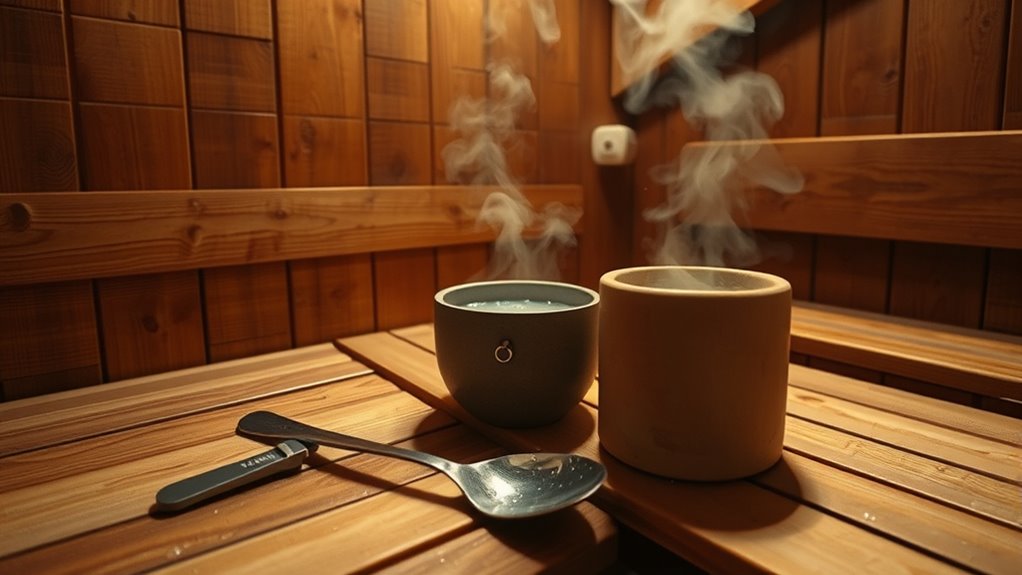
Adjusting humidity in traditional Finnish saunas involves managing the amount of water poured on the hot stones. This directly influences the sauna interior, shaping the humidity aesthetics you desire. To control moisture effectively, consider these steps:
Managing water on hot stones lets you fine-tune sauna humidity for perfect comfort.
- Start with small water amounts to test how your sauna responds.
- Increase water gradually, observing how the humidity levels change.
- Use a hygrometer to monitor humidity and fine-tune your pouring technique.
- Balance water quantity with your preferred sauna temperature for comfort.
- Understanding the contrast ratio of your sauna environment can help optimize the perceived humidity levels and overall atmosphere.
Using Water and Ventilation to Manage Moisture

Using water and ventilation together is essential for effectively managing moisture levels in your sauna. Proper control guarantees a comfortable steam therapy experience and maintains the moisture balance. To optimize this, you can adjust water use on the heater and improve airflow. Ventilation helps remove excess humidity, preventing mold and discomfort, while water creates steam for relaxation. Consider this table:
| Action | Effect | Tips |
|---|---|---|
| Adding water to heater | Increases moisture for steam | Use sparingly to avoid excess humidity |
| Opening vents | Reduces humidity | Vent periodically during use |
| Sealing gaps | Retains moisture | Ensures consistent humidity levels |
| Ventilation adjustment | Controls moisture levels | Balance airflow with water use |
Mastering these techniques keeps your sauna comfortable and safe, and understanding the importance of humidity control can further enhance your sauna experience.
Tips for Maintaining Consistent Humidity
To keep your sauna’s humidity steady, you should regularly verify the moisture levels inside. Using the right water dispensers ensures even distribution and prevents fluctuations. Staying attentive to these details helps you maintain a comfortable, consistent environment. Incorporating a hygrometer can help monitor humidity levels accurately.
Regularly Monitor Humidity Levels
Regularly monitoring your sauna’s humidity levels is essential for maintaining a comfortable and consistent environment. Using moisture sensors helps you keep track of humidity regulation accurately. To guarantee ideal conditions, follow these steps:
- Check the moisture sensors daily to verify they’re functioning correctly.
- Record humidity readings at different times to identify fluctuations.
- Adjust your humidity controls based on sensor feedback to maintain desired levels.
- Replace or recalibrate sensors if readings seem inconsistent or erratic.
- Ensuring proper sensor calibration is crucial for accurate humidity readings and optimal sauna performance.
Consistently monitoring allows you to respond promptly to changes, preventing humidity from becoming too dry or too moist. This proactive approach keeps your sauna comfortable and helps prolong equipment life. Accurate humidity regulation depends on regular oversight and reliable moisture sensors.
Use Proper Water Dispensers
Proper water dispensers play a key role in maintaining consistent humidity levels in your sauna. Choose high-quality water dispensers that allow you to control the amount of water added, preventing sudden spikes or drops in humidity. Confirm your dispensers are compatible with your sauna’s setup and easy to operate. To keep humidity steady, use humidity sensors to monitor the environment continuously. These sensors help you determine the right amount of water to add, avoiding over-wetting or under-humidifying the space. Regularly check and clean your water dispensers to prevent mineral buildup that can affect performance. By using reliable water dispensers paired with accurate humidity sensors, you can maintain a comfortable, consistent sauna atmosphere, ensuring a safer and more enjoyable experience.
Common Mistakes and How to Avoid Them
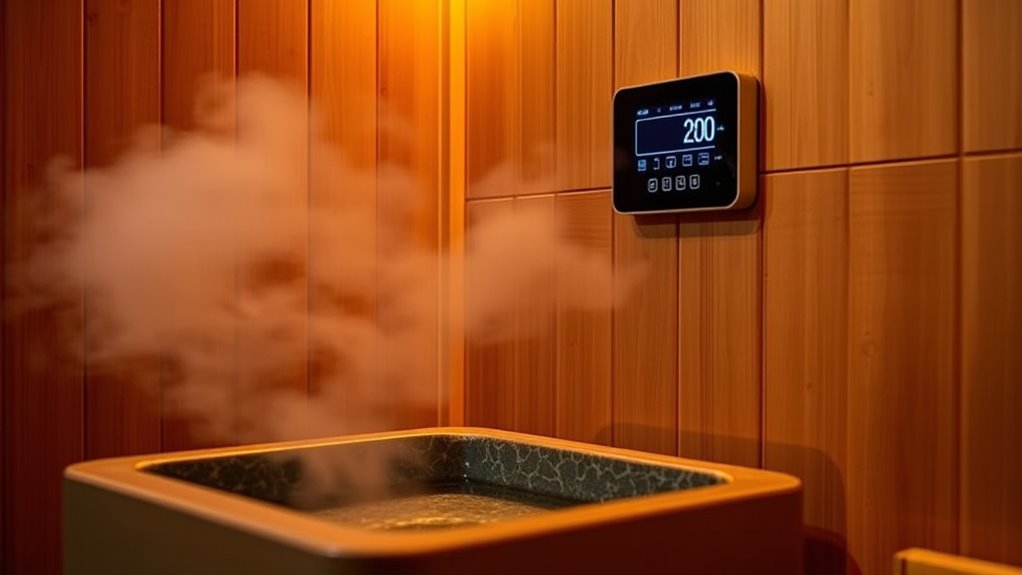
One of the most common mistakes in sauna humidity control is failing to monitor and adjust the humidity levels regularly. This often leads to issues like incorrect placement of humidifiers or miscalculations of how much water to add. To avoid these pitfalls:
Neglecting regular humidity checks can lead to discomfort and equipment issues.
- Place humidifiers in the proper location, away from vents or direct heat sources.
- Regularly check humidity levels with a reliable hygrometer.
- Avoid overestimating the water needed, which can cause excessive humidity.
- Keep track of adjustments to understand how your sauna responds over time.
Ignoring these steps can result in inconsistent humidity, discomfort, or even damage. Being attentive to placement and calculations ensures you maintain an ideal, comfortable environment while preventing common mistakes.
Signs You’re Over- or Under-Humidifying

If your sauna feels damp or musty, you’re likely over-humidifying, which can lead to discomfort and mold. On the other hand, if it’s too dry, you might notice dry skin or difficulty breathing. Recognizing these signs helps you adjust humidity levels for a safer, more enjoyable experience.
Excess Moisture Signs
How can you tell if your sauna is too humid or not humid enough? Excess moisture signs include visible moisture buildup, which can lead to mold growth if left unchecked. Over-humidifying causes issues that affect comfort and safety. Watch for these indicators:
- Excessive condensation on walls or benches
- Persistent musty smell indicating mold prevention concerns
- Water droplets forming on surfaces
- Damp towels or materials that don’t dry quickly
If you notice these signs, you might be over-humidifying. Too little moisture, on the other hand, can make the sauna feel dry and uncomfortable. Maintaining the right humidity level helps prevent moisture buildup, supports a pleasant experience, and protects your sauna from mold. Adjust your humidifier accordingly for ideal results.
Insufficient Humidity Symptoms
When your sauna’s humidity level isn’t properly balanced, you’ll notice clear signs that it’s either too dry or too damp. If it feels uncomfortably dry, your sauna insulation might be too effective, preventing moisture from building up. You may experience dry skin, sore throat, or difficulty sweating even when you expect to. On the other hand, if it’s too damp, you might notice lingering dampness, musty odors, or condensation on the walls. Humidity sensors can help you monitor these fluctuations accurately. Without proper control, your sauna won’t deliver the desired experience or benefit. Recognizing these symptoms early allows you to adjust your humidity levels, ensuring a comfortable, safe, and effective sauna session every time.
Enhancing Your Sauna Routine With Proper Humidity

Proper humidity levels can substantially enhance your sauna experience by balancing skin comfort and respiratory health. To do this effectively, consider these tips:
- Make certain your sauna has good insulation, which helps maintain consistent humidity levels.
- Use aromatherapy infusion to add moisture and pleasant scents, enriching your routine.
- Adjust humidity with water buckets or steam generators, depending on your preferred level.
- Incorporate humidity-sensitive accessories, like humidifiers, to fine-tune the environment.
Frequently Asked Questions
Can Humidity Levels Affect Sauna Heater Efficiency?
Yes, humidity levels can affect your sauna heater’s efficiency. If humidity is too high, it can make the heater work harder, especially with poor sauna insulation or improper heater placement. Making sure good insulation helps maintain consistent humidity, reducing strain on the heater. Proper heater placement also ensures even heat distribution, making your sauna more efficient and comfortable, regardless of humidity fluctuations.
How Does Ambient Room Humidity Impact Sauna Moisture Control?
Imagine stepping into your sauna as the air outside feels muggy and dense. Ambient room humidity directly affects your moisture control, making it harder to maintain ideal levels. You’ll need to focus on humidifier maintenance and consider how moisture absorption from the environment influences your setup. High outside humidity can cause excess moisture, so adjusting your controls ensures a comfortable, consistent experience without overloading the system.
Is There an Optimal Humidity Range for Health Benefits?
You should aim for a humidity range of 40-60% in your sauna to maximize health benefits and guarantee humidity comfort. This range helps promote better breathing, skin hydration, and relaxation without feeling too oppressive. Maintaining ideal humidity allows your body to adapt comfortably to the heat, enhancing detoxification and circulation. Keep an eye on humidity levels to enjoy a safe, beneficial sauna experience every time.
Do Different Sauna Materials Respond Differently to Humidity Changes?
Did you know that some sauna materials respond more sensitively to humidity changes? For instance, certain wood types like cedar absorb moisture well, expanding and contracting without damage, while others may crack or warp. Metal corrosion is also a concern; frequent humidity fluctuations accelerate deterioration. So, choosing the right wood and metal materials helps maintain sauna integrity, ensuring a safe, durable, and comfortable experience as humidity levels fluctuate.
How Often Should I Check and Adjust Sauna Humidity Levels?
You should check your sauna’s humidity levels at least once an hour during use, especially if you notice discomfort or uneven moisture. Use humidity monitoring tools to keep track of moisture levels accurately. If the humidity drops or rises beyond your comfort zone, perform moisture adjustment by adding or releasing steam as needed. Regular checks ensure a consistent, enjoyable sauna experience and help prevent damage caused by excessive humidity fluctuations.
Conclusion
Mastering humidity control transforms your sauna experience, making each session more enjoyable and beneficial. Did you know that ideal humidity levels, around 10-20%, can boost circulation and relaxation? By understanding and adjusting humidity properly, you guarantee a safer, more comfortable environment. Keep an eye on signs of over- or under-humidifying, and you’ll find yourself confidently enjoying every sauna visit. With the right humidity, you’ll get the most out of your sauna routine every time.
Halloween Picks
halloween
As an affiliate, we earn on qualifying purchases.