Using textured and patterned wood in sauna interiors adds natural character, visual depth, and tactile appeal that can elevate your space. You can highlight unique grain variations or mix contrasting patterns to create warmth and personality. Thoughtfully choosing areas for textured details guarantees a balanced, cohesive design that feels both inviting and sophisticated. To discover how these elements can transform your sauna, explore more about blending patterns and textures seamlessly.
Key Takeaways
- Incorporate varied grain patterns like knots and swirls to add visual interest and tactile appeal.
- Use contrast by pairing textured, patterned wood with smoother surfaces for balanced design.
- Select wood tones that complement each other to ensure overall cohesion and personalized warmth.
- Highlight accent panels with darker, intricate grains to create focal points within the sauna.
- Balance bold textures with subtle variations to achieve a refined, harmonious aesthetic.
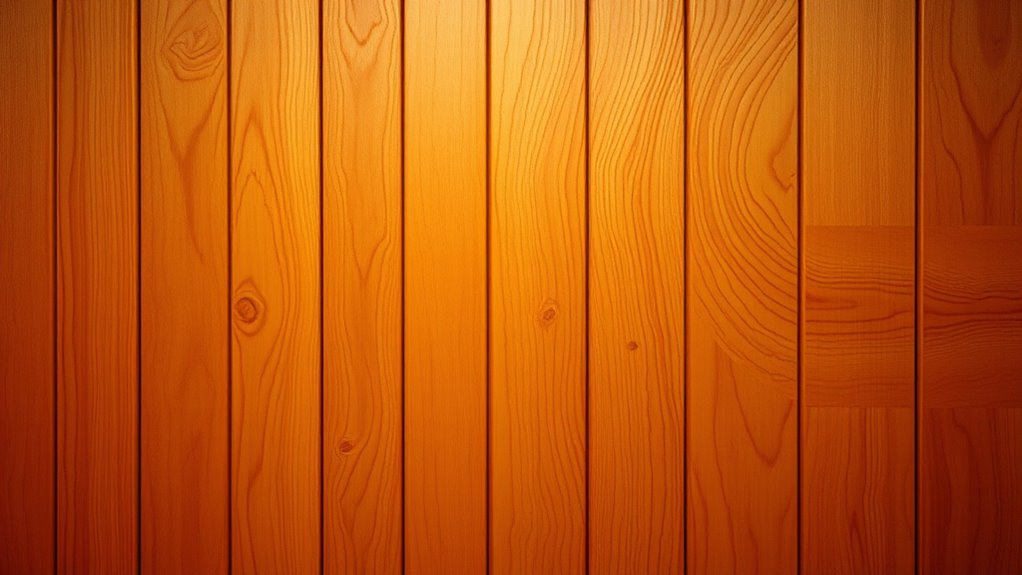
Have you ever wondered how textured and patterned wood can transform a sauna’s interior? When you choose wood with rich variations in its grain, you’re adding depth and visual interest that plain, uniform surfaces simply can’t match. Wood grain variations refer to the natural differences in the lines, swirls, and knots that occur within the wood, making each piece unique. These subtle contrasts bring a tactile quality to the space, inviting you to run your hand over the surfaces and appreciate their organic complexity. Incorporating different grain patterns helps break the monotony often found in traditional sauna designs, giving your space a more dynamic and inviting feel. Understanding wood grain can help you select the most visually appealing options for your design.
Pattern contrast is another essential element you’ll want to consider. When you combine different wood patterns—such as straight lines with swirling knots or wavy grain—you’re creating a lively interplay of textures that catch the eye. This contrast can be used strategically to highlight specific areas or features within your sauna, like a seating nook or a feature wall. By balancing areas with more intricate, textured patterns against smoother, simpler surfaces, you achieve a harmonious yet visually stimulating environment. This balance prevents the space from feeling cluttered or overwhelming while still delivering the richness that textured and patterned wood provides.
Using these variations and contrasts effectively requires a thoughtful approach. For example, selecting a darker, more complex grain pattern for accent panels can draw attention and add warmth, while lighter, more uniform planks can serve as calming background surfaces. This contrast in tones and patterns creates a layered look that enhances the overall aesthetic. additionally, textured wood brings a sensory dimension to the sauna experience. The tactile quality of the grain, combined with the visual pattern contrast, makes each touch and glance more engaging.
Incorporating textured and patterned wood also lends a natural authenticity to your sauna, connecting you to the organic origins of the material. It adds character and a sense of craftsmanship that polished, flat surfaces often lack. Whether you opt for a subtle variation or bold pattern contrast, the key is to select woods that complement each other in color and tone, ensuring the overall design feels cohesive. When done thoughtfully, the interplay of wood grain variations and pattern contrast elevates your sauna from a simple retreat to a personalized sanctuary full of warmth, texture, and visual intrigue.
sauna interior textured wood panels
As an affiliate, we earn on qualifying purchases.
As an affiliate, we earn on qualifying purchases.
Frequently Asked Questions
How Does Textured Wood Affect Sauna Heat Retention?
Textured wood can slightly impact sauna heat retention because its uneven surface may cause minor gaps, affecting thermal insulation. As the wood expands with heat, these gaps might increase, reducing efficiency. However, choosing properly treated textured wood minimizes expansion issues and maintains good heat retention. Overall, textured wood’s aesthetic benefits often outweigh minor thermal performance differences, especially if installed carefully to ensure a snug fit.
Are Patterned Woods More Prone to Mold or Mildew?
Think of patterned woods as a garden with intricate pathways—more surface complexity means more nooks for mold or mildew to hide. They can be more prone to mold if not properly treated. To prevent this, focus on mold prevention and choose textured woods with high surface durability. Regular cleaning and good ventilation also help keep your sauna mold-free, ensuring it stays beautiful and safe for years to come.
What Maintenance Is Required for Textured Wood Surfaces?
You should clean textured wood surfaces regularly with a gentle, damp cloth to remove moisture and prevent mold buildup. Use mild cleaning routines, avoiding harsh chemicals that could damage the pattern. Additionally, sealant treatments help protect the wood from humidity and moisture, reducing maintenance needs. Reapply sealing treatments as recommended by the manufacturer to keep the textured surfaces in good condition and prevent mold or mildew growth over time.
Can Textured or Patterned Wood Be Used in Steam Rooms?
Yes, textured or patterned wood can be used in steam rooms as decorative paneling. It adds visual interest and can enhance the aesthetic appeal. Keep in mind, textured wood offers acoustic benefits, reducing echoes and creating a more relaxing environment. Make sure the wood is properly treated to withstand humidity and steam, preventing damage. Regular maintenance preserves its appearance and function, making it a practical choice for steam room interiors.
How Does Wood Texture Impact the Overall Sauna Ambiance?
Your choice of textured or patterned wood greatly influences the sauna ambiance by adding visual warmth and enhancing aesthetic appeal. The tactile surfaces create a cozy, inviting atmosphere, making the space feel more luxurious and unique. You’ll notice how textures break up monotony, giving depth and character to the interior. Overall, textured wood elevates the sauna’s look, making it more visually interesting and comfortable for anyone using it.
patterned wood wall decor for sauna
As an affiliate, we earn on qualifying purchases.
As an affiliate, we earn on qualifying purchases.
Conclusion
Think of your sauna as a musical instrument, where textured and patterned wood are the strings that bring it to life. When you choose the right woods, you’re tuning each note to create a harmonious retreat. By blending these unique textures and patterns, you craft an environment that’s both soothing and inspiring. Embrace the symphony of your sauna’s design, and let your space resonate with warmth, character, and your personal touch.
As an affiliate, we earn on qualifying purchases.
As an affiliate, we earn on qualifying purchases.