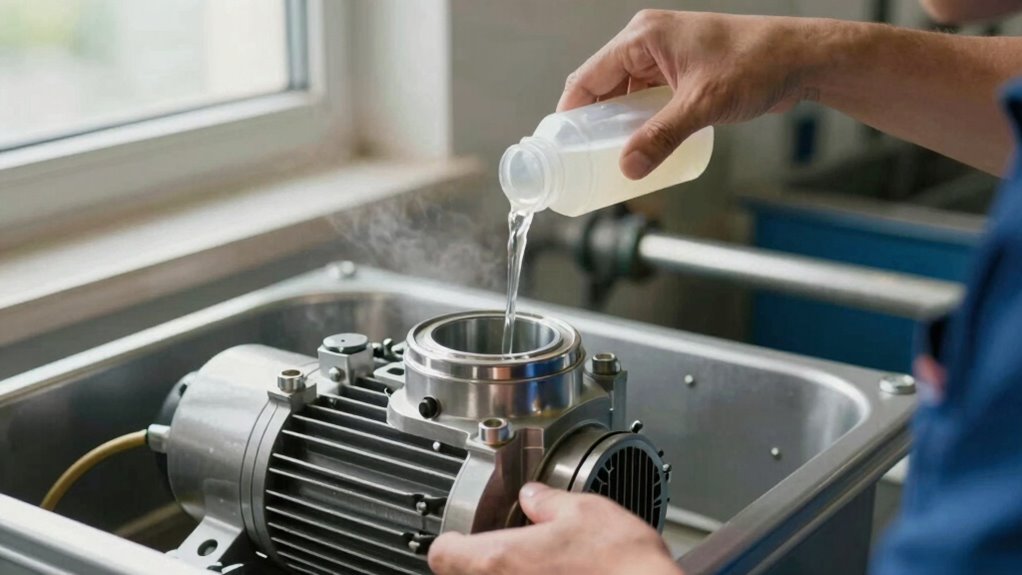
To prime your cold plunge pump safely, make certain it’s positioned on a stable, level surface below water level. Fill the pump housing with water and open the priming valve or plug. Start the pump slowly, watching for water flow and air bubbles. Avoid running it dry or ignoring signs of air pockets. Regular maintenance and proper setup prevent burnout. Want to learn more about priming correctly and extending your pump’s lifespan? Keep exploring these tips to avoid damage.
Key Takeaways
- Ensure the pump is positioned below water level to allow natural priming without forcing the motor.
- Fill the pump housing completely with water before starting to prevent dry running.
- Open all priming valves or plugs gradually, starting the pump slowly to avoid overload.
- Check hoses and fittings for leaks or air leaks, securing all connections tightly.
- Monitor pump operation closely and stop immediately if unusual sounds or overheating occur.

Swimline HYDROTOOLS Variable Speed Swimming Pool Pump for Inground & Above Ground Pools | 1.65 HP, 5820 GPH Self Priming Filter Pumps | 230 V, LED Control Panel, 2-4 Flow Speeds, Strainer Basket, DOE
- Variable Speed Operation: Adjustable speeds for efficiency and savings
- High Flow Rate: 5820 GPH with powerful 1.65 HP motor
- User-Friendly LED Control: Easy-to-use panel with customizable filter modes
As an affiliate, we earn on qualifying purchases.
As an affiliate, we earn on qualifying purchases.
Why Properly Priming Your Cold Plunge Pump Matters
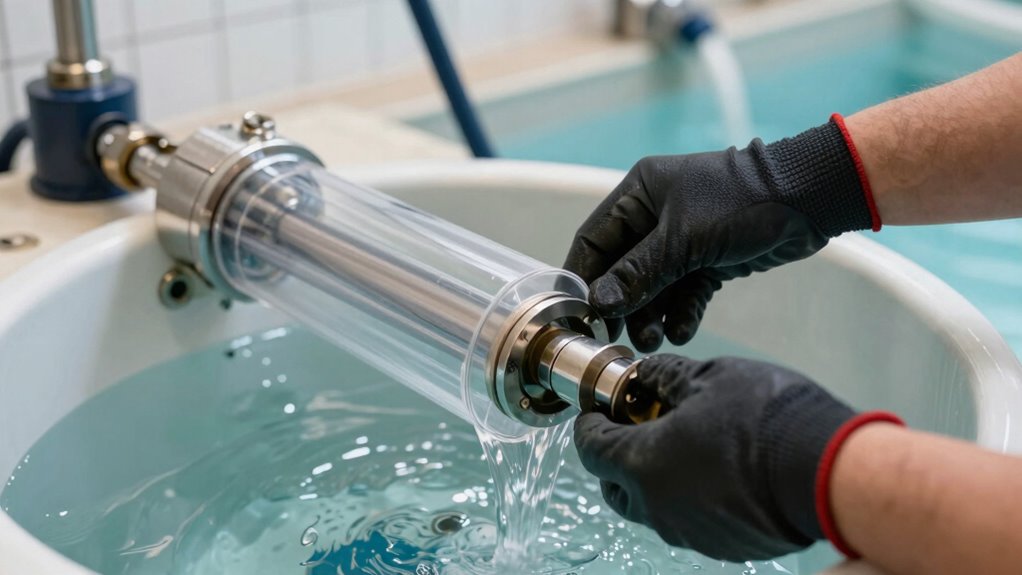
Properly priming your cold plunge pump is essential because it guarantees the pump can start and operate efficiently. When you prime the pump correctly, you enhance pump efficiency, ensuring it runs smoothly without straining or overheating. Additionally, using essential DIY tools can aid in the priming process, making it easier to achieve optimal results. Good priming also promotes ideal water circulation, which is crucial for maintaining consistent water temperature and cleanliness. Without proper priming, the pump may struggle to move water, leading to reduced circulation and potential damage over time. Efficient water movement keeps your cold plunge functioning safely and effectively, preventing issues like stagnant water or equipment failure. Taking the time to prime your pump properly helps you avoid unnecessary wear and tear, extending its lifespan and ensuring you enjoy a revitalizing, well-circulated plunge pool whenever you need it. Additionally, understanding the cultural significance of water circulation in various traditions can enhance your appreciation of the cold plunge experience. Moreover, digital skills related to maintenance can further optimize your pump’s performance and enhance your overall pool experience. Furthermore, integrating smart pool automation features can optimize your pump’s performance and enhance your overall pool experience. Ensuring color accuracy in your pool setup can also contribute to a more visually appealing environment and enhance your overall experience.

HRBBFHND 14.5" x 2.2" Iron Swimming Pool Pump Lid Removal Wrench, 2 Pack
- Compatible Models: Fits Hayward Super II SP3000 and SP3007
- Heavy-Duty Material: Made from durable iron for longevity
- Effortless Lid Removal: Eases stuck or tight lid removal
As an affiliate, we earn on qualifying purchases.
As an affiliate, we earn on qualifying purchases.
How to Recognize When Your Cold Plunge Pump Needs Priming
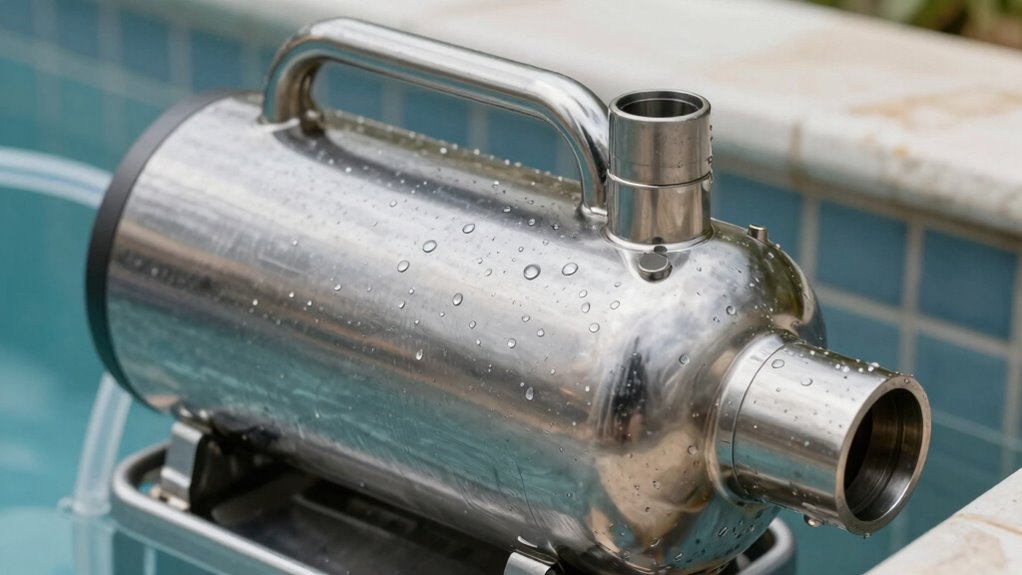
Knowing when your cold plunge pump needs priming is key to keeping your system running smoothly. If you notice poor water circulation, it’s a clear sign the pump isn’t functioning properly. You might hear strange noises or notice the pump struggling to start, which indicates it’s not fully primed. During pump maintenance, check for air bubbles in the water flow or a lack of movement in the water. If the pump runs but doesn’t circulate water effectively, it’s time to prime it. Ignoring these signs can lead to overheating or damage. Regularly monitoring these cues helps you catch issues early, ensuring your cold plunge stays at the right temperature and operates efficiently. Recognizing these indicators keeps your system reliable and prolongs the life of your pump. Additionally, cleaning the pump regularly can help prevent these problems from arising in the first place. By investing in top car protection and accessories, you can enhance your overall maintenance routine, ensuring your equipment remains in optimal condition. Furthermore, ensuring that your pump is free from water damage can significantly improve its performance and longevity. Being aware of everyday safety practices can further ensure your equipment is protected during regular use. Using quality synthetic lubricants can also help maintain optimal performance and reduce the risk of premature wear on your pump components.

Merrill MFG FVNL100 710 Series 1 Inch Brass Foot Valve – Lead-Free Female Connection Foot Valve for Irrigation and Water Pump Priming
- Material: Lead-Free Brass Construction
- Connection Size: 1 Inch Female NPT
- Seal Type: Abrasion-Resistant O-Ring
As an affiliate, we earn on qualifying purchases.
As an affiliate, we earn on qualifying purchases.
How to Safely Prepare Your Cold Plunge Pump for Priming
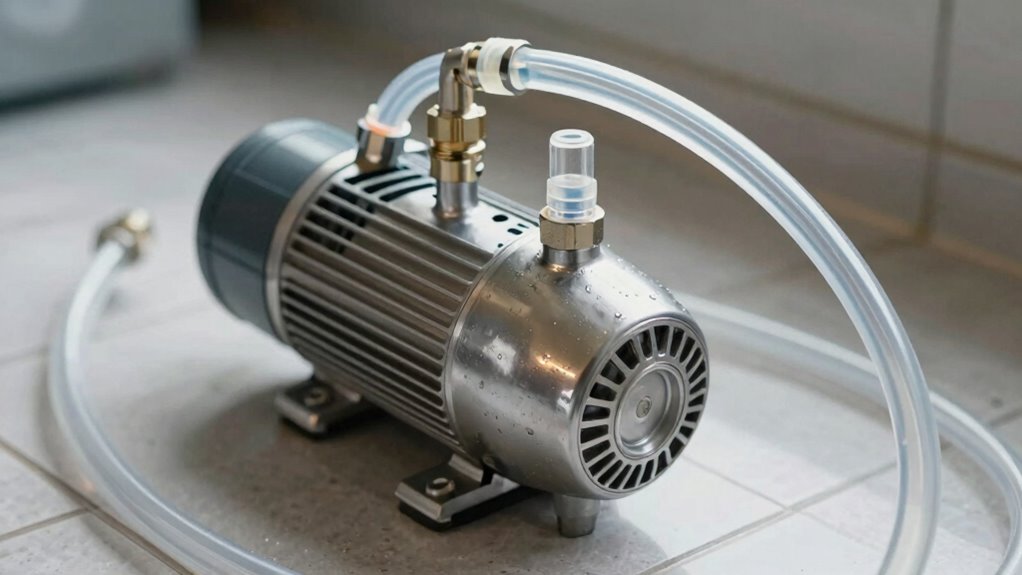
Before priming your cold plunge pump, make sure it’s positioned correctly and securely. Additionally, understanding digital content formats can enhance your approach and ensure you’re utilizing the best methods for effective operation. Incorporating Victorian etiquette can also add a touch of authenticity to your setup. Next, clear any obstructions in the air pathways to prevent airlocks. Finally, use the proper priming technique to avoid damage and guarantee a smooth startup. Additionally, understanding system monitoring can help you detect issues early and prevent potential pump burnout. Regular maintenance, including cleaning makeup brushes, is essential, as it reduces stress and enhances your focus on tasks like pump maintenance.
Check Pump Placement
Sure! Here’s the revised content with the requested changes:
—
Have you checked that your pump is positioned correctly? Proper placement is essential for effective pump maintenance and safety precautions. Make sure the pump sits on a level, stable surface to prevent vibrations or movement during operation. Keep it away from areas with excessive water exposure or debris that could clog the intake. Confirm that the inlet and outlet hoses are securely attached and free of kinks, allowing smooth water flow. Proper placement helps avoid strain on electrical components and reduces the risk of overheating or damage. Always follow the manufacturer’s guidelines for positioning to guarantee peak performance. Taking this step before priming ensures your pump operates efficiently and safely, preventing unnecessary wear and tear. Correct placement is a key part of responsible pump maintenance. Additionally, consider matching your pump setup with your overall maintenance routine to enhance its longevity. A well-positioned pump can greatly contribute to optimal performance and ensure that your cold plunge experience is as luxurious as intended. Furthermore, understanding ergonomics in design can play a significant role in how you interact with your equipment, promoting a more enjoyable and effective experience. Investing in reliable equipment, like a Gold IRA, can also provide peace of mind as you maintain your wellness routine. Remember, maintaining user privacy and cookies is crucial even when dealing with equipment, ensuring a seamless experience.
—
Let me know if you need any further adjustments!
Clear Air Pathways
To safely prepare your cold plunge pump for priming, start by inspecting the air pathways. Verify there are no blockages or debris that could restrict airflow, as unobstructed air pathways are essential for proper water filtration and temperature regulation. Check the vent openings and hoses for dirt, algae, or buildup that might impede airflow. Proper airflow allows the pump to efficiently circulate water without overworking, which helps prevent burnout. Additionally, maintaining financial health is crucial for ensuring you can invest in quality wellness equipment. Moreover, investing in good workspace and tech gear can enhance the efficiency of your cold plunge setup. It is important to remember that comparative advantage in resource allocation plays a role in maximizing your investment in wellness. Also, confirm that the air vents are tightly secured and free of leaks. Maintaining clear air pathways improves the pump’s ability to regulate temperature accurately and guarantees ideal water filtration. Regularly cleaning these pathways keeps your pump running smoothly and prolongs its lifespan, making priming safer and more effective. Additionally, using wellness products can enhance your overall experience during cold plunge sessions. Keeping your pump in a soundproof environment can also minimize external noise, allowing for a more tranquil experience.
Use Proper Priming Technique
Once you’ve confirmed that the air pathways are clear, it’s time to move on to the priming process itself. Proper priming is essential for pump maintenance and guaranteeing water filtration runs smoothly. To do this safely:
- Fill the pump housing with water, eliminating air pockets.
- Check that the inlet and outlet valves are fully open.
- Slowly power on the pump, observing for any unusual sounds or vibrations.
- Keep an eye on water flow; if it’s steady, the pump is primed correctly.
This method prevents burnout and assures efficient operation. Using the correct priming technique helps maintain water quality and extends your pump’s lifespan, avoiding unnecessary repairs or replacements.

O-Ring Rebuild Repair Kit, for Pentair WhisperFlo/IntelliFlo Pool Pump Seal Gasket, Drain Plug/Lid/Diffuser O-Rings, Impeller Gasket, PS-1000 Shaft Seal, Fits Pumps Built 2-1-2008 and Later Series
- Compatible Pump Models: Fits Pentair WhisperFlo and IntelliFlo series
- Complete Pump Parts Kit: Includes gaskets, O-rings, and shaft seal
- Leak-Free Operation: Ensures secure seals and prevents leaks
As an affiliate, we earn on qualifying purchases.
As an affiliate, we earn on qualifying purchases.
Step-by-Step Guide to Priming Your Cold Plunge Pump
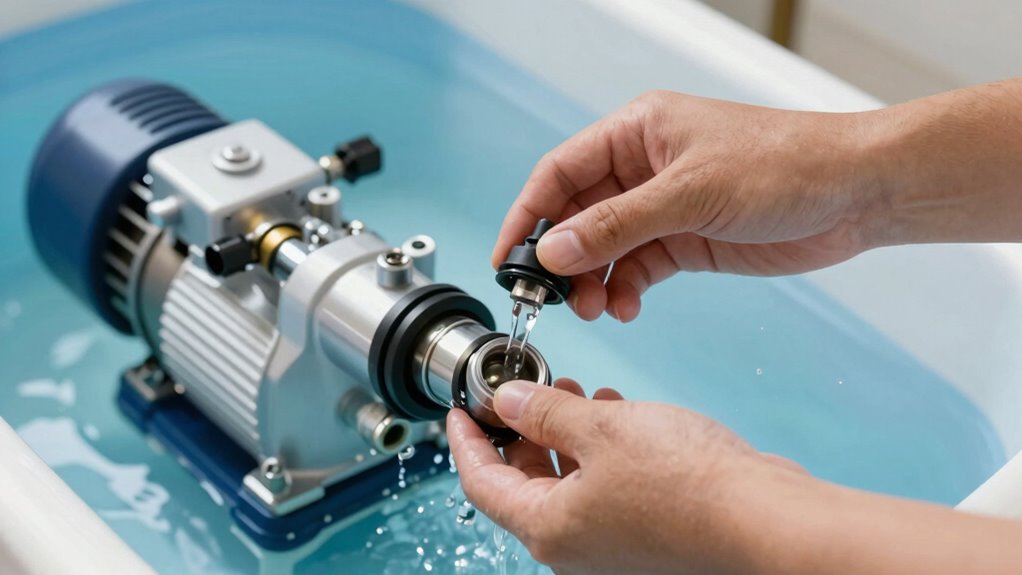
To successfully prime your cold plunge pump, you need to prepare it properly first. Then, use the correct priming technique to guarantee the pump fills with water and starts working smoothly. Follow these steps carefully to get your pump running efficiently.
Prepare the Pump
Before you start priming your cold plunge pump, making sure it is prepared correctly is essential. Proper pump maintenance helps prevent damage and guarantees efficient operation. Start by checking the water filtration system; clean or replace filters to avoid debris blocking water flow. Next, confirm the pump is free of any leaks or cracks. Verify that the pump’s inlet and outlet connections are secure and tight. Make sure the pump is positioned correctly, ideally below the water level for natural priming. Finally, inspect the power source and switch it off before proceeding. These steps set the foundation for smooth priming, reduce strain on the pump, and prevent burnout during operation. Taking these precautions guarantees your pump runs smoothly and efficiently.
Proper Priming Technique
Start by filling the pump with water if it’s empty, verifying the inlet and outlet ports are submerged. This initial step is vital for proper pump maintenance and prevents dry running, which can damage the motor. Once filled, double-check the water chemistry to confirm it’s balanced, as improper chemistry can cause corrosion or buildup inside the pump. Prime the pump by manually opening the priming plug or valve, then slowly start the pump to draw water through the system. Keep an eye out for air bubbles escaping, which indicates the pump is pulling water properly. If you notice persistent air pockets, turn off the pump and re-prime. Proper priming ensures efficient operation and prolongs the lifespan of your cold plunge pump.
Common Mistakes That Can Burn Out Your Pump: And How to Avoid Them
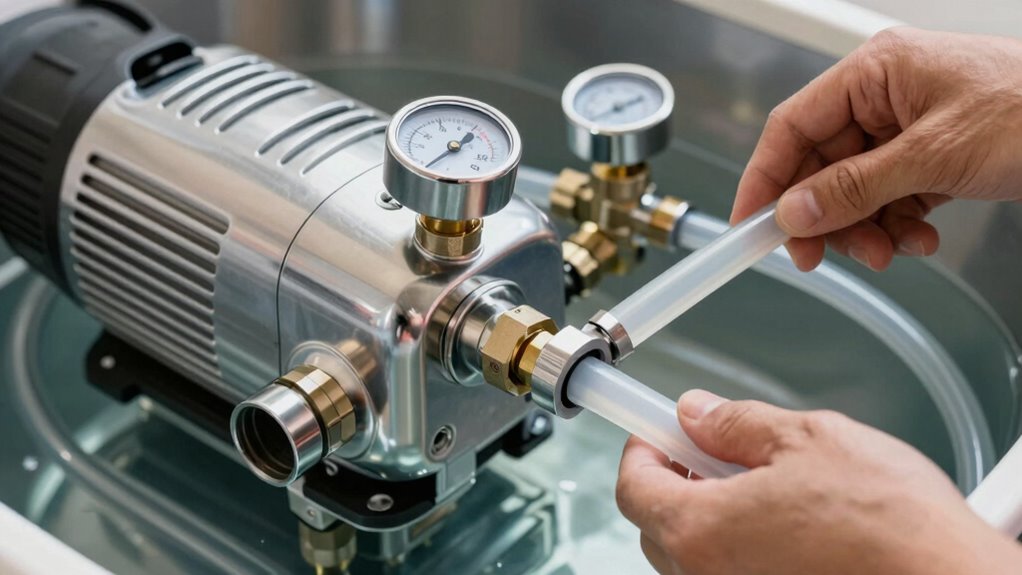
One of the biggest risks to your cold plunge pump is neglecting proper maintenance, which can lead to overheating and eventual burnout. Common mistakes include ignoring regular pump maintenance, which hampers energy efficiency and shortens lifespan. To avoid this, watch out for these pitfalls:
- Running the pump dry or without water, causing overheating.
- Using the wrong size or type of pump, leading to strain and inefficiency.
- Ignoring signs of wear or leaks, risking damage.
- Failing to clean or replace filters, reducing flow and causing stress.
These errors can cause the pump to work harder than necessary, increasing the risk of burnout. Regular maintenance ensures maximum energy efficiency and prolongs your pump’s life, saving you money and hassle.
Troubleshooting Common Pump Priming Problems
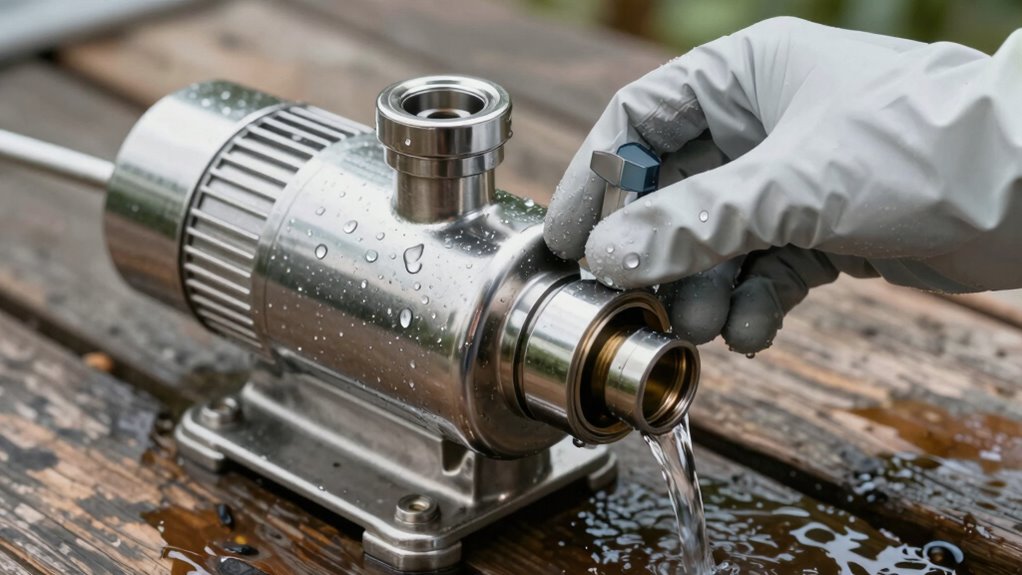
Are you struggling with your cold plunge pump not priming properly? If so, it could be due to issues in pump maintenance or water filtration. First, check for air leaks in hoses or fittings—air pockets prevent proper priming. Ensure the water source is clean and free of debris, as clogged filters can hinder water flow. Regular pump maintenance, like cleaning the intake screen and inspecting seals, helps prevent air from entering the system. Also, verify that the water level is adequate; low levels can cause the pump to lose prime. If the pump still won’t prime, bleed the air out manually or restart the system. Proper water filtration and routine maintenance are key to avoiding priming problems and keeping your pump running smoothly.
Tips to Extend Your Cold Plunge Pump’s Lifespan
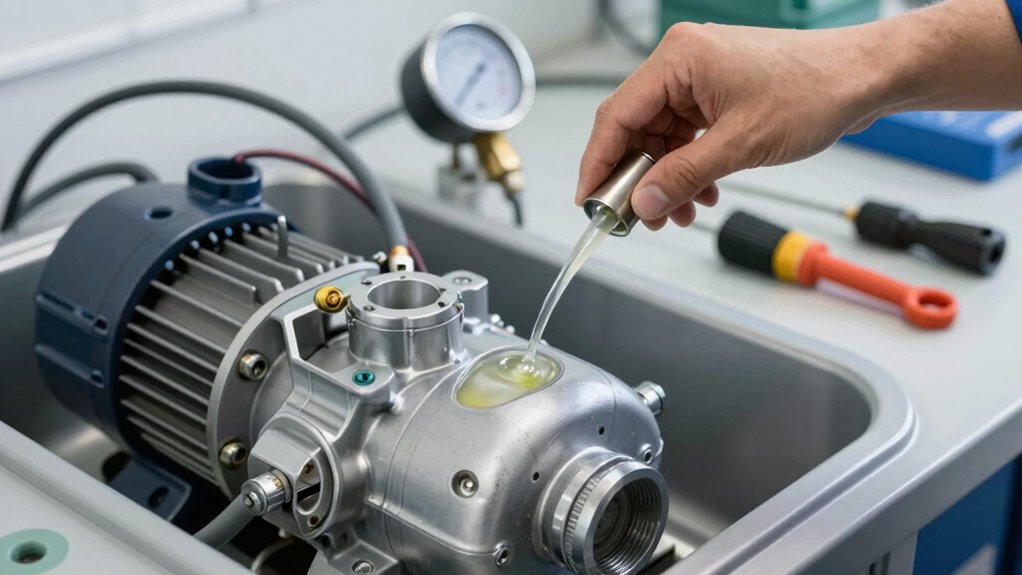
Maintaining your cold plunge pump regularly not only prevents priming issues but also substantially extends its lifespan. Proper pump maintenance ensures smooth operation and reduces the risk of breakdowns. Focus on water chemistry—keeping the water balanced prevents buildup and corrosion, which can damage components. Here are four tips to help you prolong your pump’s life:
- Clean the pump and filter regularly to remove debris and prevent clogs.
- Check water chemistry frequently, maintaining proper pH and sanitizer levels to prevent corrosion.
- Inspect seals and hoses for wear and replace them as needed.
- Run the pump for adequate periods to keep water circulating and avoid stagnation.
Consistent care minimizes strain on your pump and enhances its durability.
When to Call a Professional for Pump Issues or Repairs
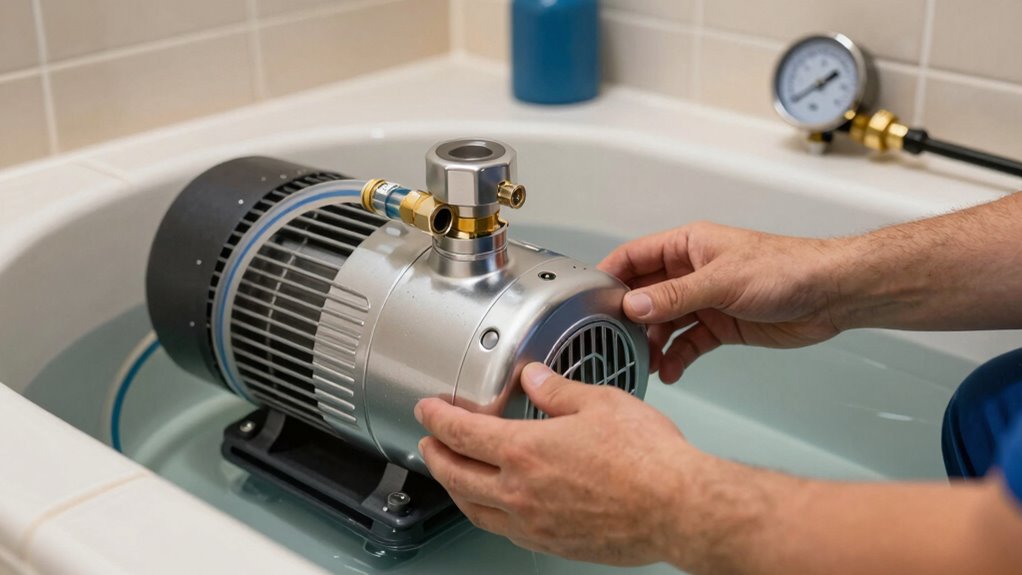
Even with regular maintenance, there are times when pump issues require professional attention. If you notice persistent pump noise or a sudden drop in water flow, it’s a clear sign that something’s wrong. Don’t ignore these symptoms, as they could indicate motor problems, blockages, or electrical issues that you can’t fix yourself. Attempting repairs without proper knowledge might cause further damage or safety hazards. If troubleshooting efforts don’t resolve the problem, it’s best to call a professional. They can accurately diagnose and repair issues, ensuring your cold plunge pump runs smoothly and safely. Recognizing when to seek expert help prevents costly damage and keeps your system operating efficiently. Trust the pros when your pump’s noise or water flow issues seem beyond your control.
Frequently Asked Questions
Can I Prime My Pump With Any Type of Water?
Yes, you can prime your pump with most types of water, but water quality matters. Use clean, fresh water to prevent mineral buildup and damage. Avoid using saltwater or contaminated water, which can harm the pump. Regularly check and adjust your priming frequency based on how often you use your cold plunge. Proper priming guarantees smooth operation and longevity, so choose water wisely and prime as needed to keep your pump running efficiently.
How Often Should I Prime My Pump to Prevent Burnout?
You should prime your pump every few weeks to keep it running smoothly and avoid burnout—a vital part of pump maintenance. Regular priming prevents dry running and guarantees water quality stays high. Don’t wait until it’s struggling; check and prime your pump proactively. This simple step keeps your cold plunge in top shape, saving you from costly repairs and making sure the pump doesn’t become a fiery disaster waiting to happen.
Is It Safe to Prime My Pump Manually or Should I Use a Tool?
You can safely prime your pump manually if you’re cautious, but using a tool makes the process easier and more consistent. Regular pump maintenance helps prevent burnout, ensuring it runs smoothly. Remember, maintaining water quality is essential; clean, clear water reduces strain on the pump. Whether manual or tool-assisted, always follow manufacturer instructions to avoid damage, and check your system frequently to keep everything functioning *best*.
What Signs Indicate My Pump Is Losing Prime Over Time?
Your pump signaling trouble is like a canary in a coal mine—early warning signs of trouble. If you notice decreased water flow, strange noises, or the pump running longer than usual, it’s losing prime. Regular pump maintenance keeps water quality high and prevents issues. Keep an eye on these signs, and you’ll catch prime loss early, helping your cold plunge stay cool and efficient without risking damage.
Can Ambient Temperature Affect the Priming Process?
Yes, ambient temperature can considerably affect the priming process. Temperature effects can cause your pump to face priming challenges, especially in colder environments where water may freeze or become more viscous, making it harder to flow. Conversely, high temperatures can lead to vapor lock, disrupting prime. To avoid these issues, guarantee your pump is in a suitable temperature range and consider insulation or heating if needed, especially in extreme climates.
Conclusion
By mastering the art of priming your cold plunge pump, you’re safeguarding it against burnout and ensuring it runs smoothly like a steady heartbeat beneath icy waters. Imagine the pump as a loyal guardian, ready to cool your plunge with unwavering strength—if you give it the proper start. With careful steps and mindful maintenance, you’ll keep your oasis of refreshment flowing flawlessly, turning chilly dips into a rejuvenating retreat for years to come.