UV sterilizers play a vital role in keeping your water clean by using ultraviolet light to inactivate harmful microbes like bacteria, viruses, and protozoa. They work quickly and effectively without chemicals, ensuring safe water for drinking, aquariums, or small systems. By disrupting the genetic material of microbes, UV sterilizers prevent them from reproducing or causing illness. If you want to understand how this technology maintains water safety, you’ll find more helpful details ahead.

Get wellness gear delivered free with Prime
- Fast, free delivery on millions of items
- Prime Video, Amazon Music and more included
- Member-only deals all year
Key Takeaways
- UV sterilizers inactivate bacteria, viruses, and protozoa by disrupting their DNA or RNA, ensuring microbial safety.
- They provide chemical-free water treatment, leaving no residual taste or harmful byproducts.
- UV sterilization is rapid, often sterilizing water within seconds to minutes for efficient maintenance.
- Proper cleaning of the quartz sleeve maintains UV transmission, ensuring continued effectiveness.
- They are eco-friendly, energy-efficient, and ideal for household, aquariums, and small-scale water purification systems.
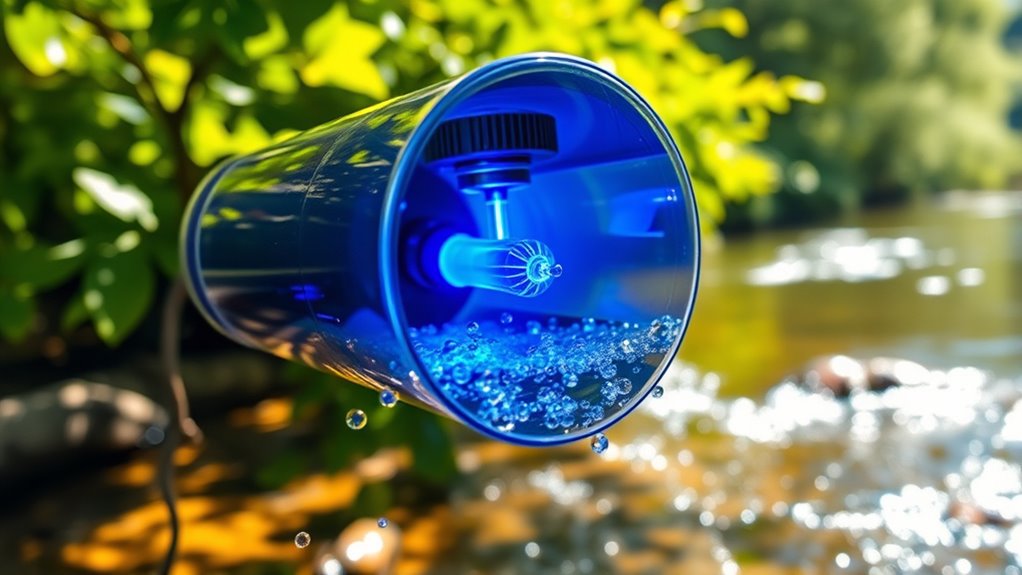
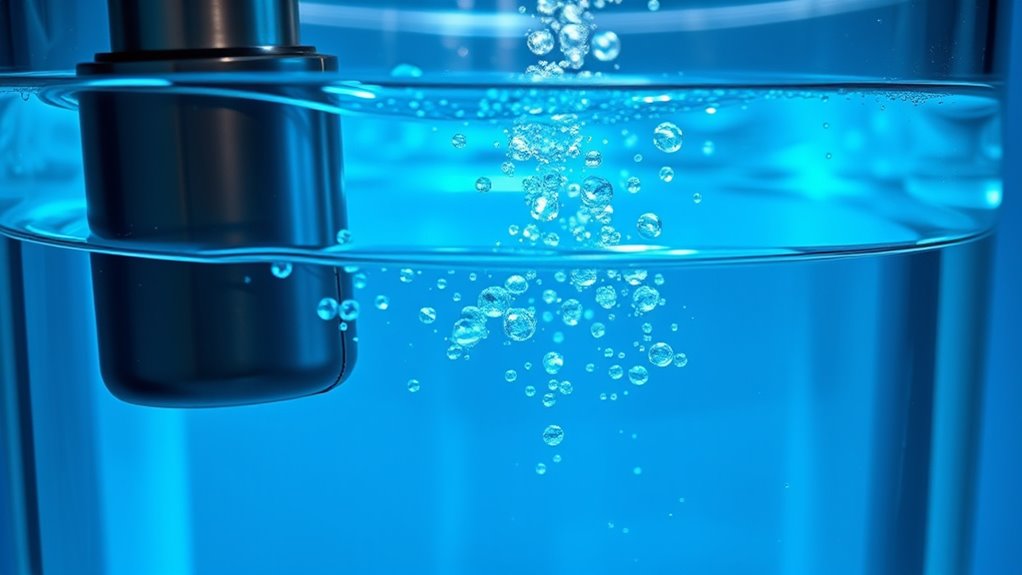
UV sterilizers have become a popular choice for ensuring water purity because they effectively kill bacteria, viruses, and other microorganisms without adding chemicals. This technology relies on UV light, a form of electromagnetic radiation, to inactivate harmful microbes present in water. When you run water through a UV sterilizer, the UV light penetrates the cell walls of microorganisms, disrupting their DNA or RNA. This disruption prevents them from reproducing or causing infection, leading to efficient microbial inactivation. Unlike chemical disinfectants, UV sterilization leaves no residual taste or odor, making it a safe and eco-friendly method for maintaining clean water.
UV sterilizers effectively eliminate microbes without chemicals, ensuring safe, pure, and eco-friendly water.
The core process involves exposing water to a specific wavelength of UV light, typically around 254 nanometers. This wavelength is *ideal* for damaging the genetic material of microbes, rendering them harmless. As water flows through the sterilizer chamber, the UV light directly contacts the microorganisms, effectively neutralizing bacteria like E. coli, viruses such as norovirus, and protozoa like Giardia. Since UV sterilizers target the microorganisms directly, they are highly effective even in water that appears clear and free of sediment. However, for *maximum* efficiency, maintaining clear water with minimal particulates is important, as debris can shield microbes from UV exposure and reduce microbial inactivation rates. Research indicates that UV sterilization technology continues to advance, improving its effectiveness and energy efficiency.
You’ll find UV sterilizers especially useful in scenarios where chemical use isn’t desirable, such as in drinking water systems, aquariums, or even small-scale household setups. The technology is quick, with most systems providing sterilization in just a matter of seconds to minutes. Because UV sterilization doesn’t generate harmful byproducts, it’s a safe choice for families concerned about chemical residues. It also requires minimal maintenance—usually just periodic cleaning of the quartz sleeve that surrounds the UV lamp to prevent mineral buildup that could block UV transmission.
In addition to its effectiveness, UV sterilization is environmentally friendly. It consumes relatively little energy and doesn’t produce waste or chemical runoff. Its ability to provide rapid microbial inactivation makes it an *essential* solution for ensuring water safety in various settings. When you choose a UV sterilizer, you’re opting for a method that offers reliable water purification, reduces the risk of waterborne illnesses, and supports sustainable practices. Properly maintained, UV sterilizers can serve as a *crucial* component in your water treatment system, giving you peace of mind that your water is free from harmful microorganisms without relying on chemicals.
UV water sterilizer for home use
As an affiliate, we earn on qualifying purchases.
As an affiliate, we earn on qualifying purchases.
Frequently Asked Questions
How Long Do UV Sterilizers Typically Last Before Needing Replacement?
You can expect your UV sterilizer’s bulb lifespan to be around 6 to 12 months, depending on usage and water quality. It is crucial to follow recommended replacement intervals, usually every year, to guarantee maximum sterilization. Regularly monitor the UV intensity and replace the bulb promptly when it dims or after the specified period. This way, your sterilizer remains effective at keeping your water clean and safe.
Are UV Sterilizers Effective Against All Waterborne Pathogens?
You might think UV sterilizers kill all waterborne pathogens, but pathogen resistance varies. While they’re highly effective within their UV spectrum efficiency, some microorganisms, like certain cysts and spores, can resist UV light. This means UV sterilizers are excellent for many pathogens, but not foolproof against all. For thorough water safety, combine UV sterilization with filtration or chemical treatments to target resistant pathogens effectively.
What Maintenance Is Required to Keep UV Sterilizers Functioning Properly?
To keep your UV sterilizer working properly, regularly check the UV bulb lifespan and replace it as recommended, usually every 6-12 months. Clean the quartz sleeve and other components frequently to prevent mineral buildup, which can reduce efficacy. Confirm the device is powered off before cleaning, and follow the manufacturer’s instructions for maintenance. Proper upkeep guarantees your sterilizer continues effectively eliminating waterborne pathogens.
Can UV Sterilizers Be Used in Both Residential and Industrial Settings?
Yes, UV sterilizers work in both residential and industrial settings. For commercial applications, they efficiently disinfect large water volumes, ensuring safety and compliance. In residential benefits, UV sterilizers provide a chemical-free way to purify drinking water, protecting your family’s health. Their versatility makes them ideal for various environments, offering reliable sterilization regardless of scale. You can confidently use UV sterilizers to maintain clean, safe water at home or in your business.
How Does Water Temperature Affect the Efficiency of UV Sterilization?
Water temperature impacts sterilization efficiency because UV sterilizers work best within certain temperature ranges. When water is too cold or too hot, UV light penetrates less effectively, reducing disinfection power. You’ll notice that at ideal temperatures, UV sterilization efficiency increases, ensuring better pathogen destruction. To maximize performance, you should monitor water temperature and maintain it within the recommended range, especially in industrial settings where water conditions vary markedly.
As an affiliate, we earn on qualifying purchases.
Conclusion
By now, you see how UV sterilizers are your secret weapon against harmful germs, keeping your water pure and safe. When you use them regularly, you’re not just crossing your fingers—you’re actively fighting off contaminants. Think of your water as a garden; UV sterilizers are the vigilant gardeners, tirelessly tending to guarantee everything stays healthy and clear. With their help, you can rest easy knowing your water is as clean as a whistle, ready for you to enjoy.
UV water purifier for small systems
As an affiliate, we earn on qualifying purchases.
As an affiliate, we earn on qualifying purchases.
UV sterilizer replacement quartz sleeve
As an affiliate, we earn on qualifying purchases.
As an affiliate, we earn on qualifying purchases.
Halloween Picks
halloween
As an affiliate, we earn on qualifying purchases.