
To avoid common electrical mistakes, you must prioritize proper load calculations, follow local codes, and use the correct wire gauge. Plan for future expansion, guarantee proper grounding, and select compatible components. Don’t skip documenting the installation or neglect regular maintenance. Always follow safety precautions and wear PPE. Skipping these steps can lead to hazards, code violations, and costly repairs. Keep these tips in mind to ensure safety and efficiency as you continue exploring essential electrical considerations.
Key Takeaways
- Conduct accurate load calculations to select appropriate circuit breakers and wiring sizes, preventing overloads and hazards.
- Ensure compliance with local electrical codes and secure proper permits to avoid legal and safety issues.
- Use correct wire gauges based on load demands and support wiring properly to prevent damage and short circuits.
- Follow safety protocols by disconnecting power, verifying absence of voltage, and wearing PPE during installation and maintenance.
- Document all wiring, components, and procedures to facilitate troubleshooting, future upgrades, and regulatory inspections.

Calculated Industries 5070 ElectriCalc Pro Electrical Code Calculator
Ideal for electrical contractors, designers, engineers, electricians, builders, and inspectors
As an affiliate, we earn on qualifying purchases.
As an affiliate, we earn on qualifying purchases.
Overlooking Proper Load Calculations

Neglecting proper load calculations can lead to serious electrical issues. When you don’t accurately determine your circuit breaker selection, you risk overloading or under-protecting your system. This can cause frequent tripping or, worse, electrical fires. Equally important is choosing the right wire insulation; if your wires aren’t rated for the intended load, they may overheat, melt, or short circuit. Proper load calculations help you select the correct circuit breaker and ensure your wiring can handle the demand safely. Skipping this step can compromise safety, damage appliances, and increase maintenance costs. Always assess your electrical needs thoroughly to match circuit breaker ratings and wire insulation specifications, preventing hazards before they occur. Conducting proper load assessments is essential for a safe and reliable electrical system. Proper planning saves you time, money, and potential safety disasters.

Siemens Q120 20-Amp Single Pole Type QP Circuit Breaker
Single pole, 20 Amp, 120V type QP Circuit Breaker
As an affiliate, we earn on qualifying purchases.
As an affiliate, we earn on qualifying purchases.
Ignoring Local Electrical Codes and Standards
Failing to follow local electrical codes and standards can undermine the safety measures you’ve already put in place, increasing the risk of violations and hazards. Ignoring requirements for electrical permits may lead to fines or delays if inspections reveal non-compliance. Proper wiring insulation is essential to prevent short circuits, fires, and electric shocks, yet many overlook code specifications for insulation quality and placement. When you disregard local standards, you risk using wiring and components that don’t meet safety criteria, jeopardizing all involved. Always check with local authorities before starting work, secure the necessary electrical permits, and ensure your wiring insulation complies with code requirements. Staying compliant not only protects you legally but also guarantees a safer, more reliable electrical system.

NAOEVO 16 Gauge Wire 60ft, 16 AWG Wire 6 Colors 10ft Each Spool, Flexible Silicone Tinned Copper Electrical Cable, Wiring kit for Breadboard/Automotive/DIY/Battery, 200℃
NAOEVO Silicone Wire Kit : 16 gauge silicone stranded copper wire, 10ft/3m each spool. 6 different colors (red,…
As an affiliate, we earn on qualifying purchases.
As an affiliate, we earn on qualifying purchases.
Using Incorrect Wire Gauge for the Application

Choosing the wrong wire gauge can lead to overheating or fire hazards. You need to calculate the load correctly and follow electrical codes to guarantee safety. Using the proper wire size protects your home and complies with standards. Additionally, understanding electrical load calculations ensures you select an appropriate gauge for your specific application.
Proper Load Calculation
Using the wrong wire gauge for your electrical load can lead to serious safety hazards and system failures. Proper load calculation is essential to determine the correct wire sizing for your circuit load. If you underestimate the load, the wire may overheat, risking fires or damage. Overestimating can lead to unnecessary expenses and difficulty in installation. Always calculate the total current your circuit will carry to select the appropriate wire gauge. Additionally, understanding Glycolic Acid Benefits for Skin can help in related skincare considerations.
| Circuit Load (Amps) | Recommended Wire Gauge |
|---|---|
| Up to 20 | 12 AWG |
| 20-50 | 10 AWG |
| 50-100 | 8 AWG |
| Over 100 | 6 AWG or larger |
Accurate load calculation guarantees safe, efficient wiring tailored to your specific application.
Code Compliance and Safety
Ensuring you use the correct wire gauge for your application is essential for code compliance and safety. Using the wrong wire size can lead to overheating, electrical fires, or tripped breakers. When designing your circuit, proper circuit design principles help determine the appropriate wire gauge needed for the load. Accurate electrical diagramming guarantees that wiring matches specifications and adheres to code requirements. Failing to follow these standards risks violations during inspections and endangers everyone’s safety. Always verify the wire gauge against local electrical codes and manufacturer recommendations. Properly planned circuit design and precise diagramming help prevent mistakes, ensuring your system is safe, reliable, and compliant. Never underestimate the importance of matching wire gauge to the application for long-term safety and legal compliance. Proper wire sizing is crucial for maintaining electrical safety and meeting regulatory standards.

Regulations for Filing Applications for Permits to Site Interstate Electric Transmission Facilities (US Federal Energy Regulatory Commission Regulation) (FERC) (2018 Edition)
As an affiliate, we earn on qualifying purchases.
As an affiliate, we earn on qualifying purchases.
Failing to Plan for Future Expansion

Failing to plan for future expansion can lead to costly electrical upgrades and safety hazards down the line. If you overlook future planning, you might find yourself scrambling to accommodate new equipment or increased power demands later. Incorporate expansion considerations early in your design to avoid these issues. This means estimating your future electrical needs and designing your system with extra capacity, such as larger panels or flexible wiring pathways. Proper planning guarantees your electrical system can grow with your business or home without requiring complete overhauls. By proactively addressing expansion considerations, you save money and reduce risks. Remember, thinking ahead now prevents major headaches and costly modifications down the road. Don’t neglect future planning—it’s essential for a safe, efficient electrical setup. Additionally, understanding power capacity and storage options can help ensure your system remains flexible for future needs.
Skipping Proper Grounding and Bonding Practices

Skipping proper grounding and bonding practices can create dangerous electrical conditions that put people and property at risk. Without following grounding protocols, your system may not safely redirect fault currents, increasing shock hazards. Proper bonding techniques ensure all metal parts are connected, preventing voltage differences that could cause shocks or fires. For example, make sure the grounding conductor is correctly installed and bonded to the main panel. Use the right materials and adhere to code standards to avoid future issues. Regular system testing is also important to identify potential problems early.
Neglecting to Turn Off Power During Work

Always turn off the power before working on electrical systems. Failing to do so puts you at risk of electric shock, which can be deadly. Taking this simple step protects your safety and prevents costly accidents. Additionally, understanding electrical safety precautions ensures a safer working environment.
Power Shutoff Importance
Turning off the power before starting electrical work is essential to prevent accidents and injuries. Even with modern devices like wireless charging stations, working on live circuits can cause electric shock or fire hazards. If you’re integrating solar power or installing new wiring, power shutoff becomes even more crucial to avoid damaging sensitive equipment or creating dangerous sparks. Always verify that the circuit is de-energized before handling wires or components. This simple step protects you and your property, ensuring safe and efficient work. Remember, neglecting to cut the power can lead to costly mistakes, delays, or serious injuries. Taking the time to shut off power is a small but critical step in any electrical project—safety first always. Proper safety procedures are vital to minimize risks during electrical tasks.
Risk of Electric Shock
Neglecting to turn off the power before working on electrical systems considerably increases the risk of electric shock. Even a minor ground fault can cause dangerous electrical currents if the power remains live. Without shutting off the circuit, you risk contact with energized parts, especially if insulation resistance has degraded over time. Faulty insulation can expose you to shock if you accidentally touch a live wire or component. Using a tester to verify the absence of voltage is vital, but it’s no substitute for switching off the power. Always disconnect power sources first to minimize the chance of accidental contact and reduce the severity of shocks. Additionally, understanding the horsepower of electric dirt bikes can help you assess the potential energy stored in the system, emphasizing the importance of proper safety procedures. Remember, taking these precautions saves lives and prevents injuries.
Relying on Faulty or Inadequate Circuit Breakers
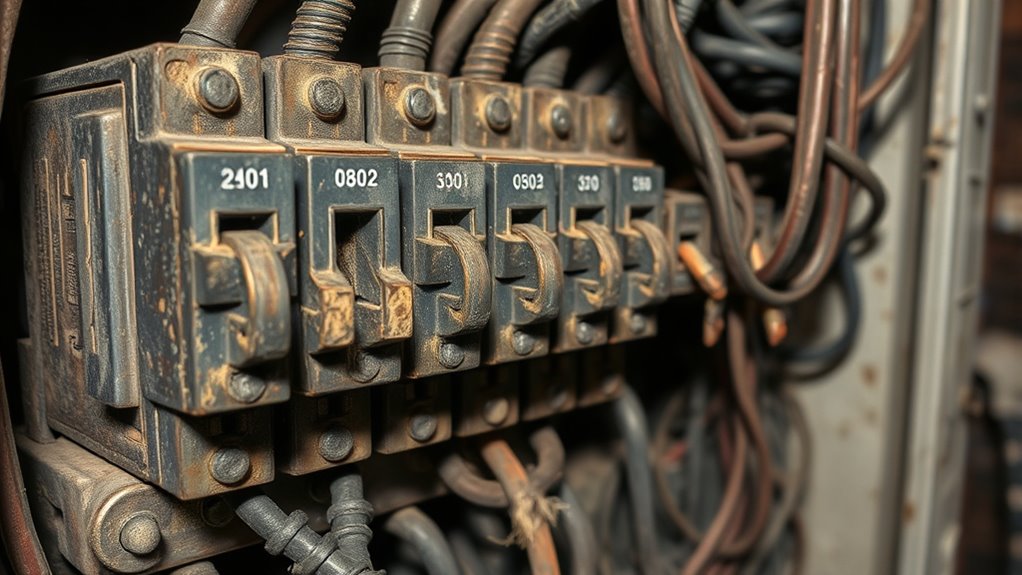
Relying on faulty or inadequate circuit breakers can lead to serious safety hazards and costly damage. Not all circuit breaker types provide the same level of protection, so choosing the right one is essential. Faulty breaker detection is vital because a breaker that doesn’t trip when it should may fail to prevent overloads or short circuits. Using an outdated or improperly rated breaker increases the risk of electrical fires or equipment damage. Always verify your circuit breakers are inspected regularly and replaced if they show signs of wear or malfunction. Properly functioning circuit breakers are your first line of defense against electrical accidents, so never overlook their importance in your electrical system. Hydrocolloid technology can promote healing in skin care but is unrelated to electrical safety.
Improperly Securing and Supporting Wiring

Faulty or inadequate circuit breakers can put your electrical system at risk, but even properly rated breakers won’t safeguard you if wiring isn’t secured correctly. Poor wire management and support can lead to loose or sagging cables, increasing the chance of damage or short circuits. Always ensure wires are properly supported and routed using secure fasteners and clips. When installing conduit, make sure it’s properly anchored and runs smoothly without unnecessary bends or stress points. Proper conduit installation not only protects wires but also makes future maintenance easier. Neglecting to secure wiring properly can cause wear, accidental disconnections, or fire hazards over time. Taking the time to manage and support wiring correctly is essential for safety, code compliance, and the longevity of your electrical system.
Not Testing Systems Before Finalizing Installation

Before you finalize the installation, you need to test the system thoroughly. Conduct detailed inspections to identify any issues and guarantee everything is secure. Always verify that the system functions correctly to prevent costly problems later.
Conduct Thorough Inspections
Although testing systems is important, thorough inspections should be your final step before completing an electrical installation. This helps guarantee that the circuit design and equipment selection align correctly and meet safety standards. During inspections, check for proper wiring, secure connections, and correct component placement. Look for signs of damage or wear, and verify that all components match the approved plans. Confirm that grounding and bonding are correctly implemented, and ensure that no loose or exposed wires remain. By conducting these detailed inspections, you catch potential issues early, preventing costly repairs later.
- Review circuit paths and connections
- Confirm equipment matches specifications
- Check for physical damage or corrosion
- Ensure compliance with safety codes
Verify System Functionality
Verifying system functionality is a crucial step to guarantee your electrical installation operates safely and efficiently before final approval. Check for electrical noise, which can cause interference and affect device performance. Ensure that all circuits are properly balanced to prevent overloads and uneven power distribution. Use appropriate tools to measure voltage consistency across circuits and identify any irregularities. Confirm that safety devices, such as circuit breakers and grounding systems, activate correctly. Inspect for loose connections or signs of overheating that could compromise system integrity. Address any imbalances or noise issues promptly to avoid future failures or hazards. By thoroughly verifying system functionality, you guarantee your electrical setup is reliable, safe, and ready for regular use, minimizing risks and costly repairs later on.
Overloading Circuits and Outlets
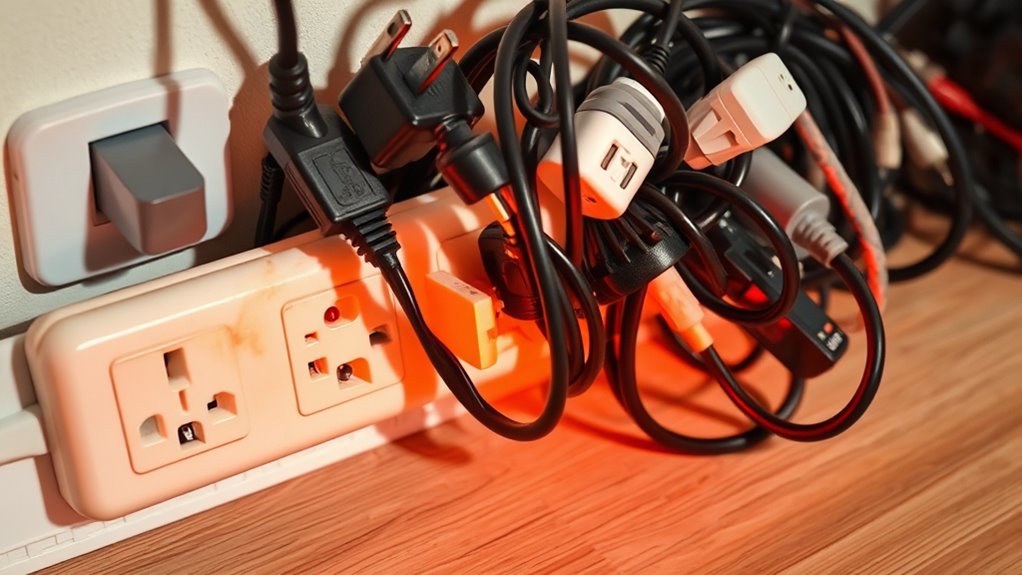
Overloading circuits and outlets can pose serious safety risks, so it’s important to recognize the signs and avoid overburdening your electrical system. Proper circuit design and outlet placement help prevent overloads. When too many devices are plugged into a single outlet or circuit, it can trip breakers or cause overheating. To avoid this, watch for warning signs like frequent flickering lights or warm outlets. Be mindful of your power needs, especially with high-wattage appliances. Distribute devices across multiple outlets and circuits to prevent overloads. Remember, a well-planned circuit design and strategic outlet placement keep your system safe and functional.
Overloading outlets risks safety; distribute devices and watch for warning signs like flickering or warm outlets.
- Avoid plugging too many devices into one outlet
- Use surge protectors for high-power equipment
- Don’t ignore warm or discolored outlets
- Consult a professional for circuit upgrades
Ignoring Environmental Factors Affecting Wiring

Ignoring environmental factors that affect wiring can lead to serious safety issues and damage your electrical system. Weather impact, such as rain, snow, and humidity, can cause corrosion and degrade insulation over time. Environmental hazards like extreme temperatures or exposure to chemicals can weaken wiring materials, increasing the risk of shorts or fires. If you don’t account for these factors, you might install wiring improperly or neglect protective measures, which can lead to costly repairs or dangerous failures. Properly evaluating the environment where wiring runs is essential; use weather-resistant conduits and choose insulation suited for outdoor or harsh conditions. By considering environmental hazards upfront, you safeguard your system’s longevity and ensure safety for everyone around your electrical setup.
Using Substandard or Incompatible Components

Using substandard or incompatible components can substantially compromise your electrical system’s safety and reliability. When components don’t meet proper material standards or aren’t compatible, it increases risks like short circuits, fires, or equipment failure. To avoid these issues, guarantee you select parts with proper component compatibility and adhere to industry standards.
Be cautious of:
- Choosing low-quality wires or connectors that don’t meet safety standards
- Using incompatible circuit breakers or fuses
- Overlooking manufacturer specifications for voltage and current ratings
- Ignoring material standards for insulation and conductors
These mistakes can lead to dangerous failures and costly repairs. Always verify that every component aligns with recognized standards and is compatible with your system to ensure safety and performance.
Failing to Document Electrical Installations

Failing to document electrical installations can lead to serious safety risks and operational issues. Without proper documenting procedures, troubleshooting becomes difficult, and future repairs may pose hazards. Always verify you keep detailed records of electrical work, including wiring diagrams, component specifications, and installation dates. This documentation supports compliance with electrical permits, which are essential for legal and safety reasons. Failing to obtain or retain electrical permits can result in penalties and invalid insurance claims if issues arise. Proper documentation not only helps in inspections but also provides a clear record of work completed, reducing miscommunication and errors. Ultimately, thorough documentation safeguards your project, ensures safety, and simplifies ongoing maintenance.
Neglecting Regular Maintenance and Inspections
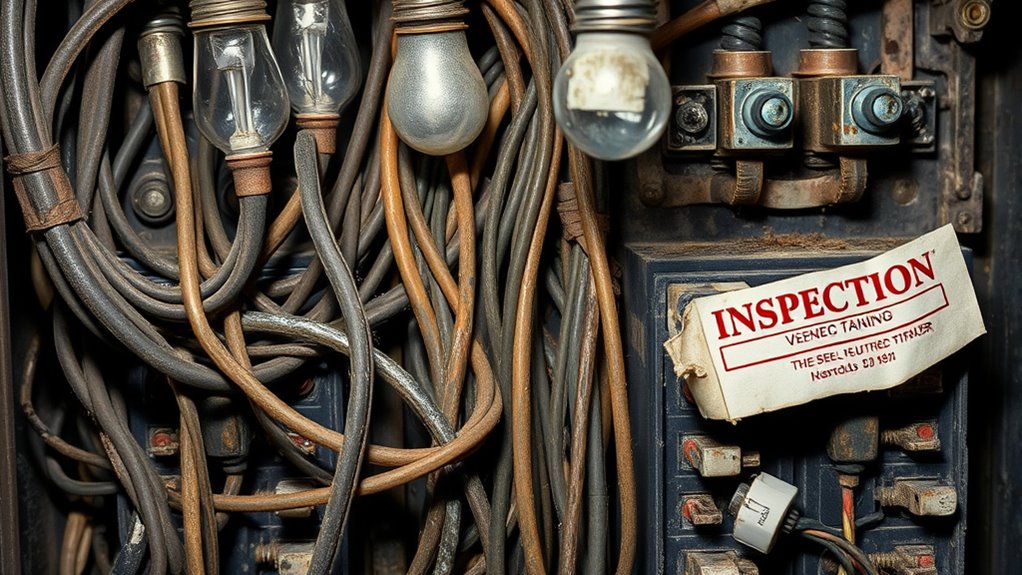
Neglecting regular maintenance and inspections can lead to unnoticed electrical issues that escalate into serious hazards. Without routine cleaning, dust and debris can accumulate, causing overheating or short circuits. Over time, equipment calibration may drift, reducing efficiency and increasing risk. Missing scheduled checks also means failing to identify early signs of wear or damage. To prevent these problems, consider:
- Performing routine cleaning of electrical panels and components
- Regularly inspecting wiring for signs of deterioration
- Ensuring equipment calibration is up to date
- Scheduling professional inspections to catch issues early
Staying proactive helps maintain safety, prolongs equipment lifespan, and avoids costly repairs. Don’t overlook these essential tasks—your safety depends on it.
Disregarding Safety Precautions and Personal Protective Equipment

Disregarding safety precautions and personal protective equipment (PPE) markedly increases the risk of injury when working with electricity. Without proper PPE, you expose yourself to electrical shocks, arc flashes, and burns, which can be severe. Ignoring safety measures also leads to issues like electrical noise, which can interfere with circuit performance and obscure the aesthetics of your installation. Overlooking these precautions can result in unsafe work environments, causing accidents or damage to equipment. Proper safety gear, including insulated gloves, goggles, and protective clothing, minimizes these risks. Additionally, maintaining circuit aesthetics by following safety protocols ensures cleaner, more organized wiring, reducing accidental contact and improving overall safety. Prioritizing safety and PPE isn’t just about compliance—it’s about protecting yourself and ensuring reliable, safe electrical systems.
Frequently Asked Questions
How Do I Determine the Correct Electrical Load for My Project?
To determine the correct electrical load for your project, start with circuit planning by listing all devices and their power requirements. Then, perform a power calculation to sum the wattages, considering future expansion. This helps you select the right wire gauge, circuit breakers, and outlets. Always double-check your calculations and consult electrical codes to guarantee safety and efficiency. Proper planning prevents overloads and ensures reliable operation.
What Are the Essential Local Electrical Codes I Need to Follow?
You need to follow your local electrical codes, which typically specify grounding requirements and circuit breaker sizing. Check with your city or state authority to verify compliance. Proper grounding protects against electrical faults, while correct circuit breaker sizing prevents overloads. Always use licensed electricians familiar with local regulations to ensure your project meets all safety standards and code requirements, avoiding costly violations or hazards.
How Can I Identify the Proper Wire Gauge for Specific Appliances?
Choosing the right wire gauge is like picking the right shoe size for a marathon—you need the perfect fit. To identify the proper wire gauge, check your appliance’s amperage rating, usually found on the label. Then, match this with a wire size that safely handles that amperage. For higher amperage appliances, opt for thicker wire gauge to prevent overheating and guarantee safe, reliable operation.
When Should I Plan for Future Electrical System Expansion?
You should plan for future electrical system expansion during your initial design stage. Incorporate future planning by installing higher-capacity wiring and circuit breakers to guarantee expansion readiness. Consider potential upgrades, such as additional outlets or appliances, and leave room in your panel for new circuits. This proactive approach prevents costly rewiring later, saves time, and guarantees your system can accommodate your evolving electrical needs seamlessly.
What Are the Best Practices for Documenting Electrical Installations?
You should document electrical installations using detailed electrical diagrams and thorough installation checklists. Keep diagrams clear and up-to-date, reflecting any changes made during installation or maintenance. Use checklists to ensure all safety standards and code requirements are met. Regularly review and update documentation to facilitate future troubleshooting, upgrades, or expansion. Proper documentation not only helps maintain safety but also streamlines future electrical work, saving you time and reducing errors.
Conclusion
By avoiding these 15 common electrical mistakes, you can guarantee safer, more reliable installations. Did you know that improper wiring causes nearly 20% of electrical fires? Taking the time to follow proper load calculations, adhere to codes, and use quality components can prevent costly accidents. Stay vigilant with regular inspections and safety measures—your efforts protect lives and property. Don’t overlook these tips; a safer electrical system depends on your careful planning and attention.