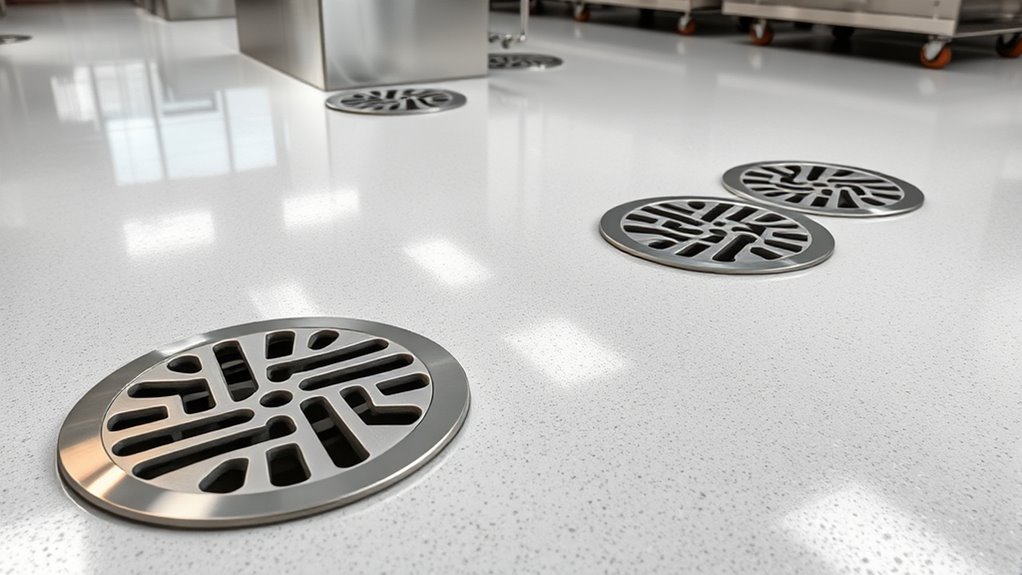

To guarantee safety and durability, you need to accurately calculate flooring slopes to direct water toward drains efficiently, typically at 1-2%. You also should determine the load-bearing capacity of materials and support structures to handle heavy use. Proper drain placement, considering high-water zones, and calculating water flow rates help prevent flooding. Assess slip resistance for safe footing, and verify all calculations comply with safety standards. Keep going to discover how these essential steps work together seamlessly.
Key Takeaways
- Calculate appropriate slope (1-2%) to ensure effective water drainage without compromising flooring aesthetics.
- Assess material strength and load capacity to support safety and prevent structural failures under heavy use.
- Test slip resistance using standardized methods to minimize fall risks and comply with safety regulations.
- Properly position and size drains based on water volume and flow to prevent pooling and water damage.
- Regularly verify adherence to safety standards through inspections and documentation of drainage and flooring conditions.
Calculating Proper Flooring Slopes for Water Drainage
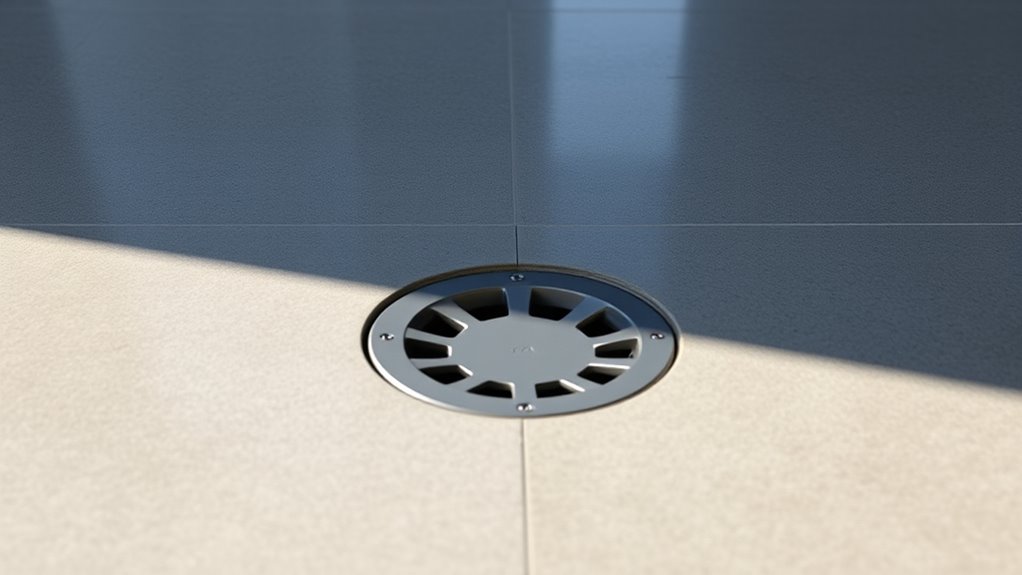
To guarantee effective water drainage, you need to calculate the proper slope for your flooring. This ensures water flows toward the drain without pooling, preventing damage and safety hazards. When choosing a slope, consider both functionality and aesthetic considerations. A gentle incline, typically 1-2%, can be subtle enough to maintain the room’s visual appeal while guiding water efficiently. Keep in mind that decorative finishes, like textured tiles or polished surfaces, can influence how visible the slope appears. You might want to incorporate small design elements or subtle gradations to maintain the aesthetic integrity of your space. Proper calculation of the slope balances practicality with style, ensuring your flooring looks good and performs effectively in draining water. Additionally, understanding flooring materials can help you select surfaces that accommodate slight slopes without compromising durability or appearance.
Determining Load-Bearing Capacities of Flooring Materials

You need to understand how material strength factors influence your flooring’s capacity to support weight. Evaluating structural support requirements ensures your flooring can handle expected loads safely. By focusing on these points, you’ll choose the right materials and support systems for a secure, durable floor. Incorporating goal setting techniques can help you plan and implement effective support strategies.
Material Strength Factors
Understanding the material strength of flooring is essential for accurately determining its load-bearing capacity. Factors like material durability and proper installation techniques directly influence how much weight your flooring can support safely. Stronger materials resist wear and deformation, ensuring longevity. Correct installation enhances load distribution and prevents weak points. Consider the following table to visualize key factors: material strength is a critical aspect that can be optimized through appropriate choices and practices.
| Material Durability | Installation Techniques |
|---|---|
| Resists cracking | Ensures even load distribution |
| Withstands moisture | Prevents early failure |
| Maintains structural integrity | Reduces risk of damage |
| Extends lifespan | Improves overall safety |
Structural Support Requirements
Determining the load-bearing capacity of flooring materials requires evaluating their structural support requirements. You need to assess foundation stability first, ensuring the supporting structure can handle expected loads without shifting or settling. This involves checking the foundation’s design and condition, especially in older or compromised buildings. Seismic reinforcement is also critical if you’re in an earthquake-prone area; it enhances the flooring’s ability to withstand lateral forces and seismic activity. Incorporate appropriate reinforcement methods, such as adding bracing or upgrading support beams, to improve overall safety. Additionally, understanding the importance of building codes and standards ensures compliance and safety in your flooring installation. By understanding these factors, you ensure your flooring system can support both static and dynamic loads, preventing failures and ensuring long-term stability. Proper evaluation of these support requirements is essential for safe, durable flooring installations.
Selecting and Positioning Drainage Outlets Accurately

To guarantee effective drainage, you need to choose the right outlet locations and spacing. Properly calculated outlet placement helps prevent water accumulation and potential damage. By focusing on ideal strategies, you can maintain safe, efficient water flow across your flooring. Considering exotic fruit blend inspirations can also inspire creative solutions for drainage aesthetics and integration.
Optimal Drain Placement Strategies
Have you considered how strategic placement of drainage outlets can prevent water accumulation and reduce slip hazards? Properly positioned drains ensure water flows efficiently toward outlets, minimizing puddles on the surface. When planning, consider the flooring’s decorative patterns and aesthetic finishes, ensuring drain placement doesn’t disrupt visual harmony. Position drains near high-traffic areas and at low points where water naturally collects. Avoid placing drains in the middle of decorative features that could compromise the design. Instead, integrate drainage outlets seamlessly, maintaining both safety and visual appeal. By combining functional placement with thoughtful design, you ensure effective water management without sacrificing the aesthetics of your flooring. This strategic approach keeps surfaces safe, dry, and visually appealing. Additionally, understanding AI security vulnerabilities can help in designing smarter drainage systems that adapt to changing conditions and prevent failures.
Calculating Proper Outlet Spacing
Accurately calculating the spacing of drainage outlets is essential for effective water management and safety. Proper outlet placement ensures water flows efficiently, preventing pooling and slips. When designing drainage systems, consider factors like surface area, slope, and expected water volume. Choosing outlet materials that resist corrosion and wear prolongs system durability. To determine outlet spacing, analyze the floor’s size and drainage load, ensuring outlets are evenly distributed for uniform water removal. Proper positioning minimizes the risk of standing water and structural damage. Keep in mind that outlets should be placed near high-traffic zones and low points for maximum performance. Correct calculations and strategic placement are crucial steps in creating a safe, reliable drainage system. Additionally, understanding the flow rate of water helps optimize outlet placement and prevent overloads.
Ensuring Effective Water Flow
Selecting and positioning drainage outlets correctly is essential for ensuring water flows smoothly across your flooring surface. Proper placement prevents water pooling and directs flow efficiently, especially in areas with decorative patterns or aesthetic finishes. You want outlets to be discreet yet effective, blending seamlessly into the design without compromising functionality. Position drains near high-water zones, like showers or entrances, to optimize drainage. Consider the floor’s slope and ensure outlets align with natural water movement. This careful placement maintains the integrity of decorative patterns, avoiding disruption of visual appeal. Accurate positioning also reduces the risk of water damage, mold, and slips. When drainage outlets are thoughtfully integrated, they support both safety and style, making your flooring both beautiful and practical. Incorporating proper maintenance ensures long-term effectiveness and prevents clogs that could compromise water flow.
Assessing Slip Resistance and Friction Coefficients

To guarantee flooring and drainage systems are safe, you need to assess their slip resistance and friction coefficients effectively. These measurements determine how well a surface resists slipping under various conditions. High slip resistance and appropriate friction coefficients reduce fall risks, especially in wet or slippery environments. Use standardized testing methods, like the pendulum test or traction testers, to evaluate surfaces accurately. Regular assessments help identify areas needing improvement. Consider factors such as surface texture, material, and contamination that influence slip resistance. Document your findings to ensure compliance with safety standards. Remember, consistent testing and maintenance are key to preventing accidents and ensuring safe flooring and drainage systems. Incorporating testing procedures aligned with industry standards can further enhance safety evaluations.
Analyzing Water Flow Rates and Drain Capacity

Understanding water flow rates and drain capacity is essential for preventing flooding and water accumulation on floors. To analyze this effectively, you need to calculate the expected water volume during peak usage or heavy rainfall. Properly sized drains ensure quick water removal, reducing slip hazards and water damage. When designing drainage systems, consider the color contrast of drain covers and surrounding flooring to enhance visibility, which improves safety. Additionally, balancing functionality with aesthetic appeal helps maintain a clean, professional look without sacrificing performance. Measuring flow rates allows you to determine whether existing drains can handle maximum water loads or if upgrades are necessary. Using appropriate drain cover designs can further improve both safety and efficiency. By carefully analyzing these factors, you ensure efficient water management and create a safer, more visually pleasing environment.
Evaluating Structural Support for Heavy Loads
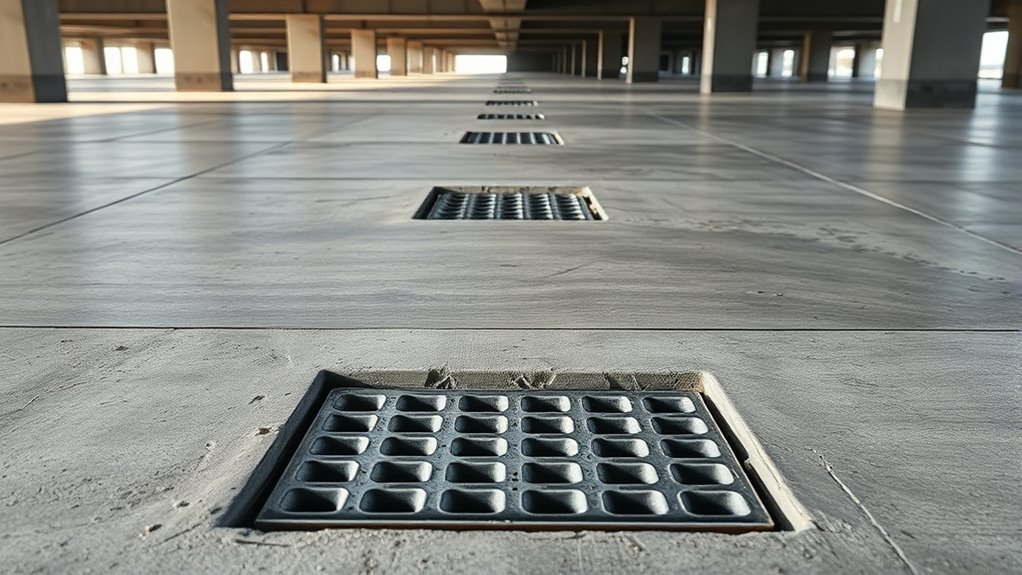
Evaluating structural support for heavy loads is crucial to guarantee safety and prevent structural failures. You need to assess whether your subfloor reinforcement can handle the weight, especially in areas with heavy equipment or storage. Ensuring seismic support is also critical if you’re in a quake-prone zone, as it helps maintain stability during tremors. Focus on load distribution, checking existing joists and supports for adequacy. Consider adding reinforcement where necessary, such as thicker beams or additional supports. Proper evaluation reduces the risk of collapse and prolongs the lifespan of your flooring system. Remember, a thorough assessment minimizes future costly repairs and enhances safety for everyone using the space. Don’t skip this step—it’s essential for a secure, durable foundation.
- Load distribution assessment
- Subfloor reinforcement analysis
- Seismic support considerations
- Support capacity calculations
Ensuring Compliance With Safety and Building Regulations

Ensuring compliance with safety and building regulations is essential to avoid legal issues and guarantee a safe environment. You need to focus on proper flooring design, making certain it meets slip resistance and load-bearing standards. Regular drainage maintenance is equally important to prevent water accumulation, which can cause slips and structural damage. Check that your flooring choices align with local codes, and keep documentation of inspections and modifications. Staying updated on regulations helps you identify necessary adjustments quickly. Incorporate safety features such as anti-slip coatings or drainage systems that comply with standards. By prioritizing these aspects, you ensure your flooring and drainage systems are safe, reliable, and compliant, reducing risks and protecting everyone who enters your space.
Frequently Asked Questions
How Often Should Drainage Systems Be Inspected for Safety?
You should inspect your drainage systems at least twice a year to guarantee safety and proper functioning. Regular inspection frequency helps identify potential issues early, preventing costly repairs and hazards. Incorporate these inspections into your maintenance scheduling so you stay proactive. After heavy storms or extreme weather, consider an additional check. Consistent inspections keep your drainage system reliable and safe, reducing risks and maintaining peak performance year-round.
What Are the Common Signs of Flooring Failure Under Load?
You’ll notice flooring failure under load if you see subfloor deterioration or crack formation. These signs indicate that the structure can’t support weight properly, risking further damage or safety hazards. Keep an eye out for uneven surfaces, creaking sounds, or visible cracks in the flooring. Addressing these issues early prevents costly repairs and guarantees safety. Regular inspections help catch deterioration or cracks before they worsen, maintaining the integrity of your flooring system.
Which Materials Provide the Best Slip Resistance for Wet Areas?
Imagine walking confidently on a rain-slick floor without slipping—that’s the power of the right materials. For wet areas, slip resistance is essential. You should consider textured rubber, slip-resistant vinyl, or textured ceramic tiles, as these material options provide superior grip under wet conditions. These choices help prevent accidents, ensuring safety and peace of mind. Always select flooring that offers maximum slip resistance to keep everyone safe in damp environments.
How Do Environmental Factors Affect Drainage System Longevity?
Environmental factors like soil erosion and fluctuations in the water table can substantially impact your drainage system‘s longevity. Soil erosion may destabilize the foundation, causing misalignment or damage, while changes in the water table can lead to increased water pressure or flooding. To guarantee durability, regularly assess these factors, reinforce drainage structures where needed, and implement erosion control measures. This proactive approach helps maintain ideal drainage performance over time.
What Are the Latest Safety Regulations for Commercial Flooring Installations?
You need to follow the latest flooring regulations that emphasize slip resistance to prevent accidents. Make certain your commercial flooring complies with updated safety standards, which often specify required slip resistance ratings for different areas. Regularly check for adherence to these regulations, and incorporate safety features like textured surfaces or anti-slip coatings where necessary. Staying current with these rules helps protect your staff and customers while avoiding costly violations.
Conclusion
Remember, skipping these calculations can turn your flooring project into a modern-day Tower of Babel—chaotic and unsafe. By carefully evaluating slopes, load capacities, drainage placement, slip resistance, and regulations, you guarantee a safe, durable space. Don’t be a Sisyphus doomed to redo your work—get it right the first time. So, grab your tools, channel your inner Da Vinci, and build with confidence, knowing every detail has been thoughtfully calculated for safety.