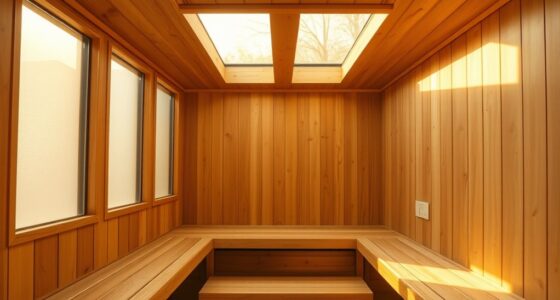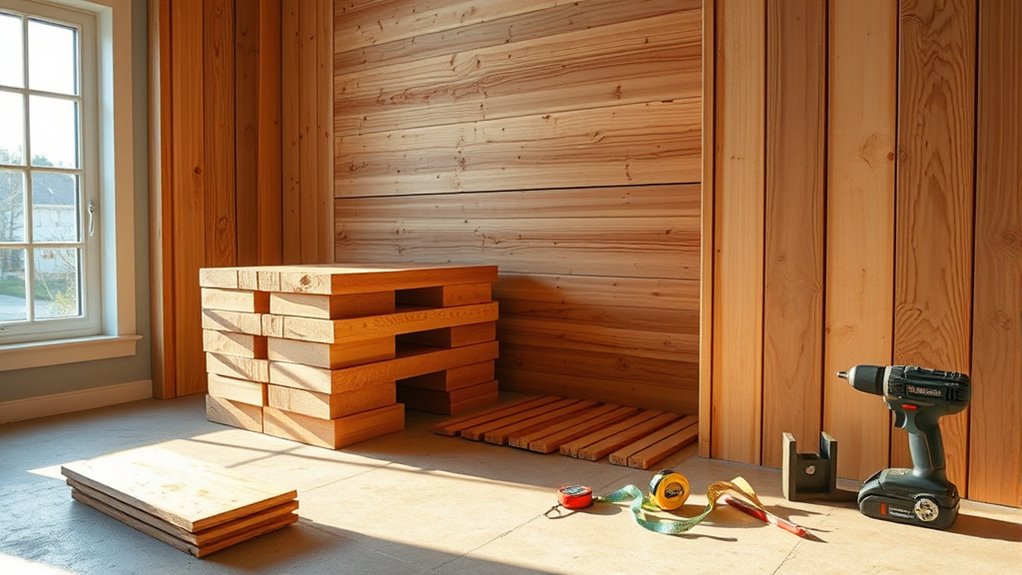

To build a home sauna from scratch, start by planning your space and selecting durable, heat-resistant materials. Insulate walls and the ceiling thoroughly to retain heat and improve efficiency. Install proper ventilation with intake and exhaust vents to regulate humidity and air quality. Choose moisture-proof interior materials and carefully set up electrical wiring for heaters and lighting. If you keep these steps in mind, you’ll create a safe, comfortable sauna tailored to your needs. You’ll discover more details as you continue.
Key Takeaways
- Plan sauna size, layout, and ventilation system based on available space and user needs.
- Insulate walls and ceiling with durable, heat-resistant materials to retain heat efficiently.
- Install proper ventilation with intake and exhaust vents to ensure air quality and moisture control.
- Use moisture-proof, heat-resistant interior materials for walls, benches, and flooring for safety and durability.
- Properly install electrical wiring, heating units, and lighting following safety standards for long-term performance.

Have you ever considered building your own home sauna? Creating a personalized retreat in your house can be incredibly rewarding, but it requires careful planning and execution. One of the most critical steps is ensuring your sauna is properly insulated and ventilated. Sauna insulation is essential because it keeps the heat inside, making your sauna energy-efficient and comfortable. Choose high-quality insulation materials like mineral wool or specialized foam boards designed to withstand high temperatures. Proper insulation prevents heat loss through walls and ceiling, so you won’t waste energy or struggle to maintain your desired temperature. Keep in mind that insulation also impacts safety, as it helps prevent excessive heat transfer to other parts of your home.
Proper insulation and ventilation are key to a safe, energy-efficient home sauna.
Once you’ve selected your insulation, focus on installing effective ventilation systems. Good ventilation is indispensable for maintaining air quality and regulating humidity levels inside your sauna. It also guarantees a steady flow of fresh air, which enhances your comfort and safety during use. A typical ventilation setup includes an intake vent near the floor, allowing cool, fresh air to flow in, and an exhaust vent near the ceiling to let out warm, stale air. Installing adjustable vents gives you control over airflow, so you can customize the environment to your preferences. Proper ventilation also helps prevent mold and mildew growth by reducing excess moisture. When planning your ventilation system, consider the size of your sauna and the number of people who will use it regularly, as these factors influence airflow requirements. Additionally, incorporating expert advice can help ensure your design meets safety and efficiency standards.
In addition to insulation and ventilation, you’ll need to choose suitable materials for the interior walls, benches, and flooring. Use heat-resistant, moisture-proof materials to withstand the humid environment. Building your sauna with attention to detail at this stage ensures durability and ease of maintenance. As you proceed, pay close attention to the placement of electrical components for heaters, lighting, and control panels, making sure everything complies with safety standards. Proper wiring and grounding will prevent accidents and ensure smooth operation.
Ultimately, the success of your home sauna depends on careful planning, especially when it comes to insulation and ventilation. These elements work together to create a safe, comfortable, and energy-efficient space. With the right materials and thoughtful installation, you’ll have a cozy retreat that boosts your relaxation and complements your home’s aesthetic. Building your sauna from scratch might seem intimidating at first, but focusing on these key aspects will set a solid foundation for a satisfying project.

1500W Portable Dry Hot Air Heater for Sauna Tent, Electric Dry Steam-Free Sauna Heater with Adjustable Temp & Timer, Fast Heating Hot Air Generator for Home Personal Spa Therapy (120V) UL Standards
- Advanced Dry Heat Technology: Pure dry heat without steam or water
- Adjustable Temperature & Timer: Control heat and duration easily
- Dual Temperature Scale: Switch between Fahrenheit and Celsius
As an affiliate, we earn on qualifying purchases.
As an affiliate, we earn on qualifying purchases.
Frequently Asked Questions
What Is the Ideal Size for a Home Sauna?
You should aim for a sauna size of about 4×6 feet for comfortable use by 2-3 people. This allows space for essential sauna accessories like a backrest and heater, while leaving room for comfortable seating. Incorporate soft sauna lighting to create a relaxing atmosphere, and guarantee the space isn’t too cramped. A slightly larger size, like 5×7 feet, provides extra comfort and flexibility for friends or family.
How Much Does Building a Sauna Cost?
Imagine the cost of a home sauna as a blank canvas ready for your personal touch. Building one with DIY electric components and proper sauna ventilation typically costs between $3,000 and $8,000. This includes materials, electric work, and ventilation setup. Keep in mind, expenses vary based on size, materials, and custom features. Budget wisely to ensure a cozy, functional retreat that fits your financial and relaxation goals.
What Safety Precautions Are Necessary During Construction?
During construction, prioritize ventilation concerns to prevent mold and guarantee air quality. Always double-check electrical safety by properly grounding wiring and using moisture-rated electrical components. Wear safety gear like gloves and goggles to avoid injuries. Keep your workspace clean and organized, and follow local building codes. Regularly inspect your work for hazards, and don’t rush—safety should always come first to enjoy your home sauna safely.
Can I Build a Sauna Indoors or Only Outdoors?
You can build a sauna indoors or outdoors, but indoor setups require proper ventilation to prevent moisture buildup and guarantee air quality. Make certain to meet ventilation requirements and install correct electrical wiring for safety and functionality. Indoors, you’ll need to take into account space and humidity control, while outdoors offers more flexibility. Always follow safety guidelines, especially with electrical connections, to enjoy your sauna worry-free.
What Are the Best Materials for Insulation?
You should use high-quality mineral wool or fiberglass insulation for your sauna, as they resist moisture and retain heat effectively. When selecting a sauna heater, choose one suited to your space and insulation type. Also, consider ventilation system options to guarantee proper airflow and safety. Good insulation combined with proper ventilation and a suitable heater will keep your sauna warm, safe, and energy-efficient.

ZXQDRE Sauna Foil Vapor Barrier, 4FT x 62.5FT 250 sqft Aluminum Insulation
- High Reflectivity: Reflects up to 96% of radiant heat
- Moisture Barrier: Prevents steam and condensation buildup
- Easy Installation: Cuts easily, staples to studs or rafters
As an affiliate, we earn on qualifying purchases.
As an affiliate, we earn on qualifying purchases.
Conclusion
Now that you’ve built your home sauna, you’ve created a personal oasis where relaxation flows like a gentle stream. It’s more than just a space; it’s your sanctuary for unwinding after busy days and recharging your spirit. With every session, you’ll feel the warmth embrace you like an old friend, turning your house into a haven of calm. So, enjoy your masterpiece—your new retreat is ready to soothe, refresh, and rejuvenate you whenever you need it.
moisture-proof sauna interior panels
As an affiliate, we earn on qualifying purchases.
As an affiliate, we earn on qualifying purchases.

ZJchao Steam Room Sauna Room Air Ventilation Panel Adjustable Air Vent Grille Ventilation System for Sauna Steam Room Accessories Cedar Wood 34.1×12.9×1.1cm
- Easy Installation: Simple to install or replace
- Enhanced Airflow: Ensures excellent ventilation
- Adjustable Ventilation: Control airflow for comfort
As an affiliate, we earn on qualifying purchases.
As an affiliate, we earn on qualifying purchases.