
Creating a basement sauna poses challenges like moisture buildup and poor ventilation, which can cause mold or damage if not managed properly. To solve these issues, you should install effective moisture control measures such as vapor barriers, moisture-resistant materials, and proper insulation. Incorporating exhaust fans and intake vents ensures fresh air circulation and reduces humidity. Paying attention to these details will help you build a safe, durable sauna—if you’re interested in mastering these solutions, there’s more to explore.

Get wellness gear delivered free with Prime
- Fast, free delivery on millions of items
- Prime Video, Amazon Music and more included
- Member-only deals all year
Key Takeaways
- Ensuring adequate ventilation with vents and exhaust fans prevents humidity buildup and maintains air quality.
- Proper moisture control strategies, like vapor barriers and moisture-resistant materials, protect the sauna from dampness.
- Assess existing basement airflow to identify ventilation gaps, then install or upgrade systems accordingly.
- Insulate and seal cracks to reduce moisture infiltration and improve temperature stability in the sauna space.
- Regular maintenance of ventilation and moisture control systems prolongs performance and prevents structural damage.
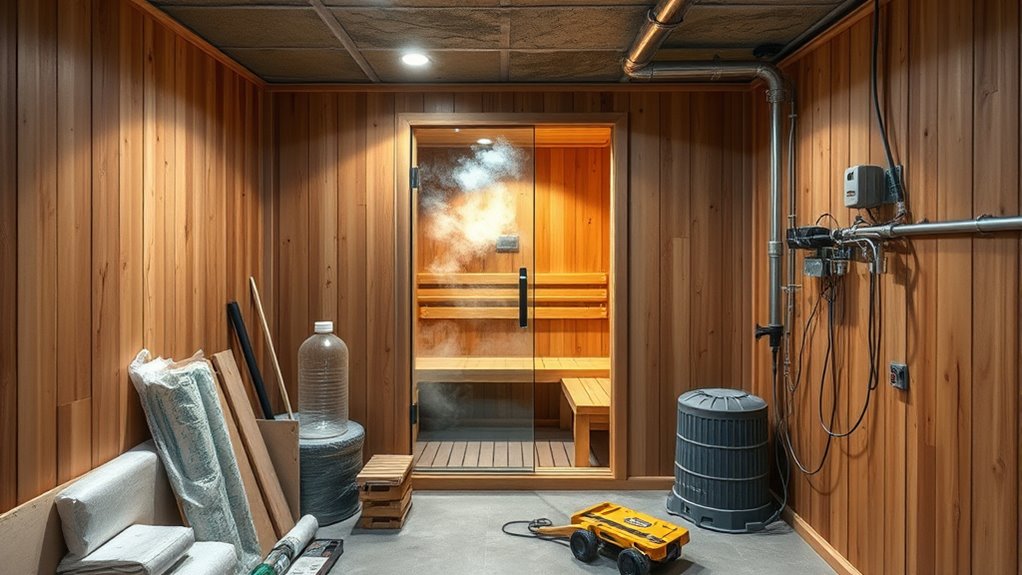
Transforming your basement into a sauna offers a relaxing retreat right at home. However, before you start building, it’s essential to consider ventilation issues and moisture control. These elements are vital because basements tend to trap humidity, which can lead to mold, wood rot, and an uncomfortable atmosphere. Without proper ventilation, your sauna space won’t just be unpleasant to use—it could also damage your property over time.
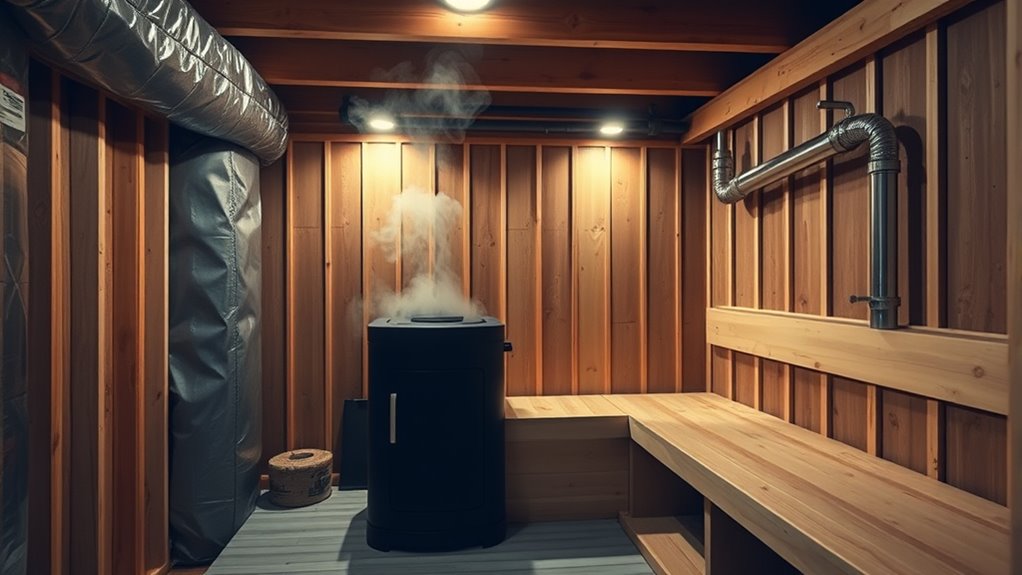
First, you need to assess your basement’s existing ventilation system. Many basements lack adequate airflow, so you might have to install new vents or exhaust fans to guarantee fresh air circulates freely. A high-quality, moisture-rated exhaust fan can effectively pull humid air out of the room, preventing excess moisture buildup. Keep in mind that ventilation isn’t just about installing a fan; it’s about creating a balanced airflow that replaces stale, humid air with dry, fresh air from outside. You should also consider installing intake vents, which allow fresh air to enter the space, maintaining a healthy oxygen level and promoting even air distribution.
Assess your basement’s ventilation; install vents and exhaust fans for fresh, balanced airflow.
Moisture control is equally important. Basements are naturally prone to dampness, which can interfere with your sauna plans. To combat this, you should start by sealing any cracks or leaks in the foundation to prevent water intrusion. Installing a vapor barrier on the basement floor and walls can greatly reduce moisture infiltration. Using moisture-resistant building materials, like treated wood or specialized drywall, further protects your space. Additionally, a dehumidifier can help maintain ideal humidity levels, especially during times when the sauna isn’t in use. Proper insulation also plays a role in moisture control; insulated walls and ceilings help keep the temperature steady and reduce condensation that can lead to mold growth. Incorporating ventilation and moisture control measures into your sauna design will ensure the space remains dry and comfortable.
Finally, guarantee that the ventilation and moisture control measures work seamlessly with your sauna design. Ventilation ducts should be discreet yet effective, and exhaust fans need to be powerful enough to handle the humidity generated during sauna sessions. Regularly inspecting and maintaining your ventilation system will keep the air fresh and dry, prolonging the life of your sauna and safeguarding your home. Taking these steps early on will help you create a safe, comfortable, and enjoyable sauna space that enhances your home wellness routine without risking moisture-related issues.
As an affiliate, we earn on qualifying purchases.
Frequently Asked Questions
How Much Does a Basement Sauna Installation Typically Cost?
A basement sauna typically costs between $3,000 and $8,000, depending on size, materials, and features. When planning your budget, consider cost considerations like insulation, wiring, and ventilation. You should also include installation fees and potential remodeling costs. Proper budget planning helps you avoid surprises and guarantees your sauna fits your space and finances. Remember, investing in quality materials can save money long-term by reducing maintenance needs.
What Are the Best Materials for Waterproofing a Basement Sauna?
You should use moisture barriers and waterproof membranes for ideal waterproofing in your basement sauna. These materials prevent moisture from seeping through walls and floors, protecting your space from mold and water damage. Look for high-quality, vapor-resistant options like rubberized membranes or sheet membranes, which are easy to install and durable. Combining these materials ensures your sauna stays dry and safe, enhancing longevity and comfort for your relaxation space.
How Long Does It Take to Build a Basement Sauna?
Building a basement sauna usually takes about 4 to 6 weeks, but it depends on your planning. You’ll need to think about ventilation requirements and insulation considerations carefully, which can add time. Delays can happen if materials aren’t ready or if modifications are needed. Stay focused, and you’ll be enjoying your custom sauna sooner than you think—just be prepared for a few surprises along the way.
Can a Basement Sauna Be Portable or Temporary?
Yes, you can have a portable or temporary sauna in your basement. A portable sauna is designed for easy setup and dismantling, making it perfect if you want flexibility or a temporary solution. These saunas often come as prefabricated units that you can relocate when needed. Keep in mind, though, ensure proper ventilation and safety measures for any temporary sauna to enjoy a relaxing, heat-filled experience without issues.
Are There Specific Building Codes for Basement Saunas?
Yes, there are specific building codes for basement saunas. You need to guarantee electrical safety by following local wiring regulations and using appropriate materials. Ventilation requirements are also vital to prevent moisture buildup and ensure air quality. Check with your local building authority to get detailed codes for sauna construction, including insulation, electrical systems, and ventilation, so your project complies and remains safe for use.
moisture-resistant drywall for sauna
As an affiliate, we earn on qualifying purchases.
As an affiliate, we earn on qualifying purchases.
Conclusion
Building a basement sauna can be challenging, but with careful planning and the right solutions, you’ll create a relaxing retreat right at home. Addressing issues like moisture, ventilation, and insulation is key to success. Remember, “A stitch in time saves nine”—tackle problems early to avoid bigger headaches later. Stay patient, stay persistent, and your dream sauna will become a reality, offering comfort and relaxation for years to come.
high-quality exhaust fan for basement
As an affiliate, we earn on qualifying purchases.
As an affiliate, we earn on qualifying purchases.
basement dehumidifier for moisture control
As an affiliate, we earn on qualifying purchases.
As an affiliate, we earn on qualifying purchases.
Halloween Picks
halloween
As an affiliate, we earn on qualifying purchases.