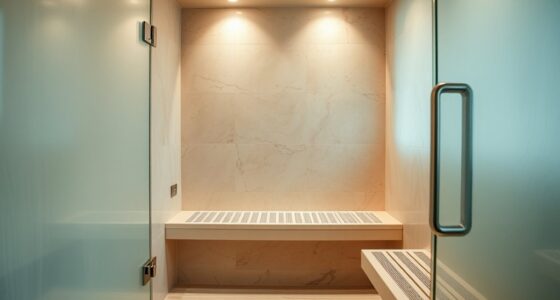
To choose the best spot for your indoor or outdoor sauna, prioritize privacy, ventilation, and safety. For outdoor, use natural barriers like fences or trees, and place it on a level, protected surface. Indoors, find a secluded room near your shower and changing area. Make sure there’s good airflow and easy access for maintenance. Considering these factors now will help you create a relaxing, safe space—so keep exploring for more tips on ideal placement.

Get wellness gear delivered free with Prime
- Fast, free delivery on millions of items
- Prime Video, Amazon Music and more included
- Member-only deals all year
Key Takeaways
- Prioritize privacy by selecting secluded indoor rooms or outdoor areas with natural barriers like fences or trees.
- Ensure proper ventilation through natural airflow, vents, or windows to prevent moisture buildup and maintain air quality.
- Choose a location with easy access, near changing or shower areas indoors or on level, protected outdoor surfaces.
- Position the sauna near electrical outlets and water sources, ensuring safety and compliance with local building codes.
- Balance privacy, ventilation, safety, and aesthetics to find a spot that offers comfort, convenience, and long-term enjoyment.

Choosing the right location for your sauna is essential to guarantee ideal comfort, safety, and convenience. When deciding where to place your indoor or outdoor sauna, you need to take into account privacy considerations carefully. You want a spot that offers enough seclusion so you can relax without feeling exposed or distracted. If you’re installing a sauna outdoors, placing it behind a fence, tall hedge, or trees can provide a natural barrier, ensuring your privacy from neighbors or passersby. For indoor installations, choose a secluded corner of your home, perhaps in a basement, spare room, or bathroom, where noise and heat won’t disturb others. Prioritizing privacy helps you unwind fully, free from worries about interruptions or prying eyes.
Select a private, secluded spot indoors or outdoors to ensure maximum relaxation and privacy during your sauna experience.
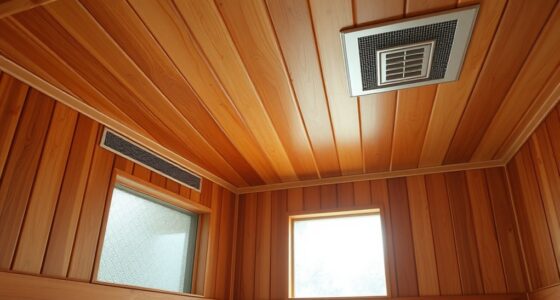
Ventilation requirements are equally critical for a safe and enjoyable sauna experience. Proper ventilation ensures that the heat, humidity, and any fumes are effectively managed, preventing moisture buildup that could cause mold or structural damage. When selecting a location, make sure there’s adequate airflow, either through natural ventilation or an exhaust system. For outdoor saunas, this means positioning it where fresh air can circulate freely, and installing vents or windows that can be opened when needed. Indoor saunas demand even more attention; you should choose a space with existing ventilation options or plan to install an exhaust fan. Good ventilation also helps maintain air quality, keeping the interior comfortable and preventing the space from becoming stuffy or overly humid. Additionally, selecting a location with proper insulation can help improve energy efficiency and temperature control.
Another factor to consider is accessibility. You want your sauna to be easy to reach but not so close that it disrupts your daily routines or causes noise disturbances. For outdoor setups, ensure the path to your sauna is clear and safe, especially in bad weather. For indoor locations, consider proximity to changing areas and shower facilities, so you don’t have to carry wet towels or clothing through the house. Additionally, think about how the location impacts your overall home layout and aesthetics—your sauna should blend seamlessly with your space without creating clutter or obstructing pathways.
Finally, think about the safety aspects, like proximity to electrical outlets and water sources. Proper placement will facilitate easier installation and maintenance, while also reducing hazards. If you’re installing an outdoor sauna, make sure it’s on a level surface and protected from the elements, with secure wiring and grounding. For indoor saunas, ensure there’s enough space around the unit for maintenance and that it meets local building codes. By carefully weighing privacy considerations, ventilation requirements, accessibility, and safety, you’ll find the perfect spot to enjoy your sauna for years to come. Understanding the importance of projector technology can also help you optimize your home relaxation space with the right equipment and setup.
As an affiliate, we earn on qualifying purchases.
Frequently Asked Questions
How Does Climate Influence Sauna Placement?
Climate greatly influences your sauna placement by affecting insulation requirements and ventilation needs. In colder regions, you’ll want a well-insulated spot to retain heat efficiently, while in humid or rainy climates, proper ventilation is essential to prevent moisture buildup and mold. Consider placing outdoor saunas where they’re shielded from harsh weather, ensuring consistent temperatures and reducing energy costs. Your choice should balance climate conditions with ideal insulation and ventilation for lasting comfort.
What Are the Necessary Permits for Outdoor Sauna Installation?
You’ll need to check local regulations for permits required before installing an outdoor sauna. Many areas demand building permits to guarantee safety and code compliance. Zoning restrictions may also apply, limiting where you can place your sauna or imposing size and setback rules. Contact your city or county planning office to get the necessary permits and confirm zoning restrictions, guaranteeing your sauna installation is legal and hassle-free.
Can I Install a Sauna on a Rooftop?
Imagine elevating your relaxation space—yes, you can install a sauna on a rooftop! Just make certain you address sauna insulation to handle temperature changes and meet ventilation requirements for safety. Properly insulating keeps the heat in, while good ventilation prevents moisture buildup. Confirm your building’s structural integrity and local regulations first, then enjoy your elevated oasis with peace of mind.
How to Ensure Privacy in Outdoor Sauna Locations?
To guarantee privacy in outdoor sauna locations, you should consider strategic placement away from neighbors and busy areas. Use privacy screens, tall fences, or planting dense shrubs to block outdoor visibility. Position the sauna where natural barriers shield it from view, and opt for locations with limited outdoor visibility. These steps help address privacy concerns, making your outdoor sauna experience more relaxing and private.
What Are the Safety Considerations for Indoor Sauna Placement?
Imagine a sauna so hot, it could melt steel—safety is vital. You must prioritize proper ventilation requirements to prevent overheating and guarantee fresh air circulation. Keep electrical safety in mind by installing grounded outlets, using waterproof wiring, and avoiding water contact with electrical components. Position your sauna away from water sources and flammable materials. Regular inspections and adherence to local codes keep you safe while enjoying your relaxing retreat.
As an affiliate, we earn on qualifying purchases.
Conclusion
Remember, location is key—like a good foundation for a house. Whether you choose indoor or outdoor, pick a spot that offers privacy, easy access, and proper drainage. Trust your instincts and plan carefully; a well-placed sauna will become your favorite retreat. As the saying goes, “A stitch in time saves nine,” so taking the time now guarantees many relaxing, enjoyable sessions ahead. Your perfect sauna spot is out there—just find it!
As an affiliate, we earn on qualifying purchases.
As an affiliate, we earn on qualifying purchases.
Halloween Picks
halloween
As an affiliate, we earn on qualifying purchases.